Most acne treatment pages in Singapore list the same treatments without stating which one suits which type of acne lesion, what each one costs, or why the acne returned six months after it cleared. This review addresses those three questions. I have treated acne for more than a decade, with AGNES radiofrequency (RF) for most of that time and AviClear since it arrived in Singapore, and a large proportion of the patients I see have already been treated elsewhere. The review is therefore organised around the question those patients ask, which is why the acne came back. It is written from the treatments I use myself, namely topical medicines, oral antibiotics, isotretinoin, AGNES RF, AviClear, Gold photothermal therapy (PTT), Platinum PTT and, in one specific group of patients, Secret RF as an add-on. Where a treatment is asked about but is not one I use for acne, I say so.
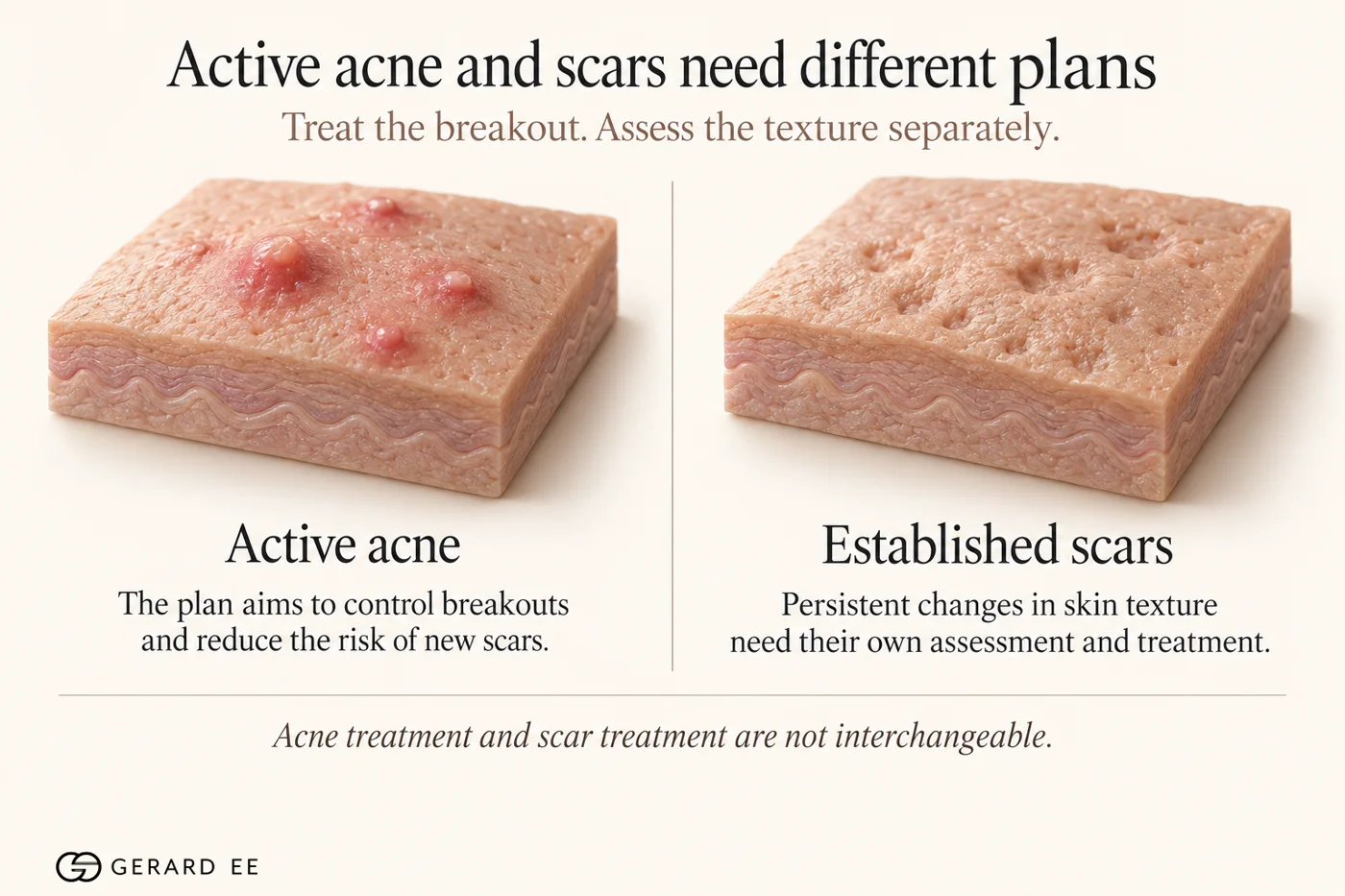
Acne scars are not covered here, because they are a different problem with different treatments, and they have their own acne scar treatment review.
What acne is and why the sebaceous gland is the treatment target
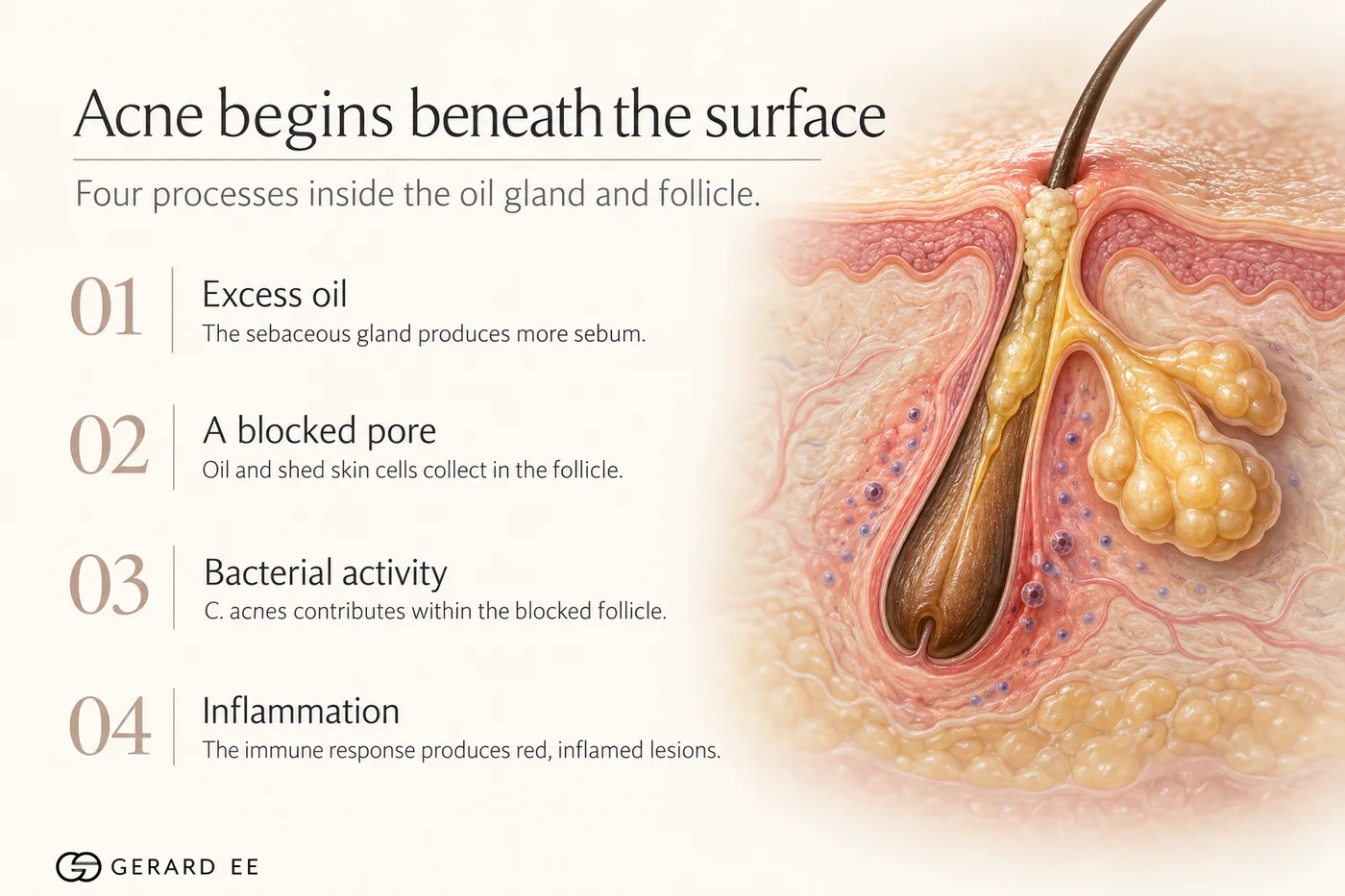
Acne is a disease of the pilosebaceous unit, the oil gland and hair follicle that share one pore. Four events occur in sequence. The gland produces excess sebum under androgen stimulation, the lining of the follicle sheds abnormally and blocks the pore, Cutibacterium acnes (C. acnes) multiplies in the trapped sebum, and the immune response to the bacteria produces inflammation. A blackhead or whitehead is the blockage itself. A papule or pustule is the inflammation around it. A nodule or cyst forms when the inflammation ruptures the follicle wall and spreads into the surrounding skin, and this is the stage at which scarring begins.
Every acne treatment acts on one or more of those four steps, and that is the simplest way to read the list below. Topical retinoids and benzoyl peroxide act on the blockage and the bacteria. Antibiotics act on the bacteria and the inflammation. Isotretinoin shrinks the gland. AGNES, AviClear and photothermal therapy destroy or disable the gland directly. The gland is the target that matters most for durability, because a gland that continues to produce sebum will eventually produce another lesion once a medicine is stopped, and sebaceous glands regenerate from reserve cells after a partial injury.
Which acne treatment for which type of acne, how I decide
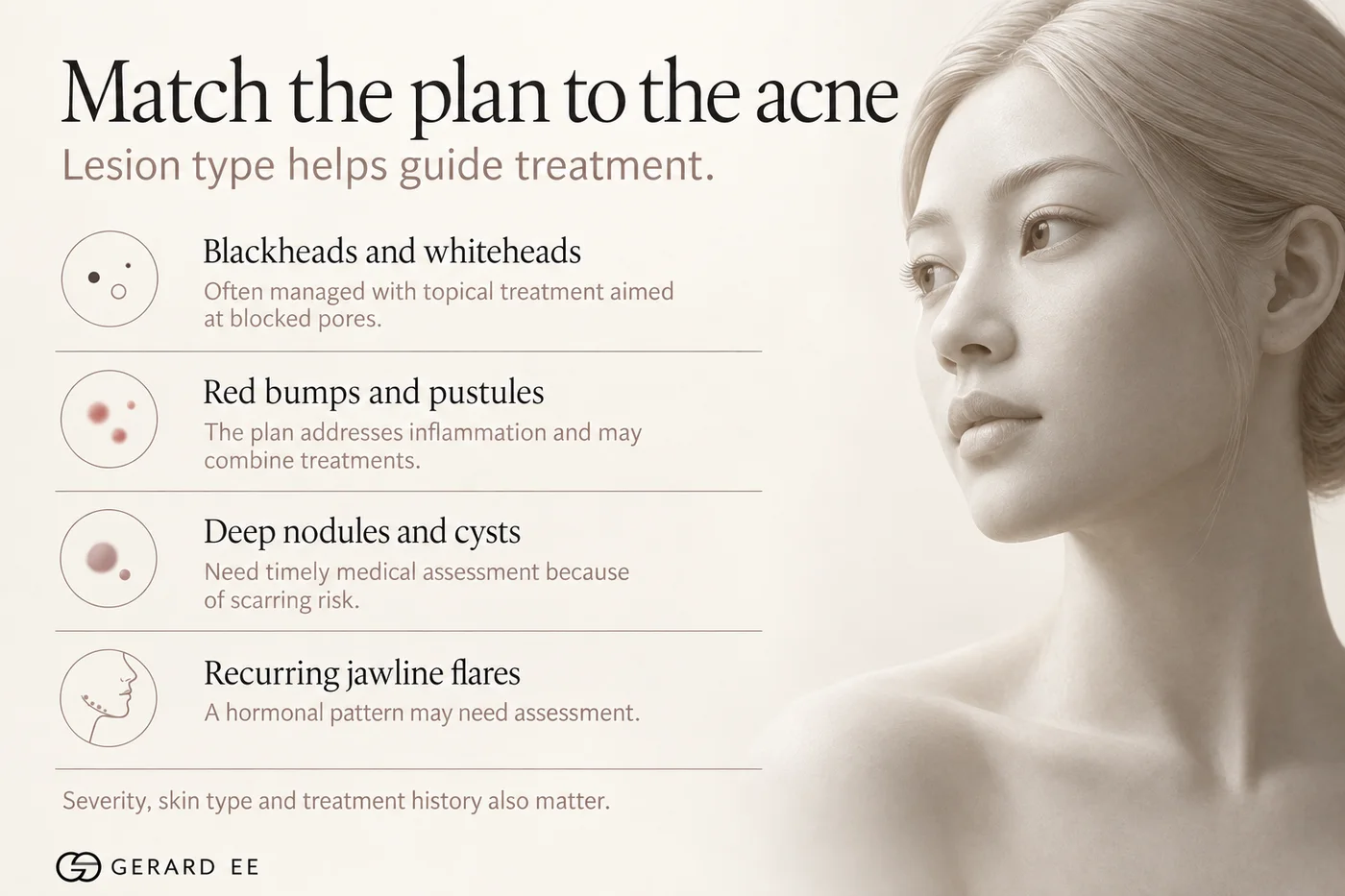
The treatment I choose depends on the type of lesion, the severity, the skin type and any other condition affecting the skin, not on how new the technology is. The grouping below is the same one used on the acne treatment page.
| Type of acne | What I usually start with | What I add or move to |
|---|---|---|
| Comedonal acne, blackheads and whiteheads | A topical retinoid, with or without benzoyl peroxide | AGNES RF for the glands that keep blocking, and sometimes AviClear depending on the skin type and how widespread the lesions are |
| Papular and pustular acne | Topicals, with a short course of an oral antibiotic if the acne is widespread | AviClear as my usual device choice, or Gold PTT or Platinum PTT |
| Nodular and cystic acne | Isotretinoin where the acne is severe or has not responded | AGNES RF for the individual glands driving the deep lesions |
| Acne with rough skin texture that is not yet controlled | The medical plan above | Secret RF as an add-on |
| Acne in women that flares with the menstrual cycle, sits along the jawline or persists after 25 | The medical plan above, plus a hormonal assessment | The hormonal acne treatment page |
Some patients are treated with medication alone, and they tend to be younger children and teenagers. A procedure is added only where the skin type, the severity and any other condition affecting the skin favour one. A procedure is not always appropriate for the type of acne in front of me, and where that is the case I say so and treat the acne another way.
Topical acne treatment with retinoids and benzoyl peroxide, and where it stops
Topical retinoids (adapalene, tretinoin and trifarotene) and benzoyl peroxide are first-line treatment for almost every acne presentation in the 2024 American Academy of Dermatology guideline, alone for mild acne and combined with another agent for anything more severe. A retinoid normalises the shedding of the follicle lining so that the pore stops blocking, and benzoyl peroxide releases oxygen inside the follicle, which kills C. acnes without inducing resistance. Both are inexpensive, and they are the maintenance treatment that every other option returns to once it has done its work.
The limits of topical treatment are depth and time. A retinoid does not reach a nodule, and it takes eight to twelve weeks of consistent use before its effect can be judged. The most common reason a patient tells me that topicals did not work is that they were stopped at week four because of dryness, or applied to the individual spots rather than to the whole affected area, so the follicles that were about to block were never treated. Topical treatment at my clinic starts from $150.
Oral antibiotics for acne, three months and then a decision
Doxycycline and minocycline reduce C. acnes and, more importantly, reduce inflammation, an effect that occurs at doses below those needed to kill the bacteria. The guideline is specific. They are used for moderate to severe inflammatory acne, always with a topical retinoid or benzoyl peroxide, and the course is limited to the shortest effective duration, ideally three to four months, because resistant strains of C. acnes are selected the longer the drug is taken. An antibiotic course is a bridge. At the end of it, the question is what carries the result, either topicals alone or one of the gland-directed treatments below. An antibiotic that is simply repeated each time the acne returns is the pattern I most often see in patients who come from elsewhere, and each repeat course is more likely to meet a resistant strain than the one before.

Isotretinoin (Roaccutane) for acne in Singapore, the strongest medicine and its relapse rate
Isotretinoin is the only medicine that shrinks the sebaceous gland itself. It reduces the size of the gland and its sebum output within weeks, so all four steps of the acne process lose their starting point, and it therefore remains the treatment for severe nodular acne and for moderate acne that has failed everything else. I prescribe it for severe acne that has not responded to other treatments. It requires blood tests, strict contraception in women and a fixed review schedule, and the isotretinoin page sets out the side effects in full.
Two figures bear on the question of why the acne came back. In a cohort of roughly 20,000 patients, the relapse rate after a course was 22.5 percent, with a median time to relapse of 7.5 months, and about 35 percent needed further treatment. Relapse is more likely after a lower cumulative dose and in younger patients, because a gland that received too little of the drug in total recovers its size and output once the course ends. A course that was cut short, or dosed low to limit dryness, is therefore the most common reason isotretinoin did not last. Isotretinoin at my clinic is about $500 a month, depending on the dose. For women with a hormonal pattern of acne, the comparison with spironolactone is on its own page, spironolactone vs Accutane.
AGNES RF acne treatment, gland by gland
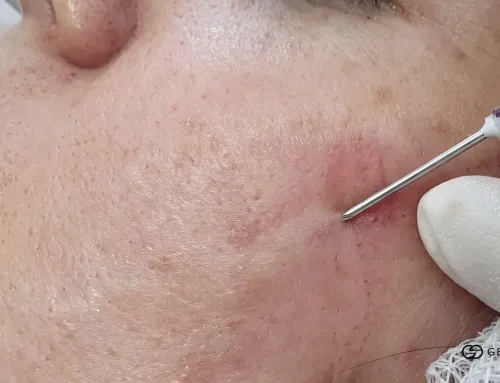
AGNES passes radiofrequency current through a single insulated microneedle into an individual sebaceous gland. The current heats and destroys the gland at the needle tip, whereas the insulation along the shaft protects the epidermis from the heat, so the gland is removed without a surface wound. It is the treatment I use most for nodular and cystic acne and for comedonal acne that keeps re-blocking, because it treats the specific glands producing the lesions rather than the whole face.
In the principal randomised controlled trial, AGNES was compared with needling and extraction alone. The treated side separated from the control side only at twelve weeks, with a lesion reduction of roughly 21 percent against a slight worsening in the control group, and earlier prospective work reported significant lesion reduction with minimal side effects. Two conclusions follow. AGNES cannot be judged before three months, because the trial data show no difference earlier, and the result is only as good as the selection of glands, so the same device produces very different outcomes in different hands. Both points are covered in detail in why your AGNES acne treatment did not work. AGNES at my clinic is $800 to $1,500 per session, depending on the number of lesions treated, and the AGNES acne treatment page has the session detail.
AviClear laser acne treatment, the 1726 nm sebum-selective laser
AviClear is a 1726 nm laser. That wavelength is absorbed by sebum more strongly than by the water in the surrounding skin, so the laser heats the sebaceous glands across the whole treated area while contact cooling protects the surface. It was the first energy device cleared by the US Food and Drug Administration (FDA) for mild, moderate and severe acne (FDA 2022). It is usually my choice for papular acne. It is given as a course of three sessions, and improvement continues after the final session because the heated glands shrink and their sebum output falls over the following months rather than on the day of treatment.
In the prospective multicentre study of 104 patients, most with moderate to severe acne, about 87 percent had at least a 50 percent reduction in inflammatory lesions at six months, rising to roughly 92 percent at one year. Those are the figures against which any AviClear result should be measured. The result builds over months, so a verdict at week six is premature, and a patient whose acne returned after AviClear usually has one of the four reasons set out below. The specifics are in why AviClear did not work for you. AviClear at my clinic is $1,800 per session. It is also the treatment most often weighed against isotretinoin by patients who want to avoid a course of tablets, and that comparison is on AviClear vs isotretinoin.
Gold PTT and Platinum PTT, photothermal therapy for acne
Gold photothermal therapy applies light-absorbing gold microparticles to the skin, drives them into the follicle with ultrasound, and then heats them with a laser. The particles absorb the laser energy and convert it to heat at the gland, so the sebaceous gland is damaged selectively while the skin between the follicles, which holds no particles, is spared. In the sham-controlled randomised trial of 51 patients, gold microparticles plus a 1064 nm laser reduced inflammatory lesions by 53 percent at 14 weeks, against 30 percent in the sham arm. An open-label European study of 25 patients reported a mean 45 percent reduction after one course, and a preliminary study in 12 Asian patients reported improvement above 50 percent in papules, pustules and comedones. I use Gold PTT for papular and pustular acne, delivered with the Bellasonic dual-handpiece protocol described on the Gold PTT page. Gold PTT at my clinic is $700 per session, or $3,500 for a course of five sessions.
Platinum PTT uses platinum nanoparticles on the same principle and may be particularly helpful for inflammatory acne. The published trials are of gold particles, so the evidence for platinum rests on the shared mechanism rather than on a trial of its own. Platinum PTT at my clinic is $700 per session, and the details are on the Platinum PTT page. How the three devices compare, lesion by lesion, is set out on AGNES vs AviClear vs Gold PTT.
Secret RF for acne, an add-on for uncontrolled acne with rough skin texture
Secret RF is a fractional microneedle radiofrequency device and a scar treatment first. Its non-insulated microneedles deliver radiofrequency heat through the dermis in a grid of columns, which stimulates collagen remodelling in the rough skin around the lesions and reduces the activity of the glands the heat reaches. I use it as an add-on for one group of patients, those whose acne is not yet controlled and whose skin texture is rough. In those patients it is added to the medical acne plan, not used instead of it. Secret RF for active acne is $1,500 per session before GST, and the number of sessions is agreed once the acne plan is in place. The Secret RF page explains where it sits on both sides of the boundary between acne and acne scars.
Supporting care for acne, HydraFacial, chemical peels and LED light
Three treatments form part of some acne plans at my clinic as supporting care, alongside medical treatment and never in place of it. HydraFacial clears blocked pores at the surface and helps congested, oily skin between medical treatments. On its own it does not cure acne, and the HydraFacial page sets out what the published evidence does and does not show. Chemical peels, at $200 per session over a course of four to six, help comedonal acne and the marks left after breakouts, as described on chemical peels for acne. Blue and red light-emitting diode (LED) light has short-term randomised evidence in mild to moderate acne, pooled in a 2025 systematic review and meta-analysis of six trials of home devices (JAMA Dermatology 2025), and I use it as an addition to a topical routine. The full evidence review is on light therapy for acne.
Acne treatments I am asked about but do not offer
Accure is another 1726 nm laser and the device most often raised in consultation by patients comparing their options. The differences from AviClear are on Accure vs AviClear. Light therapy with a photosensitising cream and intense pulsed light have low-certainty evidence and more downtime than LED, and both are reviewed on the light therapy page. None of these is on my treatment list, and a page that lists them beside isotretinoin or AGNES as equivalents does not reflect how acne is treated in practice.
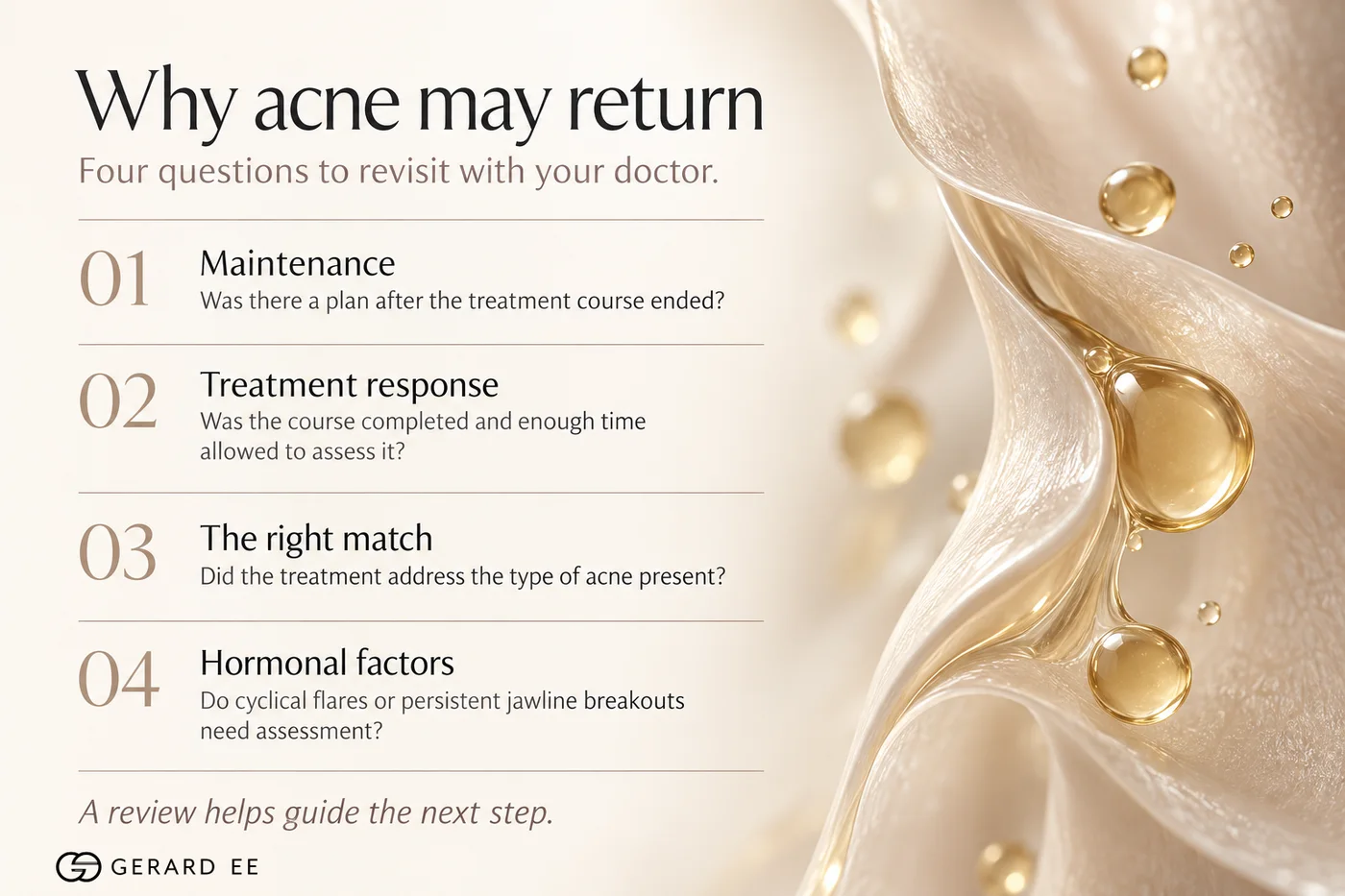
Why acne comes back after treatment, the four reasons I see
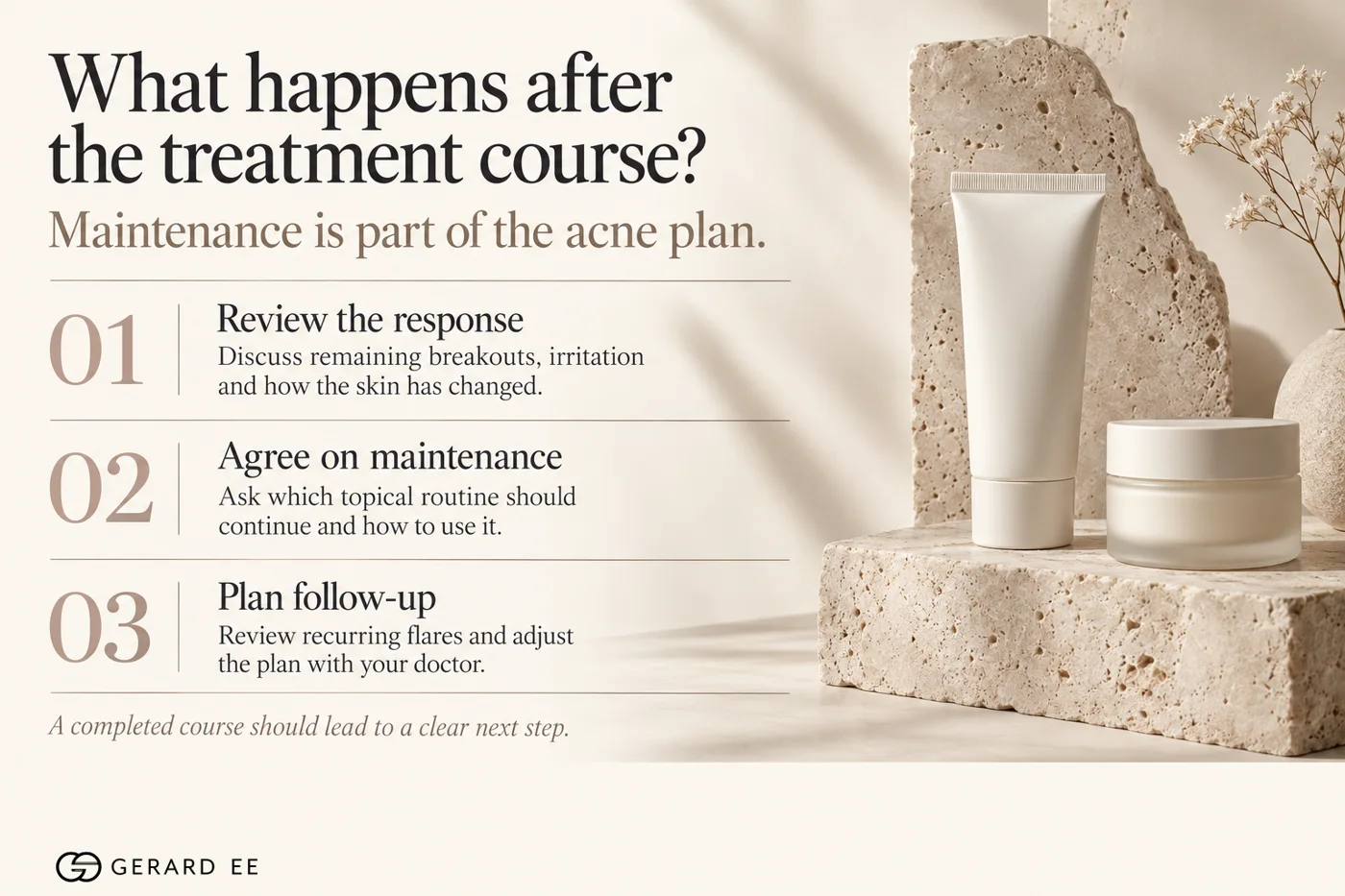
The first reason is that the medicine stopped and nothing replaced it. Topicals, antibiotics and, to a lesser degree, isotretinoin suppress the acne process rather than remove the gland, so the sebum, the blockage and the bacteria return once the drug is withdrawn. When a course ends, the maintenance plan is what holds the result, and most relapses after antibiotics are relapses into no treatment at all.
The second reason is that the gland survived or regrew. Sebaceous glands regenerate from reserve cells after injury. A device session that under-treated the gland, an AGNES pass that missed the gland driving a nodule, or an AviClear course judged before its six-month mark will look like a failure when it is incomplete treatment. The trial timelines above matter for the same reason, since benefit becomes measurable at three months for AGNES and at six to twelve months for AviClear.
The third reason is that the wrong type of lesion was treated. A whole-face laser does little for three deep nodules, and a single-needle device is the wrong tool for two hundred comedones. Matching the treatment to the lesion, as in the table above, is most of the work of the first consultation.
The fourth reason is that a hormonal driver was never assessed. In treatment-resistant acne, 86 percent of women without overt hirsutism were found to have biochemical hyperandrogenism on testing, and 36 percent met the criteria for polycystic ovary syndrome. Acne in a woman that flares with the cycle, sits along the jaw, or returns each time a course ends needs the hormonal assessment described on the hormonal acne page before any further device treatment is planned.
Acne treatment cost in Singapore
Prices are before GST unless stated, and are the treatment fee rather than a package.
| Treatment | Cost at my clinic |
|---|---|
| Topical treatments | From $150 |
| Oral antibiotics | Quoted at consultation |
| Isotretinoin | About $500 a month, depending on dose |
| AGNES RF | $800 to $1,500 per session |
| AviClear | $1,800 per session |
| Gold Photothermal Therapy | $700 per session, or $3,500 for 5 sessions |
| Platinum Photothermal Therapy | $700 per session |
| Secret RF for active acne (add-on) | $1,500 per session |
| Chemical peel (supporting care) | $200 per session |
The final cost depends on the type and severity of the acne, the number of sessions and the duration of treatment. The figure that matters is the cost of the plan that holds the result, not the cost of the first session, and a quote should state what the maintenance plan is. Every price with its course total, what the fee includes and the cost by type of acne is on the acne treatment cost in Singapore page.
Acne treatment side effects, treatment by treatment
Retinoids and benzoyl peroxide cause dryness, peeling and irritation, usually in the first month. Doxycycline causes photosensitivity and gut upset. Isotretinoin causes dry lips, dry eyes and a rise in lipids and liver enzymes, and carries the absolute requirement for contraception. AGNES leaves redness and small crusts at each treated lesion for a few days, and the questions about dryness, burns and pitting are answered on the AGNES page. AviClear causes temporary redness and swelling, with a possible flare in the first weeks. Photothermal therapy causes mild redness and, uncommonly, a transient change in pigment. A change in pigmentation after any energy device is the specific risk to ask about in Fitzpatrick type III to V skin, and every device session at my clinic is planned around skin type for that reason.

Dr Gerard Ee, Aesthetic Doctor in Singapore
Dr Gerard Ee is an aesthetic doctor in Singapore and the Medical Director of his practice at 50 Raffles Place. He graduated from St George’s, University of London, trained in surgery at Singapore General Hospital and the National University Hospital, and holds the MRCS (Edinburgh) and a postgraduate diploma in practical dermatology from Cardiff University.
He has practised aesthetic medicine since 2012, is the author of sixteen peer-reviewed papers, and writes and medically reviews every article on this site. Read more about Dr Gerard Ee.

Book a consultation with Dr Gerard Ee at The Clifford Clinic
Dr Gerard Ee consults and performs acne treatment at The Clifford Clinic, 50 Raffles Place, Singapore. Consultations are by appointment. Message the clinic on WhatsApp, or call 6532 2048.
Common questions about acne treatment in Singapore
What is the best acne treatment in Singapore?
There is no single best treatment, because the choice depends on the type of lesion. Comedonal acne is treated with a topical retinoid and, if it keeps re-blocking, with AGNES. Papular acne is usually treated with AviClear. Nodular and cystic acne is treated with isotretinoin or AGNES. The best treatment is the one matched to the type of acne present.
How much does acne treatment cost in Singapore?
At my clinic, topicals start from $150, isotretinoin about $500 a month depending on dose, AGNES is $800 to $1,500 per session, AviClear is $1,800 per session, and Gold PTT and Platinum PTT are $700 per session, with Gold PTT at $3,500 for a course of five. Secret RF as an add-on is $1,500 per session.
Why does my acne keep coming back?
Acne comes back for one of four reasons. The medicine stopped and nothing replaced it, the sebaceous gland survived or regrew, the treatment did not match the type of lesion, or a hormonal driver was never assessed. The section above sets out how to tell which one applies.
Is AviClear better than isotretinoin?
They do different things. Isotretinoin shrinks every gland and is the treatment for severe nodular acne, with a relapse rate of about 22 percent. AviClear heats the glands with a laser across three sessions and avoids the systemic side effects, and about 87 percent of trial patients halved their inflammatory lesions by six months. The full comparison is on the AviClear vs isotretinoin page.
Does HydraFacial cure acne?
HydraFacial does not cure acne. It clears blocked pores at the surface and supports a medical plan, and it is listed here as supporting care rather than as an acne treatment.
Can acne treatment remove my acne scars?
Acne treatment does not remove established scars. Clearing the acne stops new scars forming, which is the strongest reason to treat early, but established scars need their own treatments, set out in the acne scar treatment review.
Selected References
Published studies cited on this page
- Reynolds RV, Yeung H, Cheng CE, et al. Guidelines of care for the management of acne vulgaris. J Am Acad Dermatol. 2024;90(5):1006.e1–1006.e30. doi:10.1016/j.jaad.2023.12.017
- Eichenfield DZ, Sprague J, Eichenfield LF. Management of acne vulgaris: a review. JAMA. 2021;326(20):2055–2067.
- Moradi Tuchayi S, Makrantonaki E, Ganceviciene R, Dessinioti C, Feldman SR, Zouboulis CC. Acne vulgaris. Nat Rev Dis Primers. 2015;1:15029. doi:10.1038/nrdp.2015.29
- Zouboulis CC, Coenye T, He L, et al. Sebaceous gland biology and acne. Exp Dermatol. 2020. doi:10.1111/exd.14172
- Veniaminova NA, Jia YY, Hartigan AM, et al. Distinct mechanisms for sebaceous gland self-renewal and regeneration provide durability in response to injury. Cell Rep. 2023;42(10):113121. doi:10.1016/j.celrep.2023.113121
- Lai C, Barbieri JS. Isotretinoin treatment and relapse of acne. JAMA Dermatol. 2025. doi:10.1001/jamadermatol.2024.5416
- Demirci Saadet E. Relapse rate and factors affecting relapse after oral isotretinoin treatment in patients with acne vulgaris. Dermatol Ther. 2021;34(6):e15109. doi:10.1111/dth.15109
- Ahn GR, Kim JM, Park SJ, Li K, Kim BJ. Selective sebaceous gland electrothermolysis using a single microneedle radiofrequency device for acne patients: a prospective randomized controlled study. Lasers Surg Med. 2020;52(5):396–401.
- Lee JW, Kim BJ, Kim MN, Lee CK. Selective sebaceous gland electrothermolysis as a treatment for acne: a prospective pilot study. Int J Dermatol. 2012;51(3):339–344.
- Scopelliti MG, Kothare A, Karavitis M. A novel 1726 nm laser system for safe and effective treatment of acne vulgaris. Lasers Med Sci. 2022.
- U.S. Food and Drug Administration. AviClear Laser System 510(k) summary. 2022.
- Goldberg D, Ronan S, Bhatia A, et al. Safe and effective acne treatment across skin types with a 1726 nm sebum selective laser: one year data from a prospective multicenter study. J Am Acad Dermatol. 2023.
- Alexiades M, Kothare A, Goldberg D, Dover JS. Novel 1726 nm laser demonstrates durable therapeutic outcomes and tolerability for moderate to severe acne across skin types. J Am Acad Dermatol. 2023.
- Paithankar DY, Sakamoto FH, Farinelli WA, et al. Acne treatment based on selective photothermolysis of sebaceous follicles with topically delivered light-absorbing gold microparticles. J Invest Dermatol. 2015;135(7):1727–1734.
- Fuchs CSK, Bay C, Adatto M, Lomholt H, Haedersdal M. Acne treatment with light absorbing gold microparticles and optical pulses: an open-label European multi-centered study. Lasers Surg Med. 2019;51(8):686–693. doi:10.1002/lsm.23099
- Suh DH, Park TJ, Jeong JY, et al. Photothermal therapy using gold nanoparticles for acne in Asian patients: a preliminary study. Dermatol Ther. 2021;34(3):e14918. doi:10.1111/dth.14918
- Elhassan YS, Idkowiak J, Smith K, et al. Approach to the patient with hyperandrogenism. Clin Endocrinol (Oxf). 2025. doi:10.1111/cen.15265
- At-home LED devices for the treatment of acne vulgaris: a systematic review and meta-analysis. JAMA Dermatol. 2025.
Is pimple treatment the same as acne treatment?
Yes. Pimple is the everyday word for an acne spot. Whiteheads, blackheads, papules, pustules and cysts are all forms of acne, so pimple treatment in Singapore means the same eight treatments described on this page, matched to the type and severity of the acne rather than to the word used for it.
This page is written by Dr Gerard Ee from his own clinical practice and the published studies cited above. It is general information and not a substitute for a consultation. Prices are before GST unless stated and may change.