Home›Blog›Acne›Acne Scars & Marks›Sylfirm X No Results on Acne Scars? The Four Reasons and What to Do Next
Dr Gerard Ee consults at The Clifford Clinic, 50 Raffles Place, Singapore.
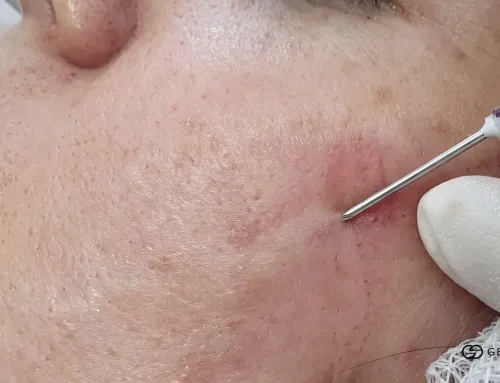
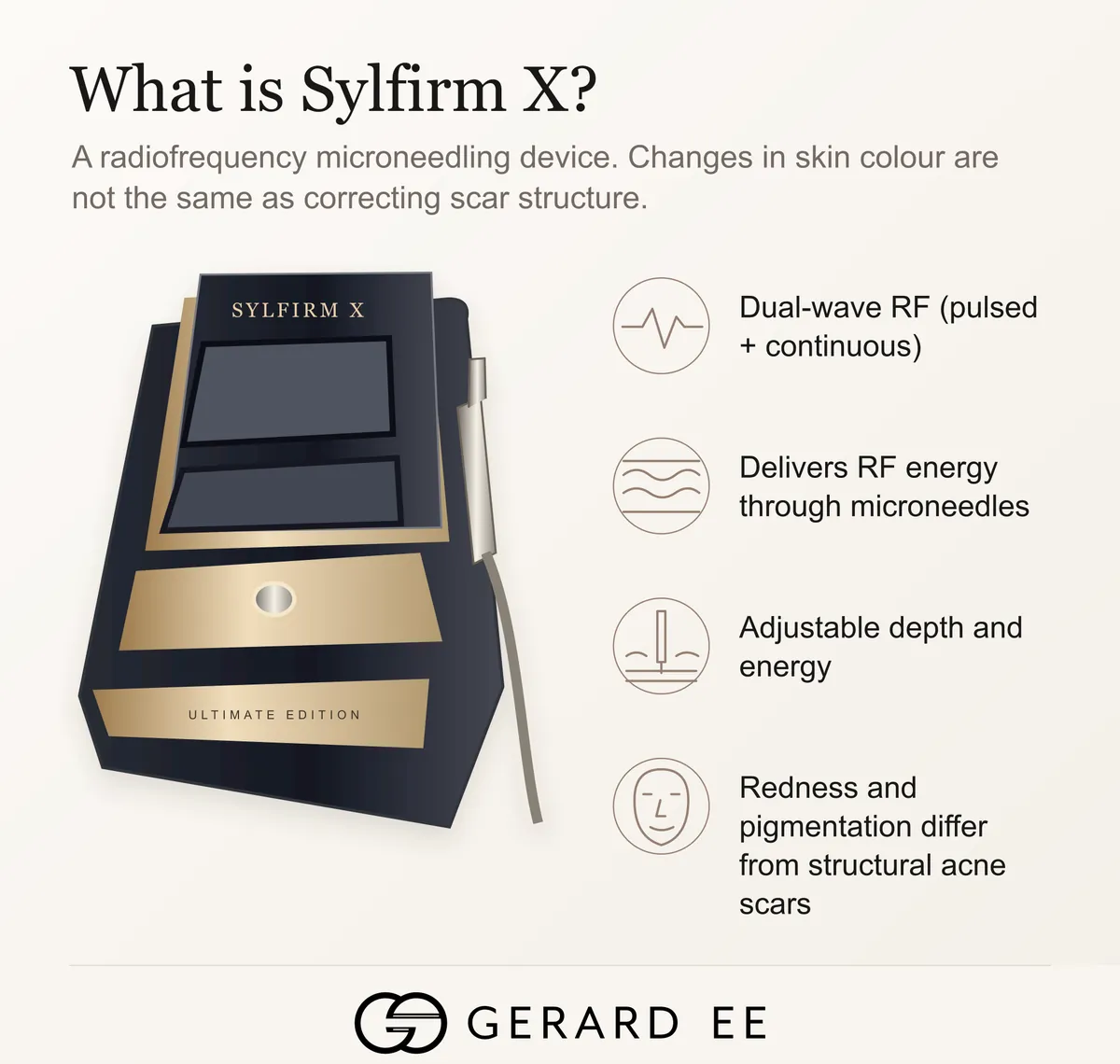
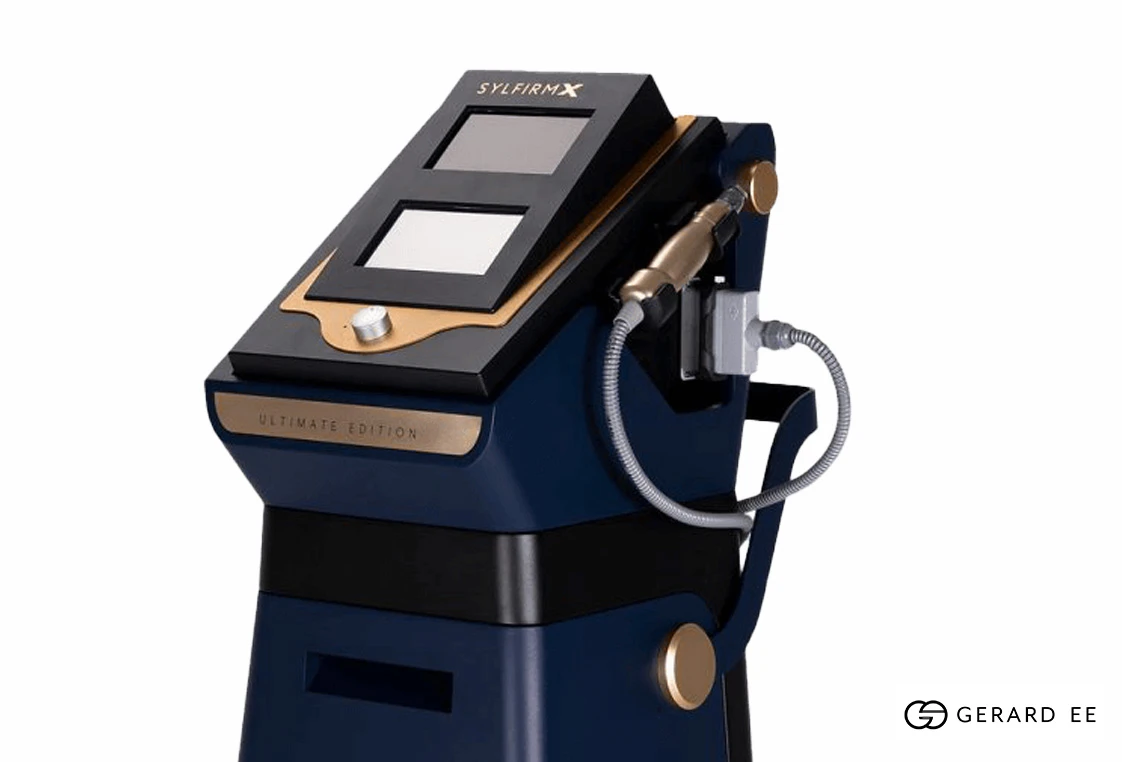
Sylfirm X no results is a common pattern: several sessions in, the skin is brighter and more even while the depressed scars remain unchanged. That outcome rarely reflects anything the patient did wrong. Almost always it represents a mismatch between the device, the spacing of sessions and the underlying cause. The four most common reasons are set out below, building on my review of what Sylfirm X is actually good for. When a patient tells me a full course of Sylfirm X produced nothing on their depressed scars, the explanation is usually that mismatch rather than anything peculiar to their skin.
This page is one part of my acne scar treatment guide for Singapore, which covers every scar type and every treatment option.
I do not provide Sylfirm X. I provide Secret RF and Infini.
Reason 1: Sylfirm X is underpowered for deep acne scars
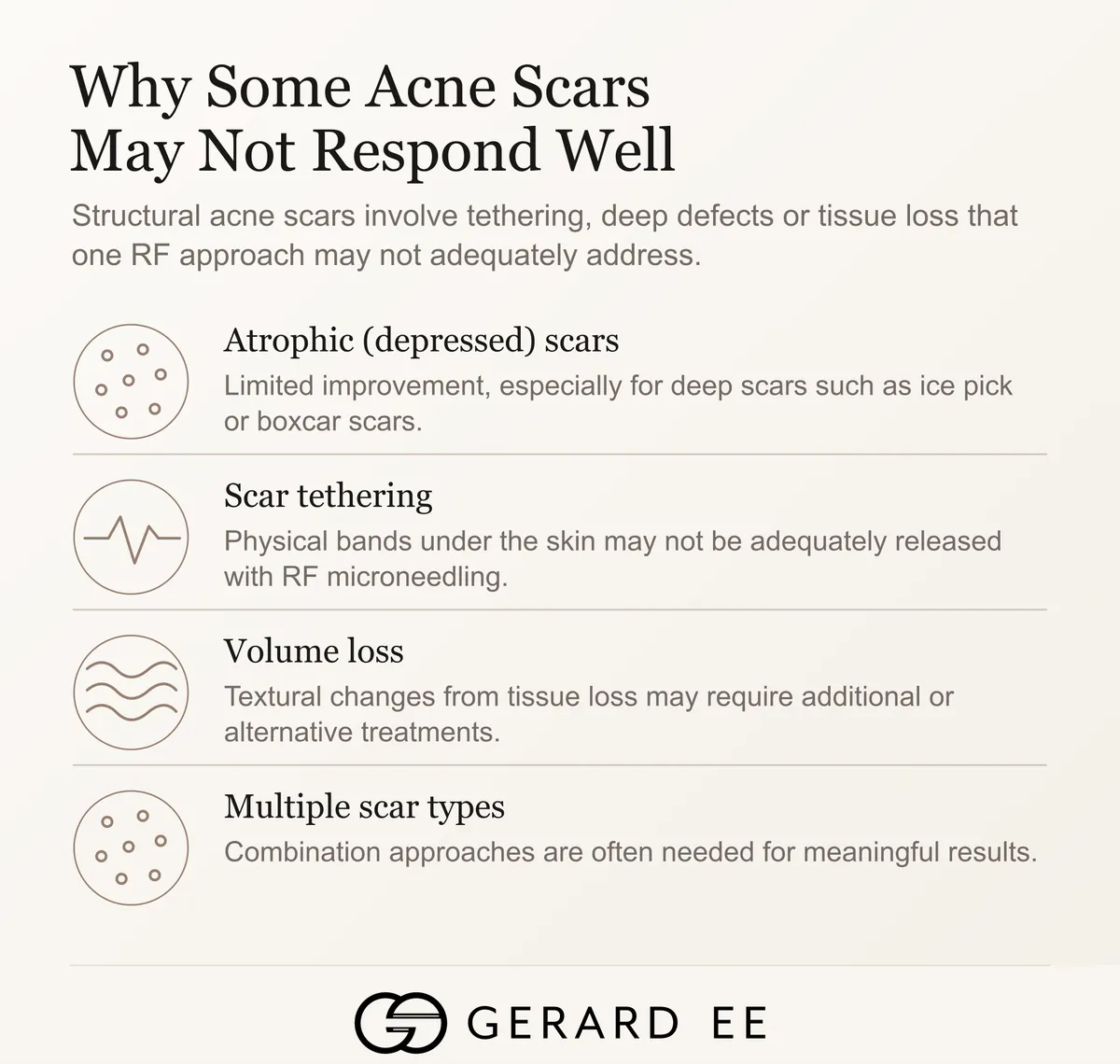
Depressed scars require substantial energy delivered deep into the dermis, which is what decides which devices can address them. The FDA-cleared maximum for Sylfirm X is 16 W (K213612), whereas Secret RF is cleared to 25 W (K170325) and the insulated Infini to around 50 W (K121481). Sylfirm X is tuned for precise, lower-energy work and is not built for the deep remodelling a boxcar or rolling scar requires. No number of sessions fully overcomes a power ceiling. With more than 10 years’ experience of the insulated Infini platform, I have found the difference between roughly 50 W and 16 W shows most clearly on deep boxcar and rolling scars. For a patient whose concern is pigment rather than depth, that same ceiling is an advantage.
Reason 2: too many Sylfirm X sessions, too close together
A frequent and counter-intuitive pattern is that treating more frequently produces a worse result. Collagen requires an interval in which to form, and weekly or fortnightly treatment does not provide it, while attempting several modalities in one sitting under-doses every one of them. Delivering proper energy and spacing sessions four to six weeks apart outperforms crowding gentle treatments together. That interval allows each session’s collagen to mature, and RF microneedling remodelling continues for months after each session1. The commonest scheduling error I see in a previous course is a run of closely spaced, low-energy sessions.
Reason 3: the acne was never controlled
Scar treatment carried out while acne remains active addresses damage that is still being generated, because every fresh breakout adds another scar. The acne is stabilised first, often with non-insulated Secret RF that calms the oil gland and sometimes with AGNES acne treatment. Sylfirm X is a pigment-and-vessel device, and it is not the instrument for that acne-control step. A course begun before the acne has settled may improve tone while the scar count rises. How I keep new scars from forming during a scar course is covered in preventing acne scars during breakouts.
Reason 4: Sylfirm X treats pigment well, not scar depth
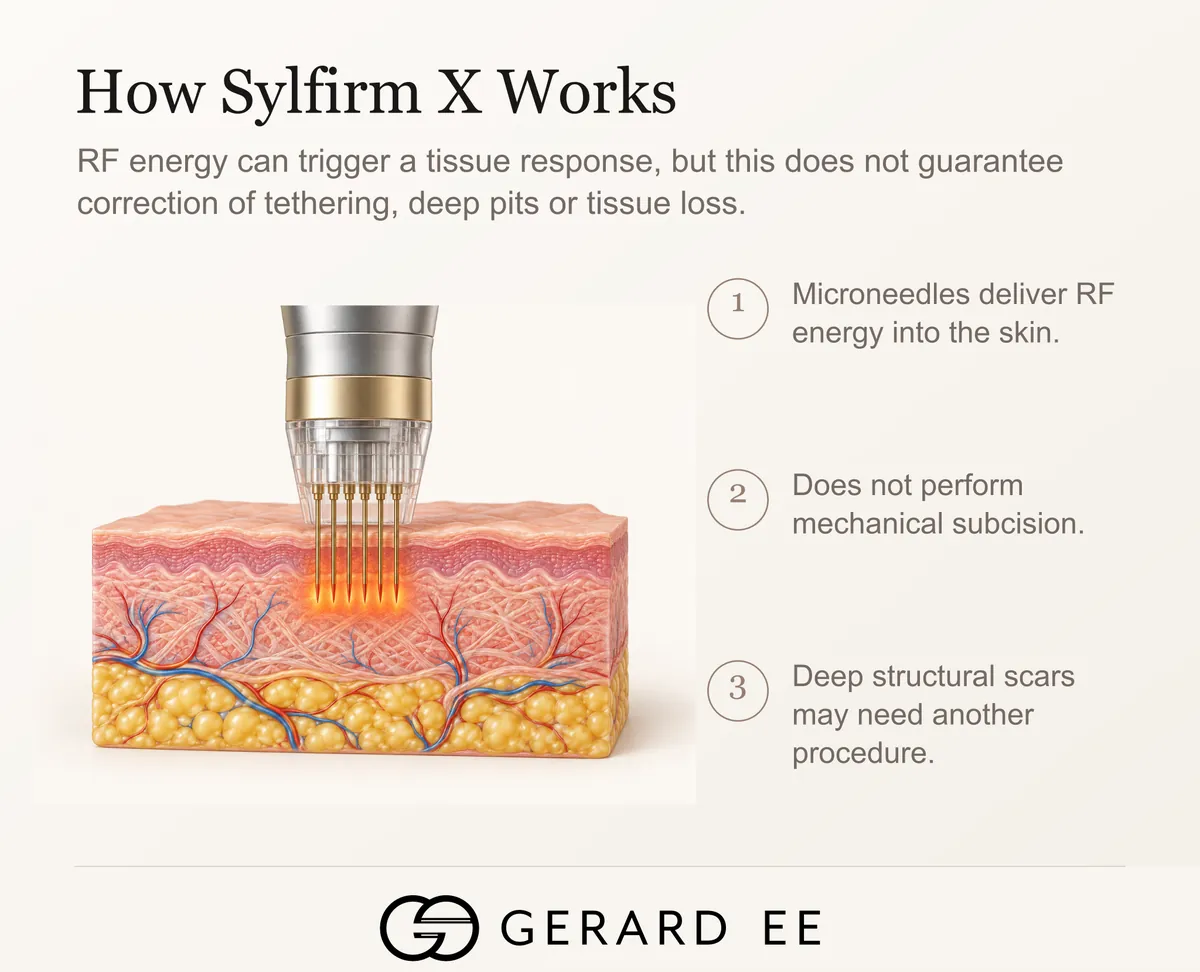
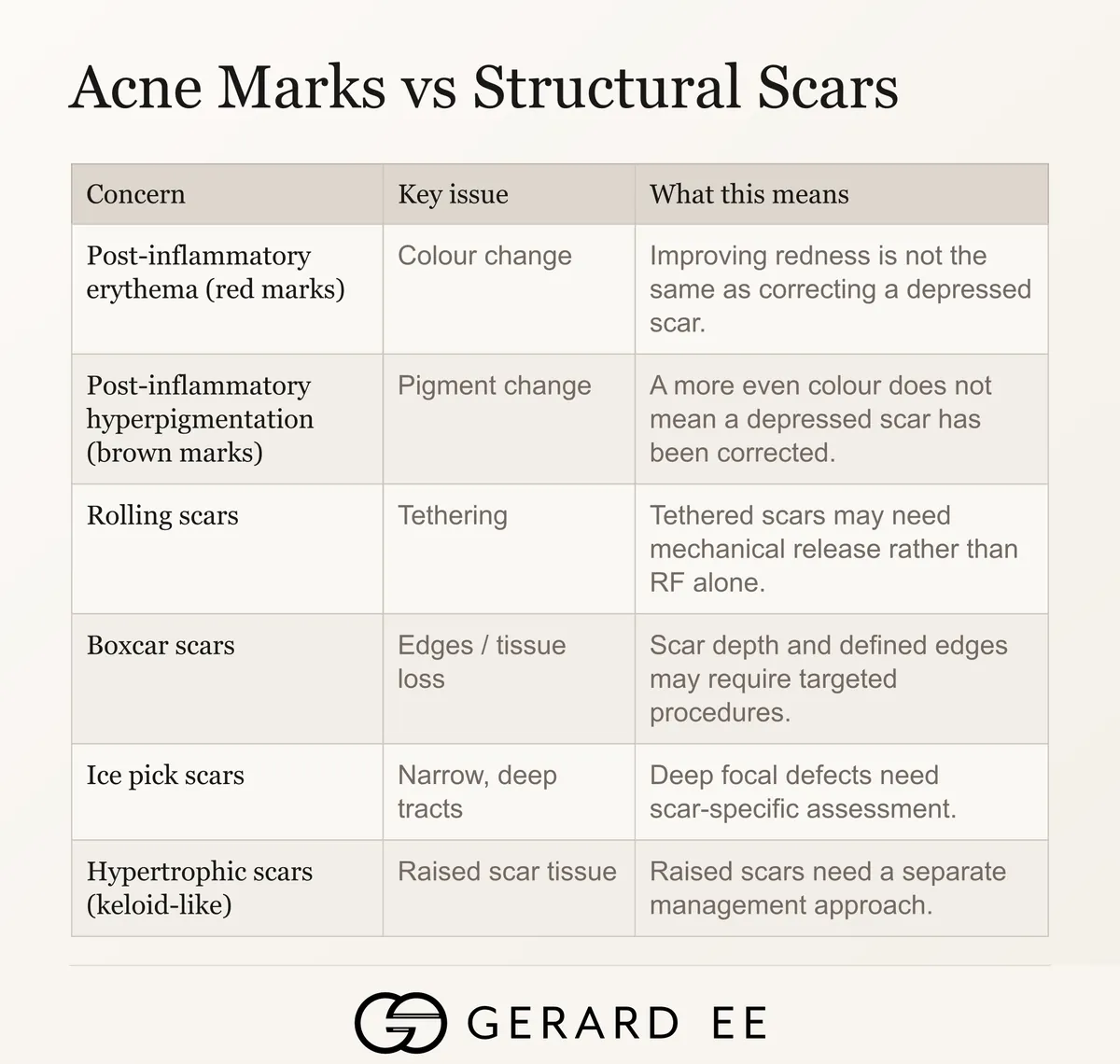
Sylfirm X delivers genuine gains on melasma, redness, pigmentation and pores. Clearer tone reflects the device performing the task it was designed around, and tone is a separate property from texture. A true depressed scar is a matter of depth, confirmed by stretching the skin or directing a light across it, as in the acne scars or dark spots self-check. In my experience the most common reason a patient concludes that Sylfirm X has failed is that the colour improved while the shadows under angled light did not.
What to do when Sylfirm X has not worked on acne scars
Where Sylfirm X has not moved the scars, that rarely means the scars cannot be treated. It usually means the plan requires more power, better spacing and attention to the root cause. The rebuilt plan is a higher-energy backbone (Secret RF or Infini), combined with subcision for acne scars for tethered scars, resurfacing and biostimulators, with the acne controlled first. The full plan is set out in my acne scar treatment guide, and the procedures matched to each scar type are on my acne scar removal in Singapore page. Of the patients who consult me after a stalled course, most received a reasonable treatment at an inadequate dose, and a minority have scars that respond only partially even to a properly powered plan.
What a properly dosed RF microneedling plan for acne scars looks like
Where Sylfirm X has underdelivered, the useful comparison is with what an evidence-based radiofrequency plan involves. Trials of fractional RF microneedling typically use a series of sessions spaced about four weeks apart, with scar improvement accumulating over the months that follow23, rather than in quick succession. In a real-world series of 126 patients, most received four or more sessions, and scar scores kept falling as sessions increased4. Because the energy delivered is a determinant of success5, a properly powered device used at adequate settings achieves what a 16 W device at the same cadence cannot.

The corrective is therefore rarely more of the same treatment. It is a better-matched device, used at proper energy and spaced sensibly, with the acne controlled first and combination treatments added for the scar types actually present. Under those conditions, both the published evidence and clinical practice indicate that previously stalled results usually begin to move. The improvement is measured in degrees rather than in erasure, and its extent varies with the scar types and the skin.
How long Sylfirm X and RF microneedling take to show on acne scars
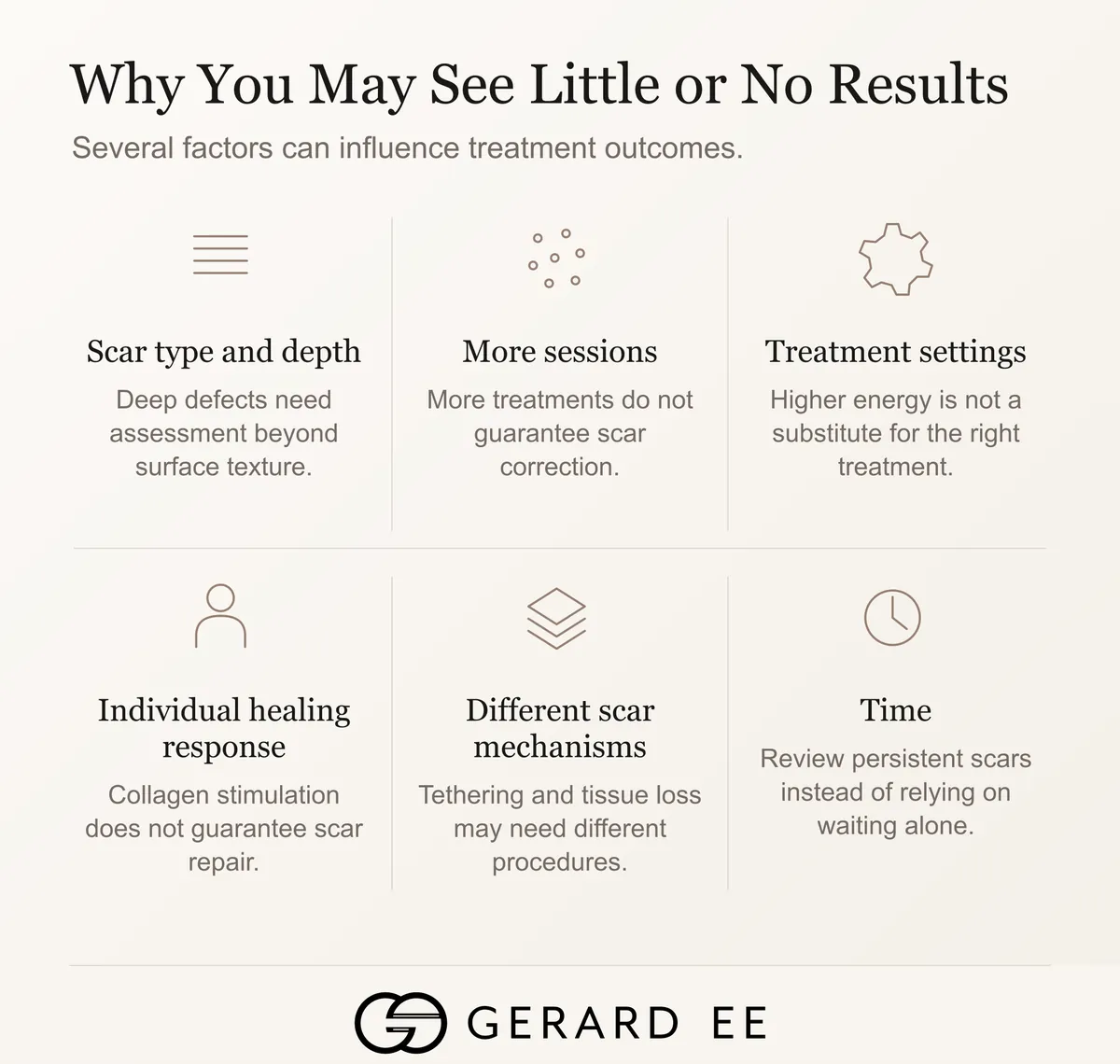
Part of the dissatisfaction with any scar treatment arises from misjudging the timeline. New collagen is laid down after each radiofrequency session and then matures over the weeks and months that follow. The gradual nature of that change makes it easy to miss from one day to the next, and an assessment made a few weeks after treatment often produces a falsely negative impression. Most of the visible improvement from a properly dosed course appears over three to six months, so patience is not encouragement but a component of how the treatment acts. When a patient reports at four weeks that nothing has happened, I have found the observation accurate about that moment and premature as a verdict on the course.
How to tell whether Sylfirm X is working on your acne scars
Because progress is slow, it requires measurement rather than casual inspection. Standardised photographs taken at each visit in the same lighting and from the same angle make honest comparison possible, and grading scales such as ECCA add a measure of objectivity. A review of those records across three to six months, rather than daily inspection in the mirror, produces a considerably more accurate picture. Measurement also separates a change in tone from a change in depth, since a device may be clearing pigment and improving brightness while leaving the scar contour unchanged. Photographs taken under angled light are the most informative of the set, because a depressed scar declares itself through the shadow it casts.
Why under-dosed RF microneedling leaves deep acne scars unchanged
The result of radiofrequency treatment depends on the energy delivered into the dermis, and a threshold exists below which a deep scar is not meaningfully remodelled. A device with a low maximum power, or a capable device run at conservative settings, delivers a stimulus that falls short of that threshold. Repetition of a sub-threshold treatment does not accumulate into an adequate dose, since every session under-delivers in the same way. Delivering adequate energy per session is therefore not optional for deep scars, and it is the factor most often missing when a course produces little change.
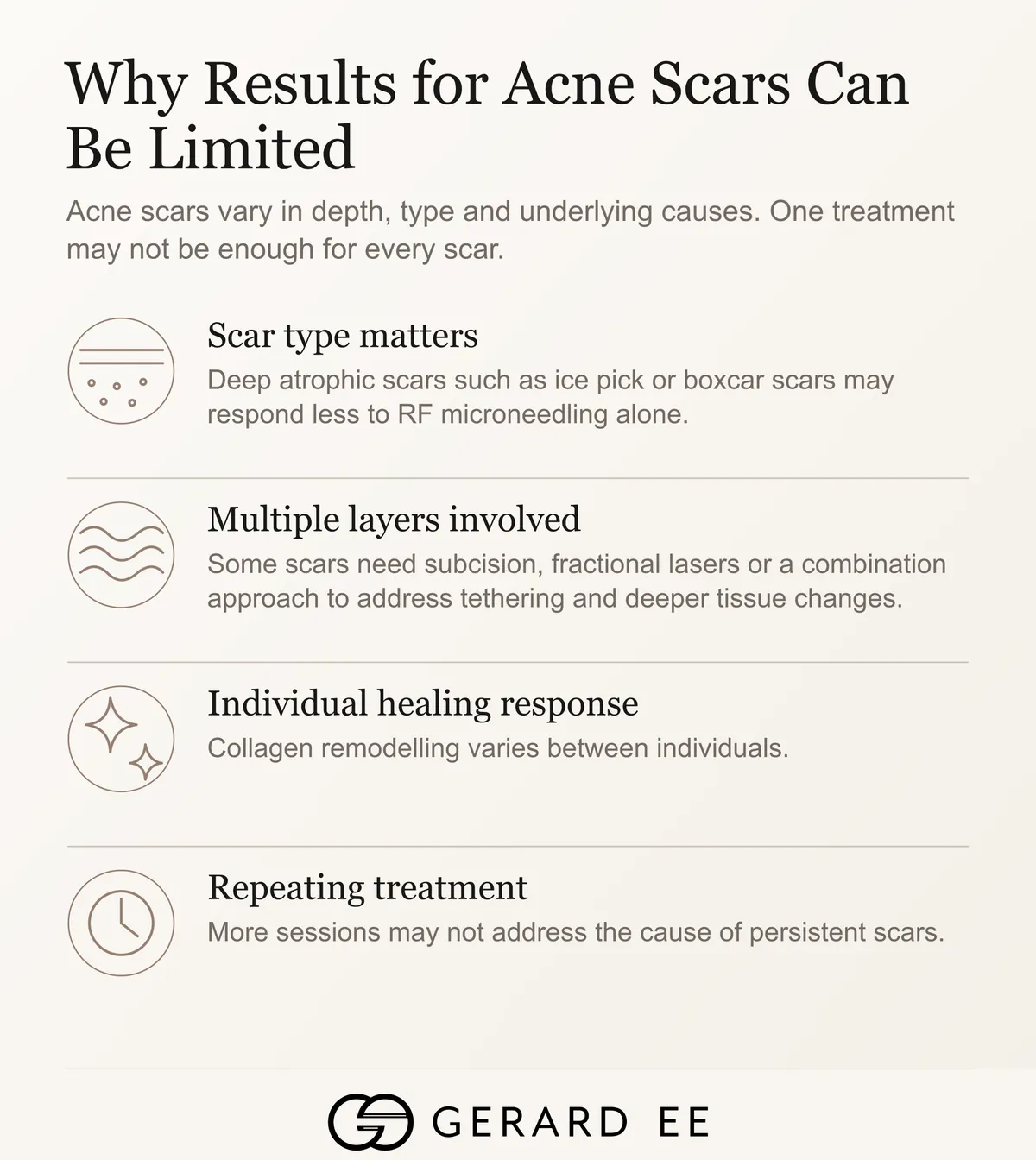
Power sets the ceiling on what a device can deliver. Within that ceiling, settings such as pulse width and the number of sessions also influence the result4, but no setting lifts a low-power device past its own maximum. That threshold cannot be read off a specification sheet for an individual patient, so an adequately powered device is a starting condition rather than a guarantee.
Why stacking acne scar treatments in one visit under-doses each of them
A related error is attempting too much within a single visit. Combining subcision, radiofrequency, laser and injectables in one sitting divides the tolerable quantity of energy and inflammation between them, so each individual treatment is under-dosed. The skin also has a limited capacity to heal well from several aggressive insults delivered at once. I use one modality per session and rotate the modality at the next, so each is delivered at effective intensity and different devices reach different depths over the course.
Controlling active acne before restarting acne scar treatment
A course also stalls where the underlying acne was never brought under control. New scars continue to form from ongoing breakouts while older ones are being treated, and inflamed, acne-prone skin tolerates less energy per session. Stabilising the acne first, whether with non-insulated Secret RF that calms the oil gland, AGNES radiofrequency or appropriate medical therapy, is a prerequisite rather than an optional extra. Treating scars on skin that is still breaking out is therefore a frequent reason a course disappoints.
The corrective acne scar plan after a stalled Sylfirm X course
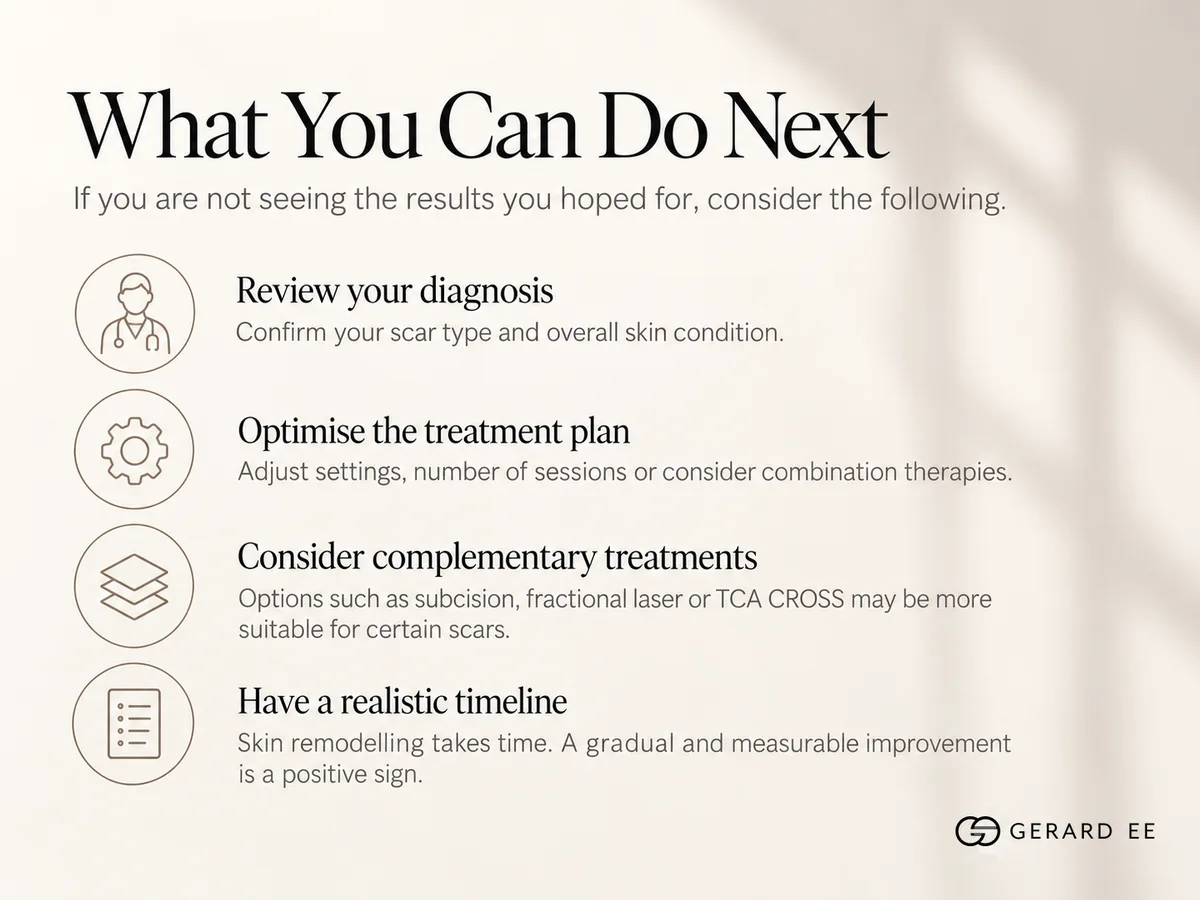
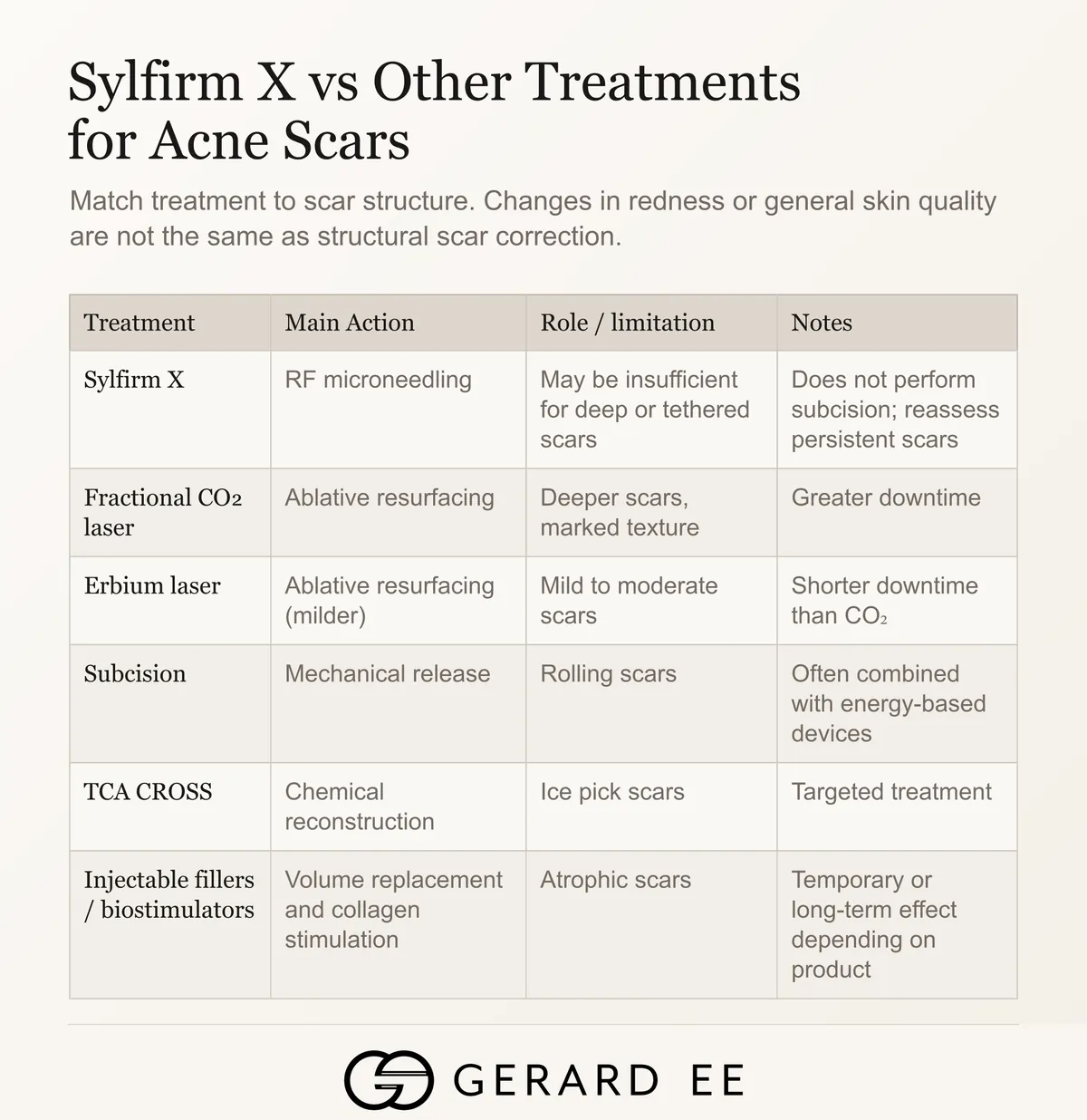
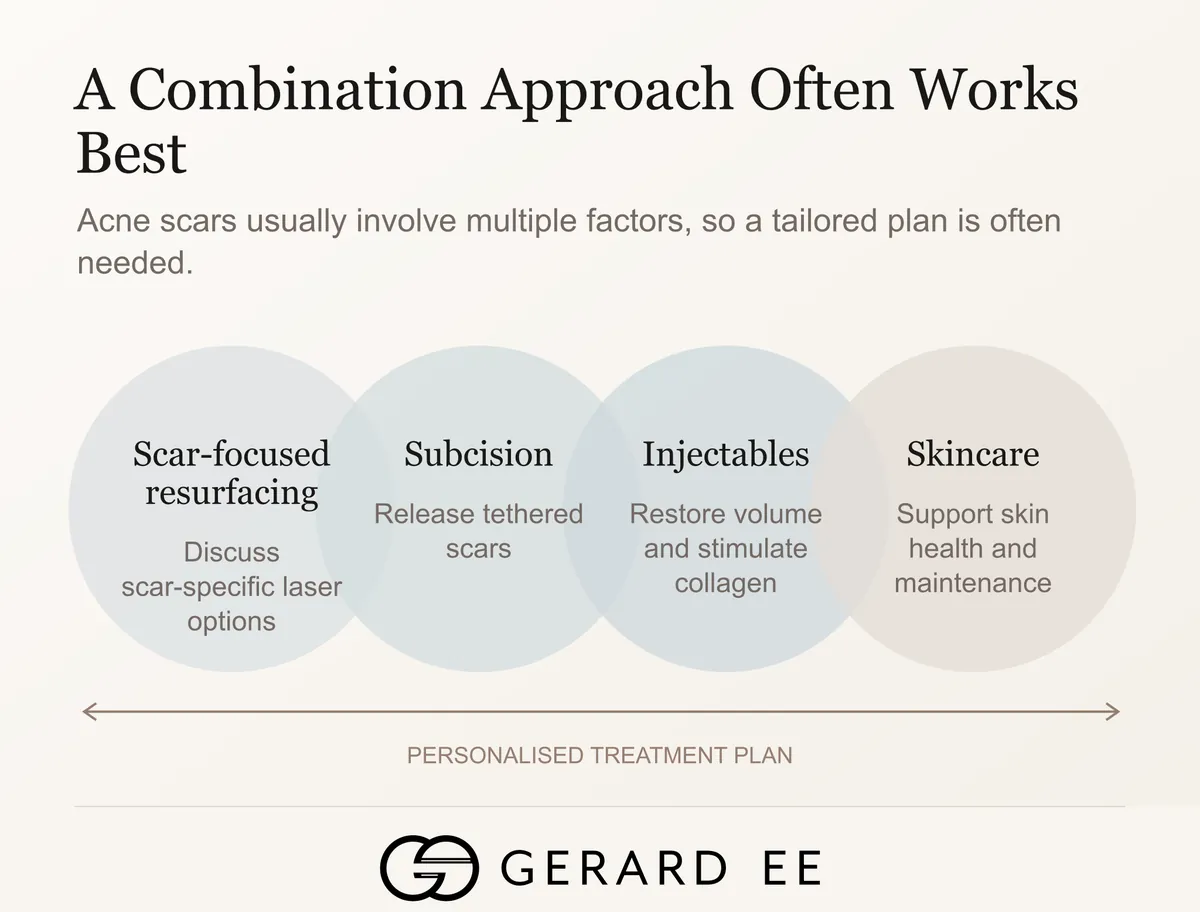
Turning a stalled result around begins with a fresh assessment of the scar types present and of the skin tone. The plan is then rebuilt around an adequately powered device, Secret RF or the insulated Infini, with subcision added for tethered rolling scars, fractional CO2 for resurfacing, TCA CROSS for ice pick scars, and biostimulators where volume has been lost. Sessions are spaced four to six weeks apart, the acne is controlled first, and progress is recorded with standardised photographs. Movement in scars that had remained static usually follows the shift from a single under-powered approach to a properly dosed and well-sequenced combination. A network meta-analysis of 56 randomised trials found that combination therapies generally outperformed single treatments for moderate to severe atrophic scars6, and matching treatment to scar type is the consistent recommendation of the evidence reviews78. Each treatment, scar type by scar type, is covered in the acne scar treatment guide.
Seeking a second opinion after Sylfirm X
A degree of preparation makes a second-opinion consultation considerably more useful. Bringing a record of the treatments and settings received, the dates and any earlier photographs allows a second doctor to establish what has been tried. It is reasonable to ask about the maximum power and treatment depth of the devices proposed, how far apart the sessions will be spaced, and how each scar type present will be addressed. A clinic that examines the skin in person and explains its reasoning at the level of mechanism, rather than brand, is a reasonable indication of quality. The record I most often wish a patient had brought is the settings used in the previous course, because without them an under-dosed plan and an unsuitable device look identical.

What the research shows on RF energy and acne scar results
The published literature is consistent with each of these four reasons for an absent result. The energy delivered is repeatedly identified as a key determinant of response in studies of energy-based scar treatment. In one 121-patient analysis, scar improvement was significantly greater in the high-energy group than in the low-energy group5, and a low-power device therefore underperforms on deep scars whatever the session count. The modalities patients are switched to are themselves well evidenced, since fractional RF microneedling3 and microneedling9 both improve atrophic scars when used properly. Against fractional CO2, needling-based treatments showed no significant difference in mean scar-score reduction, with a significantly lower risk of post-inflammatory hyperpigmentation10. These trials report averages across whole cohorts, so they establish what a category of treatment achieves rather than what an individual scarred face will achieve.
What the trials suggest changing after Sylfirm X
The same body of trials indicates which elements of a stalled plan should change. Because subcision combined with energy outperforms either component alone for tethered scars1112, a plan built on a single gentle device was always likely to stall on rolling and boxcar scars. The 413-patient analysis also found the combination added nothing for ice pick scars, which need TCA CROSS instead12. Because a properly powered RF device can match ablative laser13, the correction is usually a better-matched, adequately powered device used in combination rather than more sessions of the same one. The evidence therefore addresses the design of the plan rather than its duration.
How long to give an acne scar plan after switching from Sylfirm X
Once a better-matched plan is in place, it warrants enough time to work before it is judged. Because collagen remodelling is gradual, a fair assessment requires a full course of several sessions spaced four to six weeks apart, followed by review at around three to six months, when the collagen laid down has matured. An assessment made at one or two sessions will almost always read as falsely negative, since the deepest remodelling remains under way. A corrected plan should nonetheless show measurable change over that window. Where a well-spaced, adequately powered, root-cause-first approach yields no improvement over six months, the diagnosis and the technique are reassessed rather than the course simply continued. I cannot reliably predict at a first consultation how much depth correction a particular scar will show, which is why the review point is fixed in advance.
Warning signs an RF microneedling plan for acne scars will not deliver
A small number of signs, recognised early, predict that a scar plan is unlikely to deliver:
- Not being told the maximum power of the device used, or being treated with a device whose power sits at the low end, since for deep scars that specification matters most.
- A schedule of weekly or fortnightly treatment, which does not allow collagen to mature between sessions.
- Promises of complete scar removal, since honest treatment offers significant and gradual improvement rather than erasure.
- A single machine applied to every scar type, since a mixed face requires a combination of modalities.
- No in-person assessment that maps the scar types present, or no step to control active acne first, which indicates a plan built around a product rather than the patient.
- Treatment without standardised photographs, which makes genuine progress impossible to judge.
A plan that avoids these errors is far more likely to move scars that a previous course left unchanged, although no combination of those elements guarantees a particular degree of correction.
When to seek review promptly after RF microneedling
Persistent or worsening pain, blistering, discharge, spreading redness, numbness or an unexpected change in facial contour warrants assessment. Avoid further treatment over an unexplained reaction until it has been reviewed. The FDA has reported serious complications with certain uses of RF microneedling and advises seeking care for concerns after treatment14.
For information about the services available here, see the RF microneedling guide or contact the clinic.
The bottom line on Sylfirm X no results
The common reasons for an absent result are an underpowered device, sessions spaced too closely for collagen to rebuild, and untreated acne. Switching to a higher-power, well-spaced, root-cause-first plan usually moves the same scars. I have not found a session count that compensates for a power ceiling on deep scars, which is why the recommendation after a stalled course is a different device rather than more of the same. The degree of depth correction still varies between patients and is best assessed in person. If the previous course was subcision rather than RF, the failure modes are different and are covered in why subcision made my acne scars worse. Session prices are on the acne scar treatment cost page, and the complete picture across every scar type is in my acne scar treatment guide for Singapore.


Dr Gerard Ee, Aesthetic Doctor in Singapore
Dr Gerard Ee is an aesthetic doctor in Singapore and the Medical Director of his practice at 50 Raffles Place. He graduated from St George’s, University of London, trained in surgery at Singapore General Hospital and the National University Hospital, and holds the MRCS (Edinburgh) and a postgraduate diploma in practical dermatology from Cardiff University.
He has practised aesthetic medicine since 2012, is the author of sixteen peer-reviewed papers, and writes and medically reviews every article on this site. Read more about Dr Gerard Ee.

Book a consultation with Dr Gerard Ee at The Clifford Clinic
Dr Gerard Ee consults at The Clifford Clinic, 50 Raffles Place, Singapore. Consultations are by appointment. Message the clinic on WhatsApp, or call 6532 2048.
Sylfirm X acne scar FAQs
Why am I not seeing results from Sylfirm X on my acne scars?
The usual reasons are that the device is underpowered for deep scars, at 16 W against 25 W for Secret RF and around 50 W for Infini, that sessions were too frequent for collagen to rebuild, or that active acne was never controlled. Tone may improve while scar depth remains unchanged, which accounts for skin that looks better and scars that look the same.
Does doing RF microneedling every week or two improve results?
It usually produces the opposite of the intended effect. Sessions at that frequency do not allow enough time for collagen to build, and each treatment is often under-dosed. Sessions are best spaced roughly four to six weeks apart, and a longer interval is preferable to a shorter one.
Did Sylfirm X help the skin at all?
Sylfirm X may well have helped, although not in the respect being tracked. It commonly improves pigmentation, redness, pores and overall tone. Those are genuine benefits, and they are different from lifting a depressed scar, which is why tone and depth are best judged separately.
What should be used instead for depressed acne scars?
A higher-power approach is indicated, with Secret RF or the insulated Infini as the backbone, subcision, fractional CO2 and biostimulators added, and the acne controlled first. Outcomes vary with the scar types and the skin, and improvement is gradual rather than immediate.
How many sessions should I have had before deciding Sylfirm X did not work?
More than three, properly spaced, then a review at three to six months. In a real-world series of 126 patients, most received four or more sessions of fractional microneedle RF, and scar scores kept improving as sessions increased4. Remodelling also continues for months after each session1. If a well-spaced course on an adequately powered device shows nothing at six months, the diagnosis and technique are reassessed rather than the course extended.
References
Sources cited on this page
- Tan MG, Jo CE, Chapas A, Khetarpal S, Dover JS. Radiofrequency microneedling: a comprehensive and critical review. Dermatol Surg. 2021;47(6):755-761. PubMed 33577211.
- Efficacy of microneedle fractional radiofrequency combined with topical insulin for facial atrophic acne scars: a split-face randomised trial. J Cosmet Dermatol. 2025. PubMed 39970082.
- Fractional radiofrequency microneedling as a monotherapy in acne scar management: a systematic review of current evidence. Clin Cosmet Investig Dermatol. 2025. PubMed 39781098.
- Ding Z, Guo Y, Guo Y, et al. Efficacy and safety of fractional microneedle radiofrequency for atrophic acne scars: a real-world clinical study of 126 patients. Lasers Surg Med. 2024;56(2):150-164. PubMed 38282120.
- Li B, Ren K, Yin X, She H, Liu H, Zhou B. Efficacy and adverse reactions of fractional CO2 laser for atrophic acne scars and related clinical factors: a retrospective study on 121 patients. J Cosmet Dermatol. 2022. PubMed 35181995.
- Ou Y, et al. Laser, microneedling, and combination therapies for moderate to severe acne atrophic scars: a systematic review and network meta-analysis. Aesthetic Plast Surg. 2026. PubMed 42429955.
- Kim EY, et al. Evidence-based management of atrophic acne scarring. Arch Dermatol Res. 2023;316(1):19. PubMed 38059974.
- Salameh F, Shumaker PR, Goodman GJ, et al. Energy-based devices for the treatment of acne scars: 2022 international consensus recommendations. Lasers Surg Med. 2022;54(1):10-26. PubMed 34719045.
- Microneedling in the treatment of atrophic scars: a systematic review of randomised controlled trials. Int Wound J. 2021. PubMed 33538106.
- Batool A, Abbas MS, Mahin FE, et al. Comparing fractional CO2 laser and needling-based modalities in facial acne scar treatment: a comprehensive systematic review and meta-analysis. Lasers Med Sci. 2026;41(1):124. PubMed 42334669.
- Abdelwahab AA, Omar GAB, Hamdino M. A combined subcision approach with either fractional CO2 laser or cross-linked hyaluronic acid versus subcision alone in atrophic post-acne scars. Lasers Med Sci. 2022;38:20. PubMed 36564573.
- Li X, Fan H, Wang Y, et al. Fractional carbon dioxide laser combined with subcision for the treatment of three subtypes of atrophic acne scars: a retrospective analysis. Lasers Med Sci. 2023;38:195. PubMed 37639055.
- Qu L, Sha S, He C, et al. Comparison of non-insulated microneedle fractional radiofrequency and ablative fractional carbon dioxide laser for facial atrophic acne scars. Acta Derm Venereol. 2025. PubMed 40568948.
- U.S. Food and Drug Administration. Potential risks with certain uses of radiofrequency (RF) microneedling. Safety communication, 15 October 2025.
Device specifications
- U.S. FDA 510(k) Summary K213612 (SYLFIRM X, ViOL Co., Ltd.): output power max 16 W at 50 Ω, 2 MHz, bipolar RF.
- U.S. FDA 510(k) Summary K170325 (Secret RF, Ilooda Co., Ltd.): max power 25 W at 500 Ω, 2 MHz, needle depth 0.5–3.5 mm.
- U.S. FDA 510(k) K121481 (INFINI, Lutronic Inc.): insulated RF microneedling, 49-pin handpiece, maximum RF generator output approximately 50 W.
This page is written from published research and from clinical experience in Singapore since 2012. It is for general education, not medical advice. Whether a treatment suits you, what it may achieve and what it may risk can only be established at a consultation. Dr Gerard Ee is the Medical Director of The Clifford Clinic, a private clinic in Singapore, and treatments discussed on this site are provided commercially.