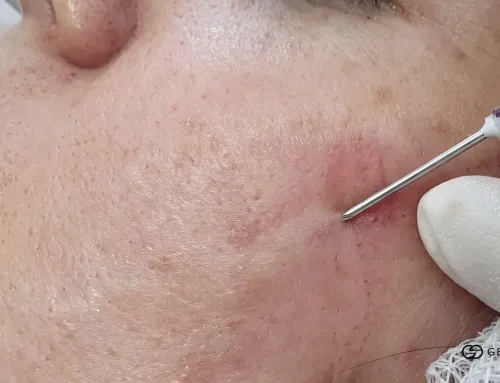
Home›Blog›Acne›Acne Scars & Marks›Vbeam Laser in Singapore for Red Acne Marks, Q-Switch for Brown Marks
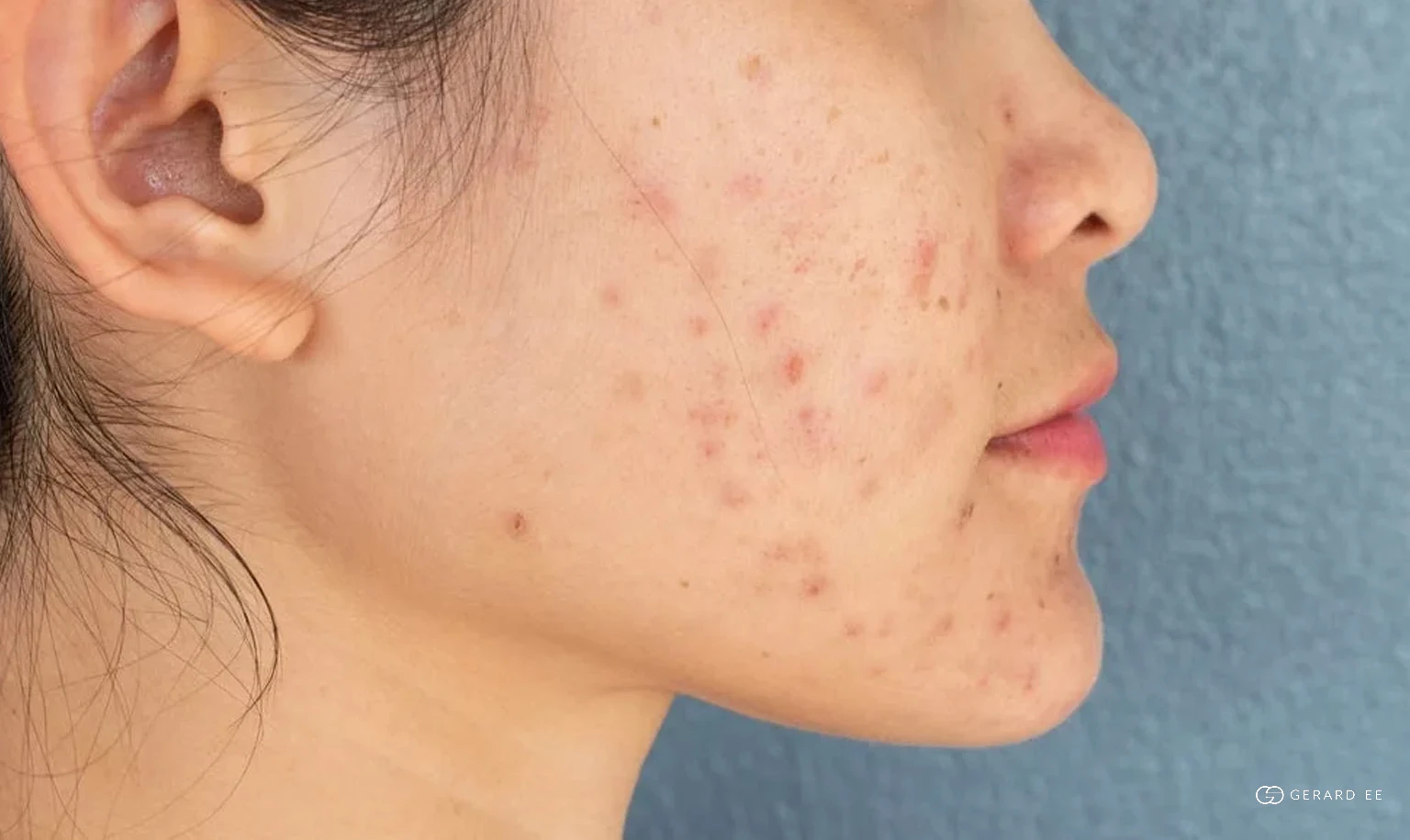
Vbeam laser in Singapore is the pulsed dye laser used for the flat red marks (post-inflammatory erythema, PIE) that acne leaves behind; the Q-switch laser is used for the flat brown marks (PIH). Neither is a scar treatment, and both work best once active acne is under control.
Dr Gerard Ee consults at The Clifford Clinic, 50 Raffles Place, Singapore.
Clearing acne is only part of the picture, as breakouts often leave marks behind, including the flat red marks known as post inflammatory erythema and the flat brown marks known as post inflammatory hyperpigmentation. The reassuring news is that these are not scars, and lasers treat them effectively once active acne is under control. This guide explains the lasers used for acne marks, primarily the Vbeam pulsed dye laser and the Q Switch Nd:YAG, along with the laser based options that help stabilise active acne first.
My quick answer
Red acne marks are post inflammatory erythema, caused by dilated blood vessels, and they respond to the Vbeam pulsed dye laser, which is suitable for sensitive skin and pinker marks. Brown acne marks are post inflammatory hyperpigmentation, more common in Asian skin, and they respond to the Q Switch Nd:YAG pigment laser. Both are treated once active acne has settled, and laser based options such as Gold Photothermal Therapy and the long pulsed Nd:YAG can help stabilise the acne first. The choice of laser depends on whether the primary concern is redness, brown pigment, or active acne that still requires calming. Red marks are not scars, but they often sit alongside depressed scars, and those are treated separately, as explained on my acne scar removal in Singapore page.
What I look for during the consultation
The assessment confirms that the marks are truly flat redness rather than brown pigment or a scar, as each requires a different treatment approach. The duration of the marks, whether they are still being reactivated by ongoing breakouts, and the sensitivity of the skin are all relevant factors. Whether the acne remains active is also important, as redness is treated only after breakouts have settled. The decision involves not only how to treat but also when to treat, as timing significantly influences the outcome.
How I classify red marks
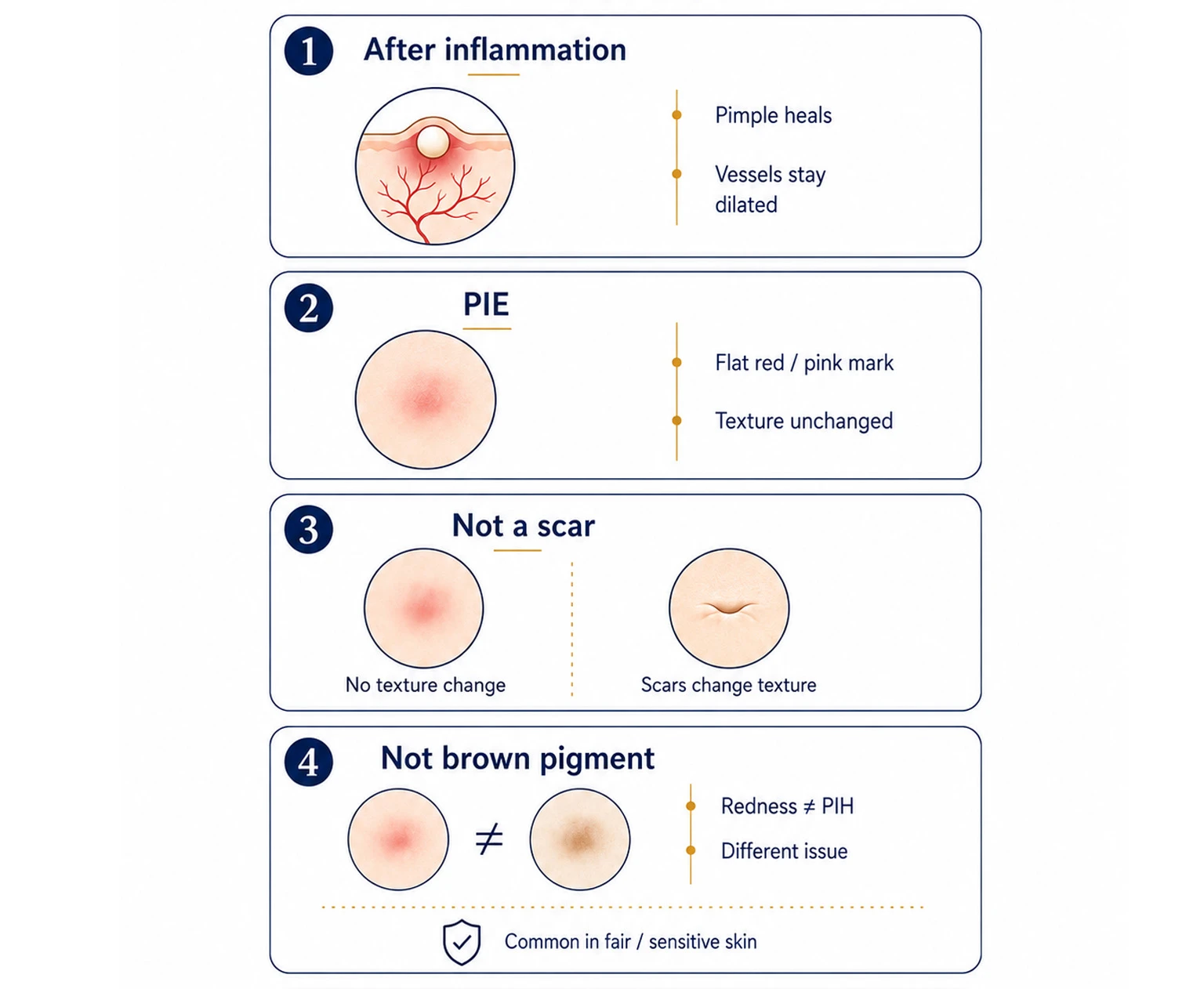
When a pimple becomes inflamed, the small blood vessels in the area dilate, and after the pimple heals, they can remain dilated for some time, leaving a flat red or pink patch. This is known as post inflammatory erythema. It is not a scar, as the texture remains unchanged, and it differs from brown pigmentation, which is a separate pigment issue. Red marks are particularly common in fair and sensitive skin.
Dr Gerard Ee’s clinical note
With red marks, the decision often involves not just how to treat, but when. If the skin is still actively breaking out, it is usually preferable to settle the acne first, as treating redness on top of ongoing inflammation is counterproductive. Once the acne is quiet, the redness becomes a clear and treatable target, and that is when a vascular laser earns its place.
When I would consider Vbeam, and when I would wait
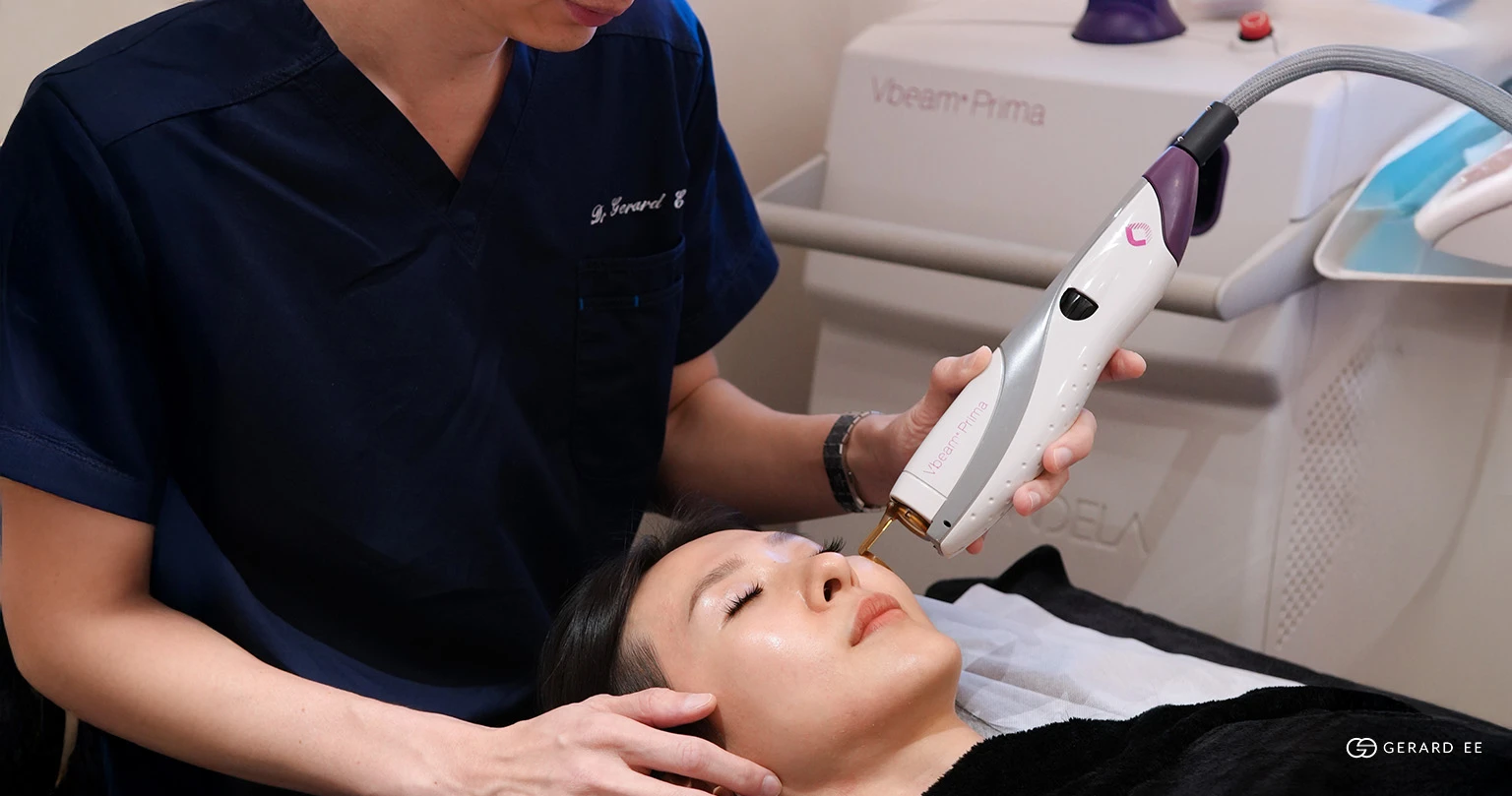
A vascular laser such as Vbeam targets the dilated blood vessels responsible for the redness, helping them settle so that the mark fades. It is particularly suitable for sensitive skin and for marks that are predominantly pink. For browner marks, a pigment laser is the more appropriate tool, which is why distinguishing between red and brown marks is important from the outset. It is preferable to wait rather than treat while new pimples continue to appear, as each fresh breakout generates new redness; therefore, the acne should be controlled first.
Common mistakes I see
The biggest mistake is picking, as squeezing re inflames the area and keeps the blood vessels dilated, prolonging the redness far longer than necessary. Another error is panicking and applying aggressive treatments to flat redness that would often fade on its own with time. Treating redness while acne is still active simply means chasing a moving target. Harsh scrubs and irritating active ingredients also perpetuate the redness.
What you can realistically expect
Red marks usually respond over a series of vascular laser sessions, with gradual fading rather than an overnight change. Many would fade on their own with time, and treatment accelerates that process once the acne is controlled. Protecting the skin from further irritation, and from the sun using a lightweight noncomedogenic product, supports the outcome. A realistic number of sessions is established at the initial consultation.
When to see a doctor
It is worth having red marks assessed if they persist for more than a few months, if they continue to be reactivated by breakouts, or if there is a desire to address them sooner. An assessment also clarifies whether the condition involves red marks, brown marks, or a scar, and whether the acne still requires control first.
Red marks and brown marks are not the same
Red marks and brown marks are often grouped together as post acne marks, but they are different issues requiring different treatments. Post inflammatory erythema, the red or pink mark, is a vascular concern caused by dilated blood vessels and responds to a vascular laser. Post inflammatory hyperpigmentation, the brown mark, is a pigment concern caused by excess melanin and responds to a pigment laser. The two can appear together, and the same breakout can leave both. Distinguishing between them is important, as a vascular laser does little for brown pigment, and a pigment laser does little for redness.
Supporting red marks between sessions
Between treatments, the goal is to avoid anything that keeps the blood vessels inflamed. This means being gentle with the skin, avoiding harsh scrubs and aggressive active ingredients that cause irritation, and resisting the urge to pick. Keeping the skin calm and well cared for gives the redness the best chance to settle and supports the results of any laser sessions. Protecting the skin from excessive sun exposure also helps, using a lightweight noncomedogenic product so that protection does not come at the cost of clogged pores.
What post-acne redness means for your skin
Post inflammatory erythema is a sign that the skin has been inflamed, not structurally damaged, which is why it remains flat and tends to settle over time. It is most common in fair and sensitive skin, where blood vessels are more visible. Understanding that the redness is vascular and temporary in nature helps clarify why a vascular laser is the appropriate tool, and why gentleness between sessions is so important for allowing it to fade.
Supporting your skin while redness settles
While red marks settle, a calm, simple routine helps more than an aggressive one. Gentle cleansing, a lightweight noncomedogenic moisturiser, and avoiding harsh active ingredients keep the skin from remaining inflamed. Sun protection with a lightweight noncomedogenic product prevents the marks from being aggravated. Leaving the skin alone, rather than picking, is the single most effective measure, as picking restarts the inflammation that caused the redness in the first place.
Vbeam pulsed dye laser for red marks in detail
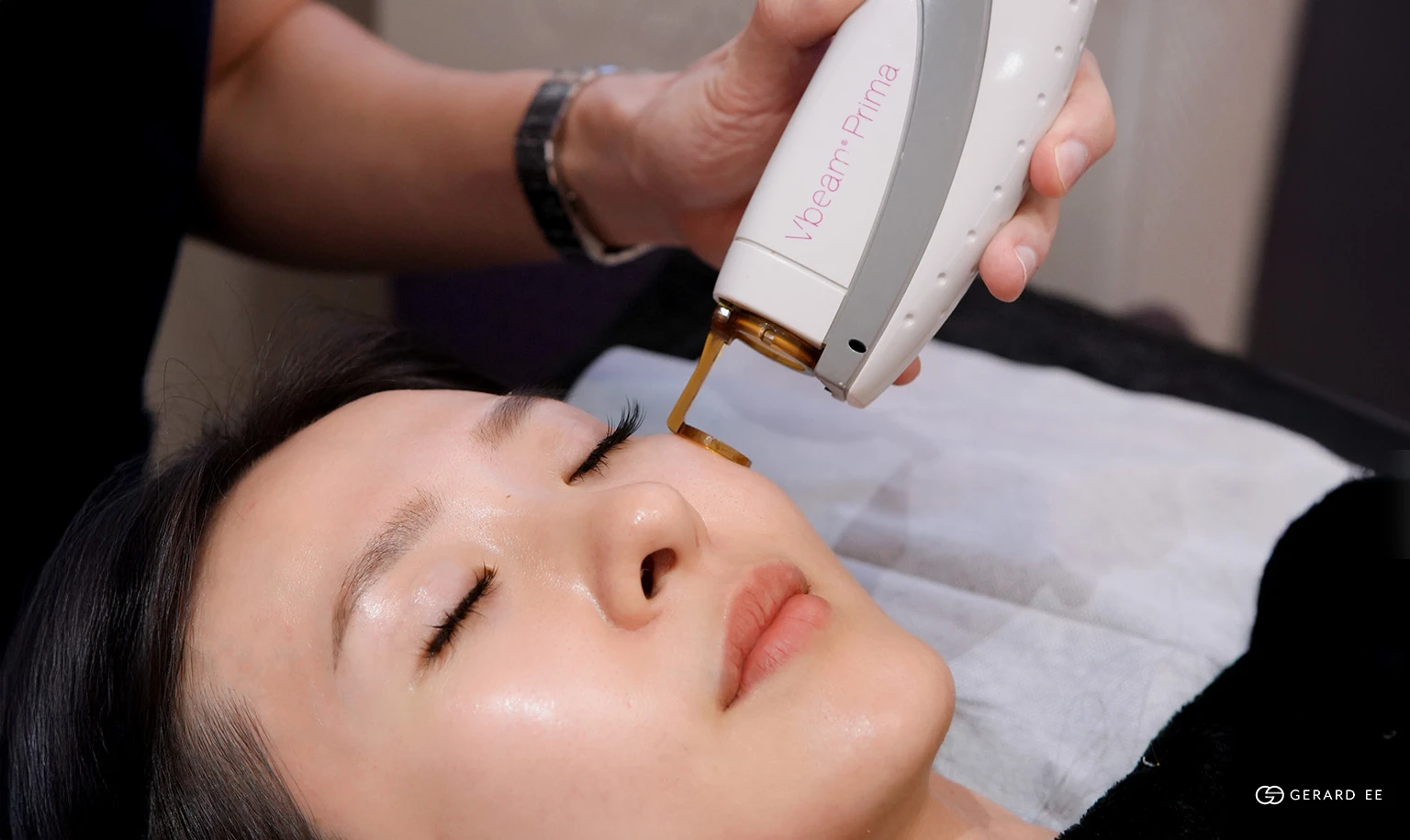
Vbeam is a pulsed dye laser that emits a 595 nm wavelength, which is strongly absorbed by oxyhaemoglobin, the pigment in red blood cells. When the dilated vessels that cause post inflammatory erythema absorb this light, they are gently heated and encouraged to settle, which fades the redness without damaging the surrounding skin. Because it is selective for blood vessels and is paired with skin cooling, Vbeam is well tolerated and suitable for sensitive skin and pinker marks. Randomised studies of the pulsed dye laser support its use for post acne erythema, whether used alone or alongside other measures. As always, the redness is treated once active acne is under control. The pulsed dye laser light is also absorbed by porphyrins produced by acne bacteria, which gives it a mild antibacterial effect on active acne alongside its work on the redness.
Q-Switch Nd:YAG for brown marks and skin tone
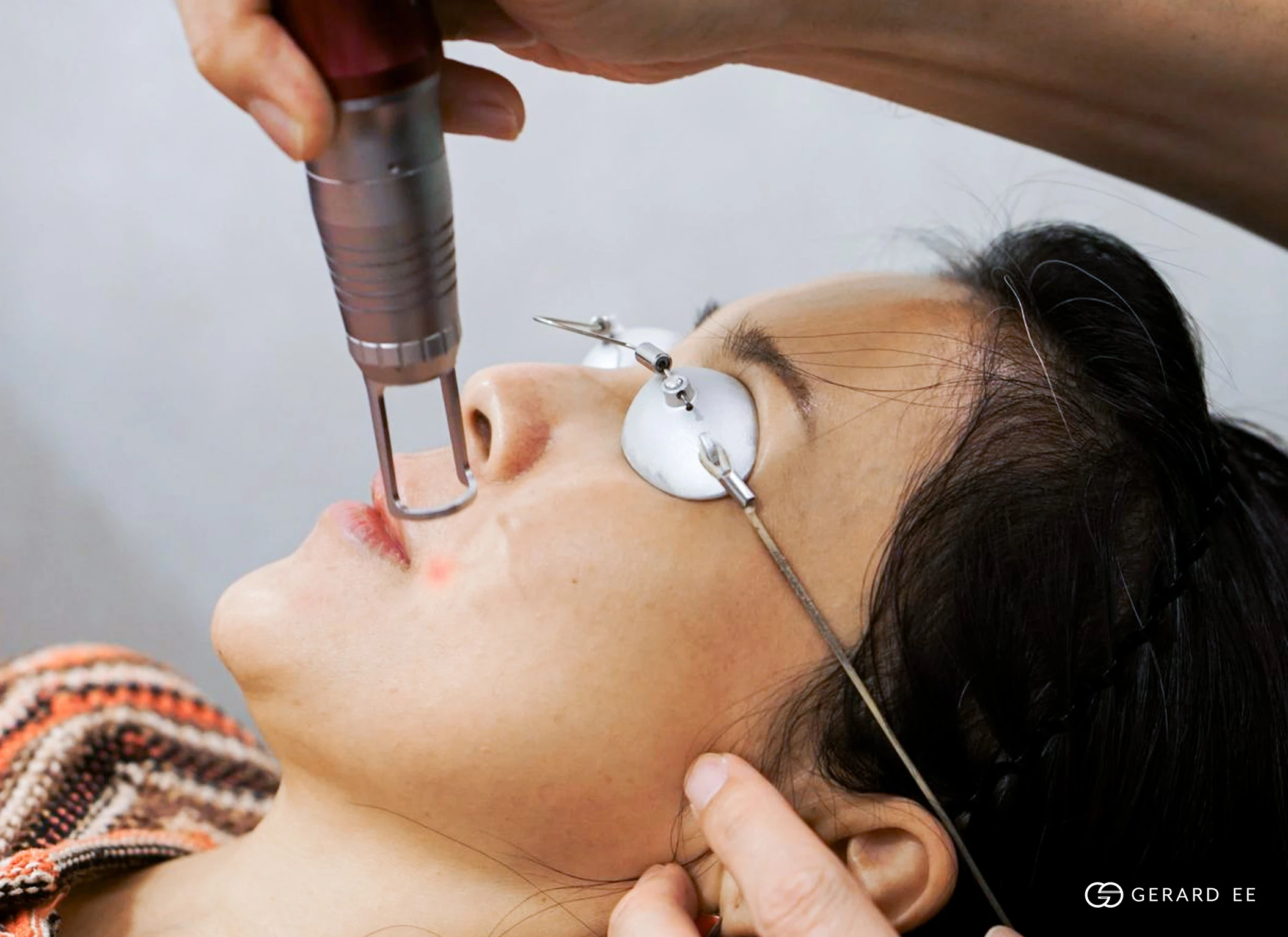
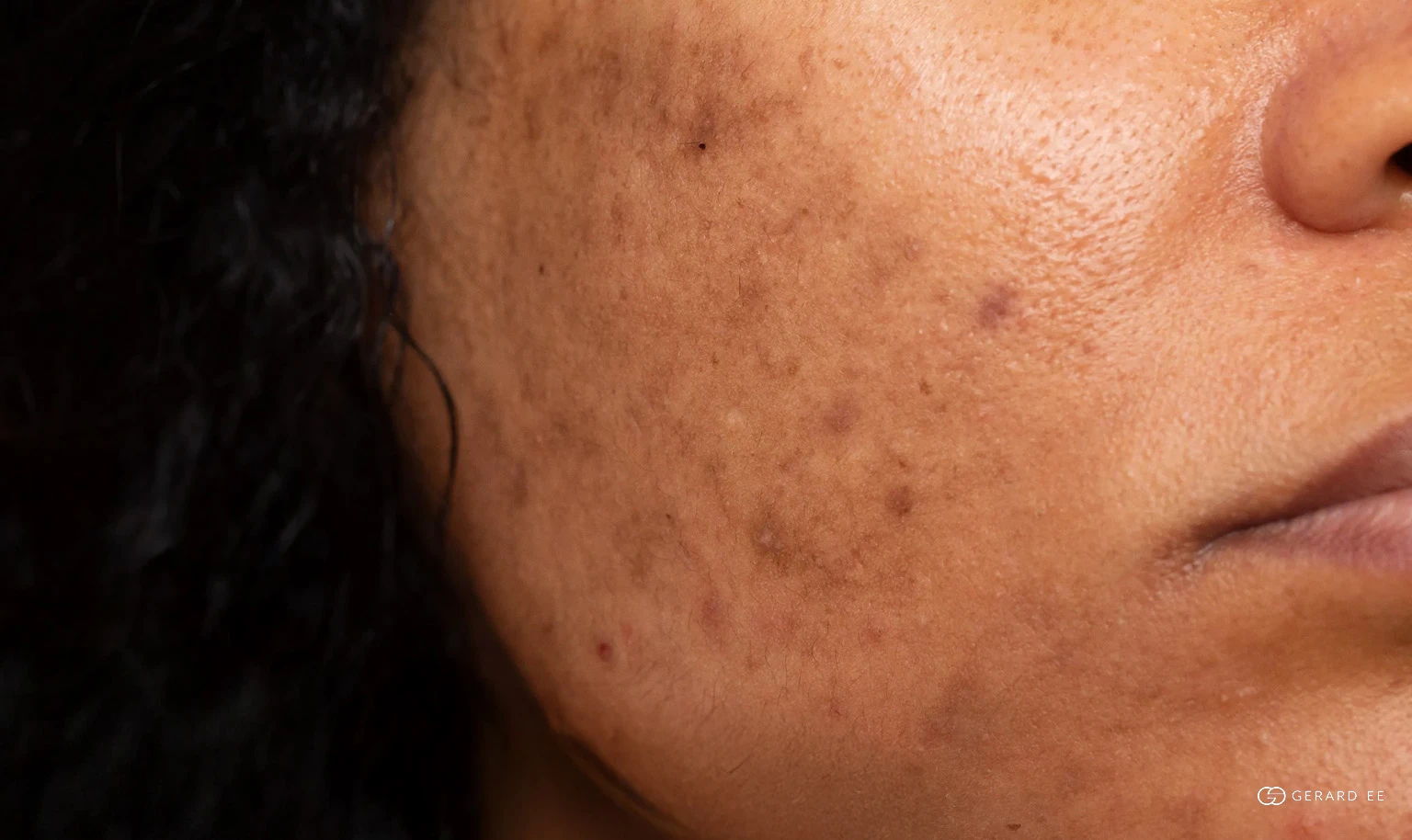
The Q Switched Nd:YAG laser delivers extremely short, high energy pulses, usually at 1064 nm and sometimes 532 nm, that shatter excess pigment through a photoacoustic effect so the body can clear it. This makes it the preferred tool for brown post inflammatory hyperpigmentation, and the published experience in Asian patients supports a low fluence approach to reduce the risk of provoking further pigmentation. It also helps refine overall skin tone and minimise the appearance of pores.
One important point is that the Q Switch laser is not a treatment for active acne, as it does not deliver the sustained heat needed to act on the sebaceous glands. When used with a thin carbon lotion, the Q Switch laser also clears sebum and debris from the pores and reduces acne bacteria, which is why it can help refine the skin as well as lift pigment. A more detailed discussion of pigment prone skin is available in the guide to brown acne marks.
Gold PTT and long-pulsed Nd:YAG for acne stabilisation
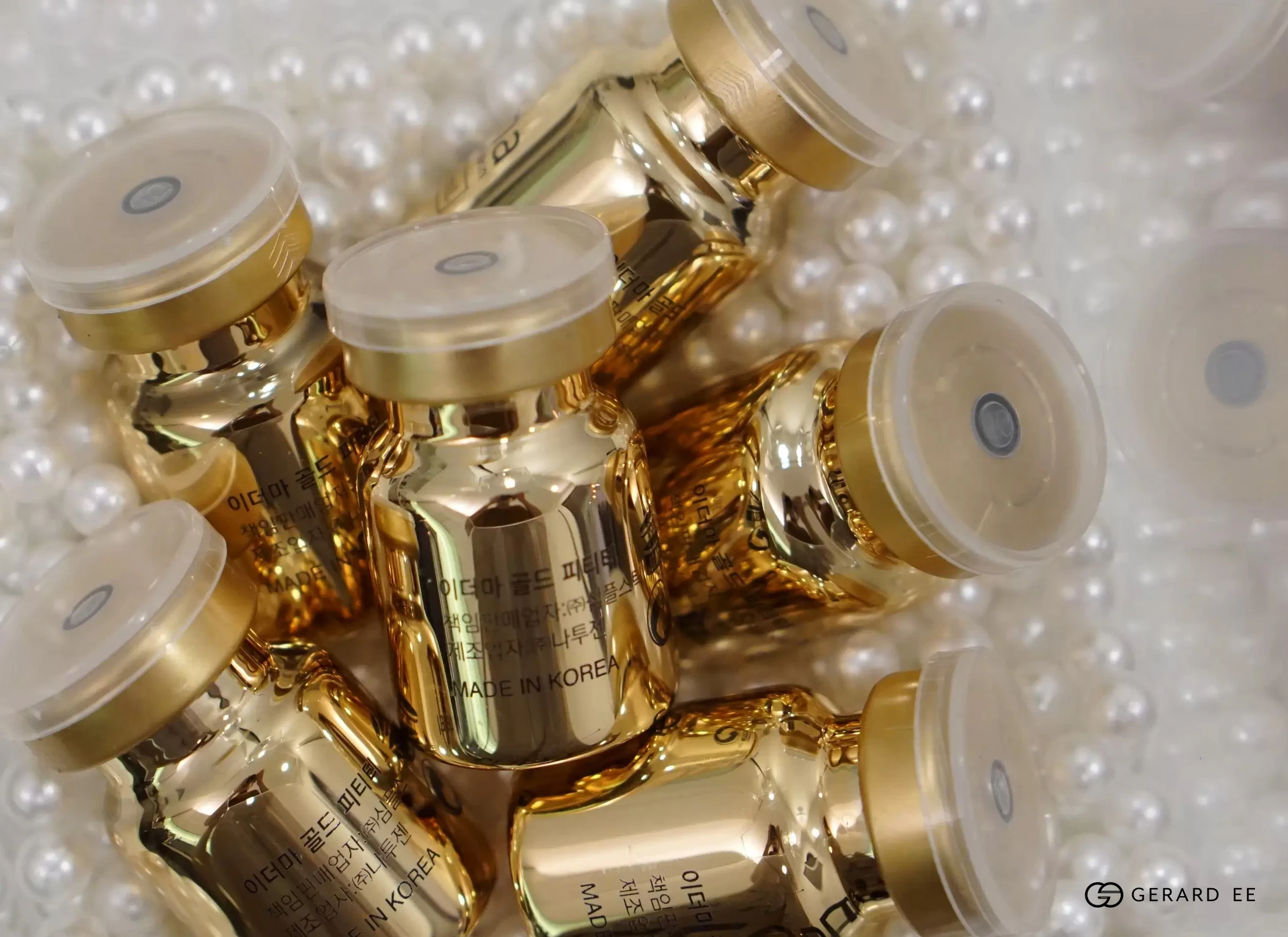
Before marks can be treated effectively, active acne needs to be stable, and two laser based options can assist with this. Gold Photothermal Therapy uses light absorbing gold microparticles, worked into the follicles and then heated with a long pulsed 1064 nm Nd:YAG laser, to reduce the activity of the sebaceous glands; a randomised controlled trial supported this gold microparticle photothermal approach for inflammatory acne. The long pulsed 1064 nm Nd:YAG laser also has a calming, anti inflammatory effect on the skin and can help settle active inflammatory acne. The way Gold Photothermal Therapy reduces sebaceous gland activity is, in its aim, similar to how isotretinoin lowers sebum production, but it is achieved externally and without systemic medication. Stabilising the acne first, with these or with a broader medical plan, is what allows marks to be treated cleanly afterwards rather than chasing a moving target.
What the evidence shows
The treatment of red post acne marks is well supported by clinical research. Post inflammatory erythema is a vascular change, and the pulsed dye laser, the vascular laser used in Vbeam, has been shown in controlled studies to improve post acne redness, whether used alone or combined with other measures. True scars are a different problem from redness, and are covered in the acne scar treatment guide. As each fresh breakout generates new redness, both the evidence and clinical practice point to controlling active acne first, then treating the residual redness. Gentle skincare and daily sun protection support the outcome between sessions.

Settle stubborn post-acne redness the right way.
The Clifford Clinic, 50 Raffles Place, Singapore Land Tower. Call (65) 6532 2048 or WhatsApp (65) 8318 6332 to arrange a consultation.
Related reading
- Acne Treatment Singapore: How I Choose (Dr Gerard Ee)
- Vbeam (Dr Gerard Ee)
- Q-Switch Laser (Dr Gerard Ee)
- Gold PTT for Acne (Dr Gerard Ee)
- Q-Switch Laser (Dr Gerard Ee)
- Acne Scar Removal (Dr Gerard Ee)
- Vbeam Laser Treatment

Dr Gerard Ee, Aesthetic Doctor in Singapore
Dr Gerard Ee is an aesthetic doctor in Singapore and the Medical Director of his practice at 50 Raffles Place. He graduated from St George’s, University of London, trained in surgery at Singapore General Hospital and the National University Hospital, and holds the MRCS (Edinburgh) and a postgraduate diploma in practical dermatology from Cardiff University.
He has practised aesthetic medicine since 2012, is the author of sixteen peer-reviewed papers, and writes and medically reviews every article on this site. Read more about Dr Gerard Ee.
Book a consultation with Dr Gerard Ee at The Clifford Clinic
Dr Gerard Ee consults at The Clifford Clinic, 50 Raffles Place, Singapore. Consultations are by appointment. Message the clinic on WhatsApp, or call 6532 2048.
Frequently asked questions
Are red acne marks the same as scars?
No. Red marks are post inflammatory erythema, a flat change in colour resulting from dilated blood vessels. Scars involve a change in skin texture. Red marks are not scars and are treated differently.
What treatment works best for red acne marks?
A vascular laser that targets the dilated vessels works best. Vbeam is particularly well suited for sensitive skin and pink marks. Active acne should be controlled first.
Will my red marks fade without treatment?
Many red marks do fade slowly over months. Treatment can accelerate this process, and protecting the skin from picking and irritation helps the marks settle sooner.
Why are my red marks not going away?
Ongoing breakouts, squeezing, and harsh skincare keep the blood vessels inflamed. Controlling the acne and allowing the skin to recover usually permits the redness to settle, with laser therapy available to accelerate the process.
References
Sources cited on this page
- HealthHub Singapore. Acne. https://www.healthhub.sg/a-z/diseases-and-conditions/acne
- American Academy of Dermatology. Guidelines of care for the management of acne vulgaris. https://www.aad.org/member/clinical-quality/guidelines/acne
- Acne vulgaris. https://dermnetnz.org/topics/acne
- Pulsed dye laser for post-acne erythema: randomised comparative study. PubMed. https://pubmed.ncbi.nlm.nih.gov/40833510/
- Efficacy of pulsed dye laser for acne vulgaris: systematic review and meta-analysis. PubMed. https://pubmed.ncbi.nlm.nih.gov/34923532
- Systematic review of vascular lasers for inflammatory acne vulgaris. Lasers Med Sci. PubMed. https://pubmed.ncbi.nlm.nih.gov/40167813
- Q-switched Nd:YAG laser for post-inflammatory hyperpigmentation in Asian patients. PubMed. https://pubmed.ncbi.nlm.nih.gov/21122049/
- Q-switched 1064 nm Nd:YAG laser with carbon suspension for acne vulgaris: randomised controlled study. PubMed. https://pubmed.ncbi.nlm.nih.gov/22033354
- Long-pulsed 1064 nm Nd:YAG laser for inflammatory acne: randomised clinical trial. PubMed. https://pubmed.ncbi.nlm.nih.gov/37592125
- Selective photothermolysis of sebaceous follicles with gold microparticles for acne. PubMed. https://pubmed.ncbi.nlm.nih.gov/25748556/
- Dr Gerard Ee. Acne Scar Removal, Singapore. https://drgerardee.com/acne-scar-treatment-guide-singapore/
Medical disclaimer: This article is for general education and does not replace an in-person consultation. Treatment suitability, results and risks vary between individuals. Please speak with a qualified doctor before starting any acne treatment.
This page is written from published research and from clinical experience in Singapore since 2012. It is for general education, not medical advice. Whether a treatment suits you, what it may achieve and what it may risk can only be established at a consultation. Dr Gerard Ee is the Medical Director of The Clifford Clinic, a private clinic in Singapore, and treatments discussed on this site are provided commercially.