Home›Blog›Body›Knee Pain in Singapore: Causes, Symptoms and Treatment Options
Written by Dr Gerard Ee | Reviewed by Dr Gerard Ee | Expert opinion by Dr Gerard Ee, MBBS (UK), MRCS (Edinburgh), PGDip Practical Dermatology (Cardiff). Member of the Royal College of Surgeons. Senior aesthetic physician with hospital orthopaedic training and a peer-reviewed publication record in knee surgery.
Knee pain is one of the most common problems experienced by Singaporeans. It can present in younger adults dealing due to sports knee injuries, in office workers as dull aching when on the stairs, or in older patients whose joints have started to wear. For many patients, the pain starts small but progressively gets worse as it tends gets dismissed for months and acknowledged only after becomes a big enough problem that starts limiting daily life.
This guide explains what causes knee pain, the warning signs that indicate the condition is worsening, how a proper diagnosis is made, and the non-surgical treatment options, such as regenerative therapy and viscosupplement injection, available in Singapore.
Why Knee Pain Is So Common
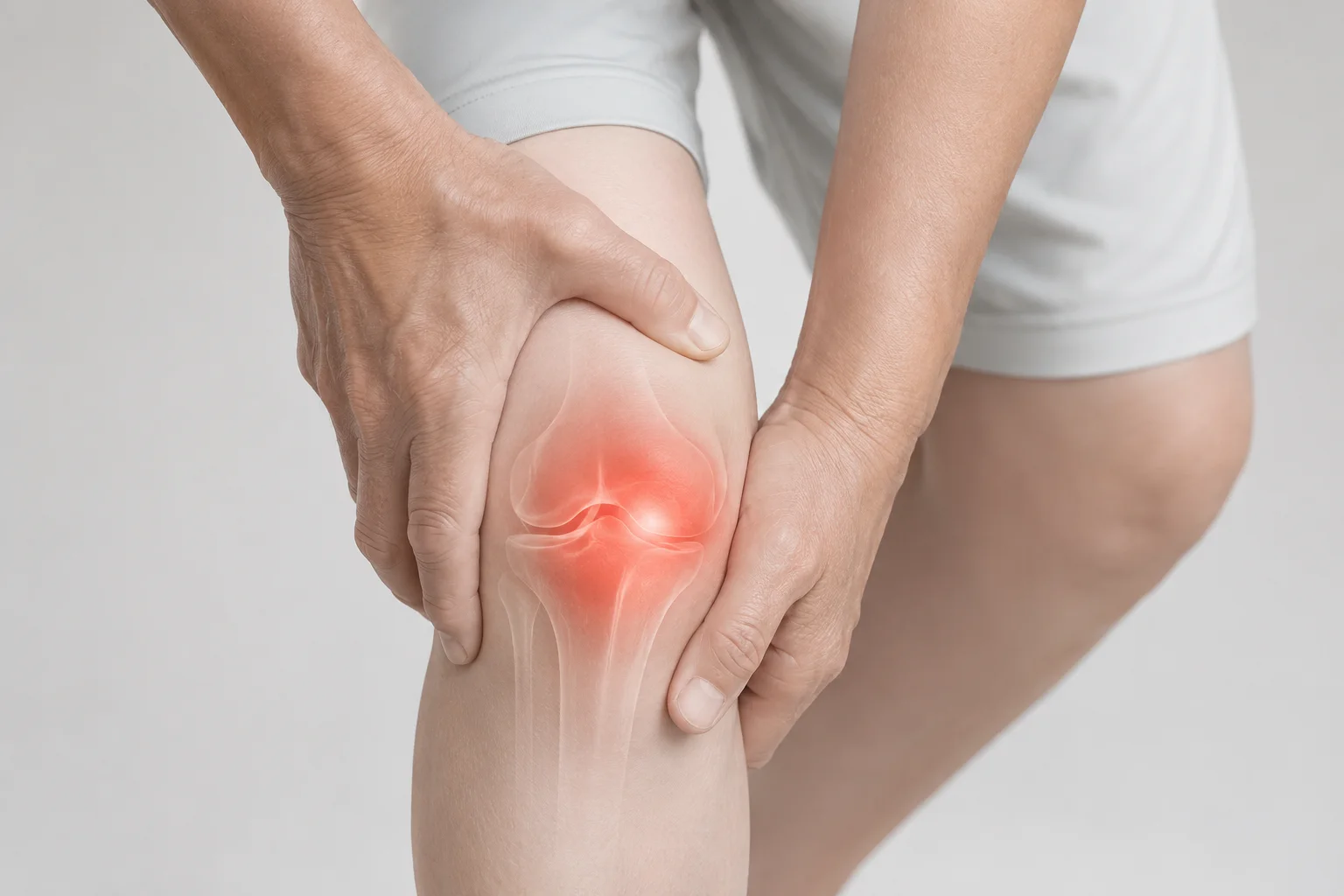
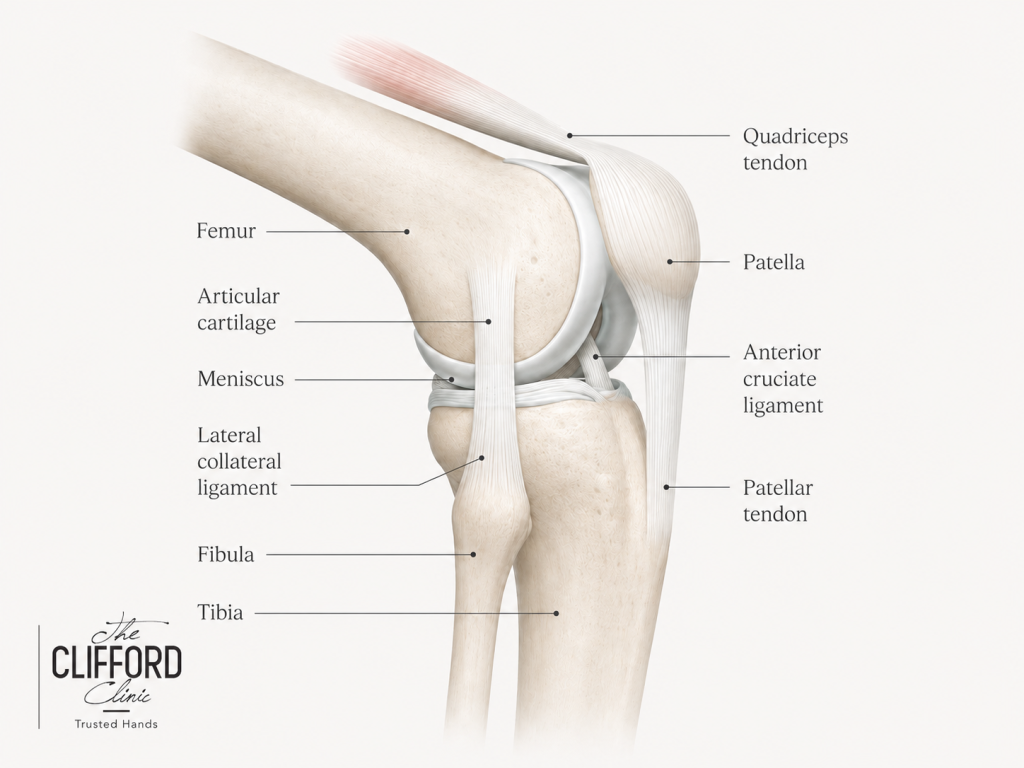
The knee is a complex joint held together by cartilage, ligaments, meniscus tissue, tendons and a fluid-filled lining called the synovium. It is heavily loaded as it bears the weight of the entire body and absorbs impact when walking or jumping. Wear, damage and inflammation to the knee or any of its structures thus has the potential of causing debilitating pain.
In Singapore, younger and active patients tend to present with sports injuries such as meniscus tears, ligament strains or patellar tendon irritation. Office workers and adults in their 30s to 50s often present with patellofemoral pain, meaning pain around the kneecap, and early cartilage wear caused by prolonged sitting and intense exercise spikes over the weekend. From the mid-40s onward, knee osteoarthritis (OA) becomes an increasingly common ailment. Slow loss of cartilage due to wear and tear is the biggest cause of persistent knee pain in adults.
Doctor’s opinion
“Most patients I see for knee pain are between 40 and 60 years old, with mild to moderate osteoarthritis. The most important thing that should be done during the first consultation is confirming the diagnosis. A knee that is not properly diagnosed tends to be paired the wrong treatment, leading to lackluster treatment results. When I look at a knee, I consider the location of the pain, the pattern of symptoms and the radiograph results before I recommend any treatments to the patient.” — Dr Gerard Ee, founder of The Clifford Clinic and member of the Royal College of Surgeons
Common Causes of Knee Pain
Knee pain almost always caused by a structural problem. The most common causes are listed below.
Knee osteoarthritis (OA). Gradual cartilage wear with low-grade joint inflammation. Pain is typically activity-related, worsening on stairs and after long walks. The patient may also feel stiffness when standing after sitting. Risk of knee OA rises with age, body weight, incidents of previous knee injury, high-impact activity and muscle weakness around the knee.
Meniscus tears. The meniscus is the C-shaped fibrocartilage shock absorber found inside the knee. Younger patients usually tear it when they twist or pivot their knees during sports or while playing. It can tear in older patients due to gradual age-related degeneration. Mechanical symptoms of a torn meniscus include knee locking, swelling, stiffness of the knee, and a sensation that the knee is going to give way.
Ligament injuries. Sprains and tears of the Anterior Cruciate Ligament, Medial Collateral Ligament, Lateral Collateral Ligament, or Posterior Cruciate Ligament (ACL, MCL, LCL or PCL) are typically obtained from sport or trauma to the knee. These injuries often present with sudden pain, swelling and a sense of instability.
Patellofemoral pain syndrome. This is pain around or behind the kneecap that is felt when going down stairs, squatting or standing after sitting. One of the most common causes of pain felt in the front of the knee in active adults.
Tendon problems. Patellar tendinopathy, also known as jumper’s knee, quadriceps tendinopathy and iliotibial band issues are common in runners, court-sport players and gym users. It is caused by sudden increases in the load borne by the knees.
Referred pain. Sometimes the knee pain can be caused indirectly by a hip or lumbar spine issue. This is why performing a proper knee assessment before committing to any treatment is important.

Symptoms and Red Flags to Look Out For
Most knee pain is not dangerous or life threatening, but certain types of knee pain can indicate a more serious issue that requires medical attention. Below are some symptoms to look out for.
- Significant swelling within hours of an injury. Especially if the knee feels unstable.
- Knee locking, catching or giving way. This suggests a possible meniscus or ligament problem.
- Inability to bear weight or fully straighten the knee.
- Fever, redness or warmth accompanying the knee pain. This indicated a joint infection.
- Sharp or severe pain that wakes the patient at night, or pain that is constant even when at rest.
If you experience any of these, see a doctor.
How Knee Pain Is Diagnosed
A proper assessment is vital for determining what type of treatment is suitable for the patient. During a knee assessment, the doctor will request for a detailed history of where the pain is, and what triggers it. This is followed by a focused examination of the knee and adjacent joints. Imaging is added where it is needed, such as a X-ray scan for arthritis or joint alignment issues. Ultrasound or MRI is used when soft-tissue detail matters or when a focal cartilage defect is suspected.
The aim of the knee assessment is to identify the dominant pain generator, which is the root cause of the knee problem. Diagnosing the root cause is vital for successful intervention as treatment matched to the right diagnosis works far more reliably than treatment applied blindly.

Doctor’s opinion
“I approach each case cautiously. If the X-ray and examination do not point clearly at cause and a diagnosis cannot be confidently established, I would rather repeat the assessment or add an MRI scan than risk applying the wrong type of treatment. A knee that appears to present with generalised osteoarthritis can turn out to have a focal cartilage defect as the driver of the pain, which changes the treatment plan entirely.” — Dr Gerard Ee
Treatment Options In Singapore
Most knee pain can be treated non-surgically. A sensible treatment plan layers measures in order of intensity.
Foundational care. Activity modification, weight management, targeted strength training, particularly the quadriceps and hip muscles, and physiotherapy can improve and prevent the recurrence of knee pain.
Medication, where appropriate. Short courses of pain-relievers or anti-inflammatories can be used during pain flares to quickly suppress pain. This should only be done under medical guidance.
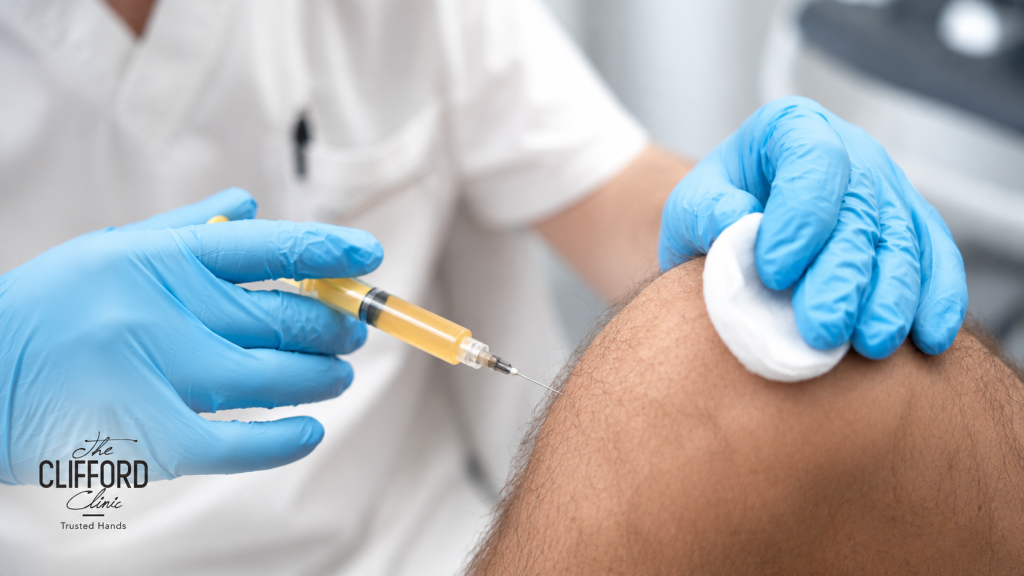
Knee injections. When conservative care alone is not enough, joint injections provide a minimally invasive alternative to full surgery. The main options available in Singapore are listed below.
- Steroid injections. Also called cortisone injections, they are fast-acting anti-inflammatory injections best used for acute pain or swelling where rapid relief is needed.
- Platelet-rich plasma (PRP). An autologous biological treatment made from the patient’s own blood. It is used to treat mild to moderate knee OA where long-term symptom improvement is the goal.
- Hyaluronic acid (HA) or Conjuran. Two viscosupplement treatment options. HA uses sodium hyaluronate. Synolis VA is a 2% non-crosslinked HA with 4% sorbitol as an antioxidant, it an option used in Singaporean clinics. Conjuran is a polynucleotide injection. It is typically used as a polynucleotide viscosupplement alternative to HA but it is not a PRP-equivalent.
- Guna Collagen MD. A Class III injectable type-I collagen medical device that is used as a bioscaffold of extracellular matrix. It functions as a mechanical scaffold that stabilises the knee joint and repairs cartilage and ligaments.
- Surgery. Knee replacement and other surgical options remain effective for end-stage arthritis when non-surgical care is no longer viable.
Doctor’s opinion
“No two cases are identical, but generally, I would recommend steroid injections for patients suffering from flaring knee pain and, for mild-to-moderate osteoarthritis, a knee injection with the type customised to the knee pathology and severity, especially when long-term symptom improvement is the patient’s goal. HA or Conjuran can be considered when the patient is diabetic as viscosupplements do not blood-sugar spikes associated with steroid injections. Surgery, in my opinion, should always be the last resort.” — Dr Gerard Ee
When Combination Treatment Make Sense
Depending on the severity of the knee pain, cause of the pain, or the patient’s treatment goals, combining different types of treatments can be beneficial. Below are examples of combination treatments. Steroid plus HA for an OA flare with synovitis and effusion where fast relief and longer symptom control are both wanted.
- PRP with HA delivered via CellularMatrix for treating mild to moderate OA. This combination is generally used when the patient does not suffer from an active flaring knee pain and long-term relief is the goal.
- Polynucleotide, such as Conjuran, with HA. This can be used when non-steroid viscosupplement is wanted.
- Sequential combination treatment, a steroid injection to settle a knee suffering from a pain flare, followed by PRP a few weeks later once the synovitis has settled.
- Guna Collagen MD with HA as a salvage strategy when HA, PRP and polynucleotide injections are unable to provide enough relief.
Different treatments are generally not combined used together by default. Combination treatments are only effective when matched to a suitable patient. Always seek the opinion of a trained medical professional before making any decisions.
When An Injection Is Not the Right Move
There are situations where knee injections should not be offered, regardless of patient preference.
- End-stage OA accompanied by major knee function loss. Knee injections are unlikely to provide significant improvement or relief. An honest conversation is about surgical referral should be had with the patient at this stage.
- When there is an active local or systemic infection, recent skin infection. Knee injections are also not recommended for patients with certain blood disorders or uncontrolled anticoagulation.
- Unclear diagnosis. Reassessment, repeat imaging or additional MRI should be performed first before committing to an injection.
- Presence of mechanical problems. Knee injections are ineffective for treating true locking meniscus tears or ligament instability. Orthopaedic or surgical intervention is recommended for these cases.
Treatment Roadmap
The suitability of the treatment should be monitored closely during the treatment, immediately after the treatment, and during the recovery phase. A good doctor will monitor for meaningful signs of improvement and adjust the treatment plan when needed.
Using a knee injection at The Clifford Clinic as an example, when a patient sees little benefit at twelve weeks, the patient will not simply be given another injection.
The diagnosis is first re-confirmed, the X-ray reviewed, and an MRI may be ordered if the diagnosis is still unclear.
Next, the patient’s rehabilitation plan and knee load will be scrutinized. If the initial treatment is truly ineffective, or the diagnosis has changed, I adjust the treatment. For example, if PRP therapy is ineffective, combination treatment or a different treatment agent can be considered. PRP plus HA CellularMatrix, or a shift to HA, Conjuran or Guna Collagen MD can be recommended to the patient depending on what their knee needs.
Doctor’s opinion
“A non-responder deserves a re-look, not an immediate repeat of the initial treatment. I review the imaging, add an MRI to rule out a focal cartilage defect, check that rehabilitation is actually happening, and consider whether a combination plan or a different treatment agent fits the patient better before repeating the initial treatment. If the non-surgical treatment ceiling has been reached, I will move the conversation to surgical referral as I believe it’s imperative that doctors always communicate honestly with their patients.” — Dr Gerard Ee
When Surgery Becomes the Right Conversation
Surgery should be considered when imaging shows radiographic change with major function loss or when the patient is in constant pain that disturbs sleep or flares even when they are at rest.
Non-surgical pathways are always the priority, but surgery should be considered when all non-surgical treatment options have been exhausted.
Clinical Summary
Knee pain is a common problem faced by both young and old patients in Singapore. Most cases of knee pain are not dangerous but a proper diagnosis before treatment is recommended as the root cause might actually turn out to be something more serious than knee OA.
The type of treatment used depends on the severity of the knee pain and the patient’s treatment goals. Generally, steroid injections can be tried first if the pain is a flaring pain. PRP therapy when longer-duration relief is wanted in mild-to-moderate cases of knee osteoarthritis. HA or Conjuran can be used if viscosupplement is suitable. Guna Collagen MD can be used, with informed consent, if the patient does not respond well to other types of minimally invasive treatments. Surgery is reserved for end-stage disease where non-surgical options are unable to improve the patient’s condition.
The most appropriate treatment depends on accurate diagnosis, OA stage, prior treatment response, and the patient’s goals. A proper consultation allows these factors to be assessed.
Related Reading
Speak to Dr Gerard Ee About Your Knee Pain
If your knee pain has lasted more than a few weeks or is starting to limit activity, a proper assessment is needed to find the root cause of the pain and decide which treatment fits your diagnosis.
Knee joint injections at Dr Gerard Ee’s practice are performed in an MOH-accredited day surgery centre, which makes them claimable through Medisave and hospitalisation insurance. The medical team will advise on eligibility at consultation.
The Clifford Clinic and Surgery 50 Raffles Place, #01-01 Singapore Land Tower, Singapore 048623 (Exit B, Raffles Place MRT) Phone: (65) 6532 2048 | WhatsApp: (65) 8318 6332
About Dr Gerard Ee
Dr Gerard Ee, MBBS (UK), MRCS (Edinburgh), PGDip Practical Dermatology (Cardiff) is a Member of the Royal College of Surgeons and a senior physician in Singapore. He trained as an orthopaedic doctor in hospital practice, with years of exposure to both operative and non-operative care of knee osteoarthritis. He now works in senior aesthetic medicine and continues to provide evidence-driven, non-surgical knee care for mild to moderate osteoarthritis. His peer-reviewed orthopaedic research has been published in top-tier journals including The Knee, Knee Surgery, Sports Traumatology, Arthroscopy (KSSTA), the Journal of Bone and Joint Surgery (British) and Clinical Orthopaedics and Related Research. His clinical philosophy is non-invasive first, surgery last, with treatment matched to evidence and to the individual patient.

Dr Gerard Ee, Aesthetic Doctor in Singapore
Dr Gerard Ee is an aesthetic doctor in Singapore and the Medical Director of his practice at 50 Raffles Place. He graduated from St George’s, University of London, trained in surgery at Singapore General Hospital and the National University Hospital, and holds the MRCS (Edinburgh) and a postgraduate diploma in practical dermatology from Cardiff University.
He has practised aesthetic medicine since 2012, is the author of sixteen peer-reviewed papers, and writes and medically reviews every article on this site. Read more about Dr Gerard Ee.
Book a consultation with Dr Gerard Ee at The Clifford Clinic
Dr Gerard Ee consults and treats knee pain at The Clifford Clinic, 50 Raffles Place, Singapore. Consultations are by appointment. Message the clinic on WhatsApp, or call 6532 2048.
Frequently Asked Questions
When should I see a knee specialist in Singapore? If your knee pain has lasted more than a few weeks, is limiting daily activities, has caused significant swelling, or comes with locking or instability, it is worth getting it assessed by a doctor.
Generally, more treatment options are avaliable the earlier the diagnosis is made.
Is knee pain always due to arthritis? No. Knee pain can be caused by the cartilage, meniscus, ligaments, tendons or even be referred from the hip or spine. A proper assessment identifies the actual cause of the pain.
Can knee osteoarthritis be treated without surgery? Yes. Mild to moderate knee osteoarthritis is usually treated non-surgically with a combination of strengthening exercises, weight management and, where appropriate, knee injections.
Surgery is reserved for end-stage disease that is no longer responsive to non-surgical care.
Are knee injections claimable through Medisave or insurance in Singapore? Knee joint injections performed in an MOH-accredited day surgery centre are claimable through Medisave and hospitalisation insurance.
Coverage varies and depends on each patient’s insurance plan. This will be explained at consultation.
Will I need an MRI for knee pain? Not always. Many cases are diagnosed with an X-ray scan. An MRI is ordered only when identifying soft-tissue detail or a focal cartilage defects meaningfully affect the treatment plan.
What is the best doctor to see for knee pain? A GP is sufficient for most patients. However, if the knee pain is persistent, mechanical or osteoarthritic, an orthopaedic or musculoskeletal-trained specialist should be consulted.
How is knee pain treated? Preventative measures like building the muscles around the knee and hip, modifying aggravating activity, and weight management are recommended.
Where necessary, targeted treatment such as a knee injection can be administered for mild to moderate knee osteoarthritis. Steroid injection are recommended for pain flares.
PRP, hyaluronic acid, Synolis VA, and Conjuran are the most commonly used non-surgical injection options.
What symptoms of knee pain are considered red flags? Escalating pain or significant swelling within hours of an injury. Inability to bear weight or fully straighten the knee. Fever, redness or warmth in the joint. Constant pain that persists unrelated to activity or disrupts sleep. A knee that locks, catches or gives way.
If you experience pain at the back of the knees with swelling of the calf, redness or breathlessness, see a doctor immediately, as an urgent review is needed.
What vitamin is associated with knee pain? Vitamin D deficiency is linked to knee pain and osteoarthritis symptoms. Clinical studies indicate that low vitamin D is associated with worse knee pain.
As a blood test is needed to check vitamin D levels, have a proper blood test to confirm the diagnosis rather than self-supplementing blindly.
How can patients tell if knee pain is serious? If the pain occurs suddenly after an injury, is accompanied by significant swelling, causes knee locking or instability, prevents weight-bearing, comes with fever or warmth, or is constant rather than activity-related.
Pain that lasts for more than a few weeks despite medical care is also concerning.
What is the number one mistake that makes knees worse? The biggest mistake is avoiding activity instead of modifying it. Total lack of movement weakens the muscles that support the knee, causing the knee to deteriorate faster. Instead of complete rest, the supporting muscles should be exercised gently and sensibly.
What are common causes of knee pain? The most common causes of adult knee pain are knee osteoarthritis, cartilage wear, meniscus tears, patellofemoral pain syndrome, and tendon problems such as patellar or quadriceps tendinopathy.
Is walking good for combating knee pain? Yes, but it should be done at a comfortable pace and built up gradually. Walking maintains joint mobility, supports cartilage nutrition, helps weight management and keeps the muscles supporting the knee active. Contrary to popular belief, complete inactivity tends to make knee pain worse.
What disease is linked with knee pain? Knee osteoarthritis. Other conditions include rheumatoid arthritis, gout, psoriatic arthritis, patellofemoral pain syndrome and, less commonly, joint infection or pain referred from the hip or spine.