
AGNES acne treatment in Singapore fails for seven predictable reasons: the result was judged too early, the wrong needle was used for the type of acne, too few shots went into each oil gland, a non-doctor performed it, a hormonal cause was never tested, no maintenance followed, or the acne itself was misunderstood. This page explains each one and what I change so that AGNES RF works the second time.
Dr Gerard Ee consults at The Clifford Clinic, 50 Raffles Place, Singapore.
I have been performing AGNES RF acne treatment in Singapore since the device arrived here in 2014, and over that period one presentation has become familiar. The patient has had AGNES RF performed elsewhere, and it either produced no visible change or worked briefly before the acne returned. By the time they attend my clinic, most have concluded that the device itself is a gimmick.
In most of these cases the treatment itself did not fail. What failed was patient selection, energy delivery, or the follow-up that should have come afterwards. The seven reasons set out below are drawn from my own practice across thousands of treatments, and each is stated as clinical opinion where the published evidence does not settle the question. Where evidence does exist it is cited, including where it is weaker than the marketing around this device suggests.
What AGNES RF acne treatment actually does
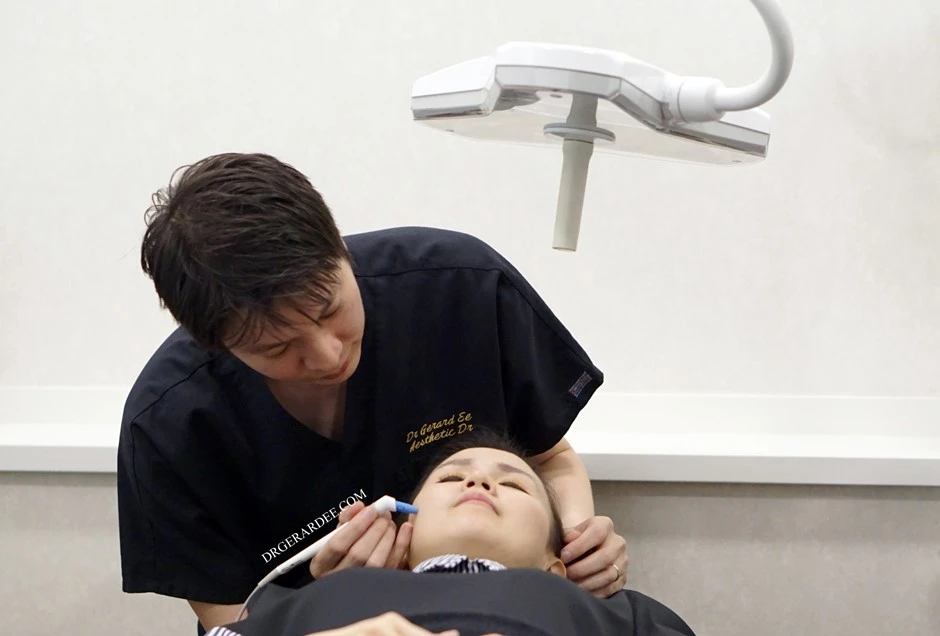
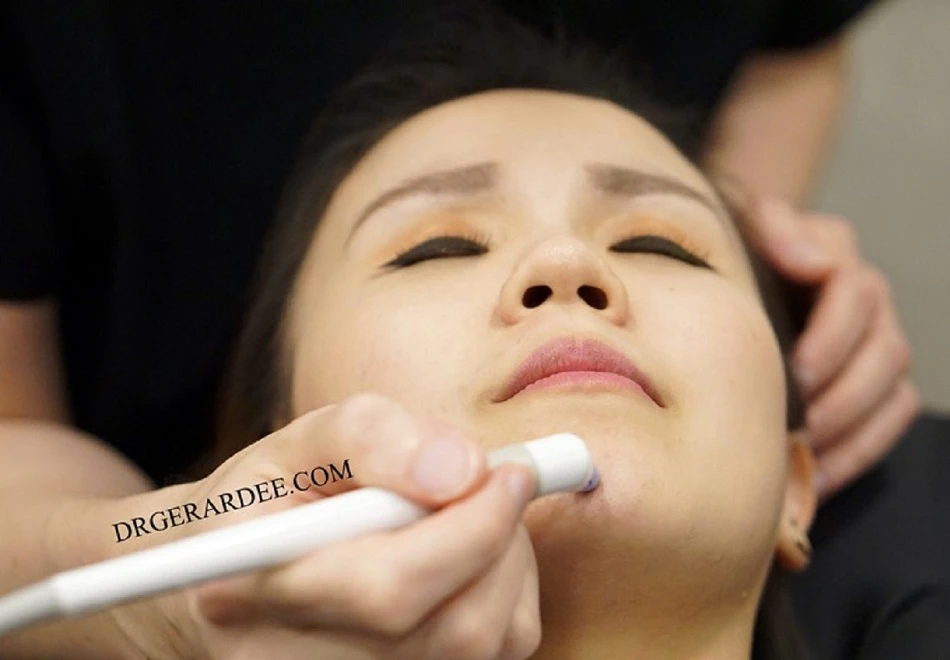
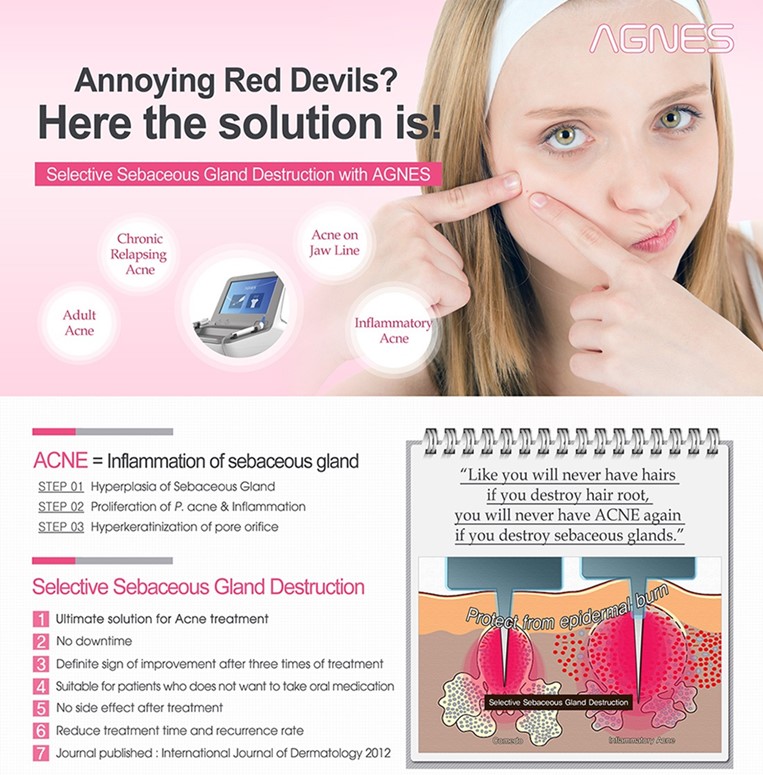
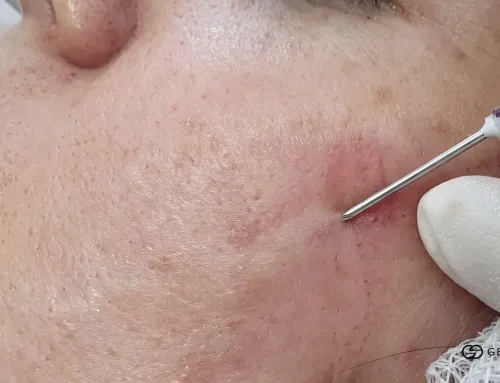
AGNES RF acne treatment, which most patients search for simply as AGNES acne treatment, is a single insulated microneedle radiofrequency device. It acts by selective electrothermolysis, in which a very fine needle is introduced into an individual acne-prone pore and radiofrequency energy released at the needle tip thermally destroys the sebaceous gland supplying that pore.
The published protocol from the randomised controlled trial of this device specifies the parameters precisely. The needle is 1,500 µm long with 500 µm of insulation on the proximal shaft, so only the distal 1,000 µm delivers energy. A T-shaped shoulder acts as a depth stopper. The needle is introduced into the lesional pore at approximately 60 to 70 degrees, with energy delivered at about 4 W over 100 ms, one to two applications per lesion, across three sessions at four-week intervals.1
The insulation is the design feature on which the whole technique depends, since it confines the thermal injury to the depth of the sebaceous gland while sparing the epidermis and upper dermis above it. The stated design intent is a treatment depth that remains consistent “regardless across sessions and physicians”.1
Why AGNES RF does not make your skin permanently dry
This is the question I am asked most often, and the arithmetic answers it. Facial skin carries roughly 2,500 to 6,000 sebaceous glands per square inch, whereas an AGNES RF course, even in severe acne, targets individual lesional pores numbering in the tens or low hundreds. AGNES RF therefore does not suppress oil production across the face, but removes specific, repeatedly offending glands while leaving the surrounding population intact. Most patients tell me that overall oiliness is unchanged afterwards, which is what those proportions predict.
Why the same pore keeps breaking out
Every follicle bearing a sebaceous gland is theoretically capable of developing acne, although in practice a minority of follicles account for most of the disease and do so repeatedly at the same site. Biological support for that observation now exists in the work of Carlavan and colleagues, who compared scar-prone and non-scar-prone acne patients and found that in scar-prone skin the inflammatory infiltrate persisted, comprising T cells, neutrophils and macrophages, with a B-cell and plasma-cell component appearing by three weeks. The reduction in sebaceous lipid-metabolism markers was also not reversible in the way it was in non-scar-prone patients.2
In some patients, therefore, the follicle never fully recovers between breakouts. That follicle is the one worth treating individually, and it is the rationale for a gland-by-gland device rather than a whole-face one.
What the evidence for AGNES RF does and does not show
Clinics marketing this device rarely present its trial data in full, which is why the timing of assessment is so widely misunderstood. The principal randomised controlled study, by Ahn and colleagues, compared single insulated microneedle radiofrequency against a control of needling and extraction alone. At four weeks and at eight weeks there was no statistically significant difference between the two groups. Only at twelve weeks did the treated side separate, with a reduction in lesion count of roughly 21% against a slight worsening in the control group.1
The American Academy of Dermatology’s 2024 acne guideline concluded that the evidence base was insufficient to make a recommendation for or against microneedle radiofrequency in acne.3 That position is a fair reading of the published data, and it coexists without contradiction with my own strongly positive experience of the device, since a short and limited evidence base and reliable performance in experienced hands are not mutually exclusive statements.
That trial nevertheless supplies the most clinically useful figure in this article, which is the point at which benefit becomes measurable. It explains the first reason an AGNES RF course may appear to have failed.
Reason 1. You judged your AGNES RF acne treatment too early
Most of the “AGNES RF did not work for me” consultations I see involve patients who stopped at four or eight weeks.
The trial timeline itself sets the earliest date at which a verdict is possible. No significant difference was demonstrated at four weeks or at eight weeks, and benefit became statistically detectable only at twelve weeks.1 If the principal study of this device could not demonstrate an effect before the three-month mark, a patient who abandoned AGNES RF six weeks after a first session assessed it at precisely the point at which the published data predict that nothing is yet visible.
The pore does not empty and remain empty by the following week, because the gland must first be thermally destroyed, the surrounding inflammation must then settle, and lesions already forming at the time of treatment must still complete their course. I ask patients to withhold any judgement on whether AGNES RF is working until the third session has been completed and a further four weeks have passed.
The trial authors raised a further caveat themselves, namely that twelve weeks is also too short an interval to say anything about durability, and the study was not designed to establish how long the benefit lasts.1
Reason 2. The wrong AGNES RF needle was used for your type of acne
This was the first reason listed when the article was originally written, and it remains the failure I identify most often on examination. Needle selection depends on the size of the lesion, its depth and its location on the face, and no single setting treats every acne lesion in every patient.
The published anatomy makes the case more forcefully than clinical impression can. Facial sebaceous glands lie in the mid to deep dermis, broadly 0.5 mm to 1.5 mm below the surface, and the variation across the face is substantial, as the following three observations show.
- T-zone skin over the nose, forehead and chin carries a higher density of sebaceous glands and larger glands than the cheeks, which correlates with the higher sebum output measured at those sites.4
- On the cheek, in-vivo ultrasound microscopy shows sebaceous units reaching their maximum cross-sectional area at roughly 700 to 900 µm below the surface, and that depth is not fixed. In young men the peak lies deeper than 900 µm and the glands are more lobulated, whereas in women, and particularly in older women, the glands are smaller and lie more superficially.5
- The nose is not uniform along its own length, in that the upper nose carries fewer, smaller and more superficial glands, whereas the tip carries larger glands with wider lumina distributed both superficially and deep, occupying a much greater share of the dermal volume.6
A fixed-geometry needle applied across that variation cannot sit correctly at every site. Porcine histology of microneedle radiofrequency shows that needle depth is the primary determinant of where the thermal injury sits, whereas power governs the width of the coagulation zone around it.7 Where the depth is wrong for the site and for the patient, energy is deposited somewhere other than the gland. Too superficial a placement risks the epidermis, and too deep a placement heats dermis below the target while the gland survives intact.
On the published anatomy, a jawline nodule in a 28-year-old man and a cheek papule in a 45-year-old woman lie at meaningfully different depths, so treating the two identically produces the patient who underwent AGNES RF, felt the treatment being performed, and saw no change afterwards. I select the needle depth site by site, and any doctor who does the same can say which depth was used where and why, which is a reasonable question to put at a second consultation.
Reason 3. Too few shots were delivered into each oil gland
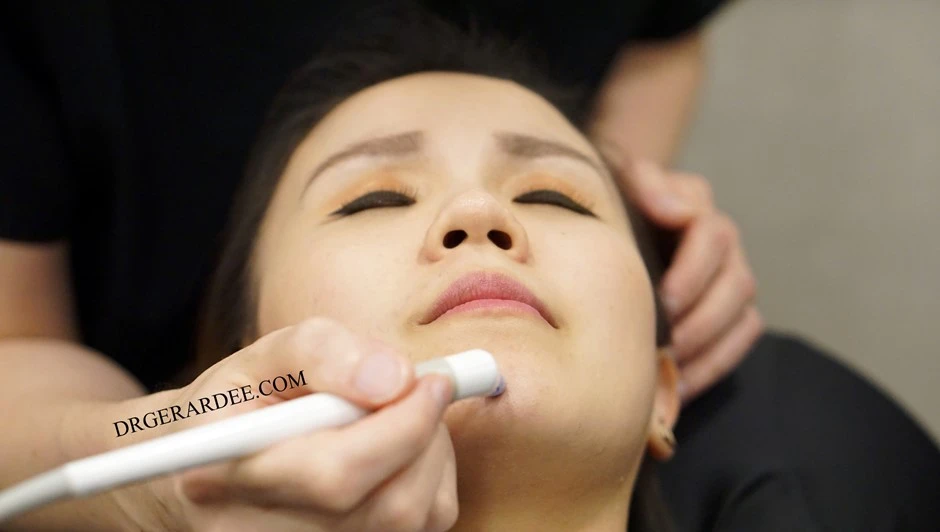
I have reviewed treatment records in which the total number of shots delivered across an entire face would have been inadequate for one severely affected cheek. Sebaceous glands vary widely in size, and an acne-prone gland in an adult is frequently a large, lobulated structure that a single sub-threshold pulse injures without destroying.
The trial protocol used one to two radiofrequency applications per lesion at 4 W and 100 ms.1 That figure represents the minimum formally studied rather than a maximum, and it was applied to lesions selected under magnification. Because power determines the width of the coagulation zone around the needle,7 under-dosing produces a thermal footprint smaller than the sebaceous lobule it is intended to encompass, leaving the peripheral acini of a large gland viable. The gland is injured rather than destroyed. The pore recovers, breaks out again, and the patient reasonably concludes that the treatment does not work.
The limits of the published evidence should be stated plainly, since no dose-response study establishes a threshold number of pulses below which AGNES RF fails. No such trial has been conducted. What exists is the mechanistic argument set out above together with a clinical pattern I encounter repeatedly. This is therefore a clinical opinion grounded in how the device deposits energy, not a citable trial result. It is also the reason the shot count delivered at each session should be recorded in the notes, since without that figure neither the patient nor a second opinion can establish whether the course was adequately dosed.
A commercial dimension also applies, in that each shot takes time and time is the principal cost of an AGNES RF session, so a clinic competing on price has a direct incentive to deliver fewer shots per gland. The saving is transferred to the patient as a reduced probability of clearance.
Reason 4. A beautician, therapist or consultant performed your AGNES RF
AGNES RF is a medical procedure, and in my view it should not be delegated. That position is not a territorial claim, and the adverse-event data supports it.
A survey of American Society for Dermatologic Surgery physician members and their patients found more burns and dyschromia among patients treated by non-physicians, more frequently in medi-spa settings than in medical ones, with improper technique cited as the leading cause of the adverse event.8 A separate cross-sectional survey similarly found that moderate adverse events were more frequent when cosmetic procedures were performed by non-physician providers.9
The more consequential finding is that the problem does not stop at licensure. A retrospective analysis examined complications from peels, lasers and energy-based devices performed by core cosmetic physicians, that is, dermatologists, plastic surgeons, and facial plastic and oculoplastic surgeons. It attributed a substantial share of severe complications to non-standardised training, noting how little hands-on time residency curricula in those specialties devote to these procedures.10 Oversight of non-physician practitioners in dermatology is an active concern in the specialty literature for the same reason.11
The question to ask is therefore not only “is a doctor doing this?” but “how many of these has this doctor personally done, and on skin like mine?” A needle capable of destroying a sebaceous gland is equally capable of producing a depressed scar or a burn if it is placed at the wrong depth or fired at the wrong energy. In darker skin the margin for error is narrower still.
Reason 5. Nobody tested you for a hormonal cause
This reason did not appear in the original version of this article, and it may be the most consequential of the seven. No device, however precisely delivered, will hold a result against an untreated hormonal driver. The treated gland is destroyed, but the androgen signal that rendered the remaining glands acne-prone is unaffected.
In treatment-resistant acne, 86% of patients without overt hirsutism were nonetheless found to have biochemical hyperandrogenism on testing, and 36% met the criteria for polycystic ovary syndrome (PCOS).12 The absence of the classic outward signs is therefore a poor guide to whether a hormonal driver is present, and first-line investigation is total and free testosterone.12,13 Where possible I take the sample while the patient is not using combined hormonal contraception, which lowers free testosterone and can mask the picture.
For a woman whose acne sits along the jawline and chin, flares with the menstrual cycle, and has resisted several rounds of treatment, an absence of any blood testing means AGNES RF was being asked to do work it was never designed to do. I would want that investigation completed before or alongside any device treatment. This is covered further in my articles on hormonal acne in women and PCOS and acne, and on the contraceptive pills for acne.
Reason 6. You were never put on maintenance treatment afterwards
Clearance is not the end of treatment, and that applies to every acne therapy yet devised. Acne is a chronic condition of the pilosebaceous unit, and after clearance by any modality maintenance therapy is required, most commonly a fixed-combination topical retinoid with benzoyl peroxide. Clinics selling procedures rarely make that point at the time of sale.
Isotretinoin provides the benchmark, being the most definitive systemic treatment available. In a claims cohort of roughly 20,000 patients the relapse rate was 22.5%, at 12.9 relapses per 100 person-years, with a median time to relapse of 7.5 months, and about 35% required subsequent treatment. Relapse was more likely in younger patients, in women, and with greater baseline severity, whereas a higher cumulative dose was protective.14 Reported relapse rates across the wider literature range from 9.4% to 65.4%.15
If isotretinoin relapses at that rate, no procedural treatment prevents recurrence on its own without a maintenance plan, and that includes AGNES RF, AviClear and gold photothermal therapy. A patient discharged after three AGNES RF sessions with no topical regimen and no follow-up will frequently break out again, and will attribute the recurrence to the device rather than to the gap in the plan. The device options are compared in AGNES RF vs AviClear vs Gold PTT, and the same failure pattern is set out separately in why AviClear did not work for you, where the mechanism of disappointment is closely comparable.
Reason 7. Poor understanding of the pathophysiology of acne
The original version of this article deferred this reason to a later post. It is set out here instead.
Acne is routinely described as overactive oil glands, bacteria and blocked pores. That description is not incorrect, but it is superficial enough to produce poor treatment decisions, and a considerable number of AGNES RF failures begin there. Five aspects of the disease are worth setting out, which are sebum composition, the role of the resident organism, the timing of inflammation, the parts of the body that go unexamined, and the local climate.
Why sebum composition matters more than sebum volume
Sebum composition matters at least as much as sebum quantity. Acne-prone skin shows lower levels of linoleic acid, an increase in pro-inflammatory monounsaturated fatty acids, and increased squalene lipoperoxides, and these changes drive follicular hyperkeratinisation directly.16,17 A patient with visibly oily skin and a patient with normal-looking skin can therefore both present with refractory acne, and treatment directed at oil volume alone is correspondingly limited.
Cutibacterium acnes is not simply an infection
The organism involved is Cutibacterium acnes, formerly named Propionibacterium acnes, from which the older “P. acnes” label derives. It is a normal resident of the follicle in everyone. What differs in acne is not its presence but the interaction between particular phylotypes, the altered lipid environment and the host inflammatory response. Treating acne as a simple infection to be sterilised is what places patients on repeated courses of antibiotics with diminishing returns.
Inflammation precedes the visible lesion
Inflammatory changes are demonstrable in the follicle before a lesion is clinically visible, and in scar-prone patients that inflammation persists and leaves lasting changes in the gland’s lipid metabolism.2 A treatment plan that responds only to visible lesions is therefore always reacting to disease that has already occurred.
Truncal acne, the acne patients do not mention
Truncal acne affects more than half of patients with facial acne, carries a comparable risk of scarring, and is substantially underdiagnosed because neither doctor nor patient raises it.18 If back, chest and shoulder acne was never examined, the assessment was incomplete, and a facial device was never capable of being the whole answer. Examination of the trunk should form part of any acne consultation, whether or not the patient volunteers the complaint.
The local factor, acne in Singapore’s climate
Acne behaves differently in different climates. Singapore’s heat and humidity alter sebum behaviour, sweating and occlusion, and I adjust both prescriptions and AGNES RF shot counts accordingly. A protocol lifted unmodified from a temperate-climate textbook is not automatically the right protocol here.
AGNES RF acne removal side effects and what is normal afterwards
Patients searching for AGNES acne removal side effects are usually asking two separate questions: what is normal after treatment, and what is not. AGNES RF is a two-part procedure in which existing lesions are extracted first and radiofrequency is then delivered into the emptied pore. The extraction step accounts for the raw appearance of the skin immediately afterwards, and patients who were not warned of it sometimes mistake a normal post-extraction appearance for a complication.
Expected findings include redness and swelling for a few days, visible crusting at the treated points, tenderness, and a period during which the skin appears worse before it improves. The crusts should be allowed to separate on their own, since removing them early exposes an incompletely healed surface and is a common route to brown marks in Asian skin. Burns, depressed scars and blistering are not expected findings but technique-related events, and the adverse-event data above shows that they cluster with untrained operators.8,9,10
Post-inflammatory hyperpigmentation warrants separate mention in Singapore. One genuine advantage of radiofrequency is that its energy is not absorbed by melanin in the way laser energy is, which makes microneedle radiofrequency comparatively favourable in darker skin types.19 Comparative favourability is not the same as absence of risk, since any inflammatory insult can leave brown marks in Asian skin, and photoprotection afterwards is not optional. In Fitzpatrick skin types III to V, which covers most of the patients treated here, the interval between sessions matters as much as the energy selected, because treating skin that has not yet settled from the previous session compounds the pigmentary risk.
Is AGNES RF permanent? What the evidence actually says
An earlier version of this article described AGNES RF as a permanent cure for acne. That claim has been removed, and the reasoning is set out here rather than deleted without comment.
The assumption behind “permanent” was that a destroyed sebaceous gland does not regenerate. That assumption is now open to question. Veniaminova and colleagues showed in mice that after more than 99% ablation of sebaceous glands the glands regenerated within weeks, driven by hair-follicle bulge stem cells through a mechanism dependent on fibroblast growth factor receptor 2.20
Two qualifications apply to that study. It is murine rather than human, and it did not involve radiofrequency. It is therefore not proof that human sebaceous glands regenerate after AGNES RF. It does, however, establish that regeneration is biologically plausible, so the accurate description is long-lasting, with treated pores that in my experience remain free of lesions for years, rather than permanent, since no human cohort has been followed for long enough to support the stronger claim. The principal trial itself ran to twelve weeks.1
A second claim carried in older material on this site also requires correction. AGNES RF is not a treatment for acne scars, since it treats the active gland that produces the lesion, whereas established acne scarring requires separate treatment, and conflating the two leads predictably to disappointment.
How many AGNES RF sessions do you need, and when should you see results?
The studied protocol is three sessions at four-week intervals, with the assessment point at twelve weeks.1 That framework is reasonable, and I plan around it, adjusting for severity, distribution, and the number of acne-prone glands identifiable under magnification. A baseline lesion count recorded at the first session is what makes the twelve-week assessment meaningful, since patients seeing their own skin daily consistently underestimate the change.
More than one session is necessary for a structural reason rather than a commercial one. Where acne has already left scarring, that is a separate problem, and the acne scar treatment guide explains how it is approached. Acne-prone follicles do not all become inflamed simultaneously. Glands that are quiescent at the first session are frequently identifiable at the second. Treating only what is visible on the day of the first session leaves untreated the glands that become inflamed in the weeks that follow.
I have deliberately not repeated the specific clearance percentages that circulate in AGNES RF marketing material, including on older pages of this website. They cannot be sourced to published data, and should not be presented to patients as though they could be.
When AGNES RF is not the right treatment for you
I decline to offer AGNES RF fairly often. The following are the situations in which I would not lead with it.
- Widespread inflammatory or nodulocystic acne across the whole face. AGNES RF is a lesion-by-lesion device. Beyond a certain lesion count a systemic approach is more appropriate, and I would consider isotretinoin first.
- Predominantly comedonal acne. Blackheads and whiteheads respond better to topical retinoids and chemical peels, and gland ablation offers little advantage in their management.
- An untreated hormonal driver. This should be investigated first, as set out above.
- Extensive truncal acne. The surface area involved makes gland-by-gland treatment impractical.
- When the presenting complaint is scarring rather than active acne. That is a different problem requiring different treatment.
- Unwillingness to continue maintenance. Where a patient will not use a topical afterwards, I would rather establish that before treatment begins than discover it at relapse.
My full set of articles on acne, acne treatment and acne scarring is indexed in the Acne Library.
My conclusion
Acne treatment is a complex problem, in Singapore as elsewhere, and AGNES RF is a precise instrument rather than a cure. When a patient tells me that AGNES RF did not work, the explanation is almost always one of the seven reasons above, namely premature judgement, the wrong needle, too few shots, an inadequately trained operator, an untested hormonal driver, absent maintenance, or a superficial understanding of the disease being treated.
None of those findings supports the conclusion that the device is ineffective. They indicate the questions that should be asked before a second course is undertaken. For patients who have had AGNES RF elsewhere without result, the details of what was done are worth bringing to consultation, including the number of sessions, the areas treated, who performed the treatment, and what was prescribed afterwards. That history usually tells me which of the seven reasons applies.

Dr Gerard Ee, Aesthetic Doctor in Singapore
Dr Gerard Ee is an aesthetic doctor in Singapore and the Medical Director of his practice at 50 Raffles Place. He graduated from St George’s, University of London, trained in surgery at Singapore General Hospital and the National University Hospital, and holds the MRCS (Edinburgh) and a postgraduate diploma in practical dermatology from Cardiff University.
He has practised aesthetic medicine since 2012, is the author of sixteen peer-reviewed papers, and writes and medically reviews every article on this site. Read more about Dr Gerard Ee.

Book a consultation with Dr Gerard Ee at The Clifford Clinic
Dr Gerard Ee consults at The Clifford Clinic, 50 Raffles Place, Singapore. Consultations are by appointment. Message the clinic on WhatsApp, or call 6532 2048.
Frequently asked questions about AGNES RF acne treatment
Is AGNES RF a laser treatment?
No. AGNES RF is a radiofrequency device rather than a laser. A laser delivers light that is absorbed by a target chromophore such as melanin or haemoglobin. AGNES RF delivers radiofrequency current through an insulated needle inserted into the pore, generating heat at the needle tip itself. The distinction matters clinically, because radiofrequency energy is not absorbed by melanin and therefore behaves more predictably in darker skin types than many light-based devices.19
How much does AGNES RF acne treatment cost in Singapore?
Pricing varies with the number of glands treated, because time and consumables scale with shot count rather than with a fixed fee per face. A quotation substantially below the local market rate warrants caution, since the most direct way for a clinic to reduce the cost of an AGNES RF session is to deliver fewer shots per gland, which is precisely what causes the treatment to fail. The questions worth asking are what the quotation includes, how many sessions the plan assumes, and whether follow-up and maintenance form part of it. A price quoted per session, with the assumed shot count stated alongside it, is far easier to compare between clinics than a single package figure. Current pricing at my clinic is on the AGNES RF acne treatment page.
Does AGNES RF treatment hurt?
Topical anaesthesia is used. Most patients describe a sharp warm sensation at each shot rather than pain. Deeper nodules and the more sensitive areas, particularly the nose, upper lip and jawline, are more uncomfortable than the cheeks. The extraction component is frequently the part patients tolerate least, rather than the radiofrequency. Discomfort also scales with the number of shots delivered, so an adequately dosed session is a longer and less comfortable one than an under-dosed session.
What is the downtime after AGNES RF?
Redness, swelling and pinpoint crusting are expected for several days, with the skin appearing worse before it improves. Most patients are presentable with makeup within roughly three to five days, although this varies with the number of lesions treated. A claim that AGNES RF involves no downtime indicates either that very few glands were treated or that the account is not accurate. Patients in client-facing work are best advised to schedule a session immediately before a weekend or a period of leave.
How soon will I see results from AGNES RF?
Not quickly, and this is the commonest reason patients conclude that the treatment has failed. In the randomised controlled trial there was no significant difference from control at four weeks or at eight weeks, and the difference emerged only at twelve weeks.1 The result should be assessed after the third session and a further month, not before.
Are AGNES RF results permanent?
The treated glands are destroyed and, in my clinical experience, those specific pores remain free of lesions for years. I no longer describe the treatment as permanent, because animal work has shown sebaceous glands regenerating from hair-follicle stem cells after near-total ablation,20 and no human study has followed patients for long enough after radiofrequency to exclude the same process. AGNES RF also does not prevent new acne-prone glands developing elsewhere on the face, which is the basis for continued maintenance.
Will AGNES RF cause acne scars or burns?
It should not, provided the needle depth and energy are matched to the lesion and the operator is experienced, although where they are not, scarring and burns are possible. Burns and dyschromia are documented more frequently when energy-based procedures are performed by non-physician operators, with improper technique the leading cited cause.8,9
Can AGNES RF remove my existing acne scars?
No. AGNES RF treats the active sebaceous gland driving the lesion, not the scar tissue left behind by earlier disease. Established atrophic scarring requires its own treatment, such as subcision, fractional resurfacing, trichloroacetic acid (TCA) CROSS or a combination, depending on the type of acne scar. Preventing further scarring by controlling active acne is a genuine benefit, whereas removing scarring that has already formed is a separate undertaking.
Does AGNES RF work for hormonal acne?
It can treat the individual glands, but it does not address the driver. Given that 86% of treatment-resistant acne patients without overt hirsutism were found to have biochemical hyperandrogenism, and 36% met PCOS criteria,12 I would want a hormonal assessment completed before committing to a device-only plan where the pattern of acne is suggestive.
Do I still need creams or tablets after AGNES RF?
Yes, in almost all cases. Acne is chronic, and maintenance therapy after clearance is standard practice regardless of how clearance was achieved. Even isotretinoin, the most definitive treatment available, showed a 22.5% relapse rate with a median time to relapse of 7.5 months in a cohort of around 20,000 patients.14 No procedure removes the requirement for a maintenance plan.
Should I read AGNES RF reviews before booking?
Reviews are worth reading, provided the right information is taken from them. A review describes one patient’s experience with one operator, and since the outcome depends substantially on needle selection, shot count and follow-up, the operator is the variable actually being assessed. The questions worth asking directly are how many AGNES RF cases the doctor has personally treated, whether comparable skin types are treated regularly, whether hormonal causes are assessed, and what maintenance plan follows the third session.
References
Sources cited on this page
- Ahn GR, Kim JM, Park SJ, Li K, Kim BJ. Selective sebaceous gland electrothermolysis using a single microneedle radiofrequency device for acne patients: a prospective randomized controlled study. Lasers Surg Med. 2020;52(5):396–401. doi:10.1002/lsm.23152.
- Carlavan I, Bertino B, Rivier M, et al. Atrophic scar formation in patients with acne involves long-acting immune responses with plasma cells and alteration of sebaceous glands. Br J Dermatol. 2018;179(4):906–917. doi:10.1111/bjd.16680.
- Reynolds RV, Yeung H, Cheng CE, et al. Guidelines of care for the management of acne vulgaris. J Am Acad Dermatol. 2024;90(5):1006.e1–1006.e30. doi:10.1016/j.jaad.2023.12.017.
- Seo YJ, Li ZJ, Choi DK, et al. Regional difference in sebum production by androgen susceptibility in human facial skin. Exp Dermatol. 2014;23(1):70–72. doi:10.1111/exd.12291.
- Sugawara T, Nakagawa N, Shimizu N, Hirai N, Saijo Y, Sakai S. Gender- and age-related differences in facial sebaceous glands in Asian skin, as observed by non-invasive analysis using three-dimensional ultrasound microscopy. Skin Res Technol. 2019;25(3):347–354. doi:10.1111/srt.12657.
- Michelson LN, Peck GC, Kuo HR, Lambert WC, Cohen PJ, Adler US. The quantification and distribution of nasal sebaceous glands using image analysis. Aesthetic Plast Surg. 1996;20(4):303–309. doi:10.1007/BF00228460.
- Feng J, Zhang L, Qi J, Huang L. Histological damage characteristics and quantitative analysis of porcine skin with non-insulated microneedle radiofrequency. Skin Res Technol. 2023;29(6):e13396. doi:10.1111/srt.13396.
- Rossi AM, Wilson B, Hibler BP, Drake LA. Nonphysician practice of cosmetic dermatology: a patient and physician perspective of outcomes and adverse events. Dermatol Surg. 2019;45(4):588–597. doi:10.1097/DSS.0000000000001829.
- Aleisa A, Lu JT, Al Saud A, Veldhuizen IJ, Rossi AM, Lee KC. The differences in the practice of cosmetic dermatologic procedures between physicians and nonphysicians. Dermatol Surg. 2023;49(12):1165–1169. doi:10.1097/DSS.0000000000003948.
- Murray TN, Lohray R, Schultz KP, Boutros S, Friedman PM. Complications of chemical peels, lasers, and energy-based device procedures performed by core cosmetic physicians: a retrospective analysis. Lasers Surg Med. 2024;56(7):619–624. doi:10.1002/lsm.23820.
- Kubicki SL, Wang JV, Geronemus RG, Friedman PM. Delegation and oversight of non-physician practitioners in dermatology. Clin Dermatol. 2023;41(2):257–261. doi:10.1016/j.clindermatol.2023.06.009.
- Elhassan YS, Idkowiak J, Smith K, et al. Approach to the patient with hyperandrogenism. Clin Endocrinol (Oxf). 2025. doi:10.1111/cen.15265.
- American College of Obstetricians and Gynecologists. Evaluation and treatment of hirsutism in premenopausal women. Obstet Gynecol. 2019. doi:10.1097/AOG.0000000000003475.
- Lai C, Barbieri JS. Isotretinoin treatment and relapse of acne. JAMA Dermatol. 2025. doi:10.1001/jamadermatol.2024.5416.
- Demirci Saadet E. Relapse rate and factors affecting relapse after oral isotretinoin treatment in patients with acne vulgaris. Dermatol Ther. 2021;34(6):e15109. doi:10.1111/dth.15109.
- Zouboulis CC, Coenye T, He L, et al. Sebaceous gland biology and acne. Exp Dermatol. 2020. doi:10.1111/exd.14172.
- Moradi Tuchayi S, Makrantonaki E, Ganceviciene R, Dessinioti C, Feldman SR, Zouboulis CC. Acne vulgaris. Nat Rev Dis Primers. 2015;1:15029. doi:10.1038/nrdp.2015.29.
- Del Rosso JQ. Management of truncal acne vulgaris. J Clin Aesthet Dermatol. 2019.
- Tasneem S, et al. Radiofrequency microneedling in skin of colour. Arch Dermatol Res. 2025. doi:10.1007/s00403-025-04500-8.
- Veniaminova NA, Jia YY, Hartigan AM, et al. Distinct mechanisms for sebaceous gland self-renewal and regeneration provide durability in response to injury. Cell Rep. 2023;42(10):113121. doi:10.1016/j.celrep.2023.113121.
This page is written from published research and from clinical experience in Singapore since 2012. It is for general education, not medical advice. Whether a treatment suits you, what it may achieve and what it may risk can only be established at a consultation. Dr Gerard Ee is the Medical Director of The Clifford Clinic, a private clinic in Singapore, and treatments discussed on this site are provided commercially.
Related Posts





One Comment
Comments are closed.


[…] more details, click here to read what Dr. Ee wrote about this […]