Patients ask me for a chemical peel expecting it to clear their acne, fade their pigmentation and soften their scars. It will not do all three, and on Singaporean skin the wrong acid at the wrong strength can leave someone with more pigmentation than they arrived with. This is which acid I use and why, what the trials actually support, what it costs to do properly, and where I tell people a peel is the wrong answer.
In short: the 2024 American Academy of Dermatology guideline makes no recommendation for or against chemical peels in acne, because the evidence is not strong enough to grade [1]. Peels are an adjunct, not a first-line treatment. The acid with the best acne evidence is salicylic acid, and salicylic acid at 20–30% is the peel I use [2, 5]. A course is four to six sessions, two to four weeks apart [2, 6, 7].
What a chemical peel is: superficial, medium and deep chemical peels
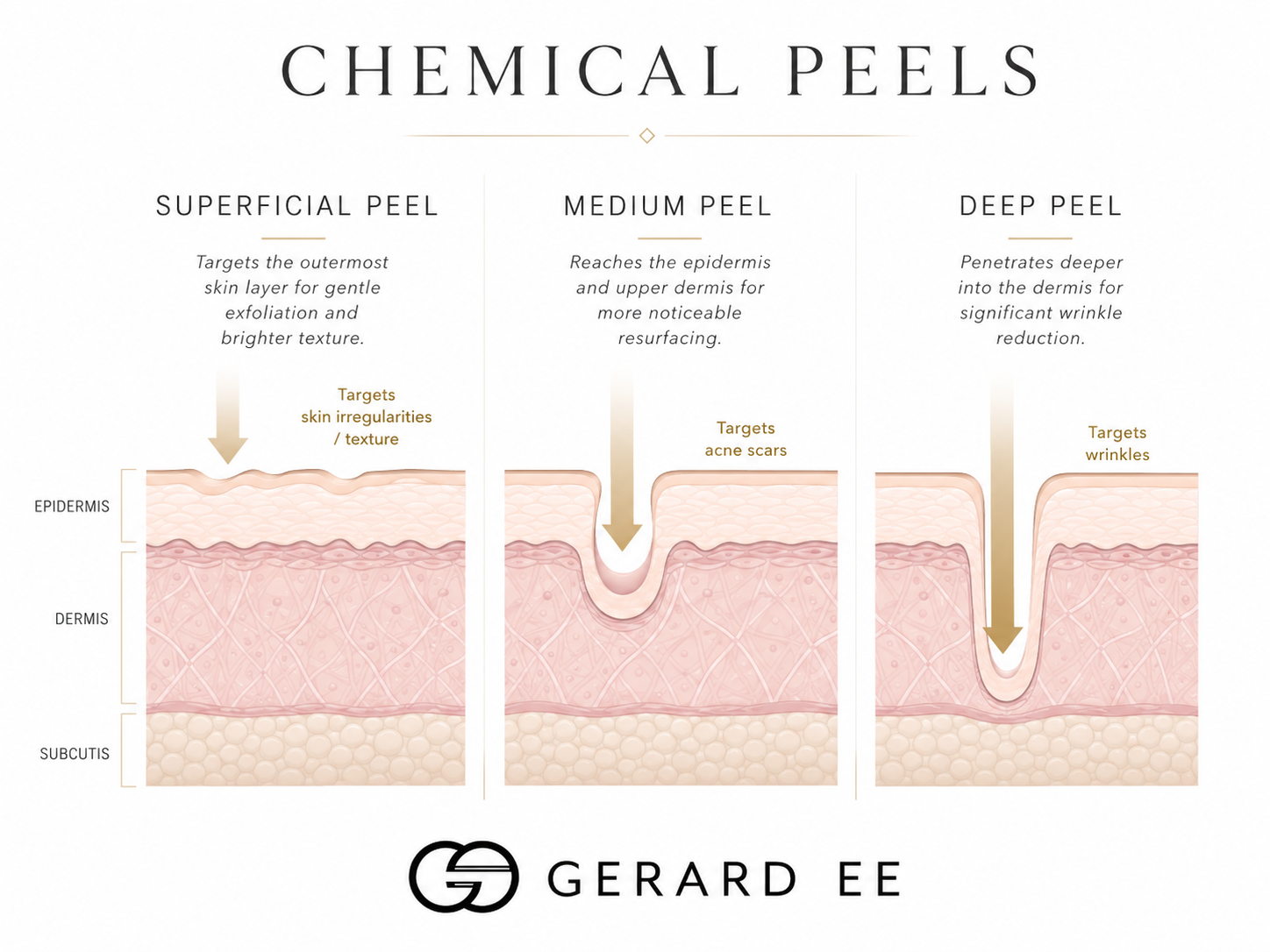
A chemical peel is controlled chemical exfoliation. An acid is applied, held to a defined endpoint, then neutralised or allowed to self-neutralise depending on the agent. Removing damaged upper layers prompts regeneration underneath, lifting some pigment and clearing some follicular plugging in the process.
Depth is the classification that matters, because it decides both what the peel achieves and what it can cost you.
Superficial peels act within the epidermis, are well tolerated and can be repeated — this is where almost all acne and pigmentation work sits. Medium-depth peels reach the upper reticular dermis, do more, and carry proportionally more downtime and risk. Deep chemical peels reach the mid reticular dermis and usually need analgesia; in Asian skin I regard the pigmentary risk as out of proportion to the benefit, and I do not offer them for acne or pigmentation.
Chemical peel types and acid strengths
There is no single best peel — the acid is chosen for the problem, the skin type, and how the skin behaved last time. The table below sets out the agents used in the published literature and the strengths they were tested at. In my own practice the peel I use is salicylic acid at 20–30%, because the acne evidence behind it is the most consistent and because an oil-soluble acid is the one that reaches the follicle.
| Acid | Typical strength | Best suited to | Main limitation |
|---|---|---|---|
| Salicylic (the peel I use) | 20–30% | Comedonal and inflammatory acne | Can irritate dry or reactive skin |
| Salicylic + mandelic | 20% + 10% | Acne in skin prone to marking | Combination evidence remains limited |
| Mandelic | 20–40% | Sensitive or pigment-prone skin | Slower and usually gentler |
| Glycolic | 20–35% | Melasma, tone and texture | Greater irritation risk than gentler AHAs |
| TCA | 15–25% in cited studies | Selected deeper indications | Higher pigmentation and downtime risk |
The numbers behind those choices: salicylic acid beat Jessner’s solution for comedones, 53.4% versus 26.3% lesion reduction (p=0.001), and 20% salicylic with 10% mandelic beat 35% glycolic acid alone, 85.3% versus 68.5% improvement (p<0.001) [2], a result Cochrane found held at short and medium-term follow-up [3]. One systematic review placed 30% salicylic acid highest on efficacy among the peels compared [5]. Glycolic acid has the strongest randomised support in melasma in Fitzpatrick III to V skin [8]. Trichloroacetic acid produced the most adverse effects of the three agents tested in skin of colour [9]. Lactic acid, Jessner’s solution, pyruvic acid and azelaic acid also appear in the literature; I have left them out of the table because they are not agents I reach for.
Chemical peel for acne: what the trials show
The guideline position first, because it is unflattering and it is true. The 2024 AAD acne guideline assessed chemical peels alongside lasers, light devices, microneedling radiofrequency and photodynamic therapy, and concluded the evidence was insufficient to recommend for or against any of them [1]. The trials were small, heterogeneous and at high risk of bias. Peels were not graded against a topical retinoid with benzoyl peroxide, which remain first-line with high-certainty evidence behind them.
Underneath the guideline the picture is more useful. Glycolic acid outperforms placebo for excellent-or-good improvement, relative risk 2.30 (95% CI 1.40–3.77) [2]. Most agents do not separate from one another head-to-head. Two comparisons do: salicylic acid beat Jessner’s solution for comedones, 53.4% versus 26.3% reduction (p=0.001), and 20% salicylic with 10% mandelic beat 35% glycolic acid alone, 85.3% versus 68.5% improvement (p<0.001) [2], a result Cochrane found held at both short and medium-term follow-up [3].
The network meta-analysis behind the NICE acne guidance put peels at a mean 39.7% additional lesion reduction over placebo in mild-to-moderate acne — with a credible interval from 12.5% to 66.8%, and peels specifically flagged as an area of high uncertainty [4].
What follows is straightforward. A peel is worth adding when someone is already on appropriate topical treatment and needs help with comedones, oiliness or the marks left behind. It is not worth starting instead of that treatment, and it is not what I offer for nodular or scarring acne — that conversation is about isotretinoin or a sebaceous-gland device.
Chemical peel for pigmentation, melasma and hyperpigmentation
Glycolic acid has the strongest randomised support in melasma in Fitzpatrick III to V skin — a systematic review of 24 studies, 15 randomised, 1,075 patients, identified it as the most effective and safest agent, typically 20–35% and most often 30%, repeated fortnightly [8].
A direct comparison in skin of colour tested 30% glycolic against 92% lactic and 15% trichloroacetic acid every two weeks for twelve weeks. Glycolic and TCA both produced significantly greater MASI reduction than lactic acid, with no significant difference between them. Adverse effects were most frequent with TCA, then glycolic; lactic acid was best tolerated and least effective [9].
But peels are not the main treatment for melasma. A review of 113 studies covering 6,897 participants concluded that triple combination cream and hydroquinone remain the most effective and best-studied options, with peels and light devices giving mixed results and more adverse effects [10]. A network meta-analysis of 59 randomised trials ranked peeling below triple combination cream, topical vitamin C and oral tranexamic acid [11]. A peel is an adjunct to topical therapy and photoprotection, which is also the position of the most recent international consensus [13].
Post-acne brown marks are a different problem from melasma and behave differently; I have written about brown acne marks and PIH in Asian skin separately.
Chemical peels on Asian skin: the pigmentation risk runs both ways
This is the section that matters most here, and the one most chemical peel pages in Singapore leave out.
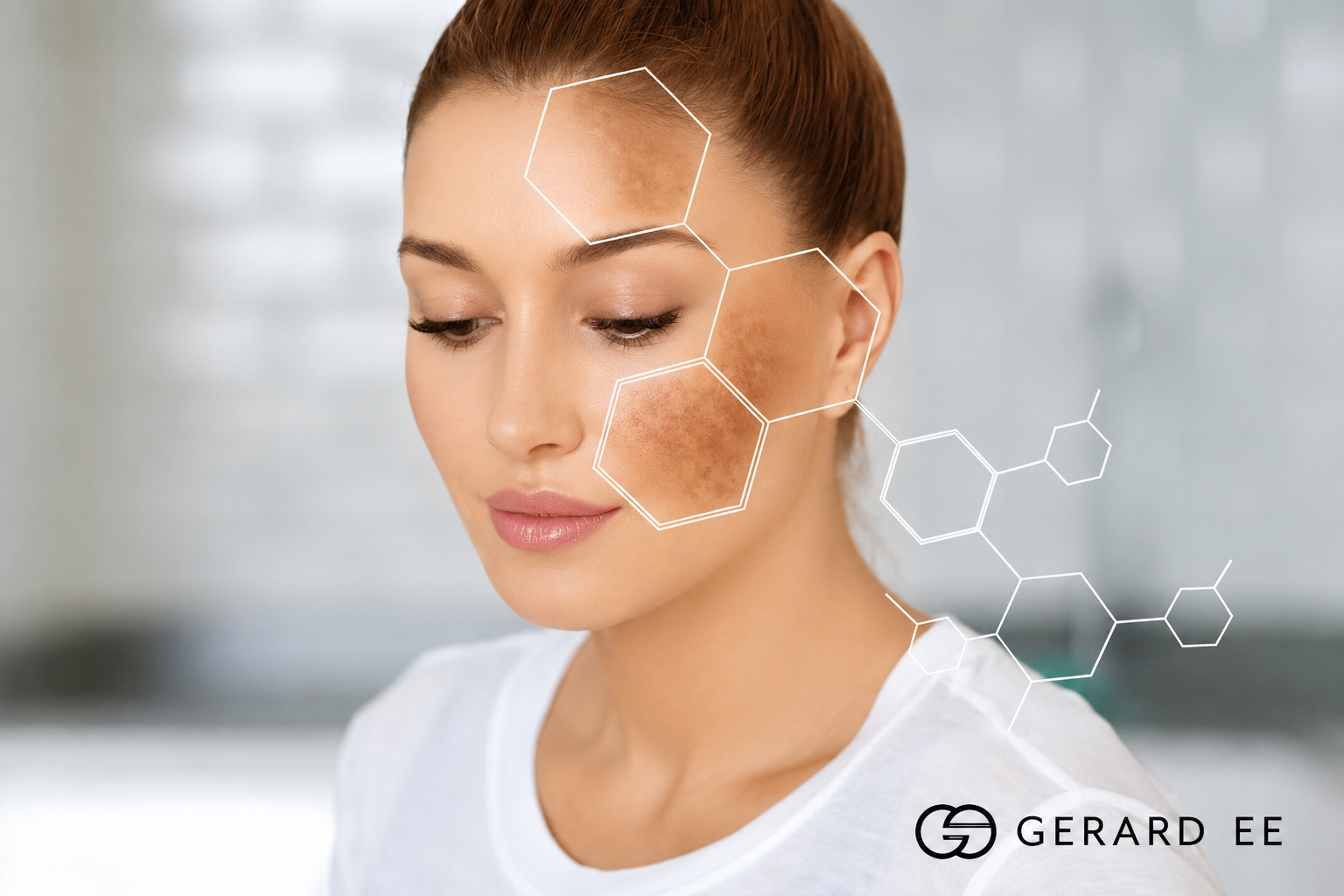
The same peel that lifts pigment can cause it. Higher Fitzpatrick phototype carries increased risk of dyschromia after peeling — both post-inflammatory hyperpigmentation and worsening of existing melasma — and the risk rises with peel depth [12]. That is why I am conservative with trichloroacetic acid on Asian skin, and why I will often start with a lower-strength or slower-penetrating acid before considering anything stronger. Patients with a history of keloid or hypertrophic scarring carry an added risk of abnormal scarring on top of the pigmentary risk [13].
Two measures reduce that risk and neither is optional. Consensus in Fitzpatrick IV to VI skin is to stop topical tretinoin about a week before the peel, so the acid does not penetrate unevenly through already-thinned skin [13]. And broad-spectrum sunscreen with high long-wave UVA protection before, during and after the course is part of the treatment, not general advice [12].
If someone tells me they cannot commit to daily sun protection for the duration, I do not do the peel. In Singapore that is not a hypothetical.
Chemical peels and acne scars: what they can and cannot do
A superficial peel does not treat an atrophic acne scar. Ice pick, boxcar and rolling scars are structural defects in the dermis, and lifting the epidermis does nothing to them. Peels help the surface — texture, tone, the marks left behind — which is a different thing from the scar itself. If scarring is the problem, the honest answer is subcision, radiofrequency microneedling or a fractional laser, and I have set out how I choose between them in the acne scar treatment guide.
The one exception is focal high-strength trichloroacetic acid applied into an individual ice pick scar — the TCA CROSS technique — which is a different procedure from a full-face peel and is used point by point rather than across the skin.
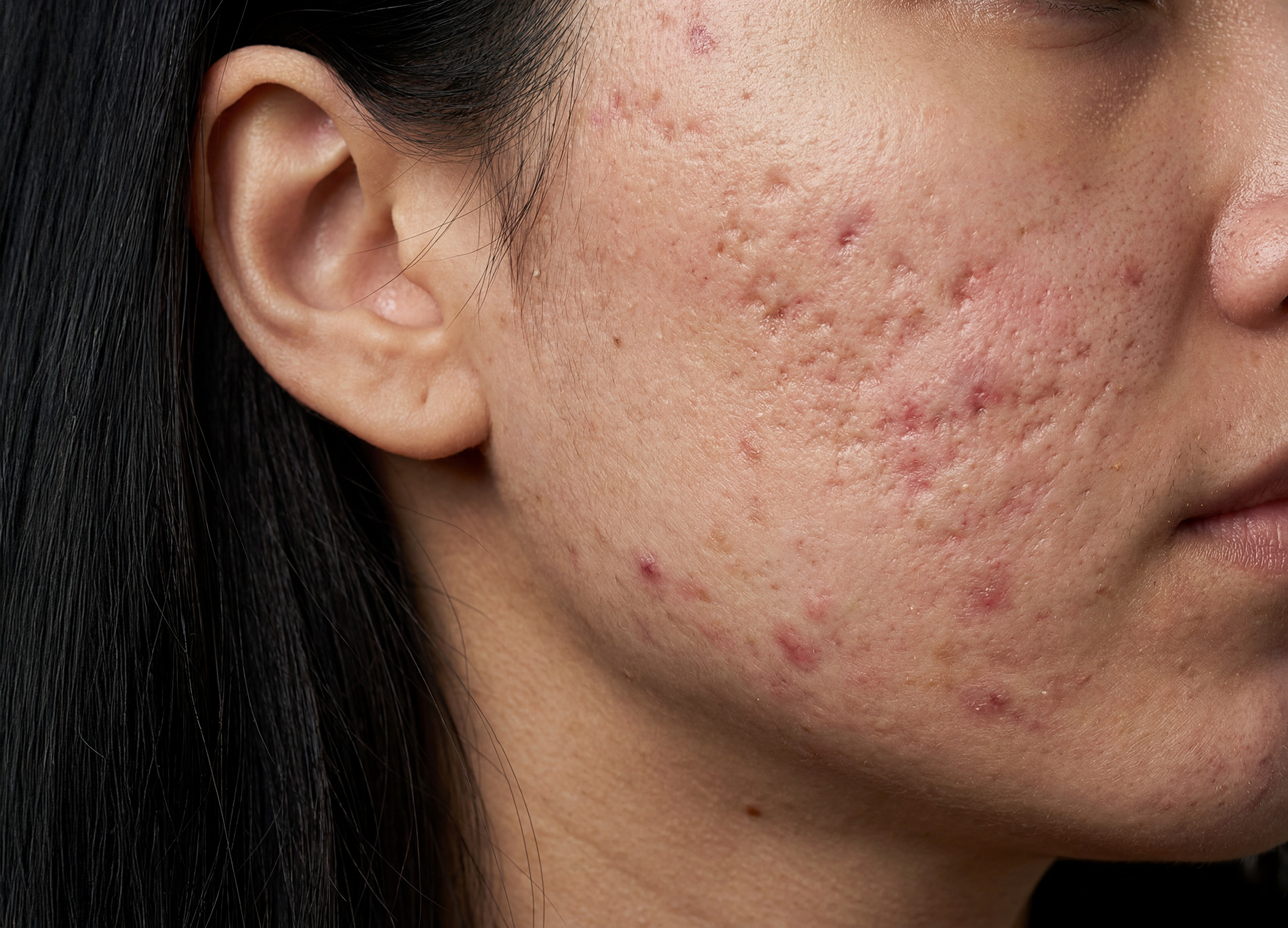
Chemical peel downtime: what your face looks like afterwards
I want to correct something that most clinic pages still say, including an older version of this one. A superficial peel is not a no-downtime procedure.
Day 0: the skin looks flushed and feels tight, like mild sunburn. Days 1 to 2: redness settles; some people get none at all, others stay visibly pink. Day 3: this is usually the peak of the visible phase — fine flaking around the nose, mouth and chin, sometimes sheet-like peeling with the stronger agents. Days 4 to 7: flaking finishes. Makeup over it is fine throughout.
What is not fine is picking at flaking skin. It is the most reliable way to produce exactly the pigmentation you came in to treat.
Chemical peel cost in Singapore
A chemical peel at my clinic is S$200 per session.
The number that actually matters, though, is the course. The published protocols run to four to six sessions two to four weeks apart [2, 6, 7], so a realistic course is S$800 to S$1,200. A single peel is rarely the whole answer, and comparing clinics on a single-session price will mislead you — ask what a full course costs and what happens if your skin needs more than the standard number.
Beyond the number of sessions, price varies with the acid and its strength, and with whether the peel is done alone or alongside another treatment.
Be wary of the very cheapest end of the market. In Singapore a chemical peel is a medical procedure. The acid and the strength should be chosen by a doctor who has assessed your skin type, and on Fitzpatrick III to V skin the cost of getting that judgement wrong is pigmentation that takes months to settle — which is considerably more expensive than the peel.
Chemical peel side effects and risks
With the right agent for the skin type and proper aftercare, complications are uncommon. They are not zero. The recognised ones are:
- Post-inflammatory hyperpigmentation — the main one in Asian skin
- Worsening of existing melasma
- Prolonged redness
- Infection
- Milia
- An acneiform eruption in the weeks afterwards
- Scarring — rare, and largely confined to deeper peels
The risk is not evenly spread. It rises with peel depth, with Fitzpatrick phototype, with trichloroacetic acid over the alpha-hydroxy agents, and with poor sun protection afterwards [5, 9, 12]. Those four factors account for most of it, and three of the four are controllable.
Chemical peel aftercare
- Do not pick or pull at flaking skin, however satisfying it looks.
- Moisturise generously and often.
- Cleanse gently — no scrubs, no acids, no exfoliating devices.
- Broad-spectrum sunscreen daily, and avoid deliberate sun exposure for at least two weeks.
- Restart active topicals when I tell you to, not when the flaking stops.
Chemical peels in pregnancy and breastfeeding
I defer elective peels in pregnancy. The safety data are observational rather than trial-based, cutaneous absorption changes in pregnancy, and pregnancy is itself a recognised risk factor for post-peel hyperpigmentation [13, 14]. For pigmentation that appears or worsens during pregnancy the sensible course is photoprotection and trigger management, with active treatment after delivery. Lactation is assessed individually rather than treated as an automatic bar [14]. My wider approach to acne in pregnancy is set out separately.

Dr Gerard Ee, Aesthetic Doctor in Singapore
Dr Gerard Ee is an aesthetic doctor in Singapore and the Medical Director of his practice at 50 Raffles Place. He graduated from St George’s, University of London, trained in surgery at Singapore General Hospital and the National University Hospital, and holds the MRCS (Edinburgh) and a postgraduate diploma in practical dermatology from Cardiff University.
He has practised aesthetic medicine since 2012, is the author of sixteen peer-reviewed papers, and writes and medically reviews every article on this site. Read more about Dr Gerard Ee.

Book a consultation with Dr Gerard Ee at The Clifford Clinic
Dr Gerard Ee consults and performs chemical peel treatment at The Clifford Clinic, 50 Raffles Place, Singapore. Consultations are by appointment. Message the clinic on WhatsApp, or call 6532 2048.
Chemical peel Singapore: frequently asked questions
How much does a chemical peel cost in Singapore?
At my clinic a chemical peel is S$200 per session. Because a course is typically four to six sessions two to four weeks apart [2, 6, 7], budget S$800 to S$1,200 for a full course — that is the figure worth comparing between clinics, not the single-session price. Very low headline prices usually mean a weak agent, a therapist rather than a doctor, or both.
Is chemical peeling good for your skin?
Used appropriately, yes — for comedonal acne, oiliness and post-inflammatory marks. It is not good for everyone: it is the wrong treatment for atrophic scarring, for active eczema or dermatitis, and for anyone who cannot manage daily sun protection afterwards. The 2024 AAD guideline found the evidence insufficient to recommend for or against peels in acne [1], which is why I use them as an adjunct rather than a mainstay.
What does your face look like 3 days after a chemical peel?
Day three is usually the most visible day. Expect fine flaking around the nose, mouth and chin, and with the stronger agents sheet-like peeling. Redness has normally settled by then. Makeup covers it. Do not pick at it.
Can a chemical peel remove hyperpigmentation?
It can lighten it, particularly with glycolic acid at 20–35% [8], but it will rarely clear it alone, and it is not first-line — triple combination cream and hydroquinone have better evidence in melasma [10, 11]. In Fitzpatrick III to V skin, a peel can also cause hyperpigmentation, so the agent and depth have to be chosen carefully [12].
Which chemical peel is best for acne?
Salicylic acid has the most consistent evidence, and 20–30% is what I use. A combined 20% salicylic with 10% mandelic peel beat 35% glycolic acid in a direct comparison, 85.3% versus 68.5% improvement [2, 3].
Do chemical peels remove acne scars?
No. Superficial peels do not treat atrophic scars, whatever the marketing says. They improve the marks and the surface texture. Structural scarring needs subcision, RF microneedling or fractional laser.
Are chemical peels safe for Asian skin?
Yes, with the right agent and proper sun protection — but the risk of post-inflammatory hyperpigmentation is genuinely higher at darker Fitzpatrick phototypes and rises with peel depth [12]. That is why I start conservatively and why I am cautious with trichloroacetic acid.
How many chemical peel sessions will I need?
Four to six, two to four weeks apart, is the pattern used across the published trials [2, 6, 7]. How many you actually need depends on what is being treated and how your skin responds to the first two.
Can I have a chemical peel while pregnant?
I would wait. The safety evidence is thin and pregnancy raises the risk of pigmenting afterwards [13, 14].
To see how peels sit against everything else I use for acne, the full acne library sets out the whole ladder, from topical treatment through to the sebaceous-gland devices.
Where pigment rather than texture is the main problem, a pigment laser is usually the better instrument than a peel; I compare the two devices in pico laser vs Q-switch laser.
Raised scars that grow beyond the original wound are keloids, a different problem from pitted acne scars; see my guide to keloid scars and the options for keloid treatment in Singapore.
References
Published studies cited on this page
- Reynolds RV, Yeung H, Cheng CE, et al. Guidelines of care for the management of acne vulgaris. J Am Acad Dermatol. 2024;90(5):1006.e1-1006.e30. doi:10.1016/j.jaad.2023.12.017
- Chen X, Wang S, Yang M, Li L. Chemical peels for acne vulgaris: a systematic review of randomised controlled trials. BMJ Open. 2018;8(4):e019607. doi:10.1136/bmjopen-2017-019607
- Liu H, Yu H, Xia J, et al. Topical azelaic acid, salicylic acid, nicotinamide, sulphur, zinc and fruit acid (alpha-hydroxy acid) for acne. Cochrane Database Syst Rev. 2020;5:CD011368. doi:10.1002/14651858.CD011368.pub2
- Mavranezouli I, Daly CH, Welton NJ, et al. A systematic review and network meta-analysis of topical pharmacological, oral pharmacological, physical and combined treatments for acne vulgaris. Br J Dermatol. 2022;187(5):639-649. doi:10.1111/bjd.21739
- Pour Mohammad A, Seirafianpour F, Jafarzadeh A, et al. A comprehensive systematic review on the efficacy, safety, tolerability, and relapse rates of modern procedural therapies for inflammatory and non-inflammatory acne vulgaris. Lasers Med Sci. 2025;40(1):383. doi:10.1007/s10103-025-04640-3
- Chilicka K, Rogowska AM, Szyguła R, et al. A comparison of the effectiveness of azelaic and pyruvic acid peels in the treatment of female adult acne: a randomized controlled trial. Sci Rep. 2020;10(1):12612. doi:10.1038/s41598-020-69530-w
- Deda A, Hartman-Petrycka M, Gędoś M, et al. Cosmetic benefits of medium-depth chemical peels for moderate acne lesions and atrophic acne scars: a single-arm clinical trial in young adults. J Clin Med. 2025;14(23):8598. doi:10.3390/jcm14238598
- Sarkar R, Lakhani R. Chemical peels for melasma: a systematic review. Dermatol Surg. 2024;50(7):656-661. doi:10.1097/DSS.0000000000004167
- Sahu P, Dayal S. Most worthwhile superficial chemical peel for melasma of skin of color: authors’ experience of glycolic, trichloroacetic acid, and lactic peel. Dermatol Ther. 2021;34(1):e14693. doi:10.1111/dth.14693
- McKesey J, Tovar-Garza A, Pandya AG. Melasma treatment: an evidence-based review. Am J Clin Dermatol. 2020;21(2):173-225. doi:10.1007/s40257-019-00488-w
- Liu Y, Wu S, Wu H, et al. Comparison of the efficacy of melasma treatments: a network meta-analysis of randomized controlled trials. Front Med. 2021;8:713554. doi:10.3389/fmed.2021.713554
- Amici JM, Cogrel O, Jourdan M, et al. Expert recommendations on supportive skin care for non-surgical and surgical procedures. J Eur Acad Dermatol Venereol. 2023;37(Suppl 3):16-33. doi:10.1111/jdv.18855
- Ocampo-Candiani J, Alas-Carbajal R, Bonifaz-Araujo JF, et al. Latin American consensus on the treatment of melasma. Int J Dermatol. 2025;64(3):499-512. doi:10.1111/ijd.17522
- Kovacs T, Nadir U, Goldenberg M, et al. Cosmetic dermatology in pregnancy and lactation: a risk-benefit framework for clinical practice. Int J Dermatol. 2026. doi:10.1111/ijd.70620
- Shi M, Wang R, Peng G, et al. Efficacy of compound acid chemical peeling in patients with moderate acne: a prospective study with comprehensive facial evaluation. J Vis Exp. 2026;(234). doi:10.3791/72116
- Chng WQ, Samuel M, Naidoo K, et al. Topical treatments and skin-resurfacing techniques for skin ageing. Cochrane Database Syst Rev. 2021. doi:10.1002/14651858.CD014391
This page is written from published research and from clinical experience in Singapore since 2012. It is for general education, not medical advice. Whether a treatment suits you, what it may achieve and what it may risk can only be established at a consultation. Dr Gerard Ee is the Medical Director of The Clifford Clinic, a private clinic in Singapore, and treatments discussed on this site are provided commercially.