Home›Blog›Acne›Acne Scars & Marks›Brown Acne Marks (PIH): Pigmentation Treatment for Asian Skin
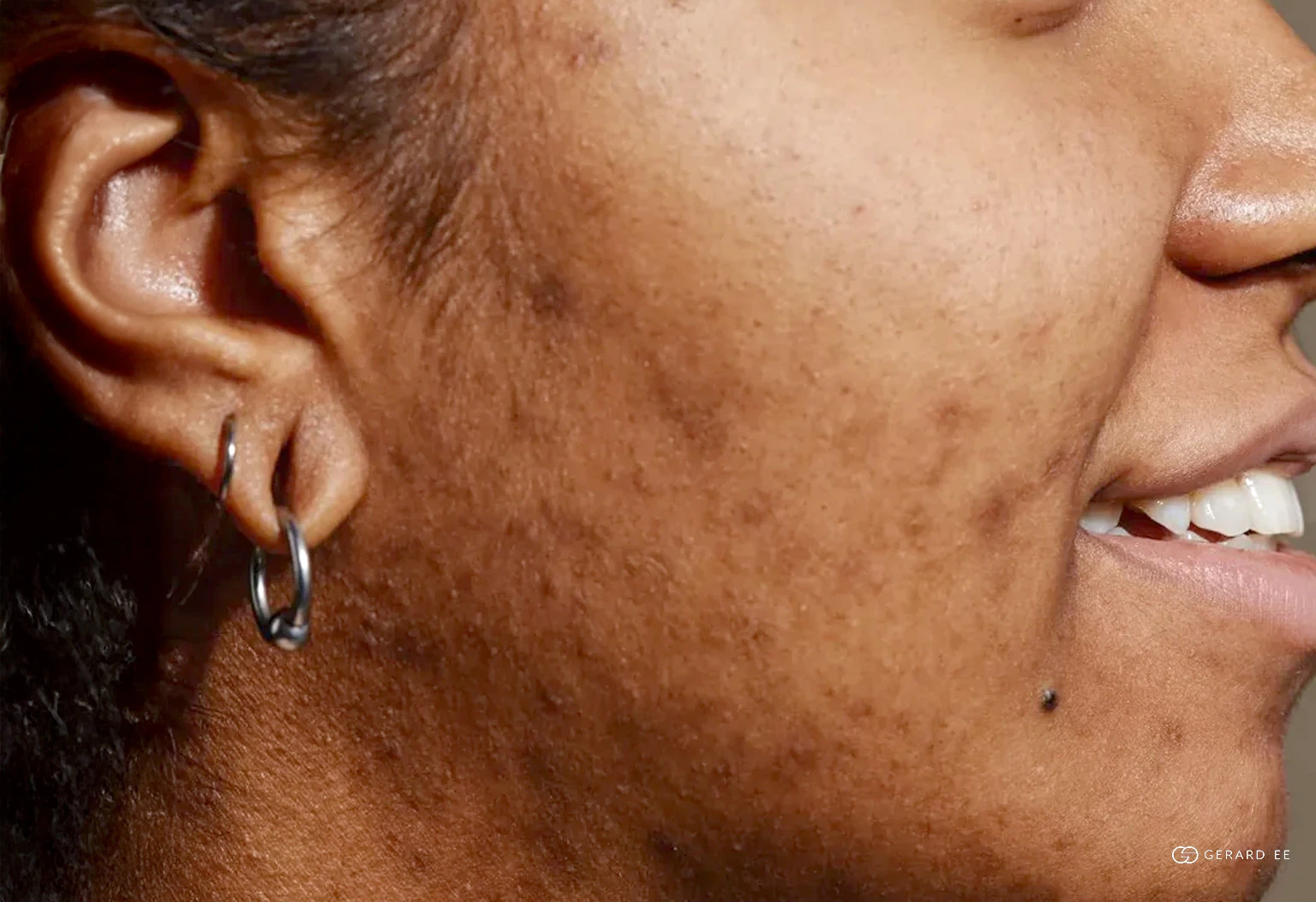
Clearing acne is only half the story for many of my Asian patients, as the brown marks left behind often linger far longer than the pimples themselves. These flat brown patches are one of the most common concerns I see, and they are not scars. They can be treated, but in darker skin they need a careful, pigment aware approach rather than aggressive treatment.
Dr Gerard Ee consults at The Clifford Clinic, 50 Raffles Place, Singapore.
My quick answer
Brown acne marks are post inflammatory hyperpigmentation, or PIH, where extra pigment is deposited after a breakout. They are flat, not scars, and they are more common in Asian and darker skin. Treatment combines a pigment laser such as Q-Switch with diligent sun protection and pigment friendly skincare. In pigment prone skin the approach is gentler, using lower energy and longer intervals and avoiding the more aggressive devices that can worsen pigmentation. If some of the marks are indented rather than flat, those are scars, and the procedures for them are set out on my acne scar removal in Singapore page.
What I look for during the consultation
The assessment confirms that the marks are flat brown pigment rather than a scar or another form of pigmentation such as melasma, since each is treated differently. How long the marks have lasted, the skin tone, sun exposure habits and current products all matter. Whether the acne is still active is important too, as pigment is treated once the breakouts settle. In darker skin I pay particular attention to how reactive the skin is, as that decides how gently to treat.
How I classify brown marks
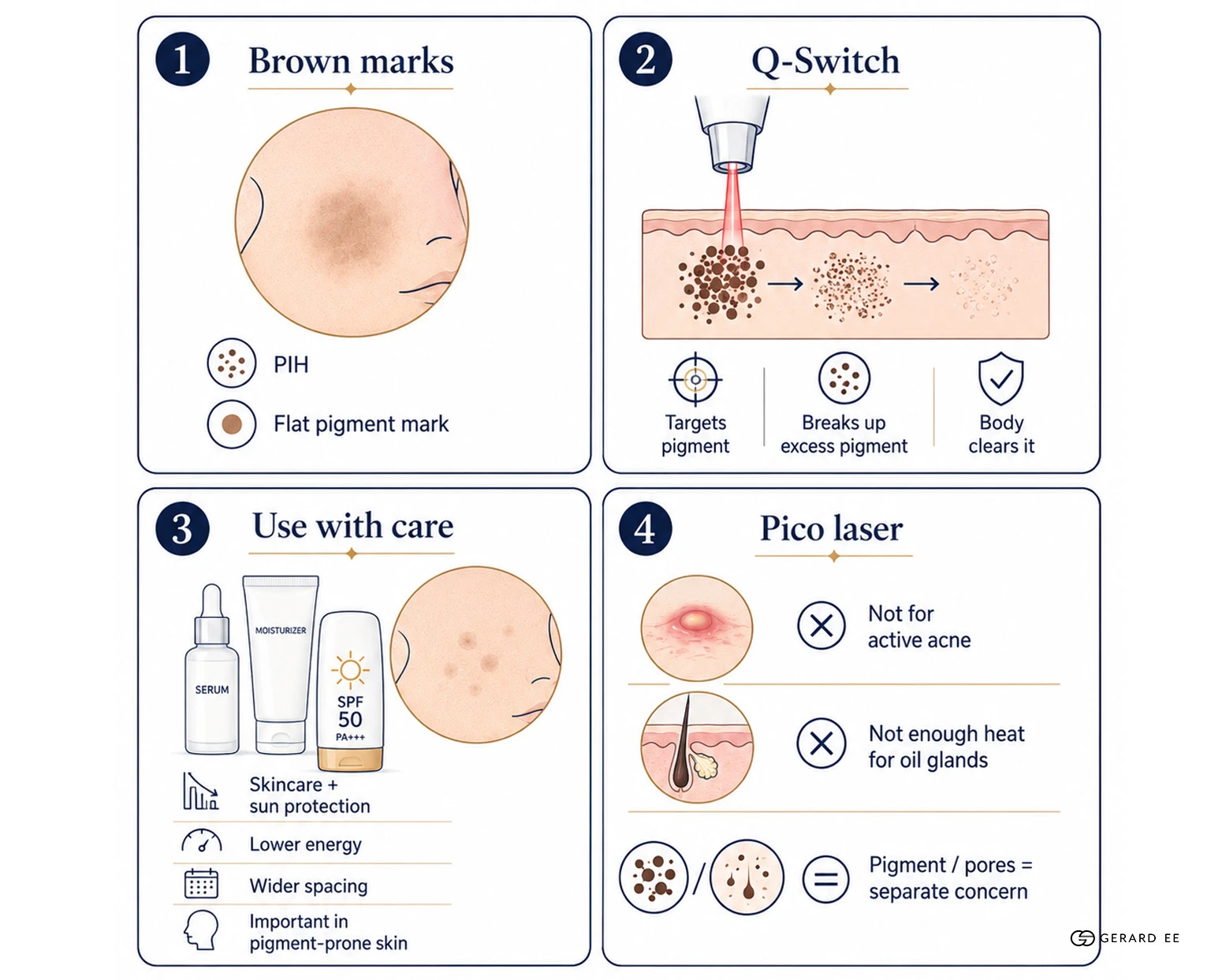
When the skin is inflamed by a pimple, the pigment producing cells can become overactive and leave a brown mark once the spot heals. This is post inflammatory hyperpigmentation, a change in colour only, with no change in texture, which is what separates it from a true scar. It is distinct from melasma, which forms broader, symmetrical patches driven by hormones and sun rather than by a single lesion, and which needs its own approach.
Dr Gerard Ee’s clinical note
In darker, PIH prone skin my priority is to reduce the risk of pigmentation before I reach for any energy based device. That means lower energy, longer intervals between sessions, good pre-treatment skincare and strict sun protection. I would rather take a slower, safer route and protect the skin than push hard and trigger more brown marks than I started with.
When I would consider a pigment laser
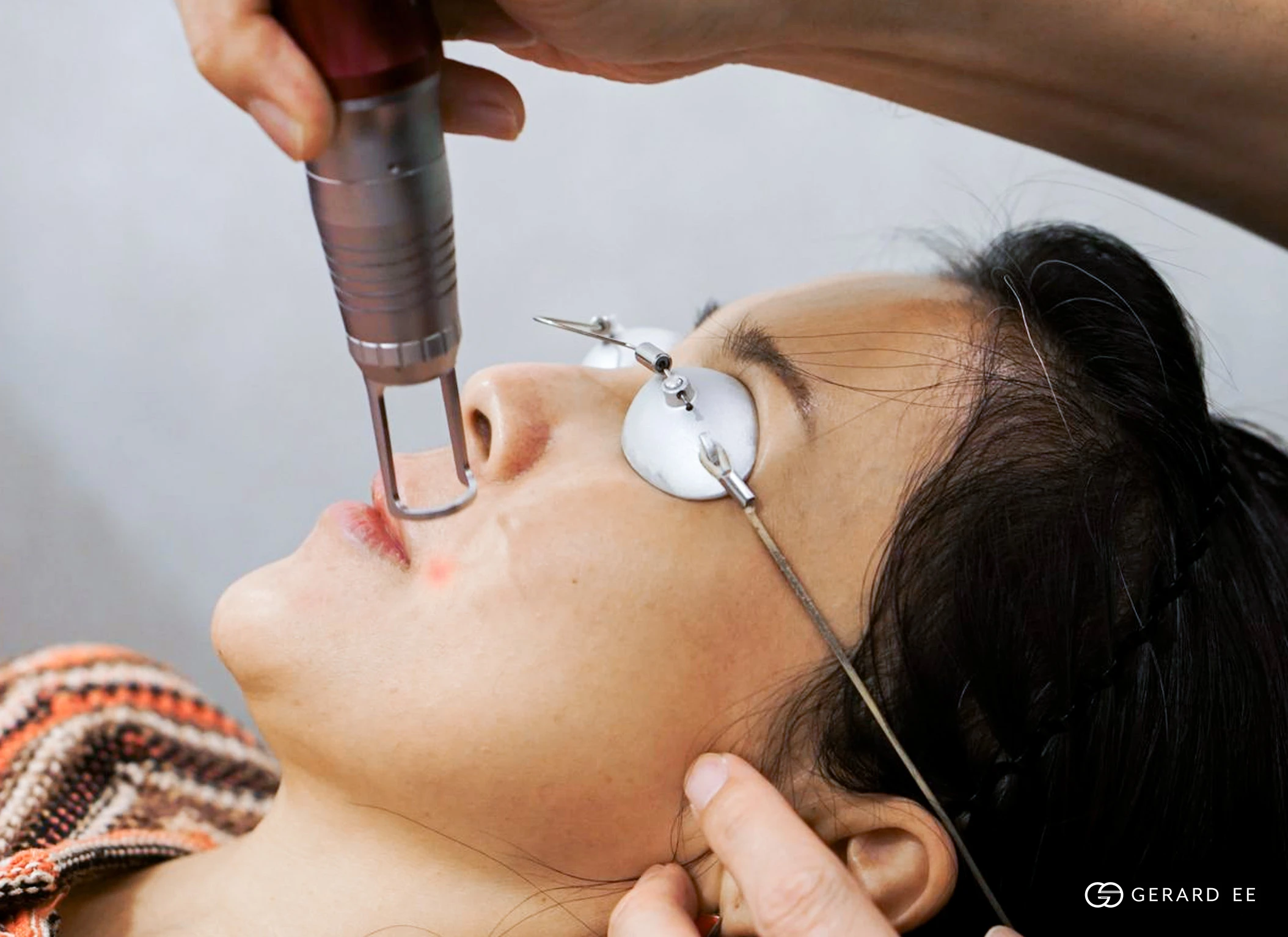
The mainstay for brown marks is a pigment targeting laser, and Q-Switch suits browner and more purple marks, breaking up the excess pigment so the body can clear it. It is used alongside pigment friendly skincare and sun protection. In pigment prone skin the energy is kept lower and sessions are spaced further apart. Pico lasers are not used for active acne, as they do not deliver enough heat to help the oil gland. Which of the two pigment lasers suits a given mark is set out in pico laser vs Q-switch laser, and the low-energy, widely spaced approach above is how pico laser in Singapore is run for brown acne marks.
When I would be cautious or wait
In darker skin I am cautious with the more aggressive energy devices and with fractional resurfacing, as they can provoke more pigment if used too hard. I would wait, rather than treat, while the acne is still active, since new breakouts simply create new marks. And I would not chase brown marks with strong treatment in someone who is not protecting their skin from the sun, as that undoes the work as fast as it is done.
Common mistakes I see
The most common mistake is treating brown marks too aggressively, which in pigmented skin often makes them worse rather than better. The second is neglecting sun protection, since sun exposure reliably darkens pigment and slows progress. The third is picking at active spots, which creates fresh pigment to treat. And the fourth is assuming long standing marks cannot be improved, which is a misconception I correct constantly, as in my experience they respond well.
How PIH differs from other pigmentation
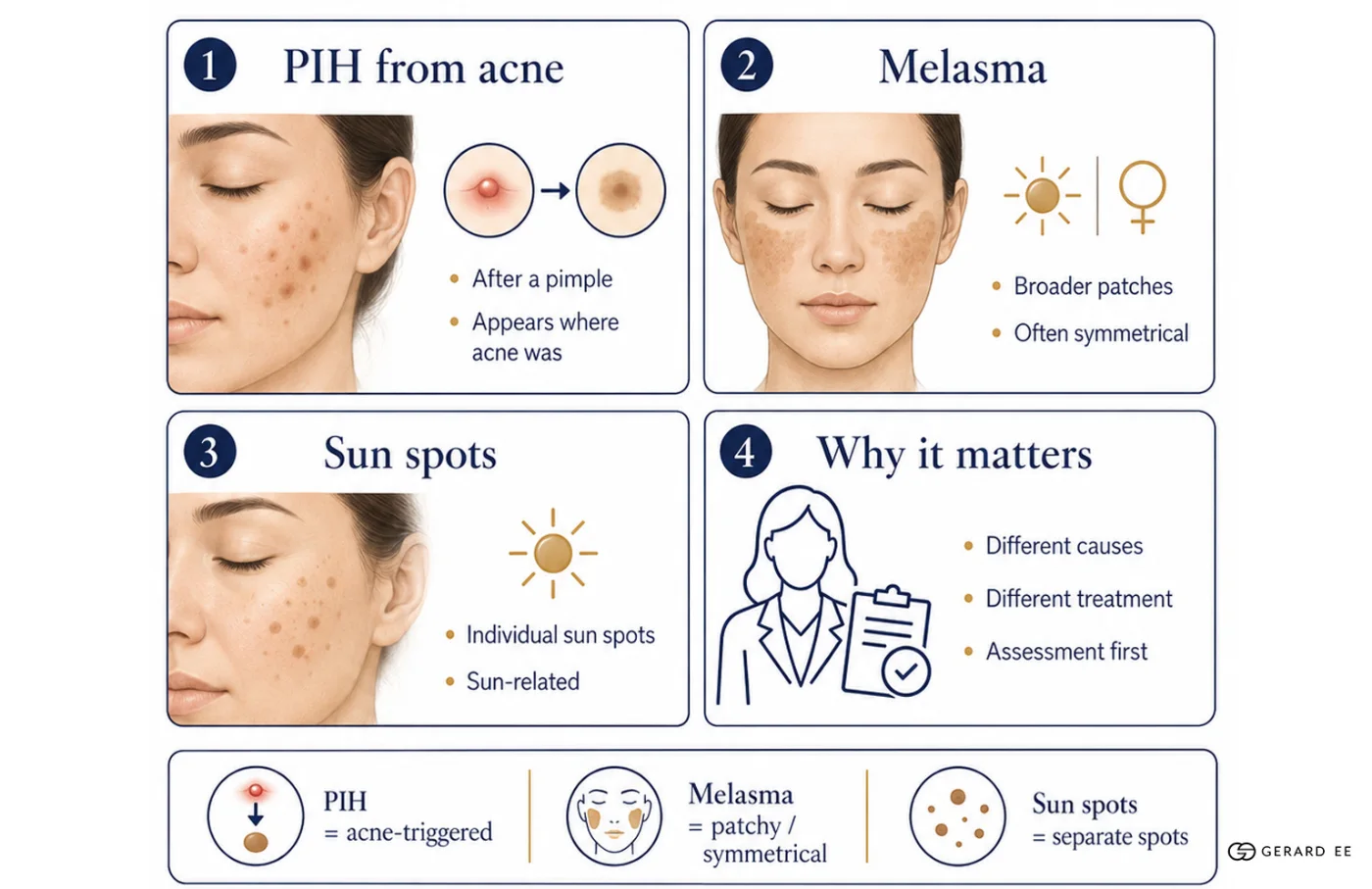
Brown marks from acne are sometimes confused with other forms of pigmentation, such as melasma or sun spots, but they have a specific cause. Post inflammatory hyperpigmentation follows a clear trigger, the inflammation of a pimple, and it appears exactly where the breakout was. Melasma forms broader, symmetrical patches and is driven by hormones and sun. The distinction matters because the treatments and precautions differ, which is another reason an accurate assessment is the sensible starting point.
Supporting brown marks between sessions
Day-to-day care strongly influences how quickly brown marks fade. Consistent, light sun protection is the most important habit, as sun exposure darkens pigment and slows progress. Pigment friendly skincare supports the laser work between sessions, and being gentle with the skin avoids the irritation that can trigger fresh pigment. Not picking at active spots prevents new brown marks from forming, which means less pigment to treat overall. In pigmented skin, steady and gentle habits consistently outperform aggressive ones.
What you can realistically expect
Brown marks clear gradually over a series of sessions, and the timeline is usually longer in darker skin as the approach is deliberately gentle. Consistent sun protection and pigment friendly skincare are part of the plan, not optional extras. Realistic expectations are set at the first visit and adjusted as the pigment lifts.
When to see a doctor
Brown marks are worth assessing if they linger for months, keep returning with each breakout, or if you are unsure whether you are dealing with PIH or another form of pigmentation. In pigment prone skin an early assessment is especially valuable, as the wrong approach can worsen pigmentation rather than improve it.
Why Asian and darker skin is more prone to PIH
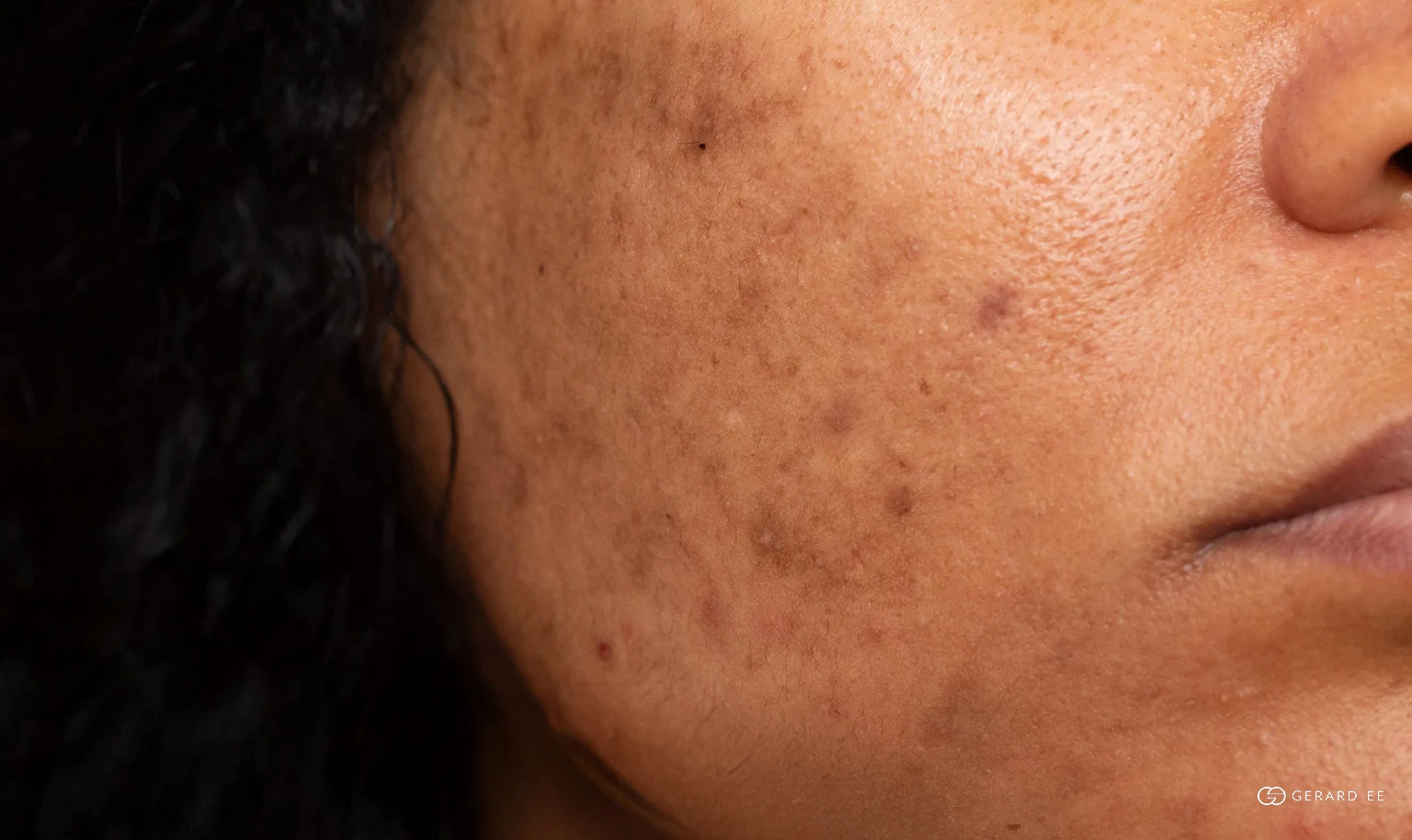
Skin with more pigment is naturally more reactive when it comes to colour. In Asian and darker skin tones, inflammation more readily triggers excess pigment, which is why brown marks are such a common after-effect of acne in Singapore. The same reactivity is the reason these skin types need a more cautious approach to lasers and energy-based devices, as the wrong settings can provoke even more pigment. Understanding this reactivity is what guides a gentler, slower treatment plan that protects the skin while it clears.The role of sun protection
Sun protection is the one area where being firm genuinely pays off with brown marks. Sun exposure darkens pigment and undoes the progress of treatment, so protecting the marks from the sun matters a great deal. For acne-prone skin the key is to choose a light, non-comedogenic product rather than a heavy, greasy one, so the pigment is protected without clogging pores. The right product, used consistently, makes a real difference to how quickly brown marks clear and stay cleared.
What the evidence shows
The approach to brown post acne marks is grounded in clinical research. Post-inflammatory hyperpigmentation is especially common in Asian and darker skin, and published experience in Asian patients supports a gentle, low-energy pigment laser to clear the excess pigment while keeping the risk of further pigmentation low. Topical azelaic acid is a useful, evidence-based partner, as it calms the pigment-forming step in the skin, helps fade discolouration and is considered safe in pregnancy. Consistent sun protection is essential, since ultraviolet light reliably darkens pigment and slows progress.
Topical options that help brown marks
Alongside laser treatment, several evidence-based topicals help brown marks fade and, just as importantly, prevent new ones. Azelaic acid calms the pigment-forming step in the skin, is gentle enough for daily use and is considered safe in pregnancy. Vitamin C and niacinamide help brighten and even the tone, and a topical retinoid speeds up skin cell turnover so pigment clears faster, though retinoids are avoided in pregnancy. Tranexamic acid, used topically or in selected cases by mouth, is a newer option that can help stubborn pigmentation. Gentle exfoliation has a role, but aggressive peels and harsh scrubs are avoided in pigment prone skin, as the irritation they cause can trigger more pigment rather than less.
The one non-negotiable is sun protection. Ultraviolet light drives the pigment cells to produce more colour, so a light, non-comedogenic sunscreen used every day protects the marks that are being treated and stops new ones from darkening. In pigmented skin, steady, gentle care consistently outperforms aggressive treatment, and it is the combination of the right topicals, sun protection and a cautious laser that gives the cleanest result.
How long brown marks take to fade
Brown marks test patience, and it helps to know what to expect. Left alone, post-inflammatory hyperpigmentation usually fades, but it can take many months, and in darker skin it often takes longer. Treatment speeds this up, but it is still gradual, working over a series of gentle sessions rather than clearing in one go. The single biggest factor in how quickly the marks fade is consistent sun protection, as ultraviolet light re-darkens pigment faster than any treatment can lift it. Steady daily habits, a suitable topical routine and a cautious, pigment aware laser together give the most reliable result, and the marks that have been present for a long time respond just as well as recent ones, so it is never too late to start.

Clear stubborn brown marks safely, the pigment-aware way.
The Clifford Clinic, 50 Raffles Place, Singapore Land Tower. Call (65) 6532 2048 or WhatsApp (65) 8318 6332 to arrange a consultation.
Related reading
- Acne Treatment Singapore: How I Choose (Dr Gerard Ee)
- Q-Switch Laser (Dr Gerard Ee)
- Acne Scar Removal (Dr Gerard Ee)
- Q-Switch Laser
- Acne Scar Treatment
- Acne Treatment Singapore

Dr Gerard Ee, Aesthetic Doctor in Singapore
Dr Gerard Ee is an aesthetic doctor in Singapore and the Medical Director of his practice at 50 Raffles Place. He graduated from St George’s, University of London, trained in surgery at Singapore General Hospital and the National University Hospital, and holds the MRCS (Edinburgh) and a postgraduate diploma in practical dermatology from Cardiff University.
He has practised aesthetic medicine since 2012, is the author of sixteen peer-reviewed papers, and writes and medically reviews every article on this site. Read more about Dr Gerard Ee.
Book a consultation with Dr Gerard Ee at The Clifford Clinic
Dr Gerard Ee consults at The Clifford Clinic, 50 Raffles Place, Singapore. Consultations are by appointment. Message the clinic on WhatsApp, or call 6532 2048.
Frequently asked questions
Are brown acne marks permanent?
No. Brown marks are post inflammatory hyperpigmentation, a flat change in colour. They fade over time and respond to pigment laser treatment with sun protection, even when present for a while.
What is the best treatment for brown acne marks in Asian skin?
A pigment laser such as Q-Switch, used at lower energy with longer intervals in pigment prone skin, combined with sun protection and pigment friendly skincare. Aggressive devices are avoided to prevent worsening pigment.
Does sunscreen really matter for brown marks?
Yes. Sun exposure darkens pigment and undoes progress. For acne prone skin, choose a light, non-comedogenic product so you protect the marks without clogging pores.
Can old brown marks still be treated?
Yes. Sun exposure darkens pigment and undoes progress. For acne prone skin, choose a light, non-comedogenic product so you protect the marks without clogging pores.
References
Sources cited on this page
- HealthHub Singapore. Acne. https://www.healthhub.sg/a-z/diseases-and-conditions/acne
- American Academy of Dermatology. Guidelines of care for the management of acne vulgaris. https://www.aad.org/member/clinical-quality/guidelines/acne
- Acne vulgaris. https://dermnetnz.org/topics/acne
- Q-switched Nd:YAG laser for post-inflammatory hyperpigmentation in Asian patients. PubMed. https://pubmed.ncbi.nlm.nih.gov/21122049/
- Systematic review of azelaic acid in acne, rosacea, melasma and skin ageing. J Cosmet Dermatol (2023). https://onlinelibrary.wiley.com/doi/10.1111/jocd.15923
- Dr Gerard Ee. Acne Scar Removal, Singapore. https://drgerardee.com/acne-scar-treatment-guide-singapore/
Medical disclaimer: This article is for general education and does not replace an in-person consultation. Treatment suitability, results and risks vary between individuals. Please speak with a qualified doctor before starting any acne treatment.