Dr Gerard Ee consults at The Clifford Clinic, 50 Raffles Place, Singapore.
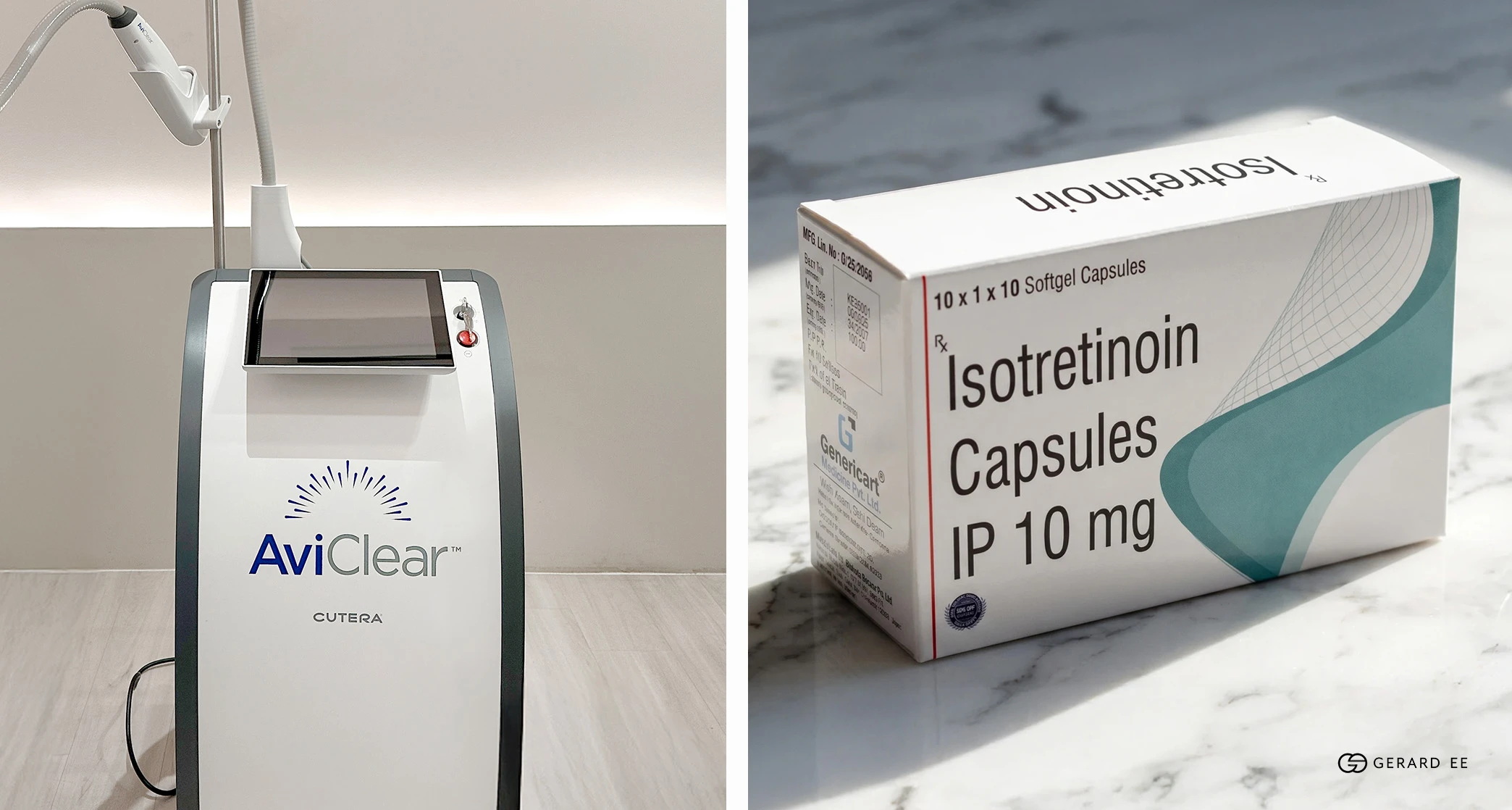
Patients researching stubborn acne often meet two very different options, isotretinoin, a powerful oral medication many know as Accutane, and AviClear, a drug-free laser that reduces oil production. Both target the oil gland, which is central to acne, but they do so in very different ways and suit different situations. The aim is not to sell a preferred treatment, but to match the right one to your acne honestly, with realistic expectations.
My quick answer
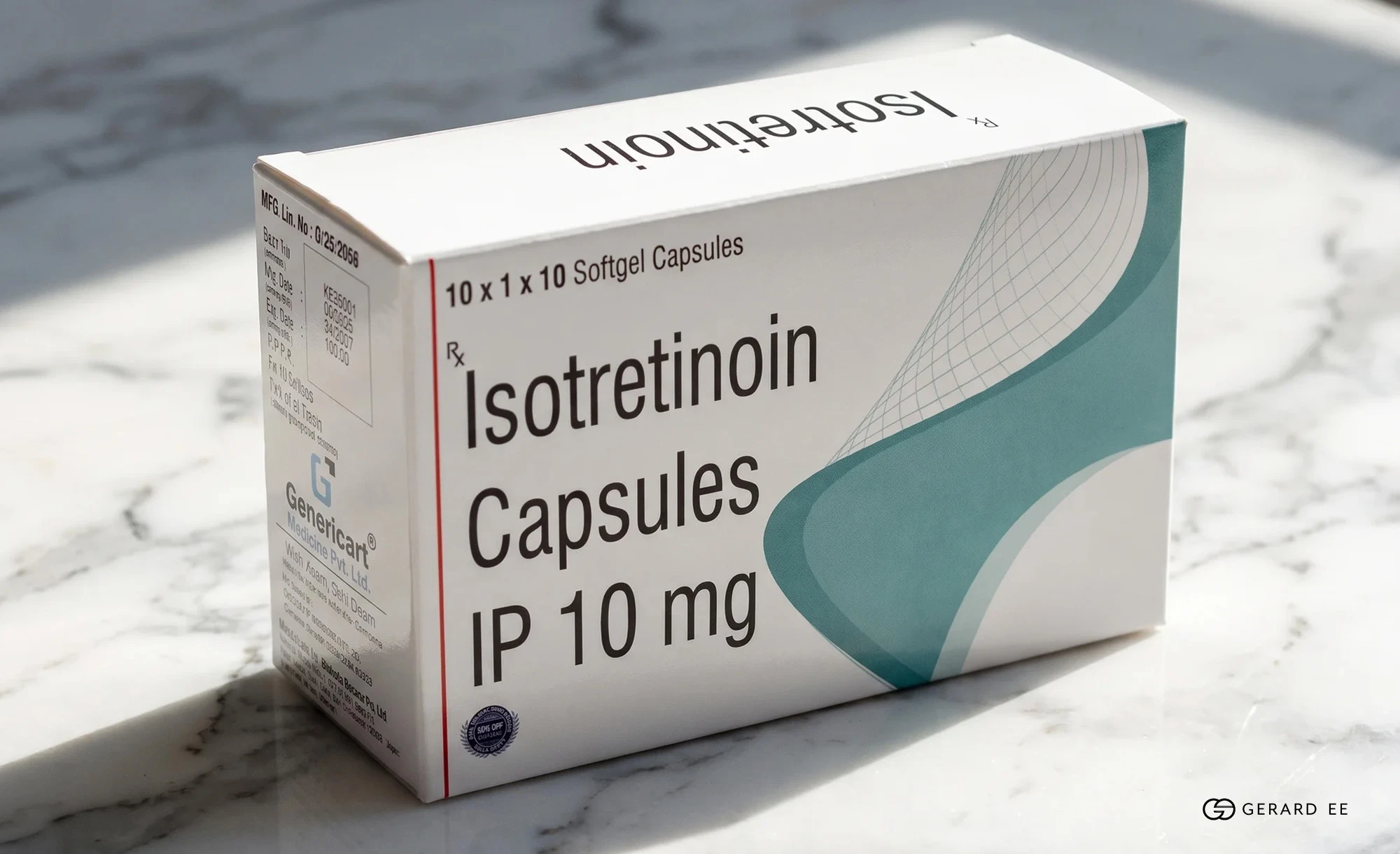
Isotretinoin is highly effective for severe, scarring or relapsing acne and remains an important option, but it carries side effects and monitoring, which is why I keep it as a last resort. AviClear is a 1726 nm laser that reduces oil production and helps many patients avoid the side effects of oral medication. It suits milder cases, oily skin and maintenance and can be combined with AGNES RF for moderate to severe acne.
What I look for during your consultation
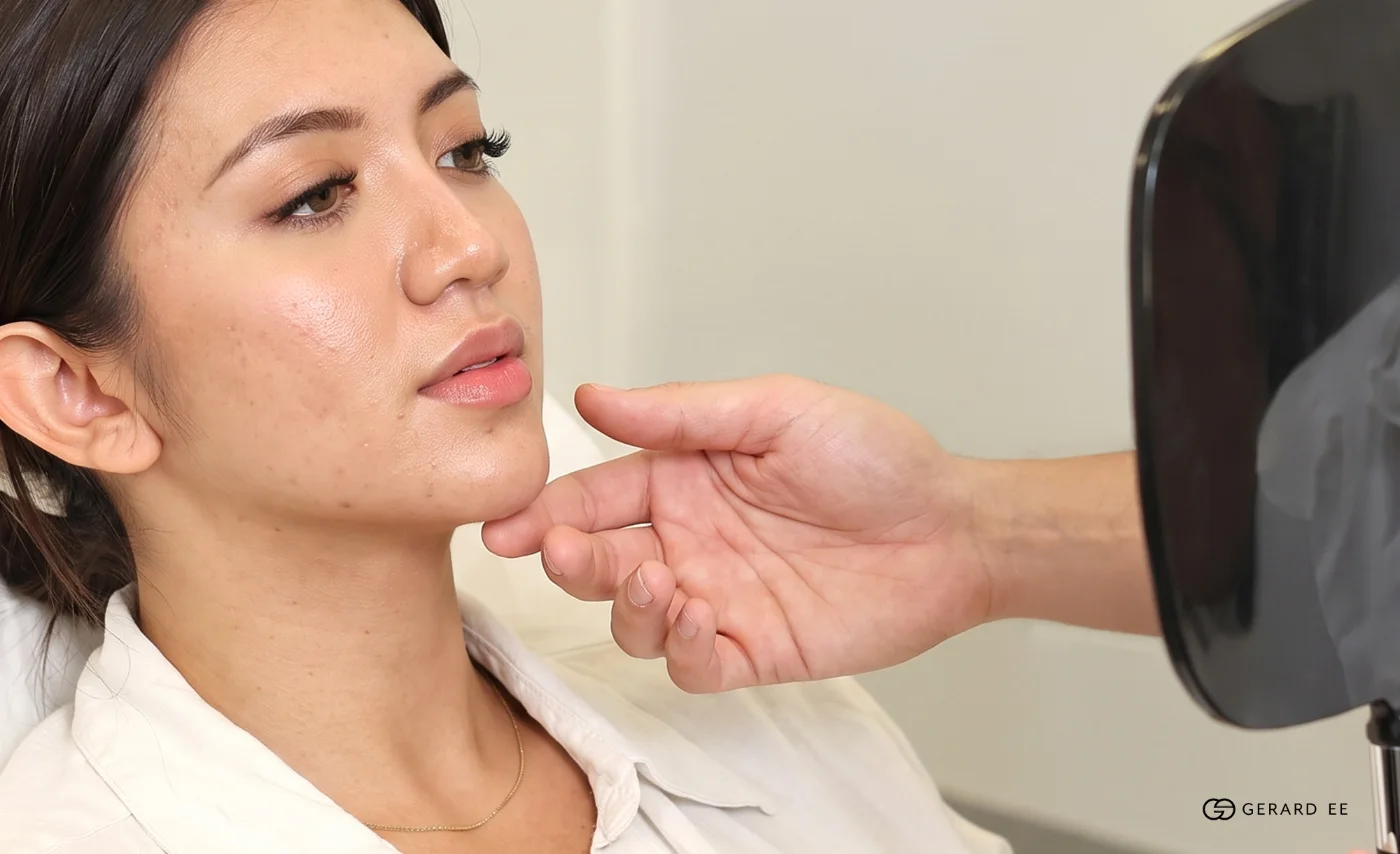
The decision rests on how severe and deep the acne is. The presence of scarring, the skin type and tendency to pigment, whether a pregnancy is planned, how well the patient tolerates medication, and their own preferences. I also look out for what has already been tried, and how the skin responded. These factors, weighed together, decide whether a more invasive treatment or an oral medication protocol would be more appropriate.
How I classify the two options
Isotretinoin shrinks the oil glands, normalises how skin cells shed and reduces inflammation, addressing several drivers of acne at once, which is why it is so effective for severe nodular and cystic acne. It is a serious medication that requires blood monitoring and strict pregnancy prevention. AviClear uses a 1726 nm laser to heat the oil glands and reduce oil production, drug-free, with a cooling system that keeps it comfortable and with very little downtime.
| Dr Gerard Ee’s clinical note
I see AviClear as a way to help many patients avoid the harsher side effects of isotretinoin. It suits milder acne, oily skin and maintenance. When acne is genuinely severe, nodular and scarring, medication still has its place. AviClear is not a replacement for medication in every case, but for the right patient, it can be a strong alternative. |
When I would consider AviClear
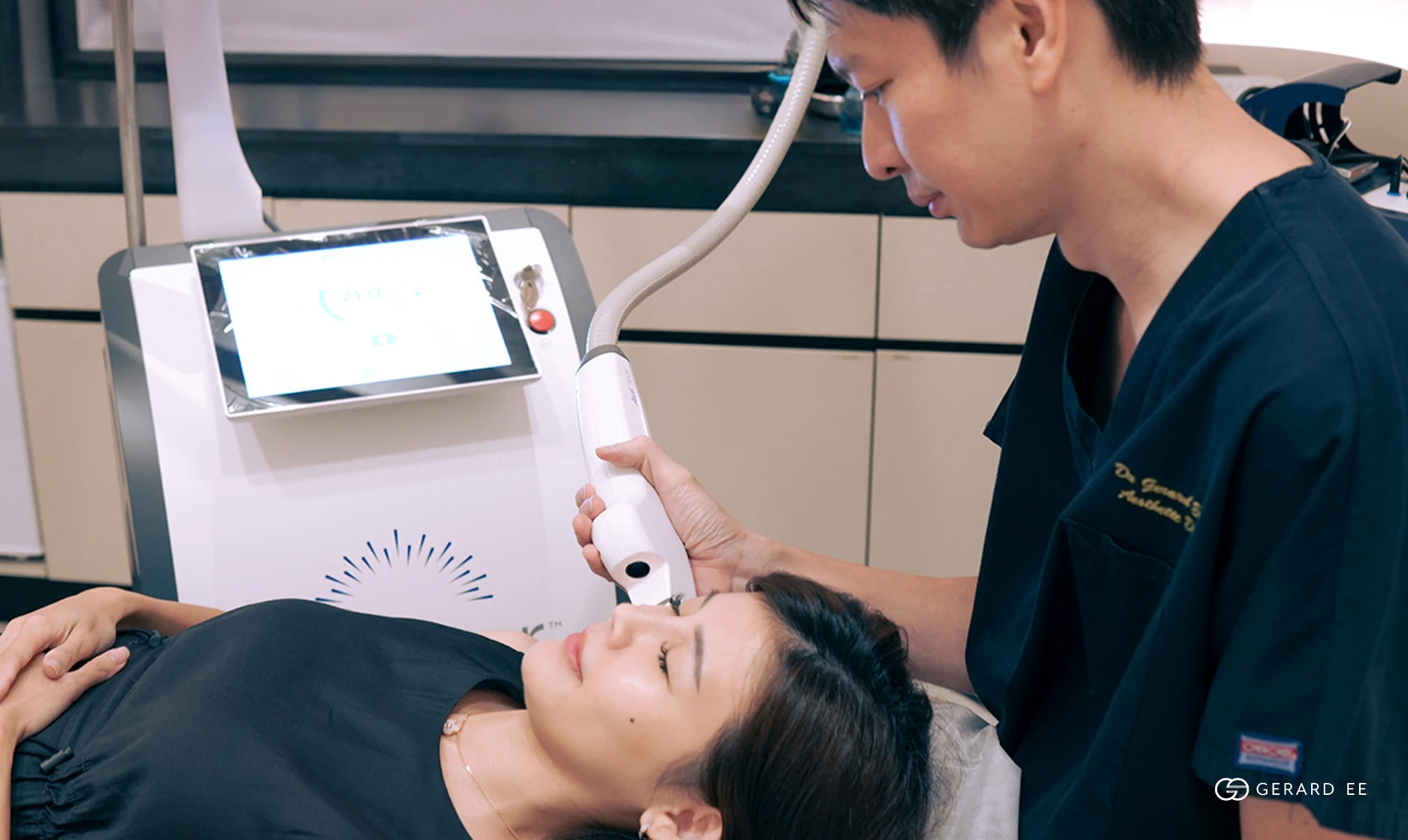
AviClear is considered when the acne is mild to moderate, when the skin is oily, when a patient wants a drug-free option, or when they cannot tolerate or would prefer to avoid oral medication. It is also a good maintenance choice. It is often combined with AGNES, so AGNES handles the stubborn recurrent glands while AviClear reduces overall oiliness. One practical point is that AviClear is not ideal on the nose, so the plan works around that area.
When I would consider isotretinoin instead
Isotretinoin is kept as a last resort, but it deserves to be on the table when acne is severe, deeply cystic, scarring, or relapsing despite everything else. The earlier truly severe acne is controlled, the lower the risk of permanent scarring, so that conversation should not be delayed when it is clearly needed. Isotretinoin should not be started lightly and never in pregnancy, given its serious risks and monitoring requirements.
Common mistakes I see
One mistake is hoping the acne would self-resolve or thinking that over-the-counter creams can stop acne. Aviclear and AGNES RF has improved outcomes drastically in the treatment of acne. Patients looking to consume isotretinoin too early, or too casually, when a less harmful path is available that can lead to a more permanent cure. Next is thinking there is an instant fix rather than having some patience when treating acne. Prescription skincare is fundamentally crucial and must not be skipped.
What you can realistically expect
AviClear typically consists of three sessions, with results visible after the second and building over three to four months; many patients maintain their results with ongoing skincare and occasional maintenance. Isotretinoin can clear severe acne over a course of months, but with dryness, sun sensitivity and the need for monitoring. Neither removes the need for sensible long-term maintenance.
What to expect during AviClear

An AviClear session is quick and comfortable, taking around thirty minutes, and the built-in cooling system means most patients do not need numbing cream. You may feel a gentle snapping sensation during treatment, and there is very little downtime, so most people return to their day straight away. Afterwards, swimming is avoided for a short period and prescribed creams are continued. Results usually become visible after the second session and build over three to four months, and one practical point worth repeating is that AviClear is not ideal on the nose, so the treatment is planned around that area.
When to see a doctor
Because these options are so different, this is a decision to make with a doctor rather than from an article. See a doctor if your acne is severe, scarring, or relapsing despite treatment, so the safest, most effective path can be chosen for your skin.
How each option affects the oil gland
Both treatments ultimately act on the sebaceous gland, the source of the oil that drives acne, but by very different routes.

Isotretinoin works from within the body to shrink the glands, normalise skin cell shedding and reduce inflammation all at once, which is why it is so powerful and also why it needs blood monitoring and strict pregnancy precautions. AviClear works from outside, using a 1726 nm wavelength that is absorbed in the oil and heats the glands to reduce their output, without affecting the rest of the body. This single difference explains why one path requires lab tests and contraception while the other does not, and it is central to how the two are weighed.
Maintenance after treatment
Both paths benefit from a maintenance plan because the skin keeps producing oil throughout life. After AviClear, many patients keep their results with ongoing medical skincare and occasional maintenance sessions, since the glands settle gradually but do not disappear. After a course of isotretinoin, a maintenance routine, often centred on a topical retinoid, helps reduce the chance of relapse, which can otherwise happen in a meaningful number of patients. Whichever route you take, good skincare remains the foundation that holds the results in place, and stopping everything at once is one of the more common reasons acne returns.
What the evidence shows
Both options are supported by clinical evidence. Oral isotretinoin remains the most effective acne treatment available, because it is the only medicine that acts on all the main drivers of acne at once, and studies consistently show that it can bring even severe, scarring acne into lasting remission. It is dosed according to body weight and taken over a course of several months, and the total amount taken across that course influences how durable the result is. Because it can harm a developing baby, it is used with strict pregnancy prevention and regular blood-test monitoring. AviClear offers a drug-free alternative for suitable patients, and clinical studies show that it steadily reduces inflammatory acne over a series of sessions, with results that keep building over the following months and hold up across a range of skin types.
Isotretinoin side effects and how they are managed
Isotretinoin is effective but demanding, and knowing what to expect makes it much easier to take. Almost everyone develops dryness, most noticeably of the lips, but also of the skin, eyes and nose, which is managed with a good lip balm, a gentle moisturiser and lubricating eye drops.
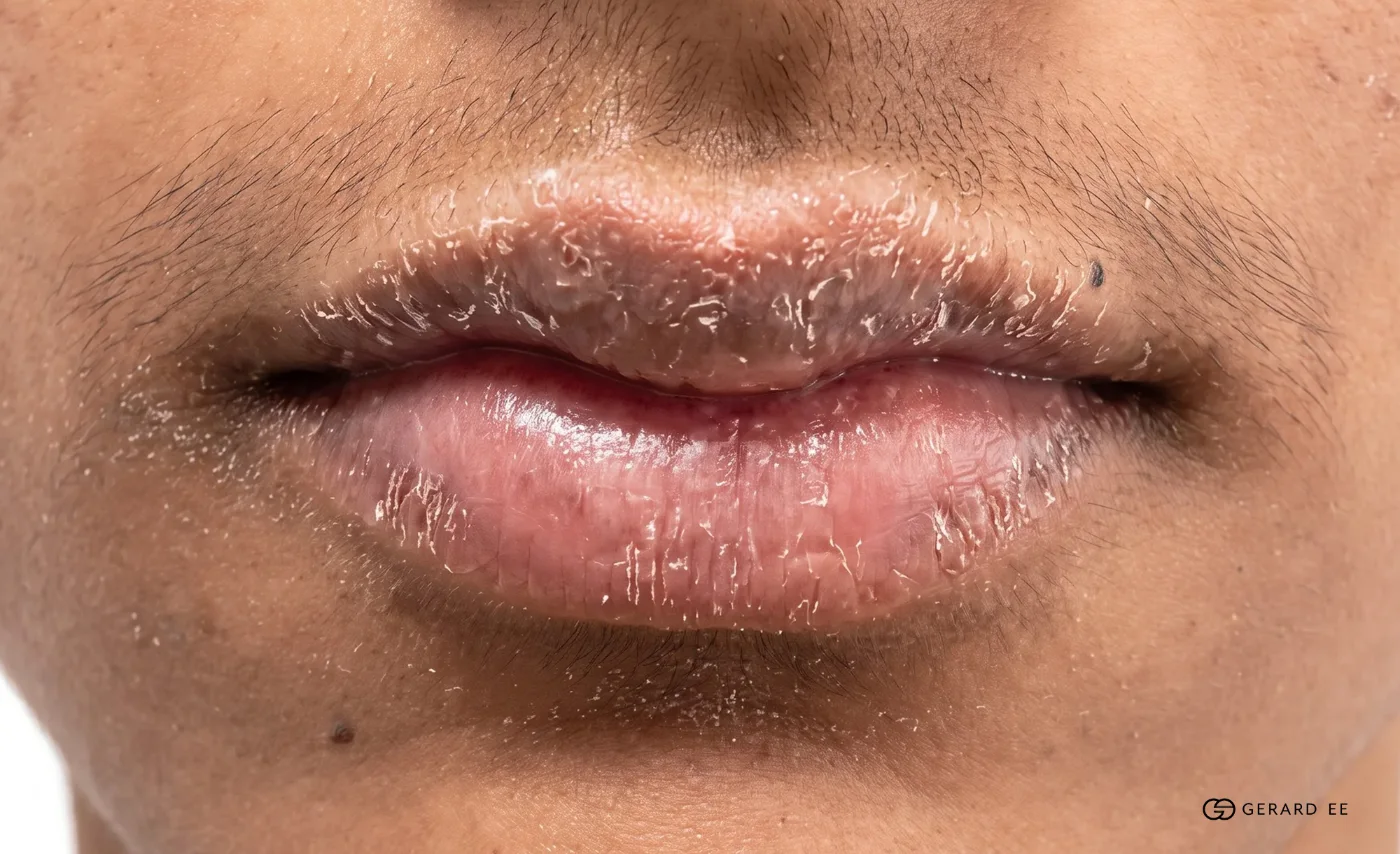
The skin becomes more sensitive to the sun, so daily non-comedogenic sun protection matters. Some people notice a brief flare in the first weeks before the acne settles, and starting at a lower dose can smooth this. Aching after exercise is common, so intense training is usually eased back for a while.
Blood tests are done before and during treatment to check the liver and blood fats, and because the medicine can seriously harm a developing baby, reliable contraception and pregnancy testing are essential throughout and for a short period afterwards. None of this is a reason to avoid isotretinoin when it is truly needed, but it is why it is prescribed carefully and monitored closely, with blood tests focused on the liver and blood fats rather than routine blood counts. Treatment is usually continued for a while after the skin has cleared, which makes lasting remission more likely, and mood is checked at each visit as a sensible precaution.
AviClear, by contrast, is a straightforward in-clinic procedure. Each session takes around half an hour, a built-in cooling system keeps it comfortable, and there is very little downtime, so most people return to their day immediately. The trade-off is that it works gradually over a series of sessions rather than as a single intensive course, which is exactly why the choice comes back to how severe the acne is and what a person is looking for.

| Let me match the right acne technology to your skin.
The Clifford Clinic, 50 Raffles Place, Singapore Land Tower. Call (65) 6532 2048 or WhatsApp (65) 8318 6332 to arrange a consultation. |
Related reading
- Acne Treatment Singapore: How I Choose (Dr Gerard Ee)
- AviClear (Dr Gerard Ee)
- Isotretinoin: How It Works (Dr Gerard Ee)
- AGNES Acne Treatment (Dr Gerard Ee)
- Cystic Acne Treatment
- Acne Treatment Singapore

Dr Gerard Ee, Aesthetic Doctor in Singapore
Dr Gerard Ee is an aesthetic doctor in Singapore and the Medical Director of his practice at 50 Raffles Place. He graduated from St George’s, University of London, trained in surgery at Singapore General Hospital and the National University Hospital, and holds the MRCS (Edinburgh) and a postgraduate diploma in practical dermatology from Cardiff University.
He has practised aesthetic medicine since 2012, is the author of sixteen peer-reviewed papers, and writes and medically reviews every article on this site. Read more about Dr Gerard Ee.
Book a consultation with Dr Gerard Ee at The Clifford Clinic
Dr Gerard Ee consults at The Clifford Clinic, 50 Raffles Place, Singapore. Consultations are by appointment. Message the clinic on WhatsApp, or call 6532 2048.
Frequently asked questions
Is AviClear as effective as Accutane?
They suit different situations. For severe, scarring acne, isotretinoin remains the most powerful option. For milder acne, oily skin and maintenance, AviClear is effective and avoids the side effects of oral medication.
Can AviClear replace isotretinoin?
For the right patient with milder or moderate acne, AviClear can be an alternative that avoids medication. For severe nodular and cystic acne, medication often remains first line.
How many AviClear sessions are needed?
Typically three sessions, with results visible after the second and building over three to four months.
Is isotretinoin safe in pregnancy?
No. Isotretinoin must never be used in pregnancy. Pregnancy acne is managed with a careful, separate protocol, and gentler options are preferred.
References
Sources cited on this page
- HealthHub Singapore. Acne. https://www.healthhub.sg/a-z/diseases-and-conditions/acne
- American Academy of Dermatology. Guidelines of care for the management of acne vulgaris. https://www.aad.org/member/clinical-quality/guidelines/acne
- Acne vulgaris. https://dermnetnz.org/topics/acne
- A 1726 nm laser system for the treatment of acne vulgaris. PubMed. https://pubmed.ncbi.nlm.nih.gov/36197599/
- A sebum-selective 1726 nm laser for acne across skin types: multicentre study. J Am Acad Dermatol. https://www.jaad.org/article/S0190-9622(25)02900-7/fulltext
- Oral isotretinoin cumulative dosing and long-term acne remission. PubMed. https://pubmed.ncbi.nlm.nih.gov/26187395/
- Management of acne vulgaris: a review. JAMA. https://jamanetwork.com/journals/jama/fullarticle/10.1001/jama.2021.17633
- Acne vulgaris. N Engl J Med. https://www.nejm.org/doi/full/10.1056/NEJMcp1702493
- AviClear (Dr Gerard Ee) https://drgerardee.com/aviclear/
- Isotretinoin: How It Works (Dr Gerard Ee) https://drgerardee.com/isotretinoin-how-it-works-and-its-side-effects/
Medical disclaimer: This article is for general education and does not replace an in-person consultation. Treatment suitability, results and risks vary between individuals. Please speak with a qualified doctor before starting any acne treatment.