By Dr Gerard Ee, MBBS (UK), MRCS (Edinburgh), PGDip Practical Dermatology (Cardiff)
Quick answer
There is no single best eye bag treatment in Singapore, because the correct choice is determined by what the lower eyelid contains. AGNES with Secret RF is my first choice for mild Grade 1 to 2 bags with firm skin, at $2,500 for the first session and $1,800 for subsequent sessions, with results that typically last 3 to 5 years. Grade 3 to 4 bags and loose lower eyelid skin require surgery, which no energy device replaces.
A search for the best eye bag treatment in Singapore returns a consistent pattern. A clinic that owns a laser recommends laser treatment, a clinic built around injectables recommends filler, and a clinic equipped with a single radiofrequency device recommends that device. In most cases the treatment presented as the best is the treatment the clinic is equipped to sell. The consequence is visible at consultation, where a patient with a hollow tear trough and a patient with a herniated fat pad are frequently offered the same device although the two conditions are opposites.
My position differs in two respects. I have performed AGNES and Secret RF eye bag treatments for more than 10 years and have managed over 500 eye bag cases, a caseload that spans the full range from Grade 1 protrusion to the loose lower eyelid skin that only surgery corrects. The centre I lead is also structured differently, in that The Clifford Clinic and The Clifford Surgery together form the only centre among the aesthetic providers usually compared for eye bag treatment in Singapore that offers both non-surgical and surgical eye bag removal, with scarless eye bag removal and pinch blepharoplasty among the surgical options. Because every pathway is available in-house, no commercial incentive favours one method over another. The recommendation can therefore follow the anatomy.
Selection therefore begins with identifying which of these lower eyelid problems is present, because that determination decides the treatment and nothing else does. The comparison that follows rests on what each treatment physically does and on outcomes observed in my own practice, because the non-surgical options have not been compared against surgery in randomised trials.
The diagnosis comes first. Five lower eyelid problems that share one name
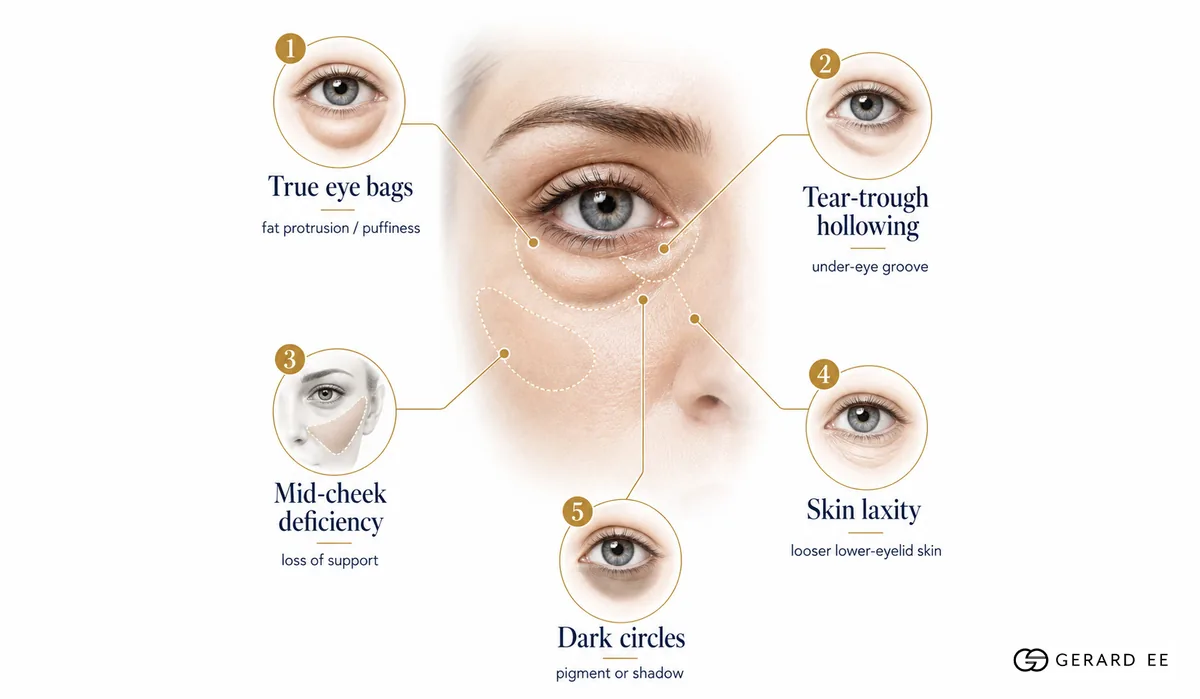
When a patient reports eye bags, examination usually reveals one of five conditions, or a combination of them, and because each of the five is corrected by a different intervention, the conditions have to be distinguished before any treatment is selected.
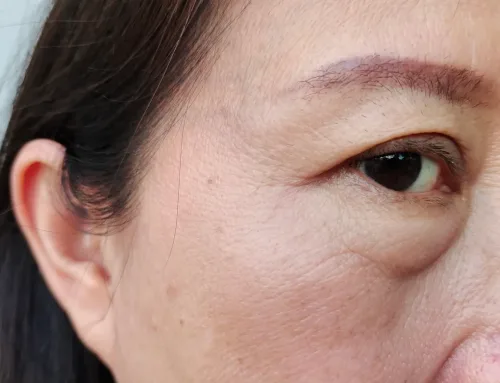
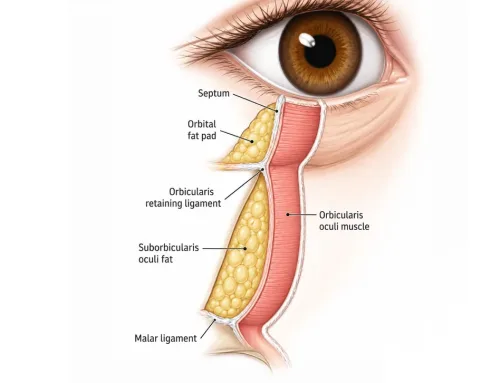
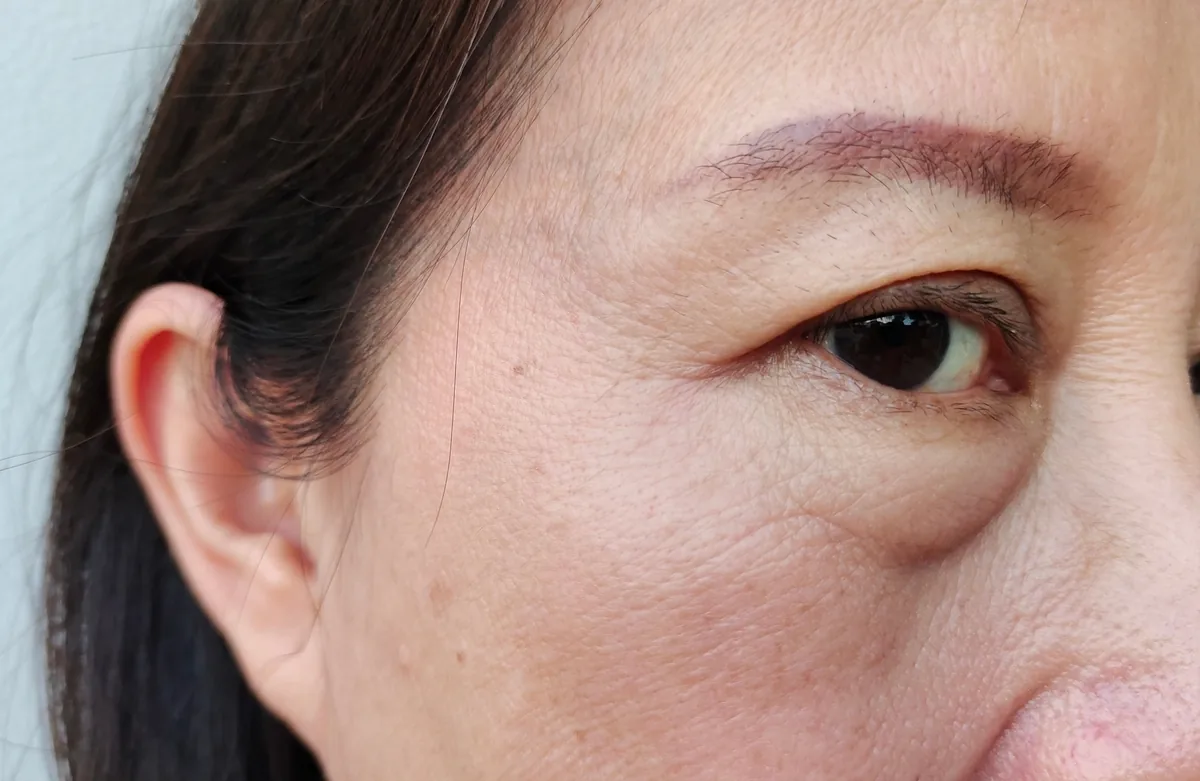
- True eye bags. The lower eyelid fat pads protrude forward through a weakened orbital septum, the thin sheet of connective tissue that normally holds them behind the eyelid. The result is a constant soft bulge that is present every day regardless of sleep or salt intake. This is a structural excess of volume.
- Tear trough hollowing. A groove runs from the inner corner of the eye toward the cheek, where the eyelid skin is bound down to the underlying bone by the tear trough ligament and no fat lies beneath it, and the depression casts a shadow that reads as tiredness. This is a deficit of volume and therefore the opposite problem to a true bag.
- Mid-cheek deficiency. The cheek below the eyelid has lost volume or projection and no longer supports the lower lid. The under-eye area appears sunken because the tissue that should support it has descended, so the shadow originates below the eyelid rather than within it.
- Skin laxity. The lower eyelid skin has become loose and crepey because it has lost elastic recoil and no longer redrapes over the contour beneath it. This is the dominant problem in many older patients.
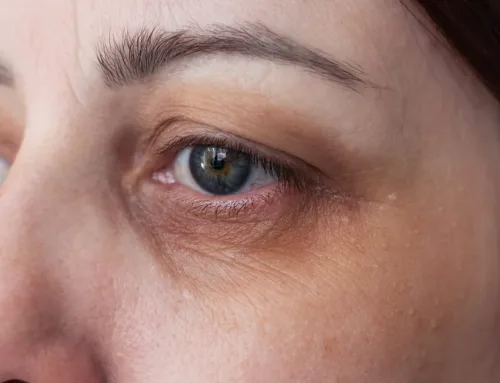
- Dark circles. True pigmentation or visible vessels darken the skin itself. A gentle stretch of the skin distinguishes the two possibilities. Darkness that persists on stretch is pigment, whereas darkness that disappears was a shadow cast by a bulge or a groove. A frequently missed driver of dark circles is allergic rhinitis, in which chronic nasal congestion and habitual eye rubbing produce the dusky under-eyes described as allergic shiners.
A sixth presentation is not a structural condition at all. Fluid puffiness fluctuates with salt intake, alcohol, allergies and sleep, and it is worst on waking and settles through the day as the fluid drains once the head has been upright for some hours. It requires lifestyle measures rather than a procedure.
The distinction matters because every treatment on the market is designed for exactly one of these problems. Applied to the wrong problem, a treatment ranges from ineffective to harmful. Filler adds volume to a problem that is already one of excess volume, fat reduction deepens a hollow, and skin heating warms a bulge that remains in place. A patient whose shadow is cast by a tear trough and who is treated with fat reduction therefore leaves with a deeper hollow, because the small amount of volume present in that groove has been reduced further. In my experience examining patients who present asking for eye bag removal, I have found that a substantial proportion have a tear trough or a mid-cheek deficiency rather than protruding fat, and that the treatment they had already selected would have deepened the shadow they came to remove. The diagnosis is the treatment decision.
My review of every eye bag treatment marketed in Singapore
Every option below is assessed against one consistent test. The test asks what the treatment physically does and whether that action matches the anatomy of the problem it claims to treat, since a treatment that does not act on the tissue responsible for the bulge cannot correct it.
Tear trough fillers. Effective for hollows and a mistake for true bags
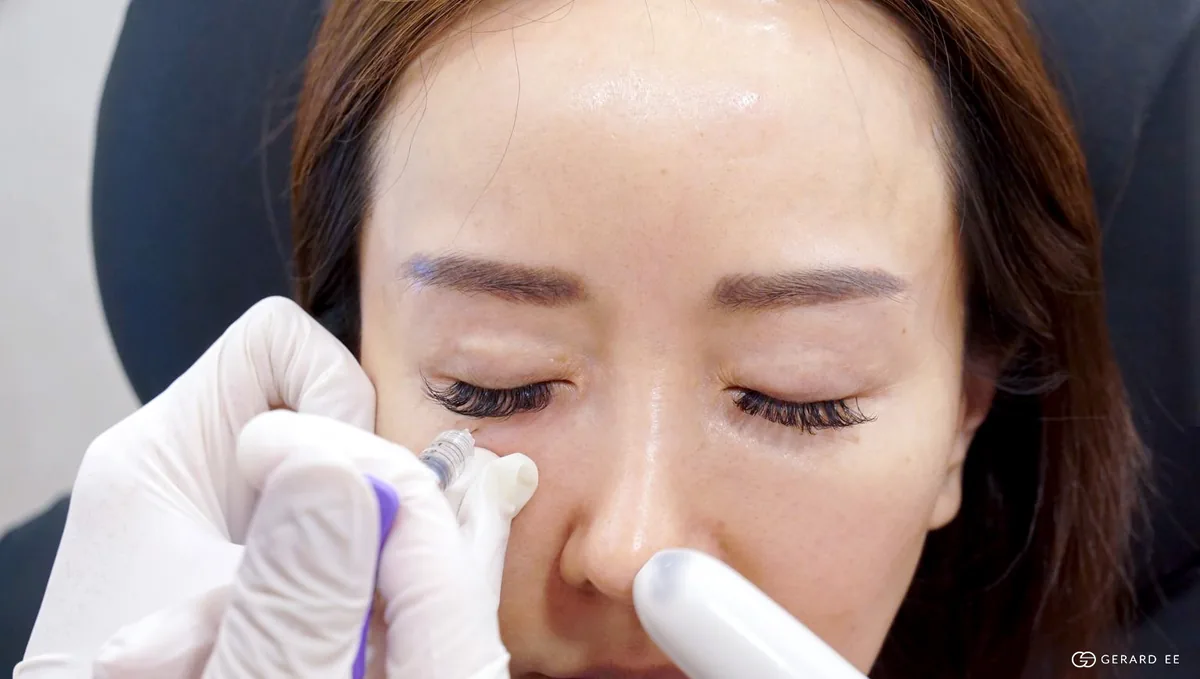
Filler adds volume and does nothing else. For a genuine tear trough or a mid-cheek deficiency, a conservative and correctly placed filler is an appropriate treatment because it replaces the volume that is missing. Even in that setting filler corrects the shadow rather than the pigment, so a patient whose darkness is partly pigmentary may see less change than expected.
For true eye bags, filler is the most common correctable error I encounter. It does not conceal the bag. In my experience treating patients who request filler by name, I have found that the request most often comes from the patients whose anatomy makes filler the wrong choice, because the shadow they want removed is cast by protruding fat rather than by a hollow, and adding volume to an already full lower eyelid usually worsens the appearance. The under-eye then carries the original fat pad in addition to the injected filler, so the area looks heavier than it did before treatment. The clearest sign appears on smiling. The cheek rises, the tissue compresses, and the filler bunches into a visible lump under the eye. Hyaluronic acid filler is also hydrophilic, drawing water into the tissue, and in the thin lower eyelid it persists far longer than the duration commonly quoted, so the puffiness may increase over the following months. Filler is broken down largely by movement, and lip fillers placed in a constantly mobile area therefore follow a much shorter timescale than filler under the eye. Correction requires dissolving the filler with hyaluronidase, allowing the tissue to settle, and then performing the treatment that was needed in the first place.
My verdict is that filler is appropriate for tear troughs and cheek deficiency and is never a treatment for a true eye bag, a distinction examined further in my comparison of tear trough fillers and eye bag removal.
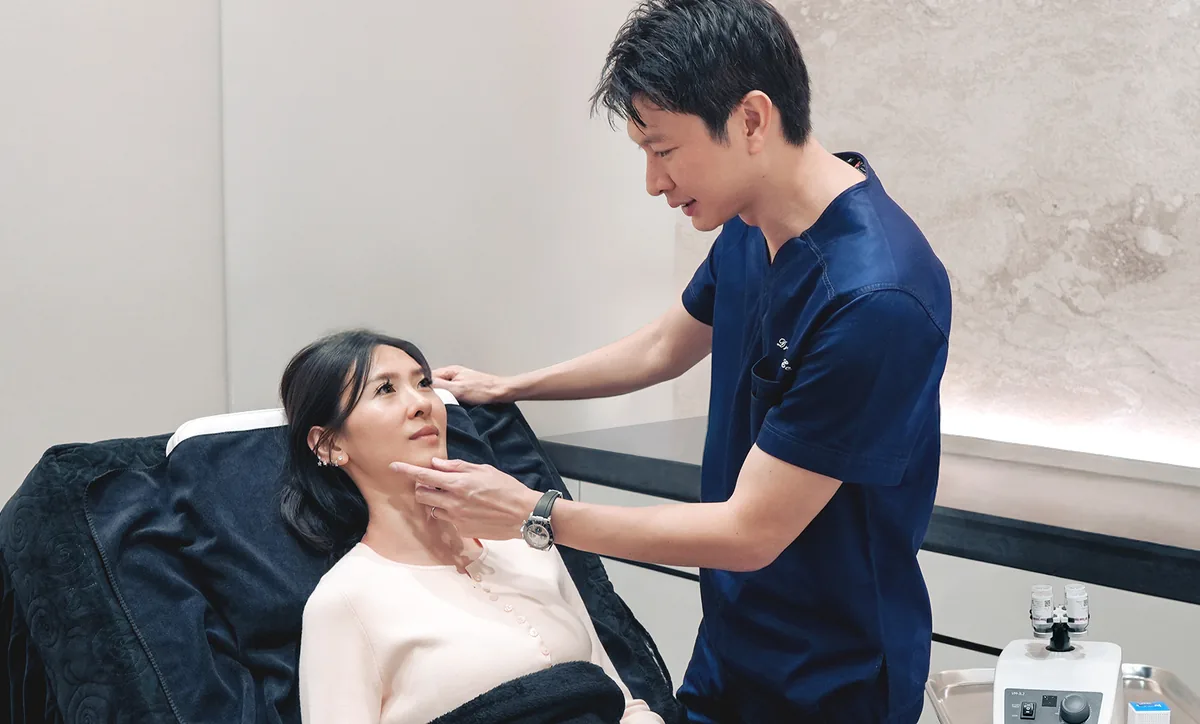
AGNES with Secret RF. My choice for mild Grade 1 to 2 bags
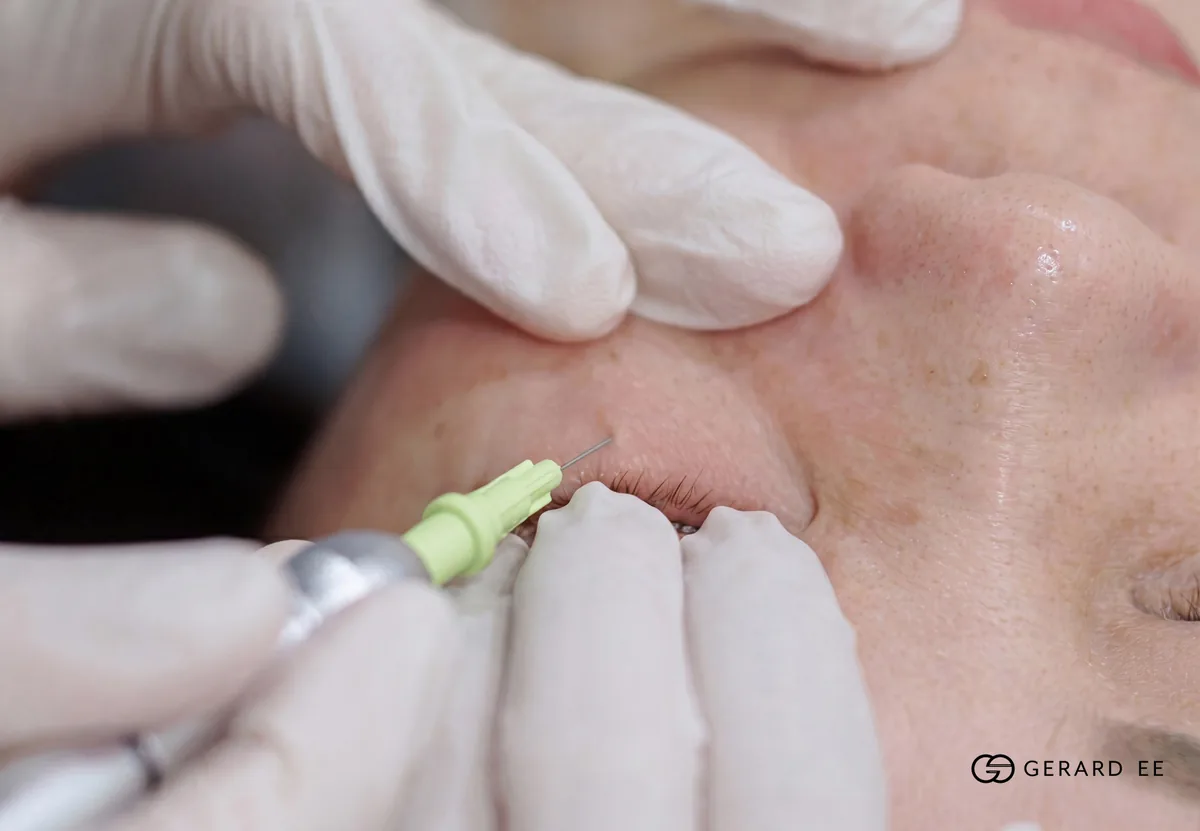
My treatment of choice for a true eye bag is the AGNES and Secret RF scarless eye bag removal protocol we developed at The Clifford Clinic (the non-surgical eye bag removal service page has the price, the steps and the FAQ), used where the bulge is mild, meaning Grade 1 to 2 on the standard severity scale, and where the lower eyelid skin remains firm. AGNES delivers radiofrequency energy through micro-insulated needles into the protruding fat compartments at a fixed depth, treating the fat from the outside in and one compartment at a time. The treated fat breaks down and is cleared by the body over the following weeks, so the contour changes gradually rather than on the day of treatment. Secret RF then delivers RF energy through a single direct insulated cannula, which permits accurate ablation of the eye bag fat at a greater depth than AGNES reaches, while the heat conducted to the overlying skin allows it to contract smoothly over the new contour.
The rationale for two devices is that an eye bag involves two layers, the fat and the skin envelope, and that the two devices act at different depths. The combination allows more accurate targeting than a single device used for both. Treatment takes about 20 minutes after numbing. Typical recovery involves 4 to 5 days of mild bruising and swelling, sometimes dry eyes for 1 to 2 days, and occasionally a small firmness that can be felt but not seen while the treated fat clears. Change is visible from about 8 weeks, and the correction typically lasts 3 to 5 years, which gives it a finite lifespan rather than the permanence of surgical removal. The protocol reduces the protrusion rather than removing the fat pad, so a treated eyelid is flatter than it was and not identical to an eyelid that never carried a bag, and outcomes vary, with some patients requiring a second session before the contour settles.
The strict requirement is firm skin. I decline to treat patients with loose lower eyelid skin non-surgically because reducing the fat beneath skin that has lost its recoil leaves the surface redundant rather than smooth, and that boundary is where surgery begins. AGNES is requested by name more often than any other treatment discussed here, and where the skin has lost recoil or the protrusion is Grade 3 to 4 it may not be the clinically appropriate option despite the request. In my experience treating mild bags with AGNES and Secret RF, I have found that the patients who are least satisfied are almost always those whose skin recoil was borderline at assessment rather than those whose fat was under-treated.
My verdict is that the two-step protocol is the strongest non-surgical option for correctly selected mild bags, and that it is unsuitable for anyone outside those criteria, in whom it delivers partial correction at the full price of the treatment. The published evidence for radiofrequency reduction of orbital fat consists of small series and clinical observation rather than randomised comparison with surgery, so the durability quoted above reflects follow-up in my own patients rather than trial data.
HIFU. Correct technology applied at the wrong depth
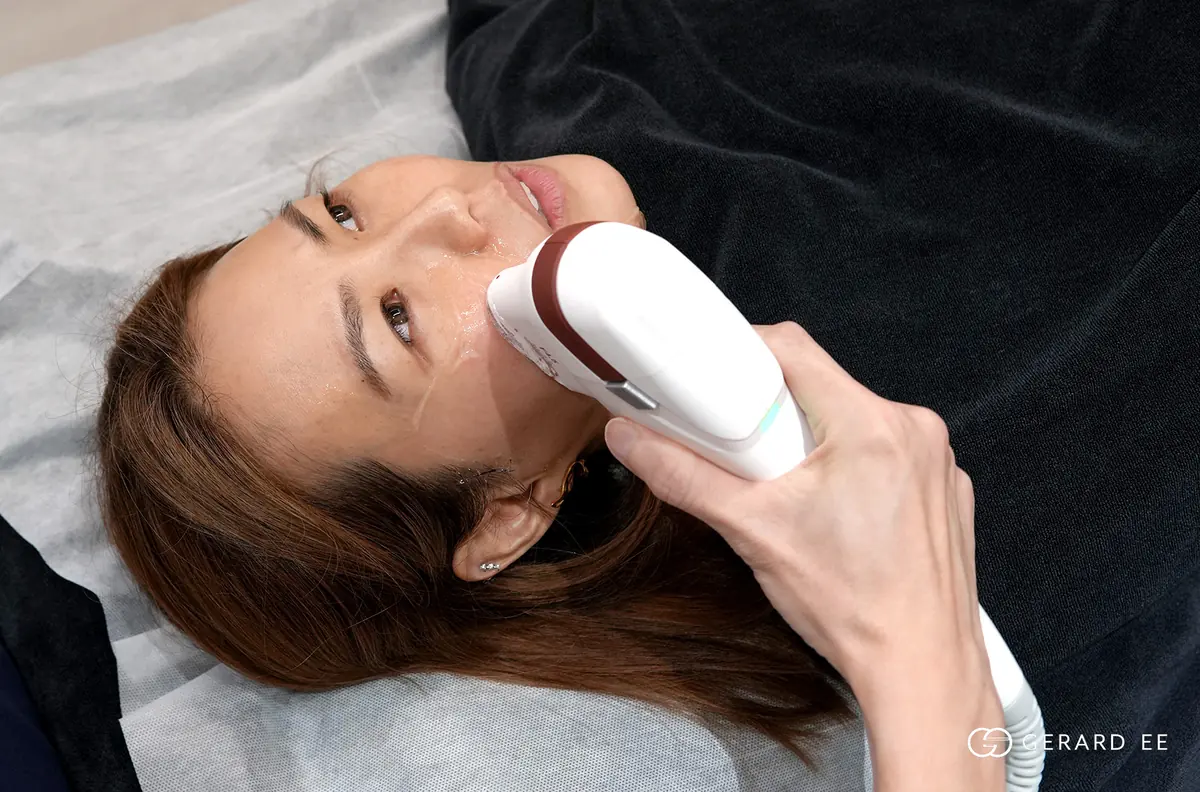
High-Intensity Focused Ultrasound (HIFU) delivers ultrasound energy into the deeper layers of the skin, heating it and activating the body’s natural wound-healing response to induce collagen and elastin production. It is a non-invasive option for lifting and tightening skin elsewhere on the face and neck.
I am regularly asked about HIFU for eye bags because it is heavily marketed for facial tightening. It has a legitimate use for skin tightening elsewhere on the face, but the depth at which it deposits its energy makes it unsuited to the lower eyelid.
The lower eyelid skin is superficial and among the thinnest on the body, whereas the energy of a HIFU device such as Tightan 2 or Sygmalift is focused into deeper planes, so the focal depth and the target anatomy do not coincide. The more fundamental problem is that HIFU can neither reduce protruding fat nor return it behind the weakened septum. Tightening the surface over an untouched fat pad does not flatten the bulge beneath it.
My verdict is that HIFU is not a useful eye bag treatment, because no setting available on the device places its focal point where the herniated fat sits. The mismatch is one of physics rather than of safety. Patients who have had HIFU on the lower face sometimes request it for the under-eye area as well, and in that setting I decline rather than treat a bulge the device cannot reach.
Fotona multi-D laser protocols. The wavelength reveals the limitation
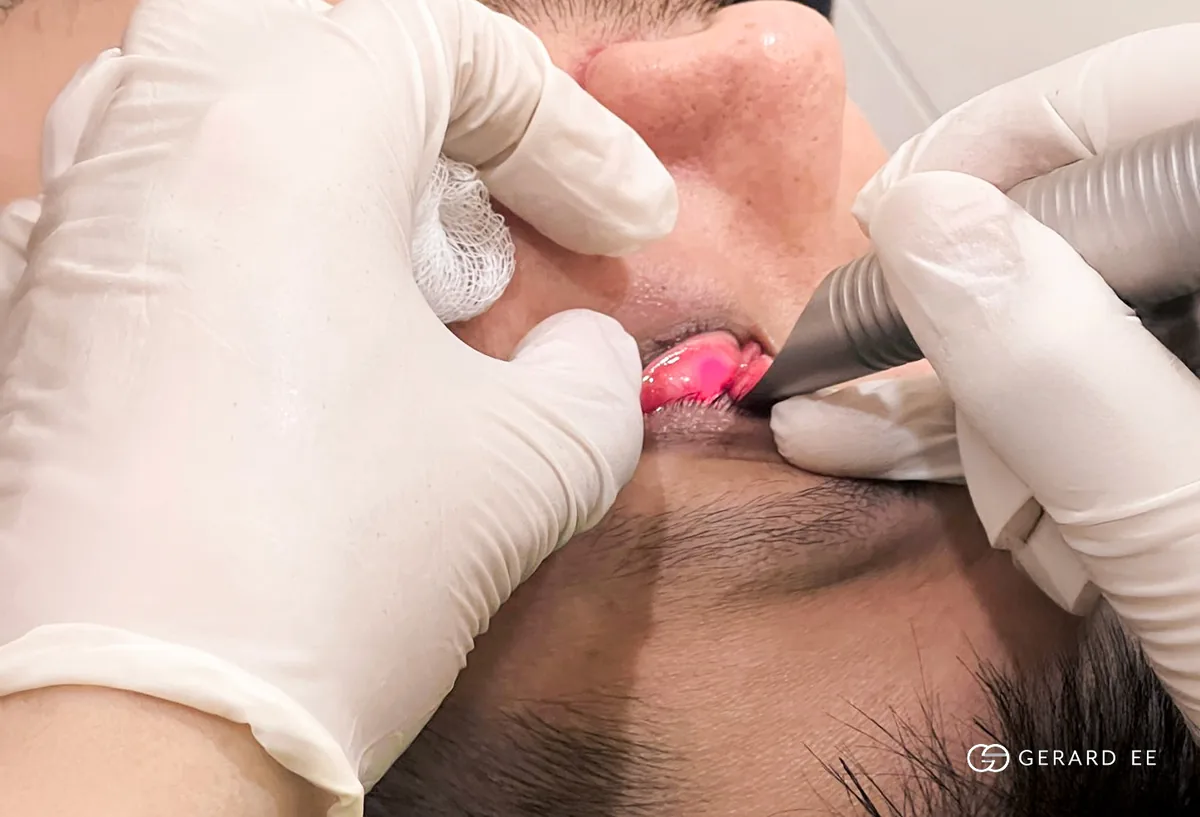
Several clinics market multi-step Fotona laser protocols for eye bags under names such as 4D, 5D and 6D. A signature step directs a long-pulse Nd-YAG laser at the conjunctiva, which is the inner surface of the eyelid, in order to heat the tissue from within, on the stated premise that heat delivered behind the eyelid will tighten the septum and restrain the fat behind it. My full 4D eye bag removal review sets out the anatomy and the evidence.
The choice of laser is itself revealing. Long-pulse Nd-YAG is absorbed principally by water rather than by fat, so it heats tissue generally and cannot selectively reduce a fat pad. Genuine laser lipolysis uses a 1444 nm wavelength precisely because fat absorbs that wavelength preferentially, which is the wavelength the AccuSculpt platform delivers in the NILER eye bag procedure. Heating the eyelid from either surface therefore neither removes nor shrinks the orbital fat pad. At most it produces mild and temporary tightening of tissue over a bulge that remains in place. In my assessment, and contrary to the claims made by a number of clinics, these protocols are not effective eye bag treatments. A patient considering one should ask the clinic to identify which step of the protocol removes or reduces the fat.
My verdict is that these protocols fail the test. The number of dimensions in the name is a marketing decision rather than a clinical outcome. Skin texture around the eye may improve with these protocols, and that improvement is real, but it is not removal of an eye bag. How AGNES and Secret RF work, step by step, is in my article on AGNES eye bag removal.
Rejuran. A skin-quality adjunct, not an eye bag treatment
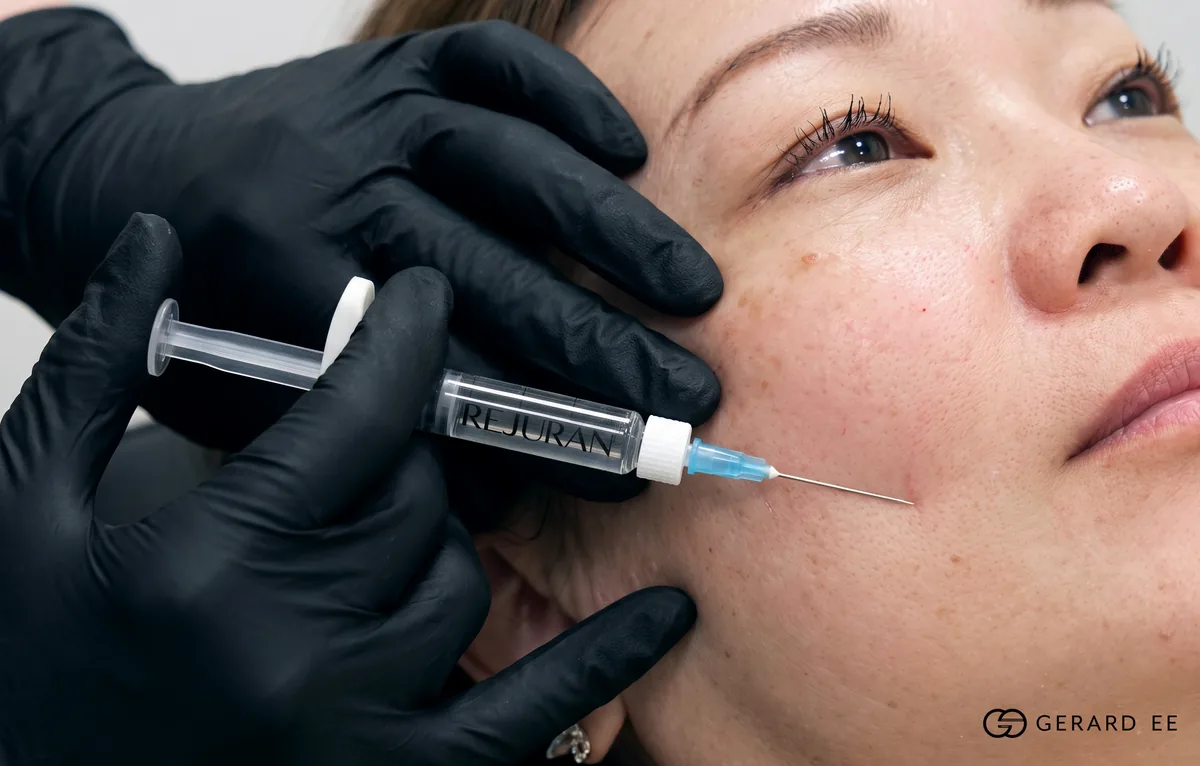
Rejuran polynucleotide injections are widely offered in Singapore for under-eye concerns, and they do have a role. Polynucleotides act in the dermis as a hydrating scaffold and as a stimulus to fibroblast activity, so what they change is the quality of the skin envelope rather than the volume beneath it. They may improve hydration, elasticity, fine lines and the quality of thin or crepey lower eyelid skin. What they do not do is reduce protruding eye bag fat, fill a significant hollow, or lighten pigmentation directly. I therefore regard Rejuran as an optional skin-quality adjunct rather than a treatment for an eye bag, and in my own clinical experience the skin-quality changes do not usually produce a meaningful improvement in the dark-circle component itself.
My verdict is that Rejuran is worthwhile when it is prescribed for skin quality, and of no value when it is bought in the expectation of fat reduction or pigment clearance. An accurate diagnosis precedes either decision.
ECM booster Fine and PDLLA eye boosters. Useful adjuncts for the correct role
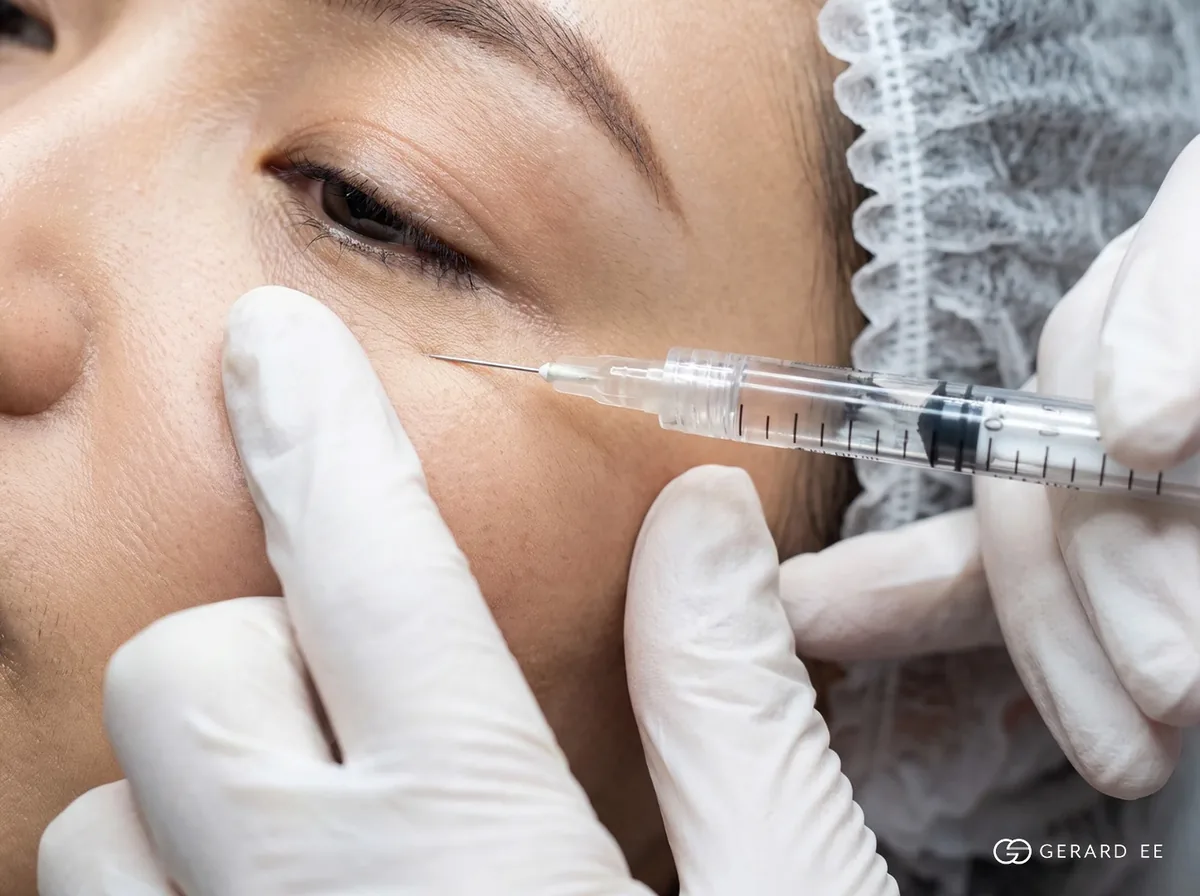
Two collagen-stimulating treatments are well suited to a defined role in my under-eye practice. ECM booster Fine and PDLLA eye boosters stimulate collagen in the under-eye skin and improve skin quality and fine crepiness in suitable patients. Both act by provoking a controlled, low-grade repair response in the dermis, so the change appears over the weeks in which new collagen is laid down rather than on the day of injection. Their role concerns the skin envelope rather than the fat. They can complement an eye bag treatment plan or serve a patient whose dominant problem is early change in skin quality rather than volume. They cannot flatten a protruding fat pad, so within my algorithm they remain adjuncts rather than answers to a true bag. The change they produce is in skin quality, is modest in degree, and is most evident where the crepiness is early rather than established.
My verdict is that ECM booster Fine and PDLLA eye boosters are worthwhile when prescribed for skin quality, and misdirected when offered as a substitute for reducing the fat.
The evidence for PDLLA skin booster under the eye is limited to case-level data: one published tear trough case documented increased skin thickness on ultrasound, CT and MRI after PDLLA skin booster placed by cannula, which supports its role for the skin envelope and not for the fat pad. Each booster is compared in my guide to under-eye skin boosters.
Dark circles driven by allergic rhinitis. The cause and the colour are treated together
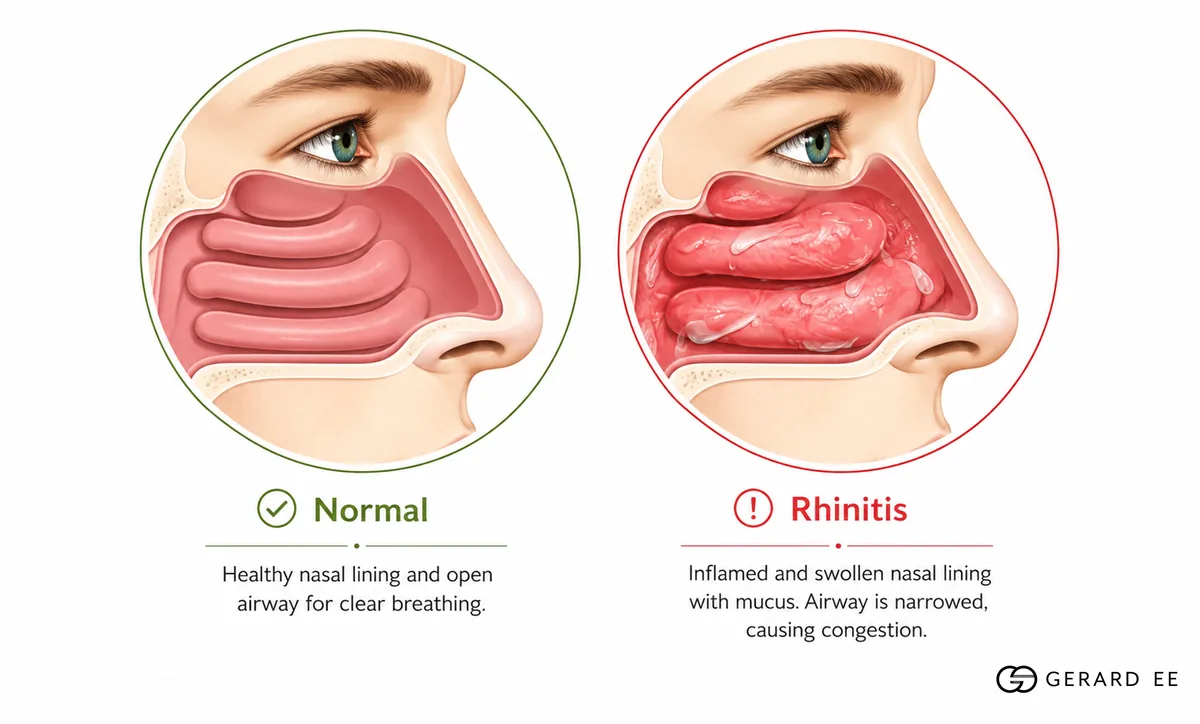
This scenario is common in Singapore and frequently mismanaged. Dark eye circles associated with allergic rhinitis arise through two mechanisms. Chronic nasal congestion impairs venous drainage around the eyes, so blood pools in the thin skin beneath them, and years of rubbing itchy eyes darken and thin that skin further. Treating the discolouration without treating the allergy produces circles that recur as soon as the treatment stops.
My approach addresses both ends of the problem at the same time. The allergy is first confirmed objectively with an allergy blood test and a skin prick test, and the panel must include Blomia tropicalis, the house dust mite that dominates in this region and that some standard panels omit. It is then resolved with sublingual immunotherapy, known as SLIT, which retrains the immune system against the confirmed allergens rather than merely suppressing symptoms, and which is taken over 3 to 5 years with improvement in the nasal symptoms typically apparent from 8 to 14 weeks. Allergoid preparations such as SLIM allow a higher allergen dose to be given with fewer side effects. Simultaneously the circles themselves are treated with V Beam Eyes, a vascular laser that targets the dusky vessel-related discolouration, combined with PDLLA eye boosters for collagen stimulation in the thin under-eye skin. In my experience treating allergy-associated dark circles, I have found that the vascular component lightens well before the pigmentary component does, and that patients who expect both to change at the same rate are the ones who abandon the immunotherapy early.
My verdict is that this combined pathway is the accurate treatment for allergy-associated dark circles. Treating only the colour or only the allergy produces an incomplete result that does not hold, and in patients who have rubbed their eyes for years the pigmentary component may not clear completely, which is why assessment for dark eye circles separates the vascular from the pigmentary contribution before anything is treated. The full approach is in my article on dark eye circles from allergies.
Surgery. The correct answer more often than single-modality clinics acknowledge
Surgery is the correct recommendation for Grade 3 to 4 eye bags and for any significant looseness of the lower eyelid skin. Scarless eye bag removal, known formally as transconjunctival blepharoplasty, removes or repositions the fat through an incision inside the eyelid, so no scar is visible on the skin and the lower lid margin is left undisturbed. Where excess skin exists, a pinch blepharoplasty removes a fine strip at the lash line. Older patients generally require surgery not because of age itself but because skin laxity accumulates with age and no energy device tightens genuinely redundant skin.
Recovery is longer than after radiofrequency treatment, with bruising and swelling commonly lasting 1 to 2 weeks. For the correct patient, surgery is both the more complete and the more economical choice because it resolves the problem once rather than partially and repeatedly. Surgery removes or repositions fat and can remove redundant skin, but it does not lighten pigmentation or halt further ageing of the lower eyelid, so a patient whose darkness is pigmentary will still have darkness afterwards.
Both scarless eye bag removal and pinch blepharoplasty are performed at The Clifford Surgery. Because our centre offers every option discussed on this page, the surgical recommendation is made when the anatomy requires it and not withheld because the capability is absent. In my experience operating on patients who have already completed two or three non-surgical courses elsewhere, I have found that the fat volume was rarely the reason those courses failed, and that the lower eyelid skin had been redundant from the outset.
My verdict is that surgery is the best treatment for advanced bags and loose skin, and that an assessment which never raises it leaves the patient choosing among non-surgical options that cannot correct the grade of protrusion present. The procedure, recovery and fee are on my page on scarless eye bag removal.
Eye creams and home remedies. Appropriate for fluid and irrelevant to fat
Cold compresses, head elevation, reduced salt intake, allergy control and caffeine-containing creams do improve fluid puffiness temporarily, because the fluid they shift is itself temporary. Cold and elevation move fluid out of the lower eyelid by drainage, and caffeine constricts the small vessels in the skin for a few hours, so the benefit of each lasts only as long as the fluid stays away. None of these measures can reach or reduce a herniated fat pad, which sits behind the orbital septum and not in the skin. A bulge that appears identical every morning regardless of sleep or salt intake is fat rather than fluid, and no topical measure will alter it. What each one can and cannot do is in my article on eye creams and cold compresses for eye bags. How to tell a fluid bag from a fat bag at home is in my article on how to get rid of eye bags.
Every eye bag treatment compared
Eye Bag Treatment Options and Doctor’s Verdict
| Treatment | What It Physically Does | Treats True Eye Bags? | My Verdict |
|---|---|---|---|
| AGNES + Secret RF | Targeted RF fat reduction and skin collagen support. | Yes. Suitable for mild Grade 1 to 2 eye bags with firm skin. | First choice for treating mild eye bags. |
| Scarless Surgery with or without Pinch Blepharoplasty | Removes or repositions fat.
Removes excess skin if done with pinch blepharoplasty. |
Yes. Suitable for Grade 3 to 4 eye bags with loose skin. | First choice for advanced eye bags. |
| Tear Trough Filler | Adds volume. | No. It often worsens the appearance of the bag. | Used for troughs and cheek deficiency only. |
| HIFU | Heats deeper tissue planes. | No. It cannot reduce or reposition fat. | Not suitable for the eye area. |
| Fotona 4D/5D/6D | Long-pulse Nd-YAG heating of the skin and the conjunctiva. | No. Fat is untouched. | I do not consider it to be an eye bag treatment. |
| Rejuran | Polynucleotide injection. | No.
No benefit for eye bags or dark circles. |
Not suitable for eye bags or dark circles. |
| V Beam Eyes + PDLLA eye boosters with allergy testing + SLIT |
Vascular laser and collagen stimulation.
SLIT resolves the underlying allergy. |
No. It is, however, excellent for treating dark circles. | My preferred treatment pathway for allergy-related dark circles. |
| ECM booster Fine / PDLLA eye boosters | Collagen stimulation in skin. | No.
Good for improving skin quality only. |
Adjunct treatment for the skin envelope. |
| Creams / Remedies | Shift fluid temporarily. | No. | Can alleviate fluid puffiness but cannot treat true eye bags. |
What my eye bag examination involves
The treatment decision rests on a short physical examination, and the six steps below make up a complete lower eyelid assessment, wherever a patient chooses to have it performed. Each step answers one question, and together they establish which of the five problems is present and whether the skin will tolerate a non-surgical correction.
The light test compares the under-eye in direct and overhead lighting. Shadows cast by a trough deepen markedly under overhead light, whereas pigment appears the same in both. The stretch test distinguishes true pigmentation, which remains dark, from shadow, which disappears. The upward gaze test uses the fact that protruding fat pads push forward when the patient looks up, so a true bag becomes more prominent while a hollow does not, and the same movement shows which of the compartments is carrying the protrusion. Grading then records that protrusion from 1 to 4 across each of the three lower fat compartments. Grade 1 to 2 is the range in which radiofrequency reduces the bulge and Grade 3 to 4 is the range in which it does not, and each side is graded separately because bags are frequently asymmetrical and the two sides may require different treatment. The skin recoil check uses a gentle pinch of the lower eyelid skin. Skin that returns briskly retains the elastic recoil that lets the surface redrape over a reduced contour, and is suitable for non-surgical treatment. Skin that returns slowly and crinkles has lost that recoil, so reducing the fat beneath it would leave the surface redundant, and that is the finding which indicates surgery. Finally I ask about fluctuation with salt, alcohol, allergies and sleep, because a bag that varies between morning and evening is carrying a fluid component that no procedure will remove.
Five minutes of examination determines most of the treatment decision. In my experience the skin recoil check alters the recommendation more often than any other step, because it is the finding that moves a patient from a non-surgical plan to surgery. An assessment that skips these steps and arrives directly at the device the clinic owns is a quotation rather than a diagnosis. What slows the formation of a new bag is in my article on how to prevent eye bags.
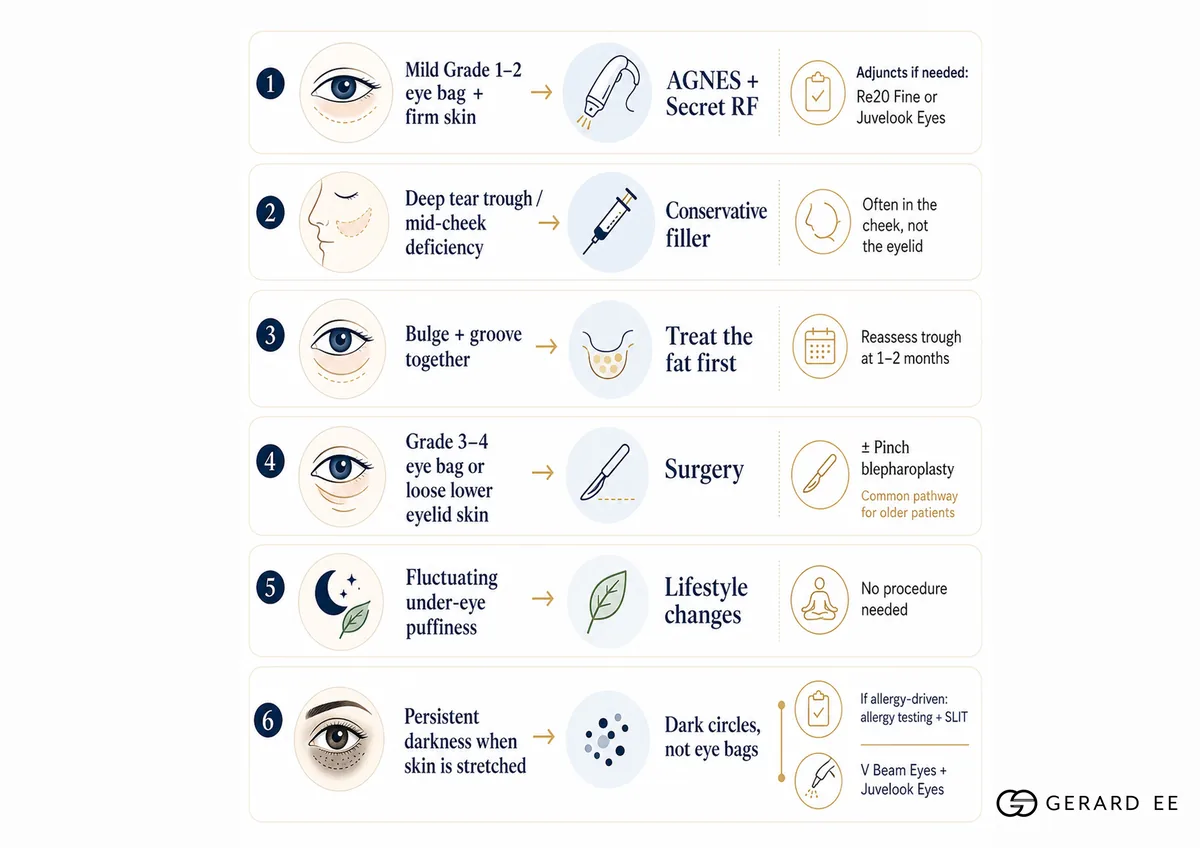
My eye bag treatment algorithm
- A constant soft bulge at Grade 1 to 2 with firm skin receives AGNES with Secret RF, because the fat is the problem and the skin envelope is still capable of contracting over the corrected contour. Collagen stimulation with Re20 Fine or Juvelook Eyes is added where skin quality warrants it, and the contour is reviewed at four weeks and again at eight weeks before any second session is considered.
- A deep tear trough or mid-cheek deficiency without significant bulge receives conservative filler, sometimes placed in the cheek rather than the eyelid, because restoring the support beneath the lid removes the shadow without adding volume to the eyelid itself. Conservative dosing matters in this area because hyaluronic acid persists far longer in the lower eyelid than elsewhere, so an overcorrection is slow to resolve.
- A bulge and a groove together receive fat treatment first with reassessment of the trough at 8 weeks. The groove has usually resolved with the bag, because the shadow that defined it was cast by the bulge sitting above it, and filling it first would add volume to an eyelid that is about to become flatter.
- A Grade 3 to 4 bulge or any loose lower eyelid skin receives surgery, with pinch blepharoplasty for excess skin. This is common in older patients, in whom the volume of protruding fat and the degree of skin redundancy both exceed what an energy device can address.
- Puffiness that fluctuates receives lifestyle measures and no procedure, since a component that varies between morning and evening is fluid and will not be removed by treating fat or skin.
- Darkness that persists on skin stretch is a dark circle problem rather than a bag problem. Where allergic rhinitis is the driver, the sequence is allergy blood testing and skin prick testing, SLIT to resolve the allergy, and V Beam Eyes with Juvelook Eyes simultaneously.
Common eye bag treatment errors I continue to see
The same patterns recur among patients arriving from elsewhere. True bags have been filled with filler that becomes visible on smiling. Packages of skin-heating sessions, whether HIFU or multi-D laser, have been sold for what is a fat problem. Rejuran courses have been prescribed for dark circles that were never going to lighten. Older patients with loose skin have been promised non-surgical results their skin could not deliver. In none of these cases did the technology fail. In every case the diagnosis had never been made.
Before committing to any treatment, a patient should ask the clinic five questions. What grade are my eye bags? Is my skin firm enough for a non-surgical result? Is my problem fat, hollowing, laxity, fluid or pigment? Which part of this treatment addresses the fat? Under what circumstances would this treatment be declined? A doctor who has examined the lower eyelid can answer all five directly, and a consultation that cannot produce those answers has not made a diagnosis.
Published evidence
Three papers underpin the positions above. Shin and colleagues treated 22 patients with lower eyelid fat bulging using a micro-insulated needle radiofrequency system, two sessions four weeks apart, and measured the bulge with three-dimensional photogrammetry. The reduction was significant at 12 weeks and held to 24 weeks, with swelling and bruising lasting about a week as the only adverse effects. It is a single-centre before-and-after study with no control group, which is why I describe radiofrequency as effective for mild to moderate bags rather than as proven against surgery. Lee and colleagues scored the lower eyelids of 108 Asian patients presenting for blepharoplasty and found orbital fat prolapse the largest single contributor to lower eyelid ageing, followed by skin laxity and periorbital hollowing, with no single factor dominant in most patients, which is the anatomical basis for examining before treating. Stutman and Codner’s review of the tear trough explains why a hollow needs volume added while a bag needs fat removed, and why the two are so often confused.
Only papers whose article title itself contains the requested brand name are included below. Product names mentioned only in the abstract, keywords or methods were excluded.
- Shin JW, Park JT, Chae JB, Choi JY, Na JI, Park KC, Huh CH. The efficacy of micro-insulated needle radiofrequency system for the treatment of lower eyelid fat bulging. J Dtsch Dermatol Ges. 2019;17(2):149-156. doi:10.1111/ddg.13736. PMID 30698910.
- Lee H, Ahn SM, Chang M, Park M, Baek S. Analysis of lower eyelid aging in an Asian population for customized lower eyelid blepharoplasty. J Craniofac Surg. 2014;25(2):348-351. doi:10.1097/01.scs.0000436736.60042.92. PMID 24514885.
- Stutman RL, Codner MA. Tear trough deformity: review of anatomy and treatment options. Aesthet Surg J. 2012;32(4):426-440. doi:10.1177/1090820X12442372. PMID 22523096.
- Ravera K. Ultrasound and Radiological Patterns in Assessing the Efficacy of Juvelook for Collagen Stimulation and Tear Trough Enhancement: A Case Report. Cureus. 2025;17(4):e82668. doi:10.7759/cureus.82668. PMID 40400849.
About the author

Dr Gerard Ee, MBBS (UK), MRCS (Edinburgh), PGDip Practical Dermatology (Cardiff) is the founder and medical director of The Clifford Clinic and The Clifford Surgery in Singapore. He has performed AGNES and Secret RF non-surgical eye bag treatments for more than 10 years across over 500 eye bag patients. The Clifford Clinic and The Clifford Surgery together form the only centre among the aesthetic clinics commonly compared for eye bag treatment in Singapore to offer both non-surgical eye bag removal and surgical eye bag removal, including scarless eye bag removal and pinch blepharoplasty. This article reflects his clinical opinion, is intended as general information and does not replace a medical consultation.
Related reading on eye bags and under-eye concerns
- Non-surgical eye bag removal: price, what happens and FAQ
- Is it an eye bag or a tear trough?
- AGNES and Secret RF eye bag removal: how the procedure works
- When you actually need eye bag surgery
- How long non-surgical eye bag results last
- When tear trough filler helps and when it does not
- Can eye creams, sleep or cold compresses remove eye bags?
- When dark eye circles are caused by allergic rhinitis
- How dark eye circles are treated
- What Emface Eyes does for the eye area
- Eye bag removal cost in Singapore
- Scarless eye bag removal: procedure, recovery and fee
- Laser treatment for dark eye circles
- AGNES and Secret RF for the upper eyelid

Dr Gerard Ee, Aesthetic Doctor in Singapore
Dr Gerard Ee is an aesthetic doctor in Singapore and the Medical Director of his practice at 50 Raffles Place. He graduated from St George’s, University of London, trained in surgery at Singapore General Hospital and the National University Hospital, and holds the MRCS (Edinburgh) and a postgraduate diploma in practical dermatology from Cardiff University.
He has practised aesthetic medicine since 2012, is the author of sixteen peer-reviewed papers, and writes and medically reviews every article on this site. Read more about Dr Gerard Ee.

Book a consultation with Dr Gerard Ee at The Clifford Clinic
Dr Gerard Ee consults and performs eye bag treatment at The Clifford Clinic, 50 Raffles Place, Singapore. Consultations are by appointment. Message the clinic on WhatsApp, or call 6532 2048.
Frequently asked questions about eye bag treatment
What is the best eye bag treatment in Singapore?
The best treatment is the one matched to the individual anatomy. AGNES with Secret RF suits mild Grade 1 to 2 bags with firm skin. Filler is appropriate for genuine troughs or cheek deficiency. Surgery is required for Grade 3 to 4 bags or loose skin. A clinic that names the best treatment before examining the patient is describing its inventory rather than the patient.
Does HIFU work for eye bags?
In my assessment it does not. The focused heat is designed for deeper tissue planes, whereas eyelid skin is thin and superficial, and the energy cannot reduce or reposition the protruding fat that causes the bag.
Do Fotona 4D, 5D or 6D protocols remove eye bags?
They heat tissue using a long-pulse Nd-YAG laser, including through the conjunctiva, but that wavelength is absorbed by water rather than by fat, and no step in the protocol removes or reduces orbital fat. I do not consider them eye bag treatments, and I would ask any clinic offering one to identify which step addresses the fat. My full 4D eye bag removal review sets out the anatomy and the evidence.
Is Rejuran good for dark eye circles or eye bags?
In my view it is not. It does not thicken skin, stimulate collagen, lighten pigmentation or reduce fat, so none of the mechanisms that produce an eye bag or a dark circle is addressed by it. For under-eye skin quality, collagen stimulators such as ECM booster Fine or PDLLA eye boosters are the more useful choice.
What is the best treatment for dark eye circles caused by allergies?
The cause and the colour are treated together. The allergy is confirmed with a blood test and a skin prick test that includes Blomia tropicalis, then resolved with sublingual immunotherapy over 3 to 5 years, with the nasal symptoms typically improving from 8 to 14 weeks. The circles themselves are treated simultaneously, with V Beam Eyes for the vascular component and PDLLA eye boosters for the thin skin over it.
When is surgery unavoidable?
Surgery is unavoidable with Grade 3 to 4 protrusion or with loose lower eyelid skin, which is common in older patients, who often also require a pinch blepharoplasty for excess skin. No energy device tightens genuinely redundant skin, so reducing the fat beneath a loose lid leaves the surface slack rather than smooth. In these cases surgery is the better and ultimately more economical answer.
Why should the availability of both pathways matter to me?
A clinic with one modality has one answer. The Clifford Clinic and The Clifford Surgery offer non-surgical treatment, fillers, collagen stimulators, scarless eye bag removal and pinch blepharoplasty within one centre, so the recommendation is driven by the examination rather than by the equipment list.
How much do these treatments cost?
At The Clifford Clinic, AGNES with Secret RF is $2,500 for the first session and $1,800 for subsequent sessions, before GST, with the consultation and both reviews included. Under-eye fillers are $1,200 a syringe. Surgical pricing is provided after assessment. The number of sessions a patient needs is not known before examination, so a figure quoted without an examination is an estimate rather than a price.
What is 4D eye bag removal?
4D eye bag removal is a marketing name some clinics use for combining several treatments, usually filler, radiofrequency, skin tightening and laser, into one plan. There is no device called 4D, and the label says nothing about whether the plan treats the fat, the hollow or the skin. A patient with a herniated fat pad needs the fat reduced, a patient with a tear trough needs volume restored, and a patient with loose skin needs tightening or surgery. A four-part package offered to all three has been assembled from an equipment list rather than from an examination. My full 4D eye bag removal review sets out the anatomy and the evidence.
Is non-surgical eye bag removal permanent?
The fat that is treated does not grow back, and in my practice the result typically lasts 3 to 5 years. The ageing that produced the bag continues, so a new bag can develop over time, and a patient with a large pad may need a second session at one to two months. Surgery removes more fat in one procedure and lasts longer. How long non-surgical eye bag results last sets this out in full.
How do I find out which treatment fits me?
The determination is made by examination before treatment. My team offers a doctor-led eye bag assessment covering non-surgical eye bag removal, fillers, collagen stimulators and scarless eye bag surgery. That assessment may conclude that no procedure is indicated.
This page is written from published research and from clinical experience in Singapore since 2012. It is for general education, not medical advice. Whether a treatment suits you, what it may achieve and what it may risk can only be established at a consultation. Dr Gerard Ee is the Medical Director of The Clifford Clinic, a private clinic in Singapore, and treatments discussed on this site are provided commercially.