Oily skin and acne in Singapore’s humid weather need a plan built around sebum, not just spots. This article explains why humidity worsens oily, acne-prone skin, which treatments reduce oil production, and how to manage recurring breakouts through the year. For every acne option compared side by side, read my review of acne treatment in Singapore.
Dr Gerard Ee consults at The Clifford Clinic, 50 Raffles Place, Singapore.
He was among the first doctors in Singapore to utilise AGNES and AviClear. The opinions expressed in this article are his own clinical views, intended to help readers better understand their treatment options.
This article is provided for general educational purposes and does not replace a personal consultation. Last reviewed: June 2026.
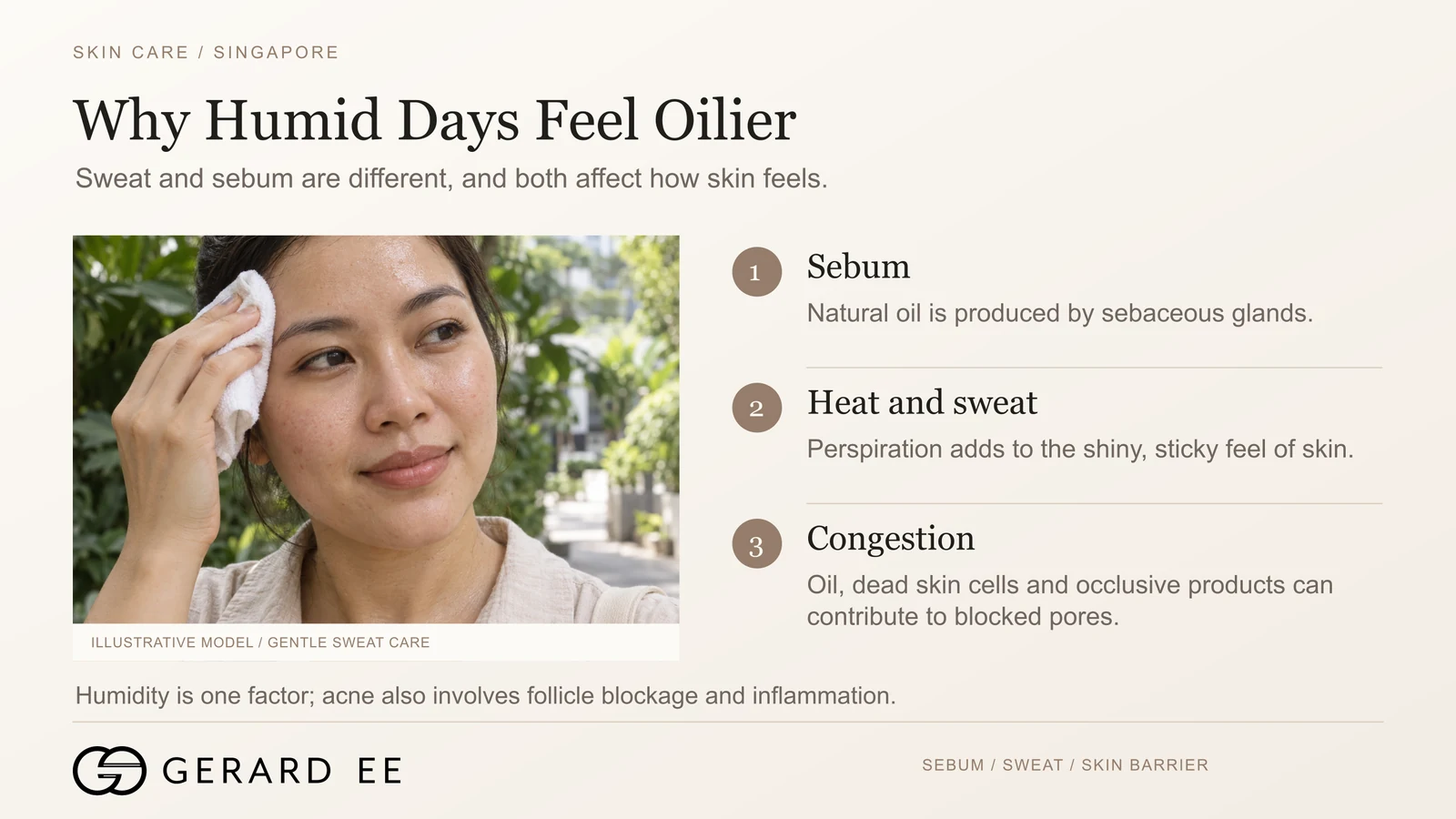
Acne treatment does not depend upon more aggressive surface scrubbing, which is the initial response many individuals with oily skin tend to adopt. It begins with an understanding of how oil, sweat, and humidity collectively contribute to breakout formation, followed by the selection of a therapeutic approach that addresses sebum production at its source.
In a climate as humid as that of Singapore, a source-focused approach transforms a persistent struggle with shine into manageable skin conditions.
My quick answer
Oily skin produces excess sebum, while Singapore’s humidity contributes additional sweat and traps oil against the skin surface, thereby encouraging pore blockage and subsequent breakout formation.

The most effective approach integrates appropriate non-comedogenic skincare with treatments that reduce sebum production at its source, including AviClear and gold or platinum photothermal therapy, in addition to AGNES for recurrent lesions. HydraFacial is recommended in cases of significant congestion.
What I look for during the consultation
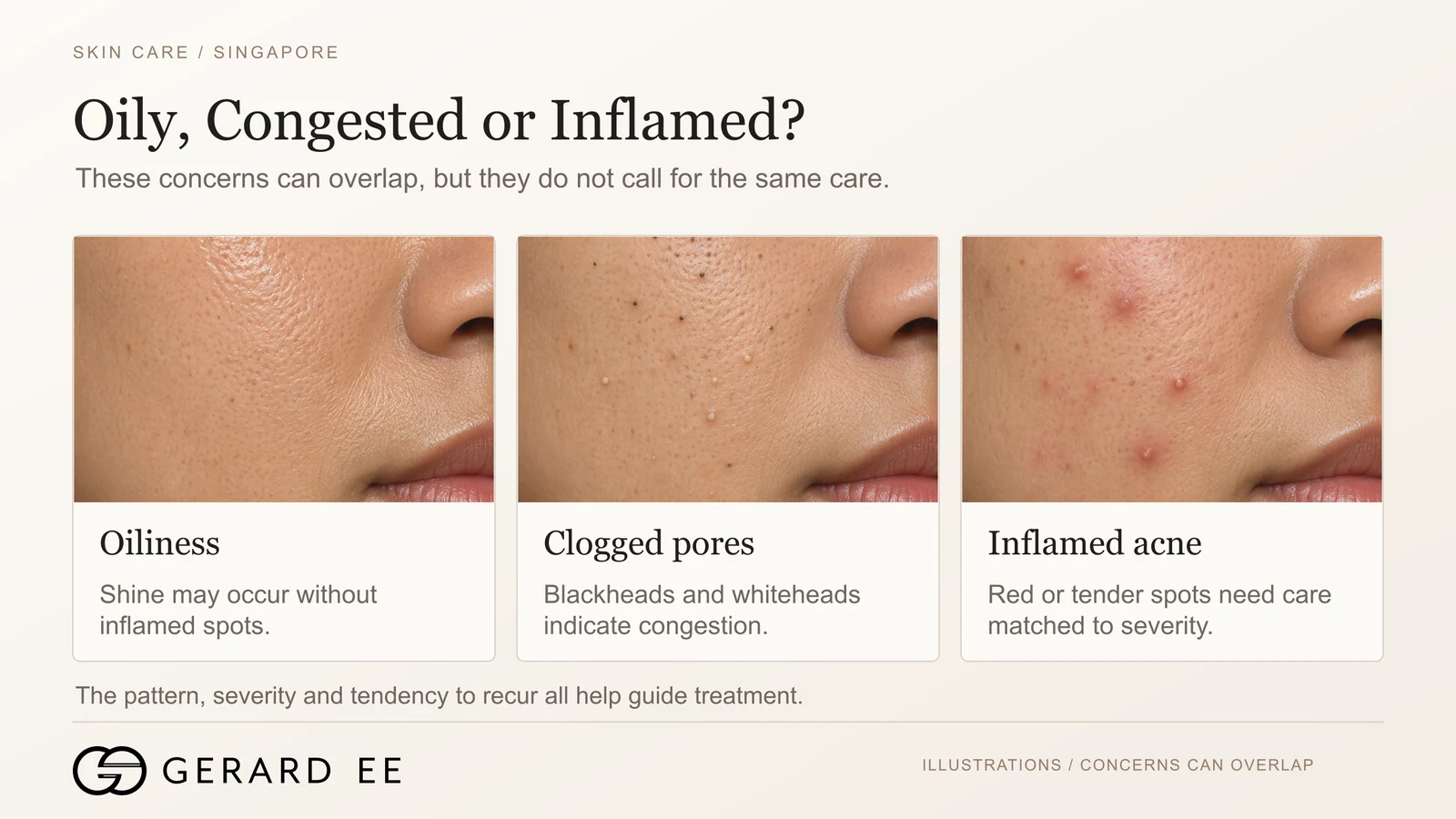
The assessment distinguishes between simple oiliness, clogged pores, and genuinely inflamed acne, as each condition requires a slightly different therapeutic approach. The location of lesions, their tendency to recur in fixed sites, and the skin’s response throughout a humid day are all relevant factors.
A thorough history includes skincare practices, particularly the use of harsh or heavy products, alongside dietary factors like dairy and whey protein, as well as sweat and exercise habits. Careful attention is given to whether the predominant concern is excess oil, clogged pores, or active inflammation, since that distinction is what steers the entire treatment approach.
How I classify oily-skin acne
Oily skin is characterised by naturally overactive sebaceous glands. In a humid climate, sweat mixes with this excess oil and remains on the skin surface, which increases the likelihood of pore blockage. Blocked pores represent the initial stage of blackhead, whitehead, and inflamed acne formation.
Acne is classified by type and severity according to standard clinical practice. However, oily skin tends toward congestion and diffuse breakouts rather than isolated recurrent lesions, and this tendency influences the selection of the most appropriate treatment.
Dr Gerard Ee’s clinical note
Patients frequently arrive with the conviction that their oily skin simply requires more frequent washing. In reality, overcleansing tends to exacerbate the condition. An effective approach involves appropriate skincare to regulate sebum production, combined with treatments that actively reduce glandular oil output. This represents a markedly different strategy from persistent surface scrubbing throughout the day.
When I would consider each treatment
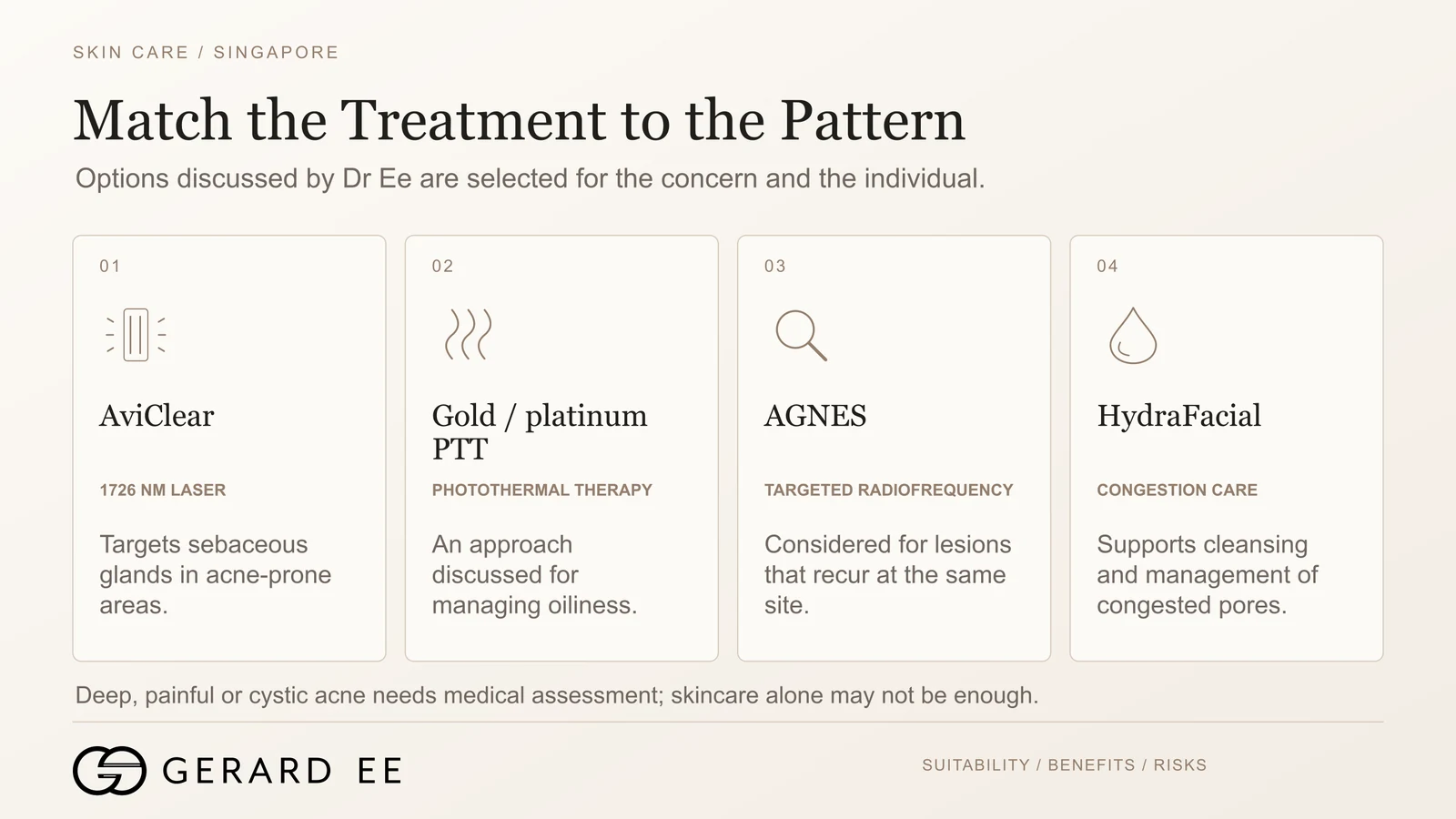
The most effective in clinic treatments for oily skin reduce sebum production rather than merely cleansing the surface. AviClear, a 1726 nm laser, lowers oil output across a broader area and is well suited for generalised oily skin as well as for maintenance purposes.
Gold and platinum photothermal therapy reduces oiliness more gently and is particularly well suited for younger patients, as well as for pregnant or breastfeeding mothers.
AGNES is indicated for acne that recurs persistently in the same location, while HydraFacial is appropriate for cases of significant congestion.Marks left behind are treated later, with Q-Switch and Vbeam.
When I would not recommend a treatment
Aggressive extraction and harsh scrubbing do not constitute effective treatments for oily skin acne, as they fail to reduce sebum production and frequently result in additional post-inflammatory marks. AviClear is less suitable for the nasal area, so the treatment plan is adjusted accordingly. It is also not the preferred option for nodular cystic acne, which typically requires more targeted therapy or medical management.
Caution is also exercised with aggressive resurfacing procedures in darker skin types that are prone to pigmentation. Gentler oil reducing options are prioritised as the initial approach in such cases.
Common mistakes I see
The most common mistake is overwashing, which strips the skin and paradoxically stimulates even greater sebum production. Skipping moisturiser in an attempt to reduce greasiness backfires for the same reason. Heavy or greasy products, including unsuitable sunscreens, block pores and contribute to further breakout formation.
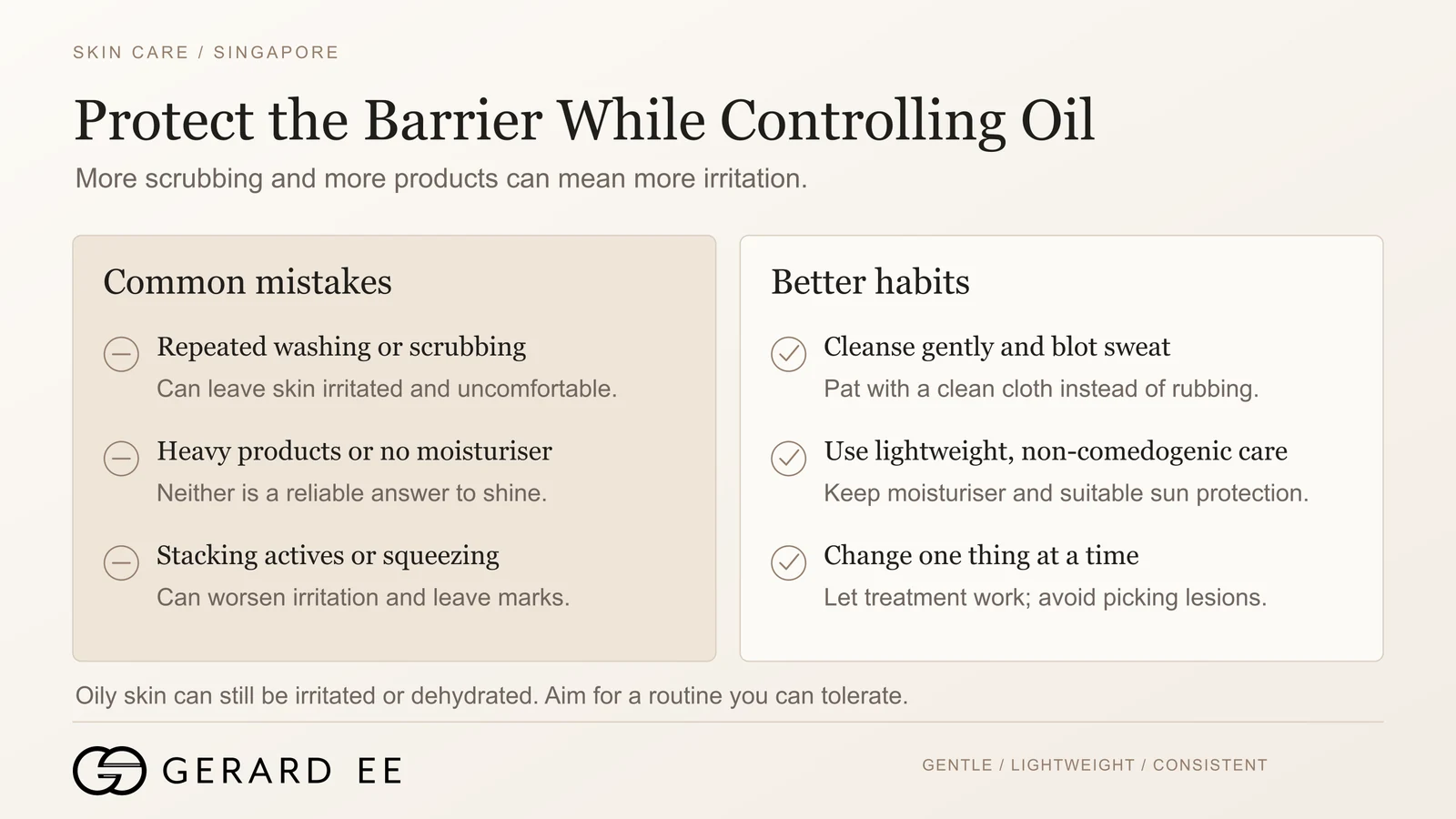
A persistent myth is that sunscreen is the most important product for acne prone skin. In practice, this does not hold true for this particular skin type. An unsuitable sunscreen often causes more breakouts than it prevents, so the recommended approach is a lightweight, noncomedogenic product rather than whatever sunscreen happens to be readily available.
What you can realistically expect
Treating oil production at its source, supported by a balanced skincare routine, gradually brings oily and breakout prone skin under control. Device based treatments build their cumulative effect over a period of several months.
Daily habits play a supportive role, such as blotting sweat gently, cleansing after heavy perspiration, and choosing lightweight noncomedogenic products. Over time, shine diminishes and breakouts become less frequent and more manageable, though oily skin continues to require sensible ongoing care.
When to see a doctor
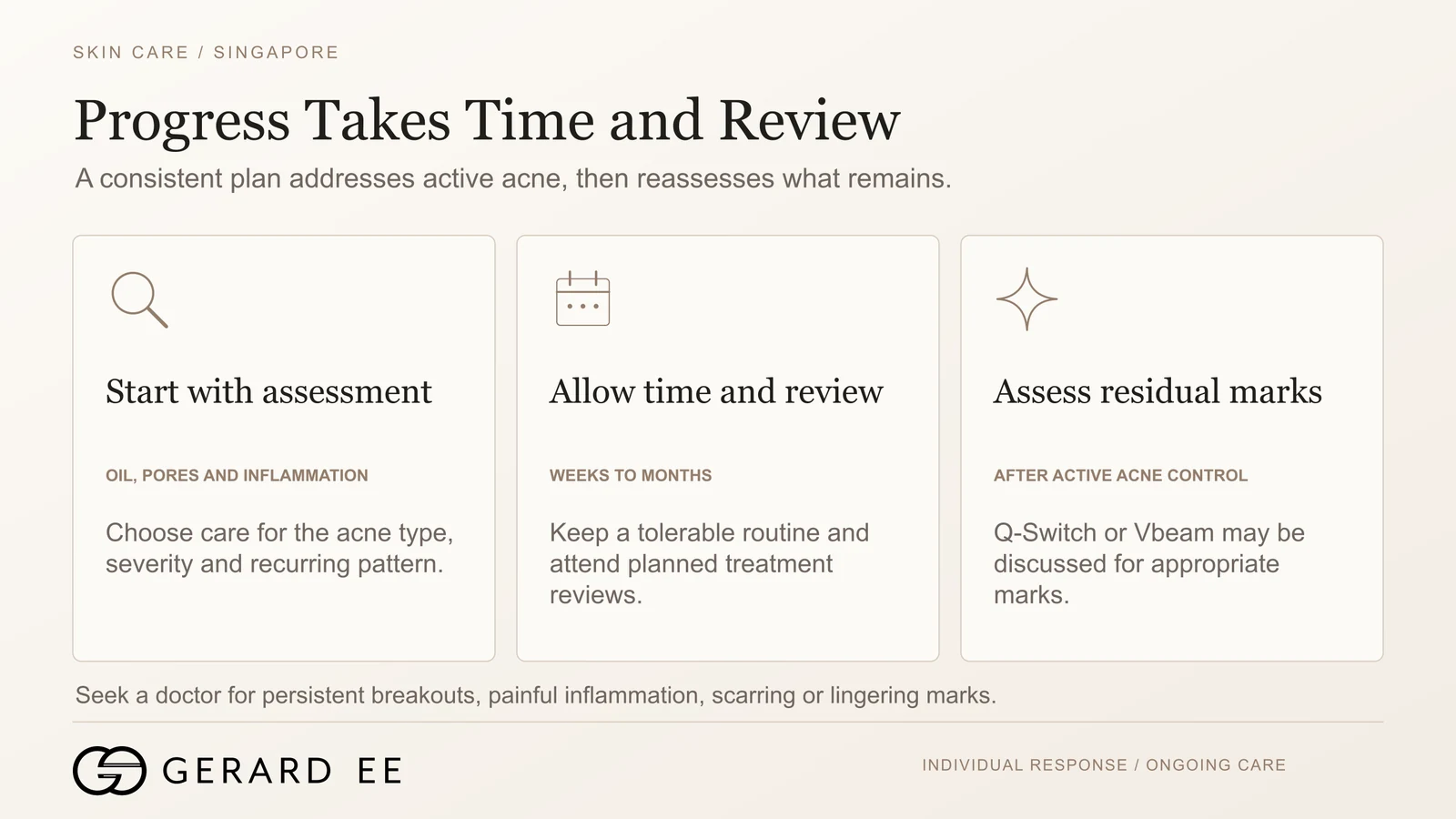
A doctor should be consulted if oily skin continues to break out despite a sensible routine, if the acne is inflamed or leaving residual marks, or if there is uncertainty about whether the primary concern is oiliness, congestion, or inflamed acne. A thorough assessment ensures that the appropriate oil reducing treatment is matched to the individual’s skin condition, rather than leaving the patient to manage the surface alone.
What the evidence shows
Treating oily skin at its source is grounded in clinical research on the sebaceous gland. The 1726 nm laser works by selectively heating and calming the oil glands, and studies demonstrate a steady reduction in inflammatory acne over a series of sessions.
Diet also plays a real, if modest, role in acne management. Controlled research suggests that a lower sugar, lower glycaemic dietary pattern can improve acne, and large population reviews have linked dairy consumption, particularly skimmed milk, with acne in certain individuals. This is why diet warrants attention as a potential contributing factor, particularly dairy, sugar, and whey protein, without being regarded as the sole cause.
Understanding sebum, the skin barrier and oil control
Oily skin results from sebaceous glands that produce more sebum than the skin requires, and understanding this helps explain why the usual instinct to wash and scrub harder tends to backfire. Stripping the skin compromises its protective barrier and signals the glands to increase sebum production, leaving the skin both irritated and greasier.
A better approach controls oil while protecting the skin barrier: a gentle cleanser, a lightweight noncomedogenic moisturiser, and ingredients such as niacinamide and salicylic acid that help regulate sebum and keep pores clear without over drying. In Singapore’s humid climate, blotting sweat gently and cleansing after heavy perspiration helps prevent trapped oil and sweat from clogging pores.
When skincare alone proves insufficient, treatments that reduce sebum production at its source deliver the most significant improvement.
The 1726 nm laser calms the sebaceous glands over a series of sessions, while photothermal therapy offers a gentler option for younger or pregnant patients. These treatments address the underlying cause of oiliness rather than merely managing the surface, which is why they prove more effective than any amount of washing.

Control oily, breakout-prone skin at the source.
The Clifford Clinic is located at 50 Raffles Place, Singapore Land Tower. To arrange a consultation, please call (65) 6532 2048 or WhatsApp (65) 8318 6332.
Related reading
- Acne Treatment Singapore: How I Choose (Dr Gerard Ee)
- AviClear (Dr Gerard Ee)
- Gold PTT for Acne (Dr Gerard Ee)
- Adult Acne (Dr Gerard Ee)
- HydraFacial Deep Pore Cleansing
- Acne Treatment in Singapore

Dr Gerard Ee, Aesthetic Doctor in Singapore
Dr Gerard Ee is an aesthetic doctor in Singapore and the Medical Director of his practice at 50 Raffles Place. He graduated from St George’s, University of London, trained in surgery at Singapore General Hospital and the National University Hospital, and holds the MRCS (Edinburgh) and a postgraduate diploma in practical dermatology from Cardiff University.
He has practised aesthetic medicine since 2012, is the author of sixteen peer-reviewed papers, and writes and medically reviews every article on this site. Read more about Dr Gerard Ee.
Book a consultation with Dr Gerard Ee at The Clifford Clinic
Dr Gerard Ee consults at The Clifford Clinic, 50 Raffles Place, Singapore. Consultations are by appointment. Message the clinic on WhatsApp, or call 6532 2048.
Frequently Asked Questions
Does oily skin cause acne?
Excess oil is a major contributing factor, particularly in humid climates where sweat and oil accumulate on the skin surface and clog pores. Treating sebum production at its source proves more effective than relying on surface cleansing alone.What is the best treatment for oily, acne-prone skin?
Treatments that directly reduce sebum production tend to yield the best outcomes. These include AviClear and gold or platinum photothermal therapy, along with AGNES for recurrent lesions and HydraFacial for significant congestion.Will washing my face more often reduce oil and acne?
Overcleansing typically backfires and may paradoxically increase sebum production. A balanced approach using noncomedogenic skincare in combination with oil-reducing treatments proves substantially more effective.
Do I still need sunscreen if I have oily, acne-prone skin?
Sun protection is important for preventing post-inflammatory marks, but it should be noncomedogenic and lightweight, as heavy or greasy sunscreens can worsen acne. Selecting the appropriate formulation is therefore essential.
Building an oily-skin routine step by step
A good routine for oily, acne-prone skin in Singapore is simple and balanced. Cleansing twice daily with a gentle cleanser removes excess oil without compromising the skin barrier, since overstripping the skin triggers even greater sebum production.
A lightweight noncomedogenic moisturiser should be applied next, as even oily skin requires hydration. Skipping this step often exacerbates oiliness. Active ingredients are best introduced gradually rather than all at once to minimise the risk of irritation. Above all, consistency is crucial, as visible results develop over weeks rather than days.
Choosing sunscreen for acne-prone skin
Sunscreen is one of the most misunderstood steps for acne-prone skin. Protecting the skin from ultraviolet exposure helps prevent marks from darkening, yet a heavy or greasy sunscreen can clog pores and aggravate breakouts.
The answer is not to forgo protection entirely, but to select a lightweight noncomedogenic formula designed for oily or acne prone skin. Matching the product to the individual’s skin type is what renders sun protection beneficial rather than detrimental, and this distinction lies at the heart of much of the confusion surrounding sunscreen and acne.
Common oily-skin skincare mistakes to avoid
Much of the frustration with oily, acne-prone skin stems from well-intentioned habits that inadvertently worsen the condition. Overwashing and harsh scrubbing strip the skin and drive the glands to produce even more sebum.
Skipping moisturiser in an attempt to feel less greasy often backfires, as dehydrated skin compensates by producing more oil. Heavy or greasy products, including unsuitable sunscreens, block pores and contribute to breakouts. Applying too many potent active ingredients at once irritates the skin and ultimately hinders progress.
Daily habits in humid weather
A few habits make a significant difference in Singapore’s humid climate. Blotting sweat gently rather than wiping vigorously reduces skin irritation, while showering and cleansing after heavy perspiration helps prevent trapped oil and sweat from clogging pores.
Choosing lightweight noncomedogenic products keeps the skin protected without adding to congestion, while resisting the urge to squeeze helps prevent post inflammatory marks. These small adjustments allow oil reducing treatments to perform their deeper work effectively, rather than forcing them to counteract the effects of counterproductive habits.
References
Sources cited on this page
- HealthHub Singapore. Acne. https://www.healthhub.sg/a-z/diseases-and-conditions/acne
- American Academy of Dermatology. Guidelines of care for the management of acne vulgaris. https://www.aad.org/member/clinical-quality/guidelines/acne
- Acne vulgaris. https://dermnetnz.org/topics/acne
- A 1726 nm laser system for the treatment of acne vulgaris. PubMed. https://pubmed.ncbi.nlm.nih.gov/36197599/
- A low-glycaemic-load diet improves symptoms in acne vulgaris: randomised controlled trial. PubMed. https://pubmed.ncbi.nlm.nih.gov/17616769/
- Dairy intake and acne vulgaris: systematic review and meta-analysis. PubMed. https://pubmed.ncbi.nlm.nih.gov/30096883/
- The Clifford Clinic. Acne Treatment Singapore. https://cliffordclinic.com/skin/acne-treatment-singapore/
Medical disclaimer: This article is for general education and does not replace an in-person consultation. Treatment suitability, results and risks vary between individuals. Please speak with a qualified doctor before starting any acne treatment.
This page is written from published research and from clinical experience in Singapore since 2012. It is for general education, not medical advice. Whether a treatment suits you, what it may achieve and what it may risk can only be established at a consultation. Dr Gerard Ee is the Medical Director of The Clifford Clinic, a private clinic in Singapore, and treatments discussed on this site are provided commercially.