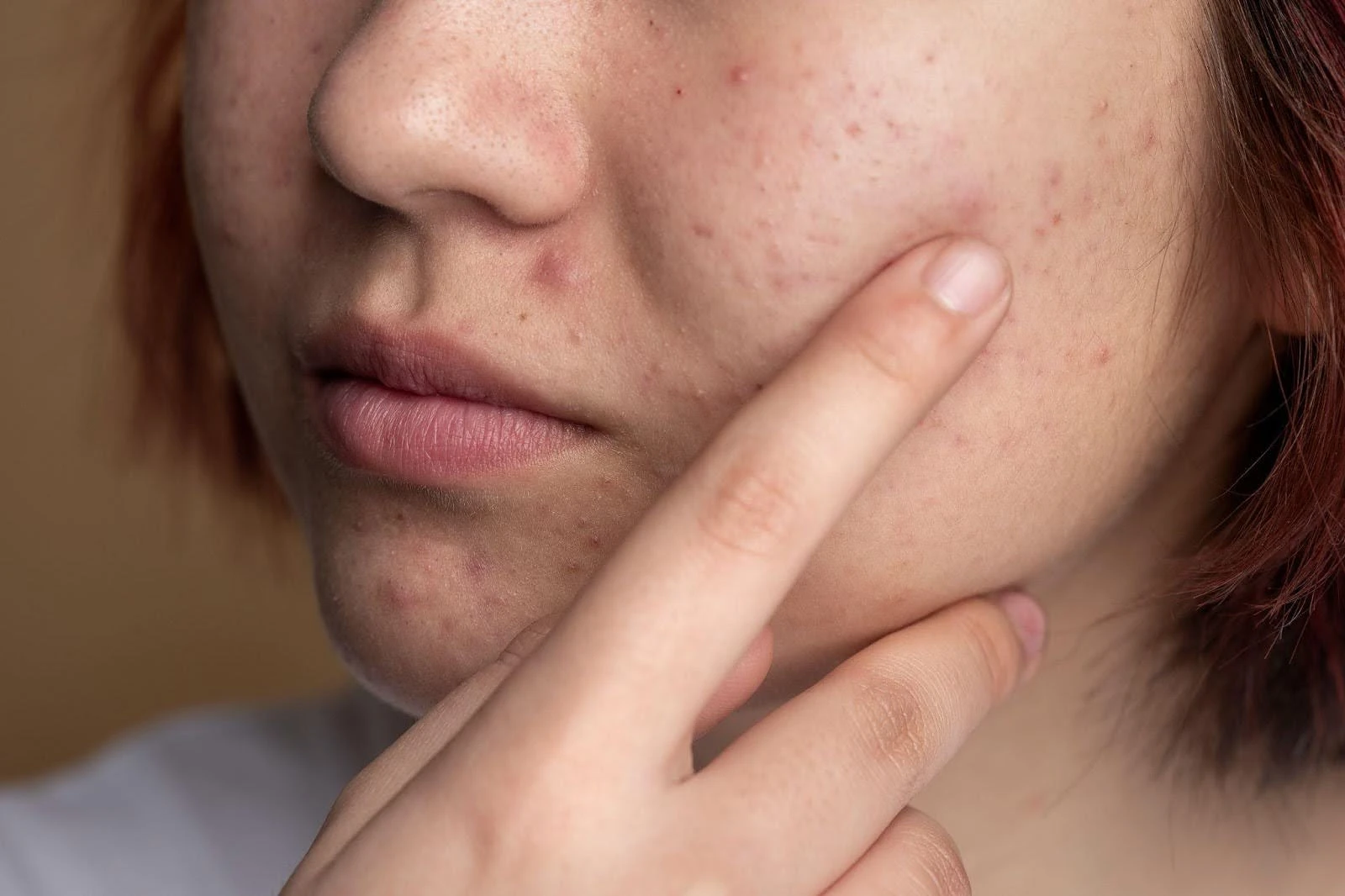
Acne treatment is not about choosing one best product for every teenager. It starts with identifying the pattern of the acne and matching appropriate and effective treatments to it. Teenage acne is extremely common and although it is a normal part of growing up, treating it early is what prevents scarring that can last a lifetime.
Dr Gerard Ee consults at The Clifford Clinic, 50 Raffles Place, Singapore.
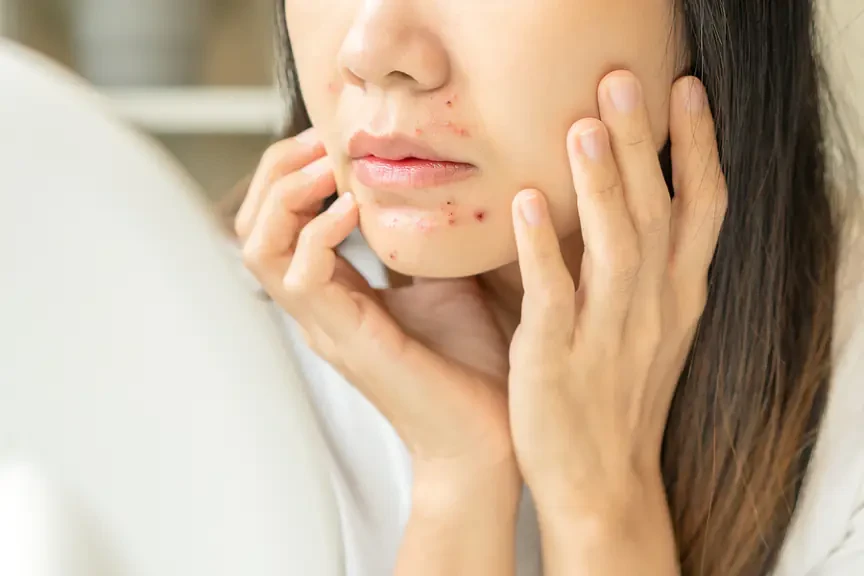
My quick answer
Teenage acne is driven largely by the hormonal changes of puberty, which increase oil production and lead to blocked pores and breakouts. Treatment focuses on good medical skincare at concentrations suited to younger skin. There are also gentle in-clinic options such as Gold or Platinum Photothermal Therapy where needed. Treating early matters most, because it reduces the risk of permanent scarring. Where scars have already formed, the acne scar treatment guide explains what can be done. The aim is effective control with a comfortable, age-appropriate experience.
What I look for during the consultation
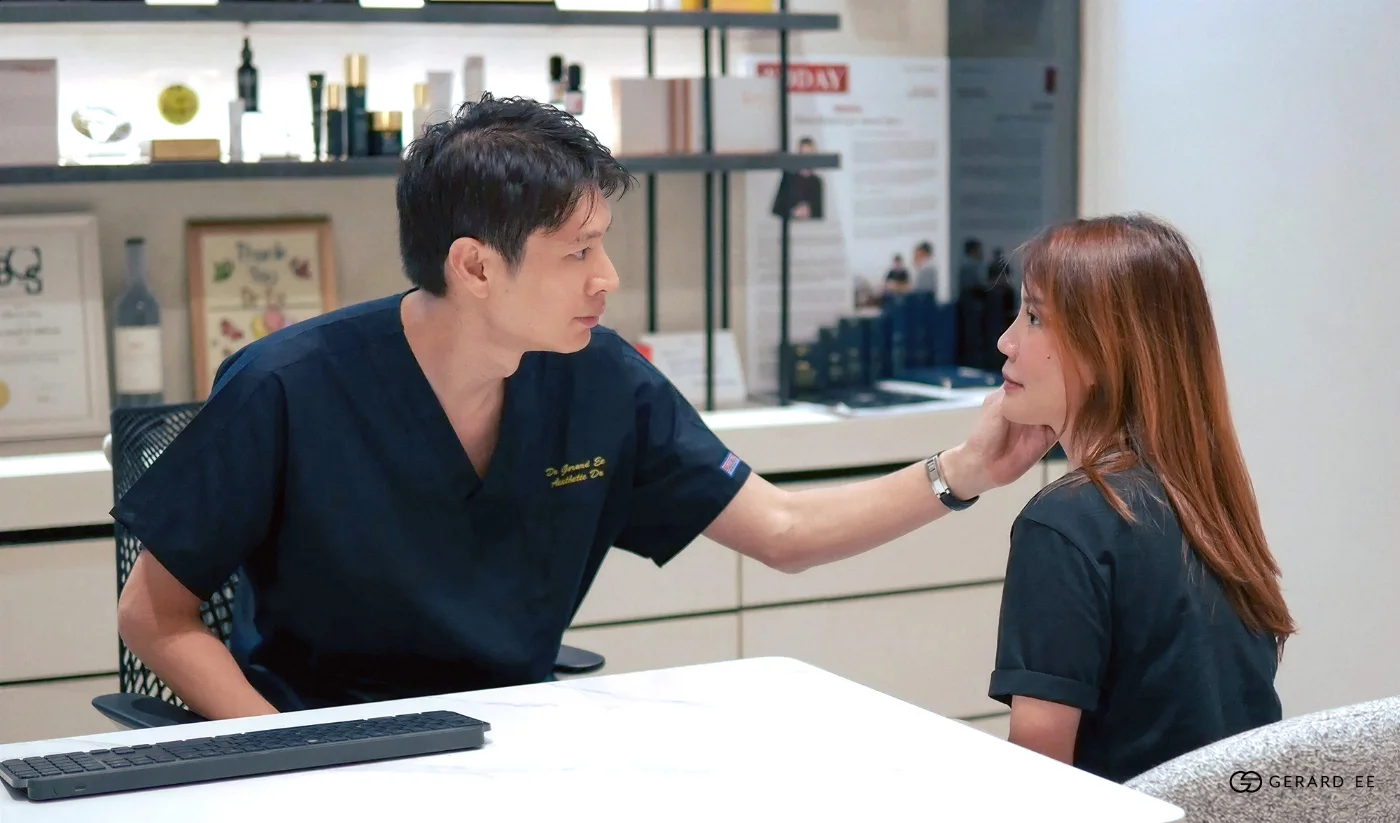
A teenage consultation begins with the type and severity of the acne, whether it is mostly blackheads and whiteheads, inflamed bumps, or deeper painful lesions and whether it is already leaving marks. The history matters too, covering current skincare, diet including dairy and whey protein, sport and sweat habits and how much the acne is affecting the young person. I keep the conversation about health and skin rather than appearance and I involve the teenager in their own plan so they feel in control rather than judged.
How I classify teenage acne
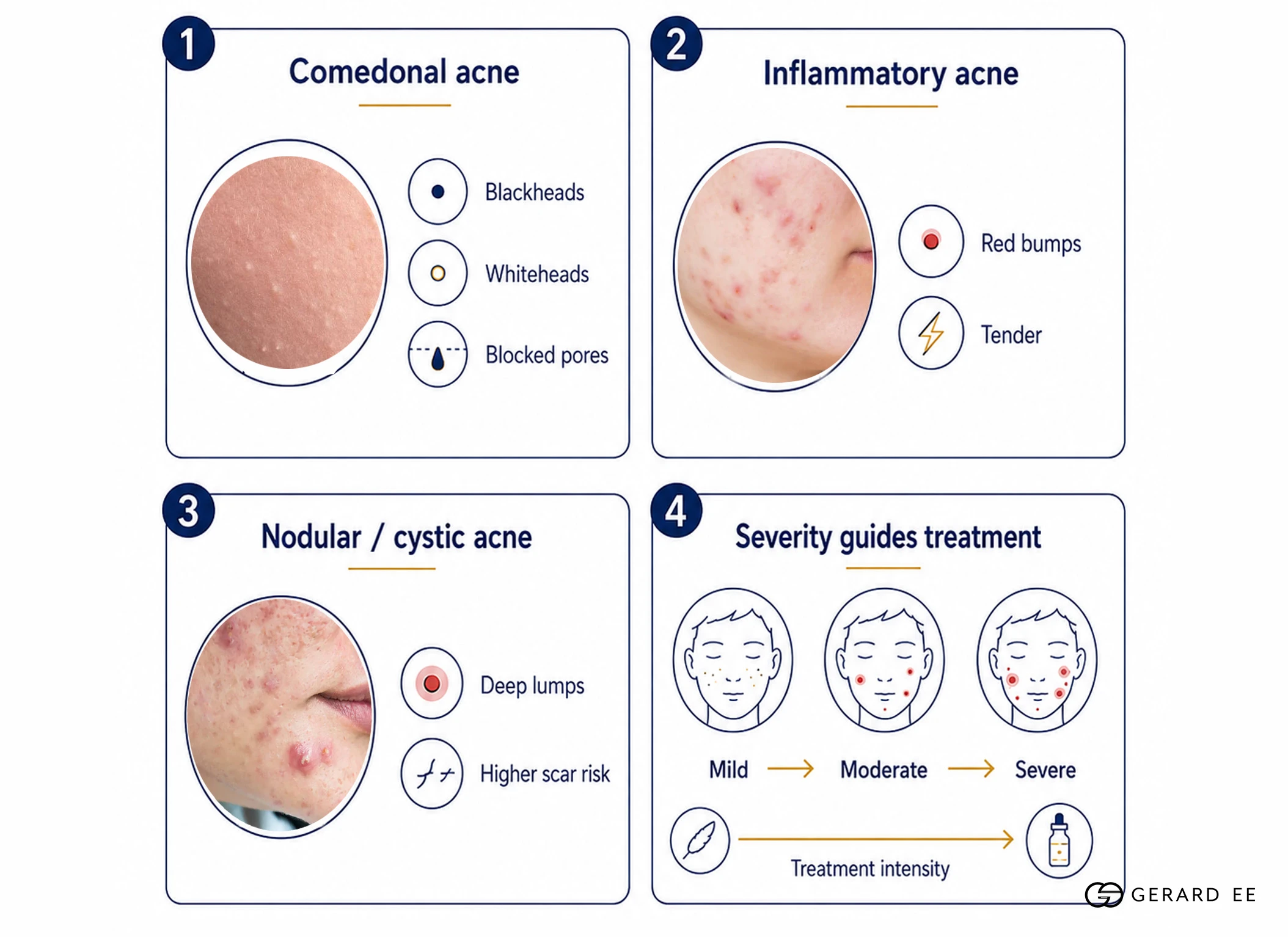
Teenage acne is classified the same way as any acne, by type and severity. Comedonal acne is the blackheads and whiteheads driven by blocked pores. Inflammatory acne is the red, tender bumps. More severe nodular and cystic acne, with deep painful lumps, is less common in teenagers but carries the highest scarring risk and needs prompt attention. Grading the severity guides how gentle or active the treatment needs to be.
| Dr Gerard Ee’s clinical note
I always tell teenagers that I had acne myself when I was younger, and that it is nothing to be embarrassed about. Keeping the conversation about health rather than appearance, and keeping them involved in their own plan, is what gets a teenager to actually use their treatment and that is half the battle won. |
When I would consider in-clinic treatment
Prescription skincare is the foundation and for mild acne it is often enough. In-clinic treatments are considered when the acne is widespread or inflamed, when products are not helping, or when it is starting to leave marks. Gold and Platinum Photothermal Therapy are particularly suitable for teenagers, because they are gentler than some other options and well tolerated. HydraFacial helps where there is heavy congestion. Treating early, before scarring develops, is the priority at this age.
When I would not recommend stronger treatment
More intensive treatments such as AGNES and AviClear can be harder for very young patients to tolerate, which is one reason the gentler photothermal options are usually preferred for teenagers. Aggressive resurfacing and strong oral medication are not first-line for ordinary teenage acne and oral medication in particular is reserved for severe cases. The aim is to control the acne effectively while keeping the experience comfortable, rather than reaching for the strongest available option.
Common mistakes I see
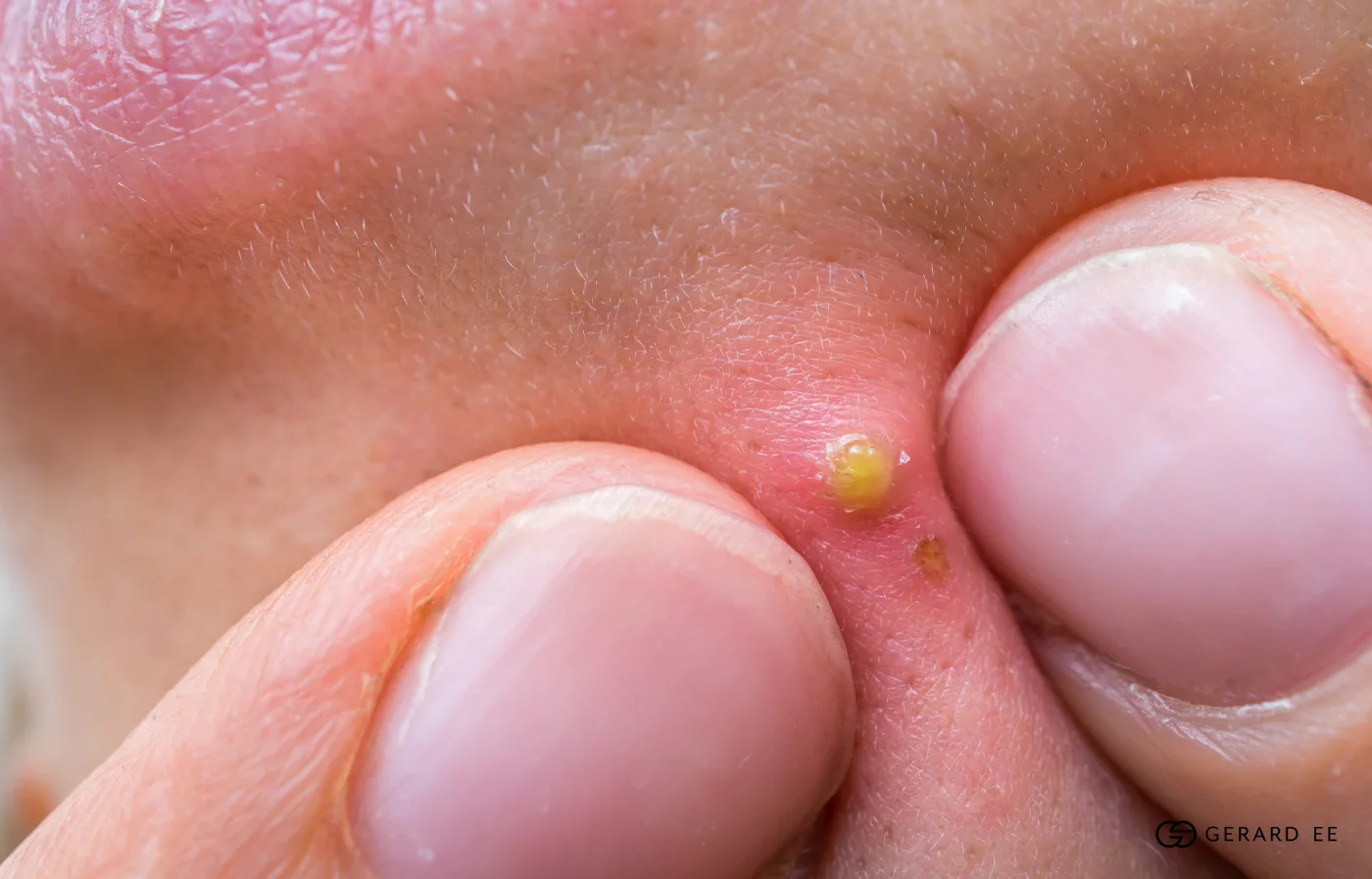
The most common mistake is squeezing and picking, which is one of the surest ways to turn temporary teenage acne into permanent scars. Another is following acne advice from social media, much of which is paid promotion with before and after results that are not real, setting unrealistic expectations. Stopping skincare too soon, before it has had a few weeks to work, is common too. And waiting too long to treat moderate or severe acne risks scarring that is far harder to fix than the acne itself.
The role of parents
Parents make a real difference, mostly by supporting consistency. Acne treatment only works when the skincare is used regularly, and many teenagers stick to their routine far better with gentle parental encouragement. Helping a teenager keep appointments, choose non-comedogenic products, and avoid squeezing all protect against scarring. Framing acne as a common, treatable medical condition rather than a flaw supports both the treatment and the young person’s confidence.
What you can realistically expect
Teenage acne generally responds well, especially when treated early and consistently, though skincare takes several weeks to show its full effect. The goal is steady control and prevention of scarring. Gentle in-clinic treatments build their results over a series of sessions while medical skincare maintains the improvement. Realistic expectations are set at the first visit so a young person does not give up too soon.
When to see a doctor
It is reasonable to seek help when the acne is widespread or inflamed, when over the counter products are not working, when the lesions are deep and painful, or when the acne is affecting a teenager’s confidence. The single most important reason to act early is to prevent scarring, which is far harder to treat than the acne itself.
Diet, sport and teenage skin
Diet can play a supporting role for teenagers. Dairy, sugar and whey protein are common triggers. Many active teenagers who use protein supplements notice a difference when they review their intake. Sport itself is healthy, but sweat left on the skin after training can clog pores, hence showering and cleansing soon after exercise helps. None of this replaces medical treatment, but these habits make the skin easier to control alongside it, and they are easy for a young person to build into a daily routine.
What to expect at a first teen consultation
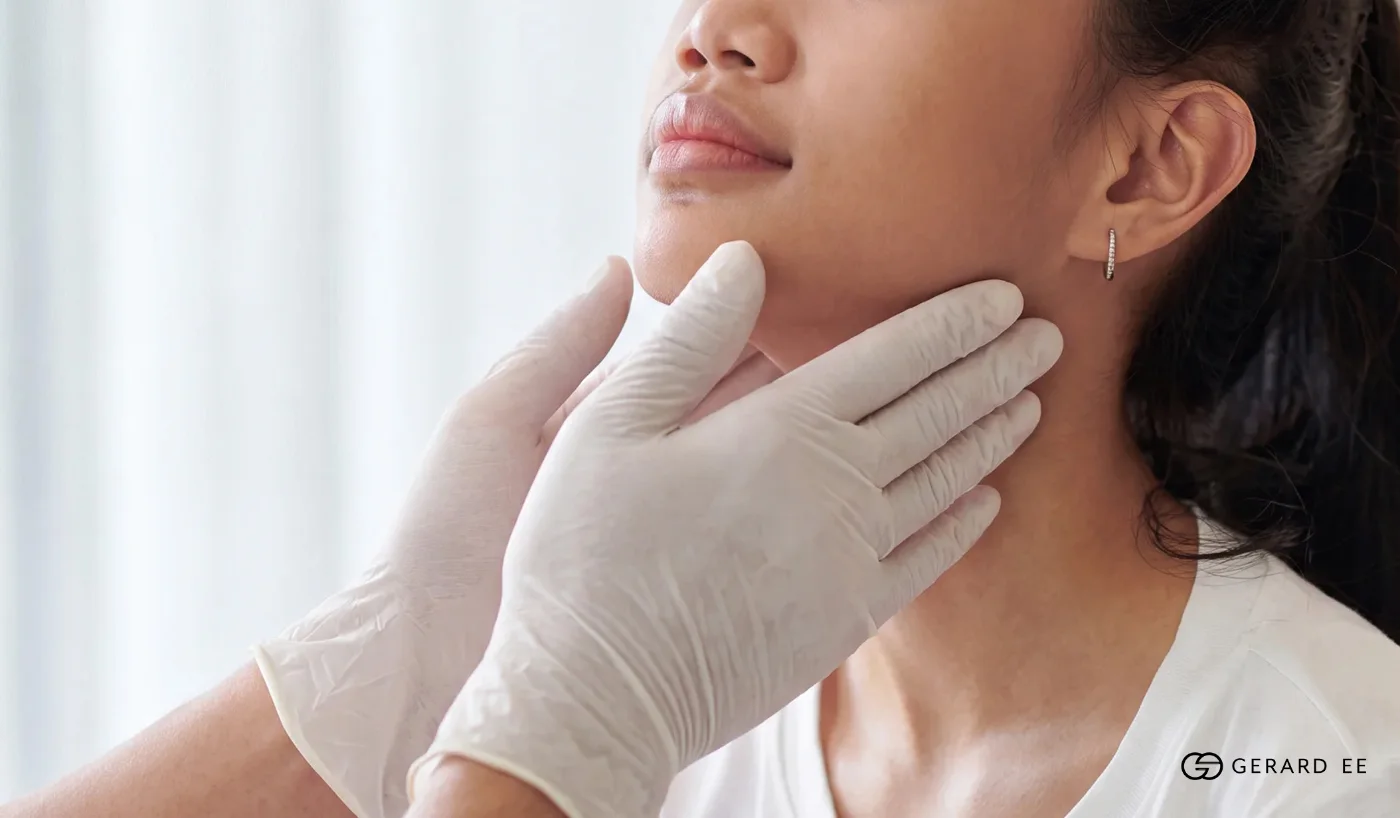
A first consultation looks at the type and severity of the acne and takes a history covering skincare, diet, sport and daily habits. From there the options are explained in plain language, including gentle in-clinic treatments such as Gold or Platinum Photothermal Therapy where appropriate, and a simple plan is agreed. Parents are welcome and play an important role in supporting consistency once treatment begins. Keeping the plan straightforward is deliberate, because a routine a teenager will actually follow beats a complex one that gets abandoned after a week.
Supporting emotional wellbeing
Acne can weigh heavily on a young person’s confidence and that is worth taking seriously. Keeping the conversation focused on health and skin rather than appearance helps, as does involving the teenager in decisions so they feel in control rather than judged. Treating the acne effectively is often the most reassuring step of all and a supportive attitude at home makes a real difference. If low mood persists beyond the skin itself, it is worth seeking support from a trusted adult or professional. This often also complicates the matter due to the fact that Isotreintoin or Roacutane can increase the risk of depression and suicidal tendencies.
What the evidence shows
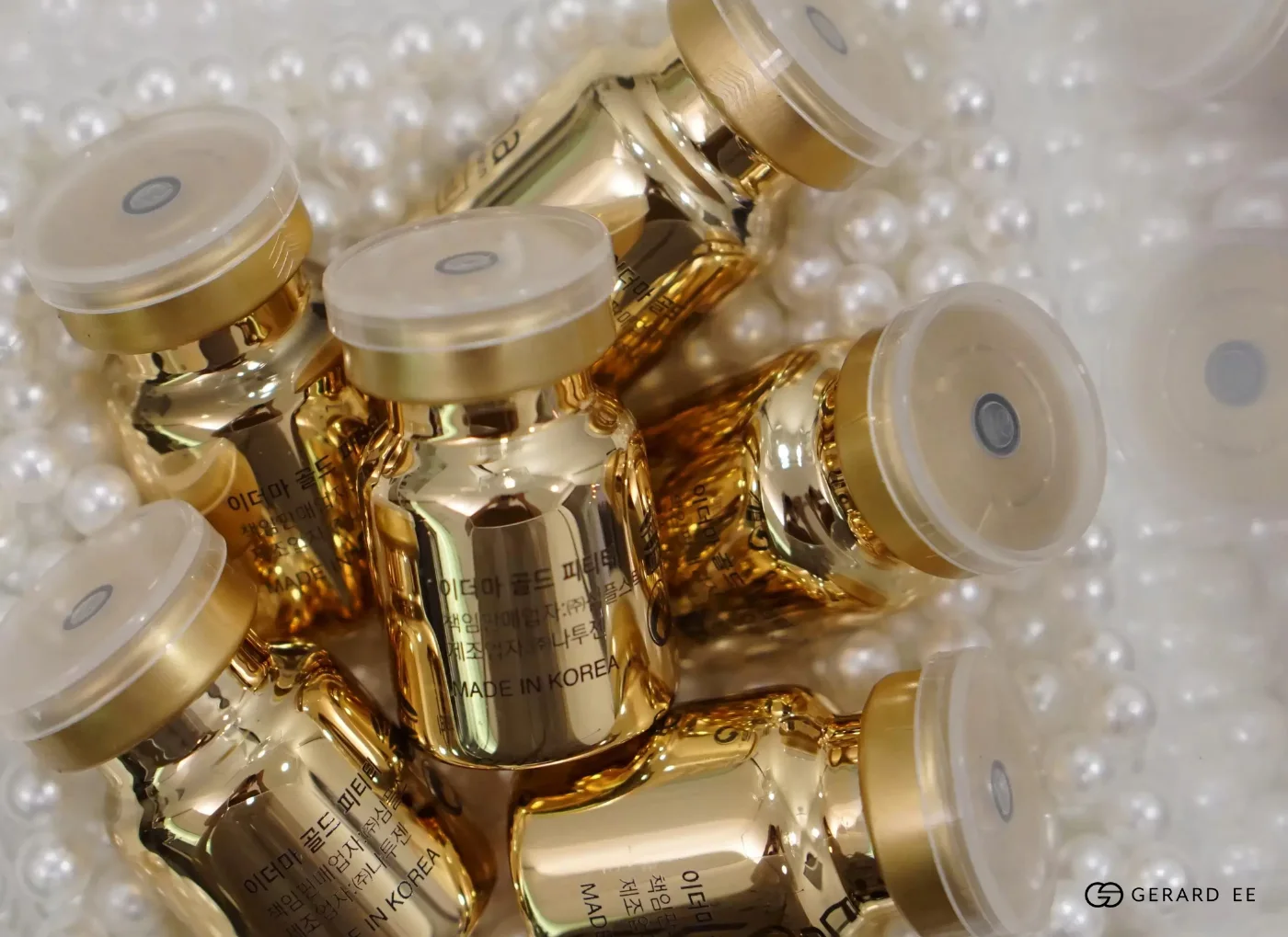
Acne is almost universal in adolescence and the medical literature shows that the great majority of teenagers are affected at some point. The priority at this age is to control the acne while preventing scarring, and the Gold PTT used for young children or teenagers work by selectively targeting the oil glands, an approach supported by clinical research. Topical medical skincare, used consistently remains the evidence-based foundation and dermatology guidelines support combining a topical retinoid with benzoyl peroxide as a mainstay of treatment.
Why teenagers get acne
Puberty raises androgen levels, androgens enlarge the sebaceous glands, and the enlarged glands produce more sebum than the pore can clear. Shed skin cells mix with the sebum, the pore blocks, Cutibacterium acnes multiplies in the trapped oil, and the resulting immune response is the red spot. Almost every teenager has some acne, and its severity depends mostly on family history rather than on hygiene.
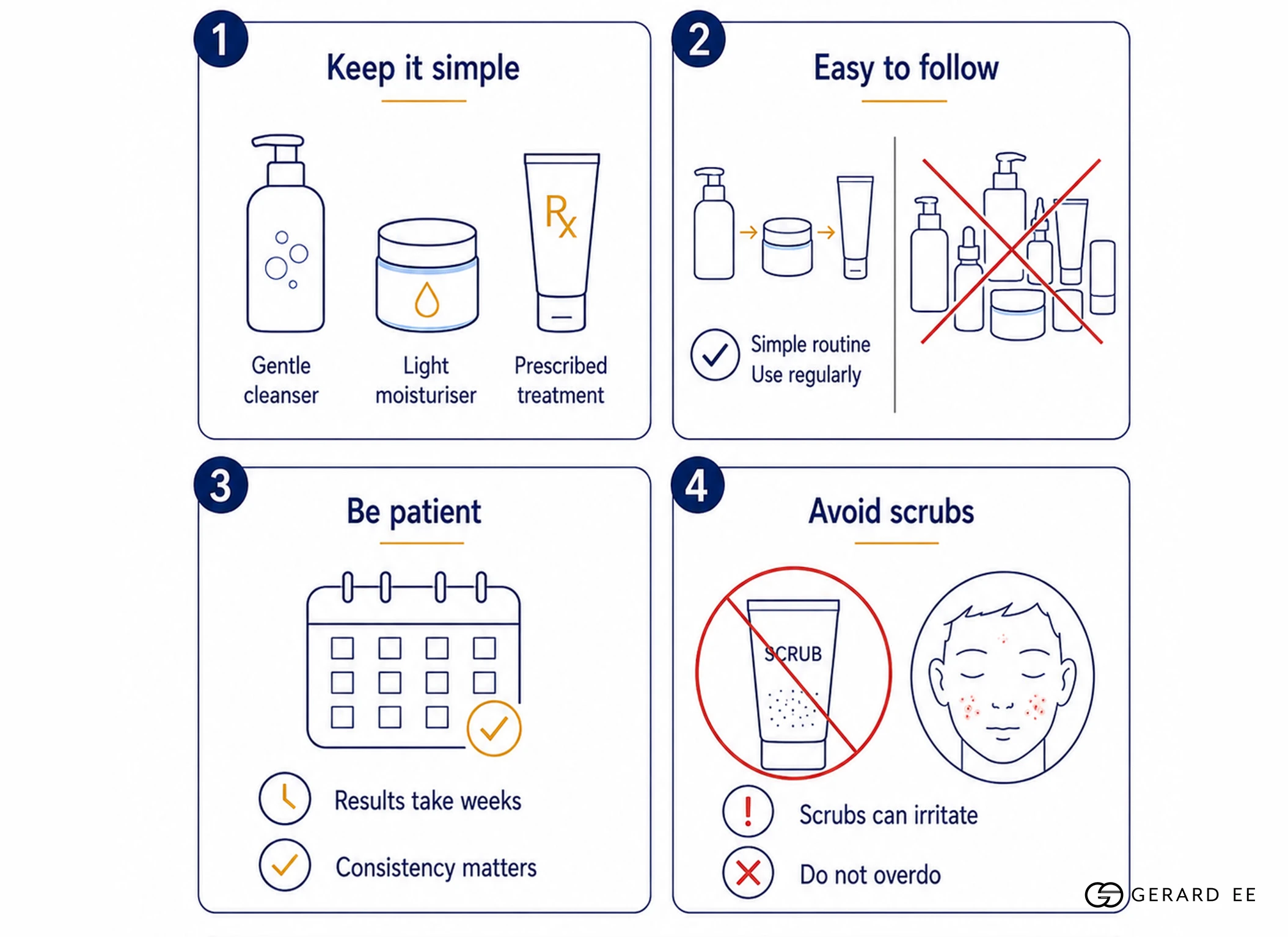
Teenage acne usually eases in the early twenties as sebum production falls, but waiting for it to pass is not a reason to leave it untreated, because nodular acne scars while it waits. The routine below keeps mild and moderate acne in check and stops it reaching that stage.
The teenage acne routine, morning and night
| Morning | Night | |
|---|---|---|
| Cleanse | Gentle, non-foaming cleanser, lukewarm water, fingertips only | Same cleanser, with sunscreen removed fully |
| Treat | Benzoyl peroxide 2.5 to 5 percent, thin layer over the whole acne-prone area, not on spots only | Adapalene 0.1 percent, pea-sized amount over the whole area, started every second night for two weeks then nightly |
| Moisturise | Light, oil-free, non-comedogenic gel or lotion | Same, applied after the adapalene has dried |
| Protect | Sunscreen SPF 30 or above, non-comedogenic, reapplied after PE or swimming | Not needed |
Benzoyl peroxide and adapalene are both available in Singapore without a prescription. They are the two treatments the 2024 American Academy of Dermatology guideline places first for almost every acne presentation, and they act on different steps of the process. Benzoyl peroxide kills the bacteria in the follicle, and adapalene, a retinoid, normalises the shedding of the cells lining the pore so that the blockage does not form. Neither shows a result before six to eight weeks, and both cause dryness in the first two weeks, which is the point at which most teenagers stop. Starting adapalene on alternate nights and moisturising over it is what carries the routine past that fortnight.
Topical treatments for teenagers are prescribed at concentrations suited to younger skin, which controls the acne while limiting irritation. Combining benzoyl peroxide with the retinoid, or with a topical antibiotic, protects against bacterial resistance. A routine that is easy to keep up achieves far more than a complicated regimen abandoned after a week, and the aim throughout is control with the least irritation and prevention of the scarring that is so much harder to treat later.
Four habits that make teenage acne worse
Scrubs and cleansing brushes irritate the follicle and worsen acne. Alcohol-based toners and astringents strip the skin and increase oil rebound, and washing more than twice a day does the same. Pore strips and squeezing push the contents of a spot deeper and are the commonest cause of a mark that lasts for months.
Teenage acne in Singapore’s humidity, sport and masks
Heat and sweat add to pore blockage, so the routine is kept light, with gel textures, nothing occlusive, and a sunscreen labelled non-comedogenic. Sweat after sport should be rinsed off with water within the hour rather than left to dry. Masks, helmet straps and phones held against the cheek produce acne in the contact area, and the remedy is cleaning the object rather than scrubbing the skin.
When teenage acne needs a doctor
Three signs mean it is time for a doctor, namely nodules or cysts (the lumps that can be felt before they are seen), marks or pits being left behind, or no improvement after twelve weeks of the routine done properly. At that point the options are prescription topicals, a short antibiotic course, isotretinoin for severe acne, or one of the sebaceous-gland treatments. For a teenager who cannot take oral medication, or whose family prefers to avoid it, Gold PTT is the treatment I use most. It is explained on the Gold PTT page, and the full set of teenage options, with prices, is on teenage acne treatment in Singapore.
Related reading
- Acne Treatment Singapore: How I Choose (Dr Gerard Ee)
- Teenage Acne (Dr Gerard Ee)
- Gold PTT for Acne (Dr Gerard Ee)
- Platinum PTT for Acne (Dr Gerard Ee)
- HydraFacial Deep Pore Cleansing
- Acne Treatment Singapore

Dr Gerard Ee, Aesthetic Doctor in Singapore
Dr Gerard Ee is an aesthetic doctor in Singapore and the Medical Director of his practice at 50 Raffles Place. He graduated from St George’s, University of London, trained in surgery at Singapore General Hospital and the National University Hospital, and holds the MRCS (Edinburgh) and a postgraduate diploma in practical dermatology from Cardiff University.
He has practised aesthetic medicine since 2012, is the author of sixteen peer-reviewed papers, and writes and medically reviews every article on this site. Read more about Dr Gerard Ee.

Book a consultation with Dr Gerard Ee at The Clifford Clinic
Dr Gerard Ee consults at The Clifford Clinic, 50 Raffles Place, Singapore. Consultations are by appointment. Message the clinic on WhatsApp, or call 6532 2048.
Frequently asked questions
What is the best acne treatment for teenagers?
Good medical skincare at teen-appropriate concentrations is the foundation. For in-clinic treatment, Gold and Platinum Photothermal Therapy are gentle and well suited to teenagers. The right plan depends on the severity of the acne.
Is it safe to treat acne at a young age?
Yes, with age-appropriate care. Treating early is actually important, because it helps prevent permanent scarring. Gentler in-clinic options are chosen for younger skin.
Should my teenager see a doctor or just use a face wash?
Mild acne may settle with simple skincare. If the acne is widespread, inflamed, painful or leaving marks, or if products are not helping, a consultation is worthwhile to prevent scarring.
How can I stop my teenager’s acne from scarring?
Treat it early, keep skincare consistent, and discourage squeezing. Habitual squeezing is one of the biggest causes of acne scarring in young people.
References
Sources cited on this page
- HealthHub Singapore. Acne. https://www.healthhub.sg/a-z/diseases-and-conditions/acne
- American Academy of Dermatology. Guidelines of care for the management of acne vulgaris. https://www.aad.org/member/clinical-quality/guidelines/acne
- Acne vulgaris. https://dermnetnz.org/topics/acne
- Selective photothermolysis of sebaceous follicles with gold microparticles for acne. PubMed. https://pubmed.ncbi.nlm.nih.gov/25748556/
- Prospective multicentre study of laser-activated gold microparticles for inflammatory acne. J Drugs Dermatol. PubMed. https://pubmed.ncbi.nlm.nih.gov/37943275
- Teenage Acne (Dr Gerard Ee) https://drgerardee.com/teenage-acne/
Medical disclaimer: This article is for general education and does not replace an in-person consultation. Treatment suitability, results and risks vary between individuals. Please speak with a qualified doctor before starting any acne treatment.
This page is written from published research and from clinical experience in Singapore since 2012. It is for general education, not medical advice. Whether a treatment suits you, what it may achieve and what it may risk can only be established at a consultation. Dr Gerard Ee is the Medical Director of The Clifford Clinic, a private clinic in Singapore, and treatments discussed on this site are provided commercially.