Dr Gerard Ee consults at The Clifford Clinic, 50 Raffles Place, Singapore.
Back acne treatment in Singapore starts with one question: is it acne at all? Bacne on the back, chest and shoulders is common in our humidity and sweat, and it is treated differently from facial acne once the diagnosis is confirmed. This guide covers how I tell body acne from folliculitis, how I classify and treat it, and how long it takes to clear.
Acne treatment is not about reaching for the same product that everyone else uses, and this applies equally to body acne. It begins with confirming what the breakouts actually are, because acne, folliculitis, and irritation can appear similar on the back and chest yet require different treatment approaches. Body acne, sometimes referred to as bacne, has its own distinct triggers and responds well once it has been properly assessed and matched with the appropriate treatment.
My quick answer
Back, chest, and shoulder acne is driven by oil, sweat, friction, and blocked pores, all of which are amplified by Singapore’s humid climate, gym routines, and tight or occlusive clothing. Treatment begins with confirming that the condition is truly acne rather than folliculitis, and then combines appropriate skincare with oil reducing and congestion clearing treatments. As with facial acne, active breakouts are addressed before any marks or scars are treated. The acne scar treatment guide sets out that sequence in full.
What I look for during the consultation
The first step is the diagnosis itself, distinguishing true acne from folliculitis, which is an inflammation of the hair follicles, and from simple heat rash or friction irritation, as each condition requires a different approach. The assessment then covers the degree of skin oiliness, the location of breakouts, and whether they tend to recur. The clinical history is also relevant, including sweat and gym habits, clothing choices, backpacks, hair and body products, and supplements such as whey protein. Confirming the diagnosis is never overlooked, as treating the wrong condition can waste considerable time.
How I classify body acne
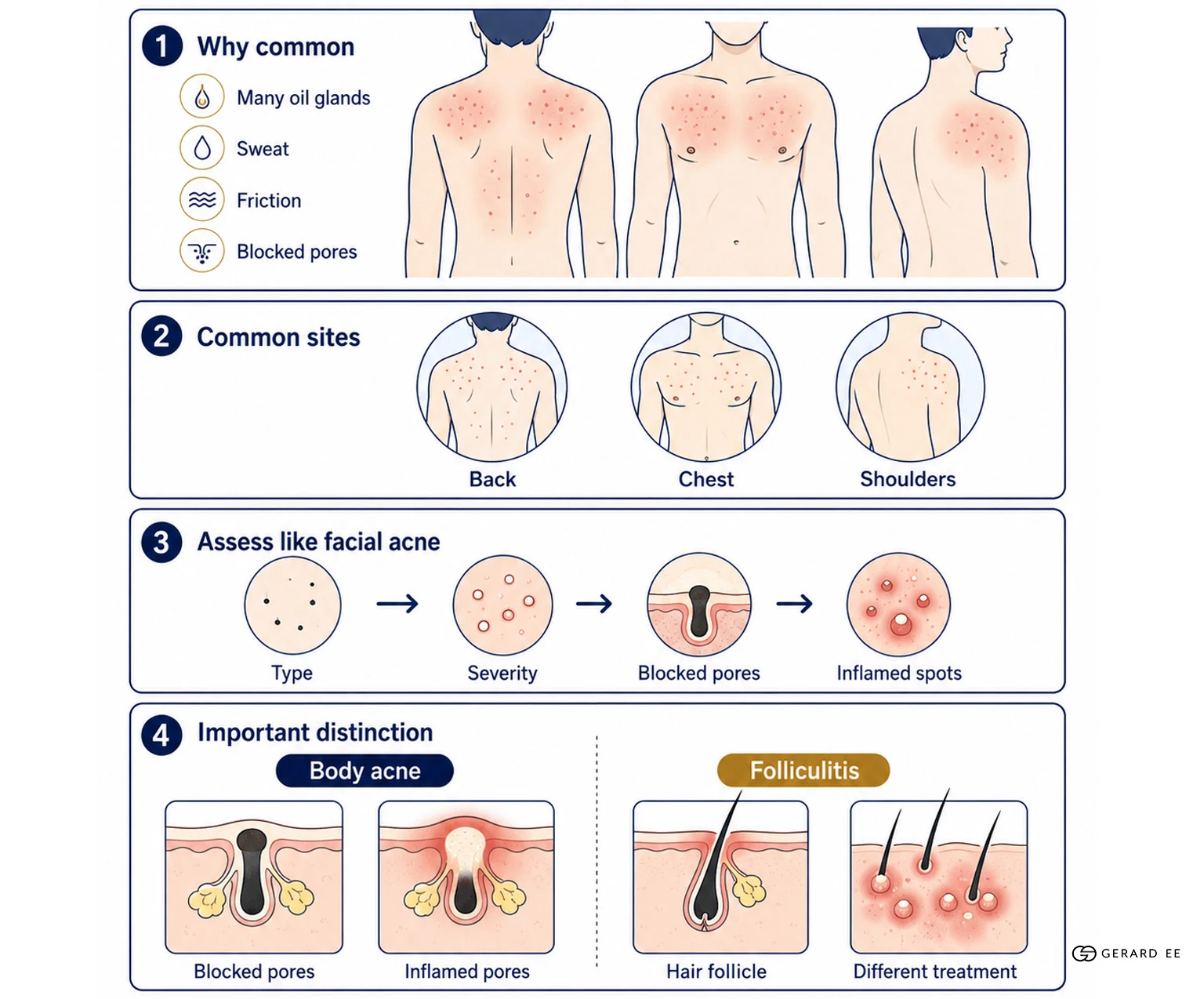
The skin on the back, chest, and shoulders contains numerous oil glands and is heavily exposed to sweat and friction, which makes it prone to blocked pores and breakouts. Body acne is classified by type and severity in a manner similar to facial acne, but the practical challenge lies in distinguishing it from look alike conditions. Folliculitis centres on the hair follicles and may require a different treatment approach, while true acne follows the familiar pattern of blocked and inflamed pores.
Dr Gerard Ee’s clinical note
With body breakouts, the first step is always to confirm whether the presentation is truly acne, or instead folliculitis or irritation, as these conditions are not the same and require different treatment approaches. Individuals may spend months using the wrong product simply because the original problem was never correctly identified. Getting the diagnosis right is most of the solution.
When I would consider treatment
Once the condition is confirmed to be acne, treatment follows principles similar to those used for facial acne, adapted for the body. Suitable medical grade skincare for the body forms the foundation, helping to control oil and clear congestion. Oil reducing treatments are considered for generally oily skin, while deep cleansing facial treatments are appropriate where significant congestion is present. Where breakouts recur persistently in the same locations, the same targeted approach used on the face applies. Marks or scars are addressed only after active breakouts have settled.When I would not treat it as acne
If the assessment points to folliculitis or simple irritation rather than acne, the condition is not treated as acne, as the approaches differ and the wrong one will not be effective. Caution is also exercised with aggressive treatment on the body in pigment prone skin, and scar treatment is not initiated while breakouts remain active. The diagnosis determines everything, so confirming it comes before any treatment is selected.Common mistakes I see
The most common mistake is spending months using the wrong product because the breakouts were never properly diagnosed. Other errors include leaving sweat on the skin after exercise, wearing tight nonbreathable clothing, and using heavy body or hair products that run onto the back and chest. Whey protein, which many gym goers rely on, can trigger breakouts in clinical experience. As with the face, squeezing body lesions is a reliable way to leave marks, since the back and chest scar just as readily.
What you can realistically expect
Body acne usually clears with a reasonable degree of patience, and the back, chest, and shoulders may respond slightly more slowly than the face, as the skin in these areas is thicker and more exposed to sweat and friction. Active breakouts are brought under control first, after which marks and any scarring are addressed. This staged approach adds time but yields a better final outcome. Daily habits, such as showering promptly after exercise and wearing breathable fabrics, support the treatment throughout.
When to see a doctor
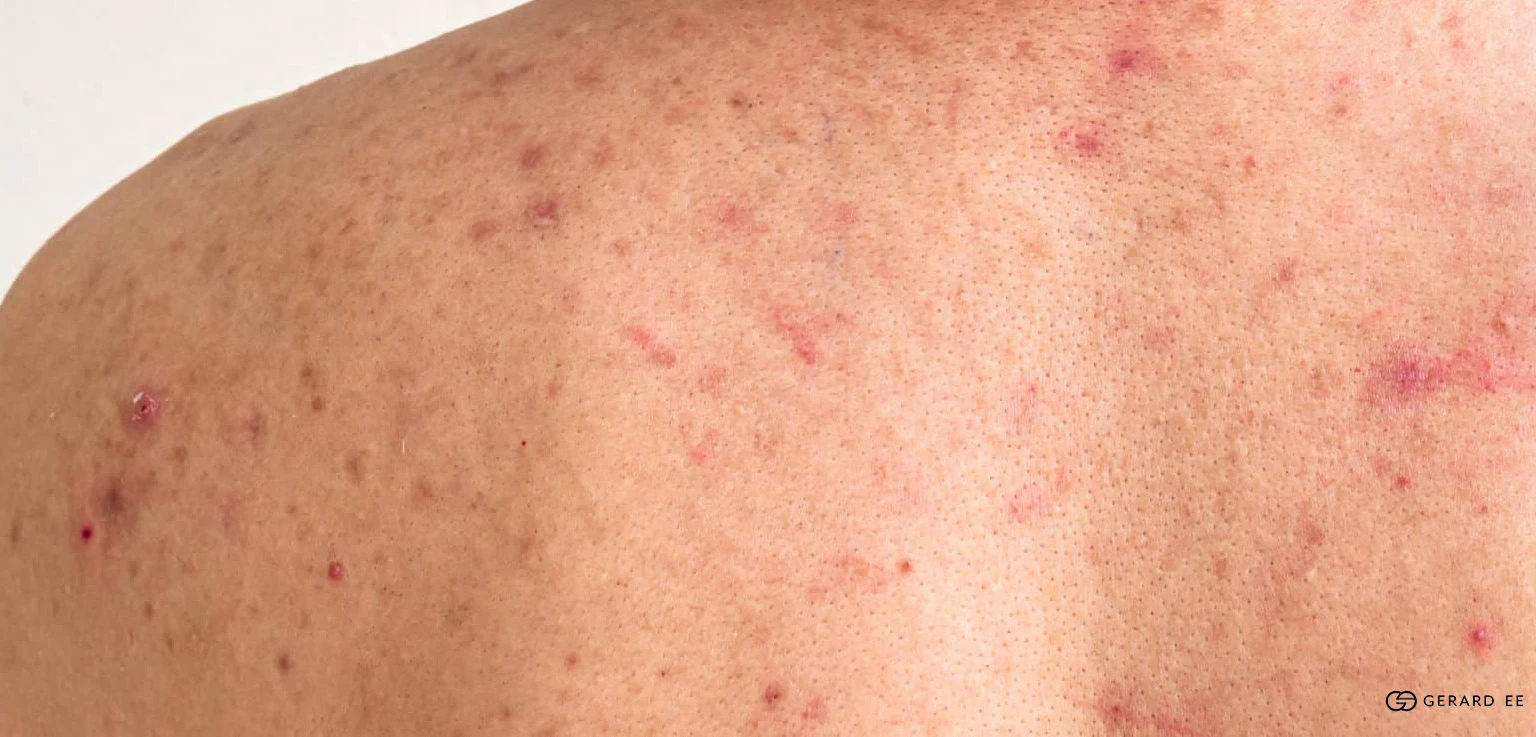
An assessment is worth considering if body acne is persistent, inflamed, or painful, if it is leaving marks, or if over-the-counter washes are not providing relief. A consultation also helps settle the important question of whether the condition is truly acne or something that resembles it, so that treatment is directed at the right target from the outset.
Other conditions that mimic body acne
Several conditions on the back and chest can be mistaken for acne. Folliculitis, an inflammation of the hair follicles, can appear almost identical but requires a different treatment approach. Simple heat rash and irritation from friction can also produce bumps, particularly in a humid climate. Because the right treatment depends entirely on an accurate diagnosis, distinguishing these conditions is one of the most valuable aspects of a consultation. Many individuals spend months using the wrong product simply because what appeared to be acne was never confirmed as such. Skincare and prevention for the body
Body skin tolerates slightly more robust care than the face, but the principles remain the same. A suitable cleansing routine helps control oil and clear congestion, and noncomedogenic products matter here as well, including any moisturiser or sunscreen used on exposed skin. Wearing breathable fabrics, changing out of damp clothing, showering promptly after exercise, and keeping backpack straps and equipment clean all help reduce the trapped sweat and friction that drive body breakouts. Avoiding aggressive scrubbing and squeezing protects the skin while treatment takes effect.
How long body acne takes to clear
Body acne usually takes some patience to clear, and the back, chest, and shoulders may respond slightly more slowly than the face, as the skin in these areas is thicker and more exposed to sweat and friction. As with facial acne, skincare and treatments work over weeks rather than days. Active breakouts are brought under control first, and only then are marks and any scarring addressed. This staged approach adds time but produces a better final outcome. A realistic timeline is established at the initial consultation.
Gym and sports acne
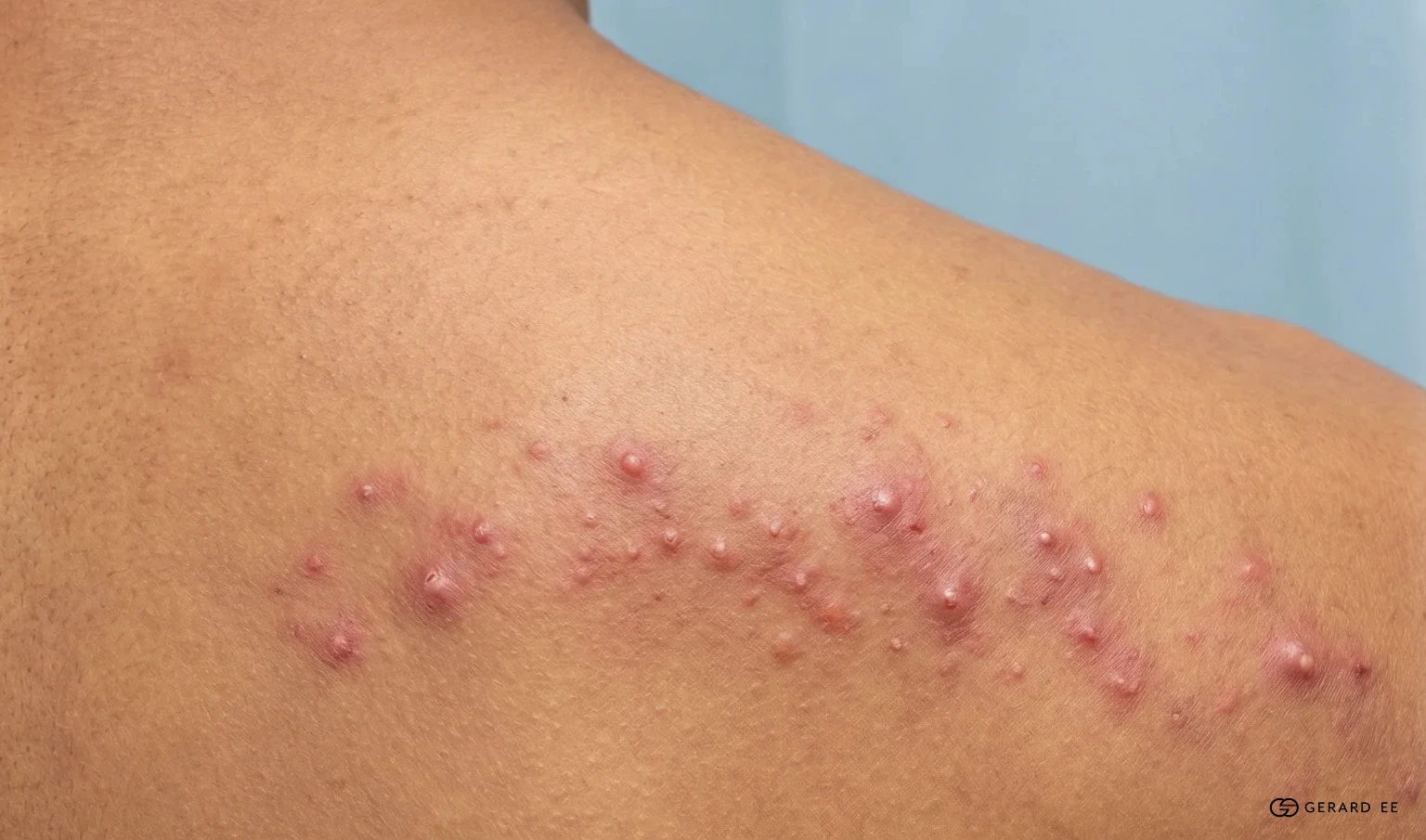
For those who train regularly, a few habits can make a substantial difference. Showering promptly after exercise removes sweat and oil before they clog pores, while wearing breathable clothing and changing out of damp gym wear reduces trapped sweat and friction. Keeping backpack straps and equipment clean is also helpful, and it is worth noting that whey protein can trigger breakouts in some individuals. None of this replaces treatment, but it makes body acne significantly easier to manage alongside it.
What the evidence shows
The most important evidence based point about body acne is that not every breakout on the back and chest is truly acne. A yeast driven condition known as Malassezia folliculitis closely mimics truncal acne, but it tends to spare the face, lacks blackheads and whiteheads, is often itchy, and presents as uniform small bumps. The distinction matters because the treatments are opposing: research indicates that the antibiotics used for acne can exacerbate this condition, while antifungal therapy improves it. This is why confirming the diagnosis is the first step. Where the condition is genuinely acne, the same evidence based principles applied to facial acne are relevant, including the topical retinoid and benzoyl peroxide combination recommended in dermatology guidelines.
Treating and preventing body acne day to day
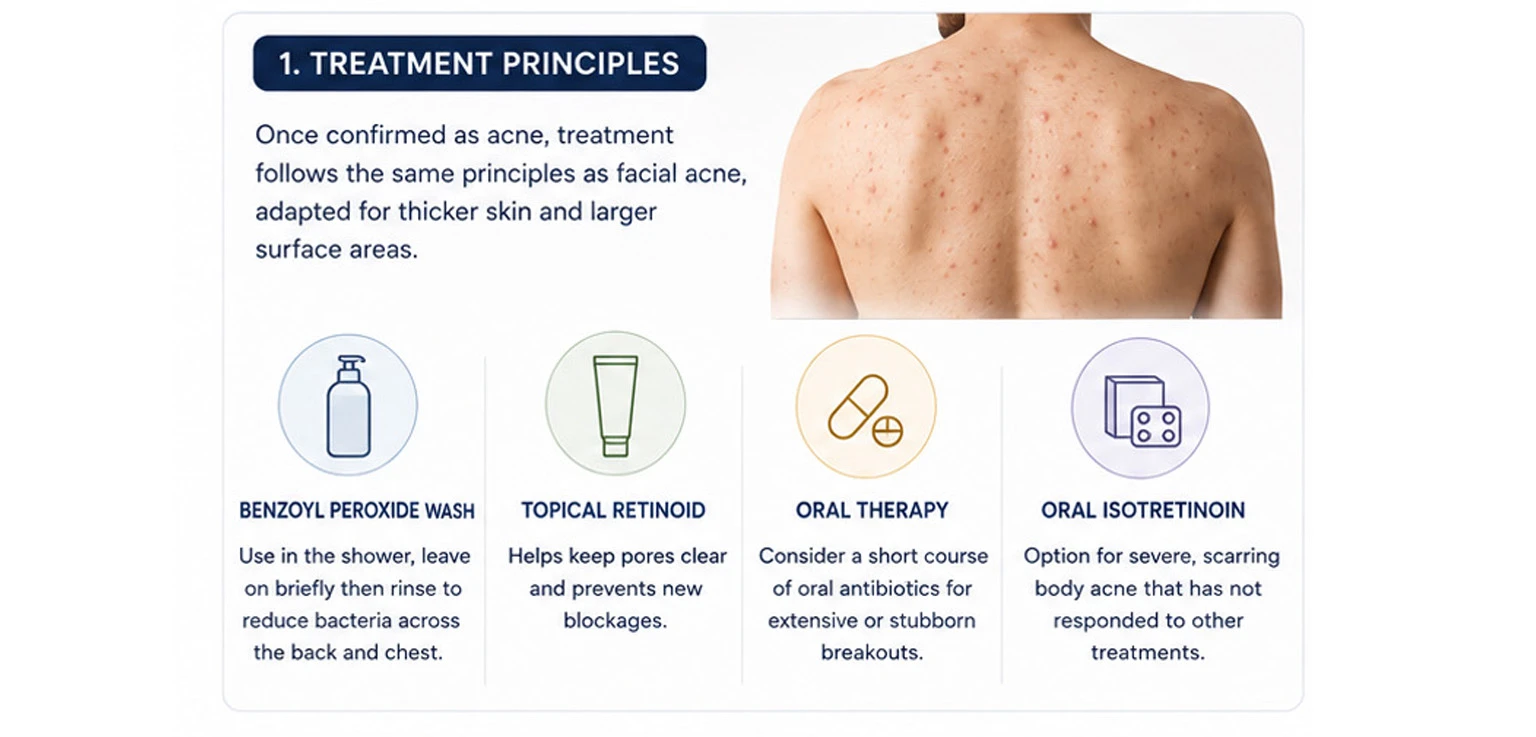
Once the condition is confirmed to be acne, body acne responds to the same principles used for facial acne, adapted for thicker skin and larger surface areas. A benzoyl peroxide wash, left on the skin briefly before rinsing, offers a practical means of reducing bacterial load across the back and chest, while a topical retinoid helps maintain clear pores. For extensive or stubborn truncal acne, a physician may consider a short course of oral therapy. Oral isotretinoin remains an option for severe, scarring body acne that has not responded adequately to other treatments.
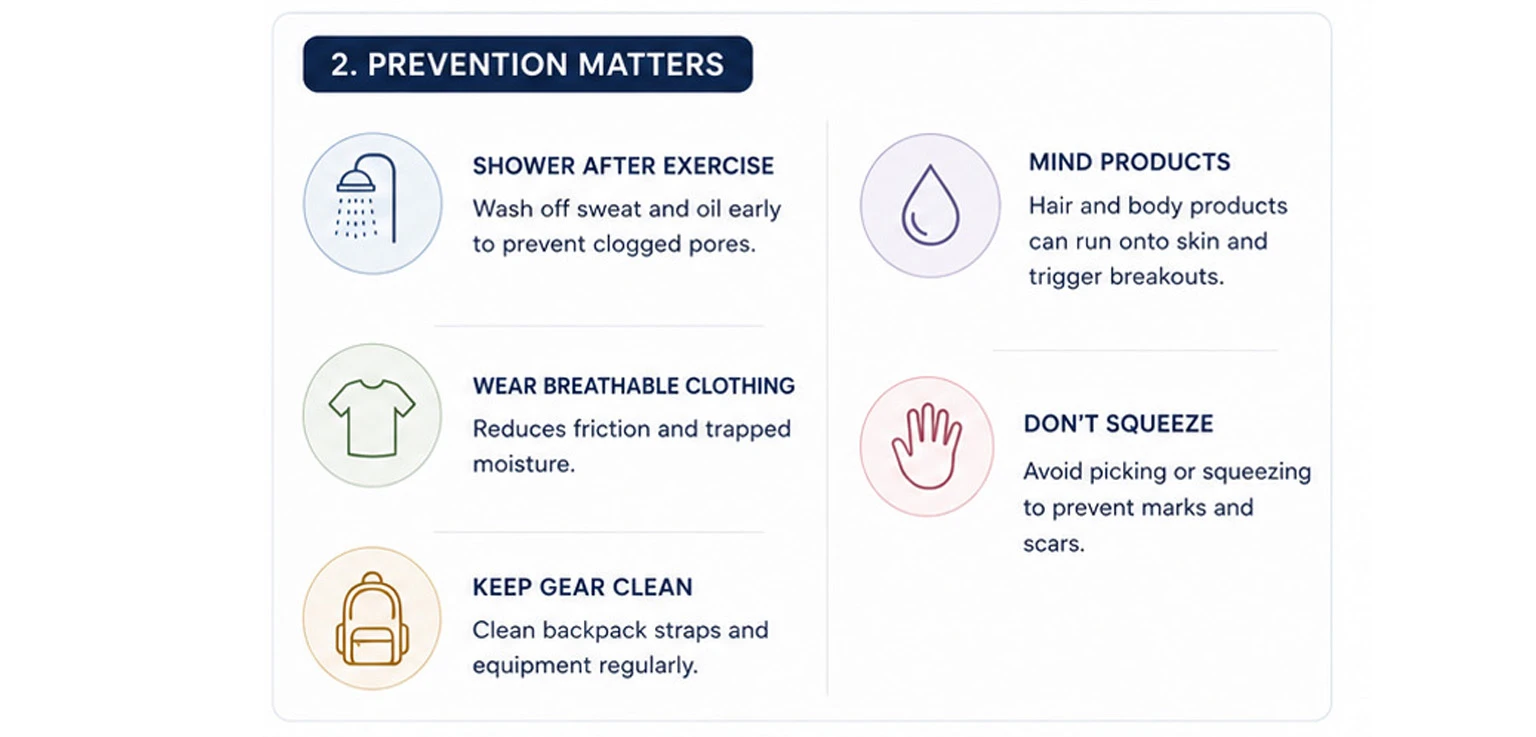
Prevention matters just as much on the body. Showering promptly after exercise removes the sweat and oil that clog pores, while breathable clothing and changing out of damp gym wear reduce friction and trapped moisture. Keeping backpack straps and equipment clean is also beneficial. Being mindful that some hair and body products can run onto the back and chest, and resisting the urge to squeeze, helps protect against marks and scars that form on the body just as they do on the face. If the breakouts are determined to be a yeast driven folliculitis rather than acne, an antifungal approach is used instead, which is why confirming the diagnosis is the first step.
How body acne treatment differs from the face
Although the principles are the same, treating the body is not identical to treating the face. The skin on the back and shoulders is thicker and the area is much larger, so leave on creams alone are often impractical. A medicated wash applied over the entire area becomes a practical method of delivering treatment. Because truncal acne is frequently more extensive, a physician is somewhat more likely to consider adding an oral therapy to bring it under control. Severe, scarring body acne is one of the clearer indications for considering oral isotretinoin. The back is also harder to reach and easy to neglect, which is why breakouts there are often left untreated for longer than facial acne and are more likely to have scarred by the time they are addressed. Addressing it earlier, and confirming that it is acne rather than a look alike condition, yields a substantially better outcome.

Clear up back, chest and shoulder breakouts.
The Clifford Clinic is located at 50 Raffles Place, Singapore Land Tower. To arrange a consultation, please call (65) 6532 2048 or WhatsApp (65) 8318 6332.
Related reading
- Acne Treatment Singapore: How I Choose (Dr Gerard Ee)
- Back Acne (Bacne) Treatment
- AviClear (Dr Gerard Ee)
- HydraFacial Deep Pore Cleansing
- Acne Treatment Singapore

Dr Gerard Ee, Aesthetic Doctor in Singapore
Dr Gerard Ee is an aesthetic doctor in Singapore and the Medical Director of his practice at 50 Raffles Place. He graduated from St George’s, University of London, trained in surgery at Singapore General Hospital and the National University Hospital, and holds the MRCS (Edinburgh) and a postgraduate diploma in practical dermatology from Cardiff University.
He has practised aesthetic medicine since 2012, is the author of sixteen peer-reviewed papers, and writes and medically reviews every article on this site. Read more about Dr Gerard Ee.
Book a consultation with Dr Gerard Ee at The Clifford Clinic
Dr Gerard Ee consults at The Clifford Clinic, 50 Raffles Place, Singapore. Consultations are by appointment. Message the clinic on WhatsApp, or call 6532 2048.
Frequently asked questions
What causes acne on the back and chest?
Oil, sweat, friction, and blocked pores are all worsened by humidity, tight clothing, and gym routines. The back and chest have numerous oil glands and are heavily exposed to sweat and friction.
How do I know if it is bacne or folliculitis?
These conditions can appear similar but require different treatment approaches. A proper assessment distinguishes true acne from folliculitis and simple irritation, which is essential for selecting the appropriate treatment.
Can back and chest acne be treated like facial acne?
The principles are similar but adapted for the body. Skincare forms the foundation, supported by oil reducing and congestion clearing treatments, while marks are addressed only after active acne has settled.
How can I prevent gym-related body acne?
Key preventive measures include showering promptly after exercise, wearing breathable clothing, changing out of damp gym wear, keeping equipment clean, and avoiding squeezing lesions.
References
Sources cited on this page
- HealthHub Singapore. Acne. https://www.healthhub.sg/a-z/diseases-and-conditions/acne
- American Academy of Dermatology. Guidelines of care for the management of acne vulgaris. https://www.aad.org/member/clinical-quality/guidelines/acne
- Acne vulgaris. https://dermnetnz.org/topics/acne
- Malassezia (Pityrosporum) folliculitis masquerading as recalcitrant acne. PMC. https://www.ncbi.nlm.nih.gov/pmc/articles/PMC7996476/
- The Clifford Clinic. Back Acne (Bacne) Treatment. https://cliffordclinic.com/skin/treatment-back-acne-treatment-bacne/
Medical disclaimer: This article is for general education and does not replace an in-person consultation. Treatment suitability, results and risks vary between individuals. Please speak with a qualified doctor before starting any acne treatment.
This page is written from published research and from clinical experience in Singapore since 2012. It is for general education, not medical advice. Whether a treatment suits you, what it may achieve and what it may risk can only be established at a consultation. Dr Gerard Ee is the Medical Director of The Clifford Clinic, a private clinic in Singapore, and treatments discussed on this site are provided commercially.