
CaHA filler in Singapore is described by clinics as a filler, a collagen stimulator and a skin tightener, often on the same page. All three descriptions are correct, because the same product behaves differently according to how far it is diluted and how deep it is placed. This review sets out what each form of CaHA does, what the published studies measured, where it is not used, and how it compares with the other collagen biostimulators available in Singapore. I have practised aesthetic medicine since 2012, and I use CaHA undiluted for contour, diluted for skin tightening, and in sequence with HIFU.
CaHA filler in Singapore, the key takeaways
- CaHA filler is made of calcium hydroxylapatite microspheres suspended in a gel. The gel adds volume on the day, and the microspheres stimulate new collagen over the following months.
- Undiluted, CaHA lifts and contours the cheeks, chin and jawline. Diluted with saline, it firms lax skin without adding volume.
- Combined with HIFU, the order of treatment matters. HIFU first and diluted CaHA six weeks later produced more than twice the new elastin of the reverse order in a randomised study.
- Results last 12 to 18 months on average. CaHA cannot be dissolved in the way hyaluronic acid filler can, so placement and dilution must be correct at the first treatment.
What CaHA filler is and how calcium hydroxylapatite works
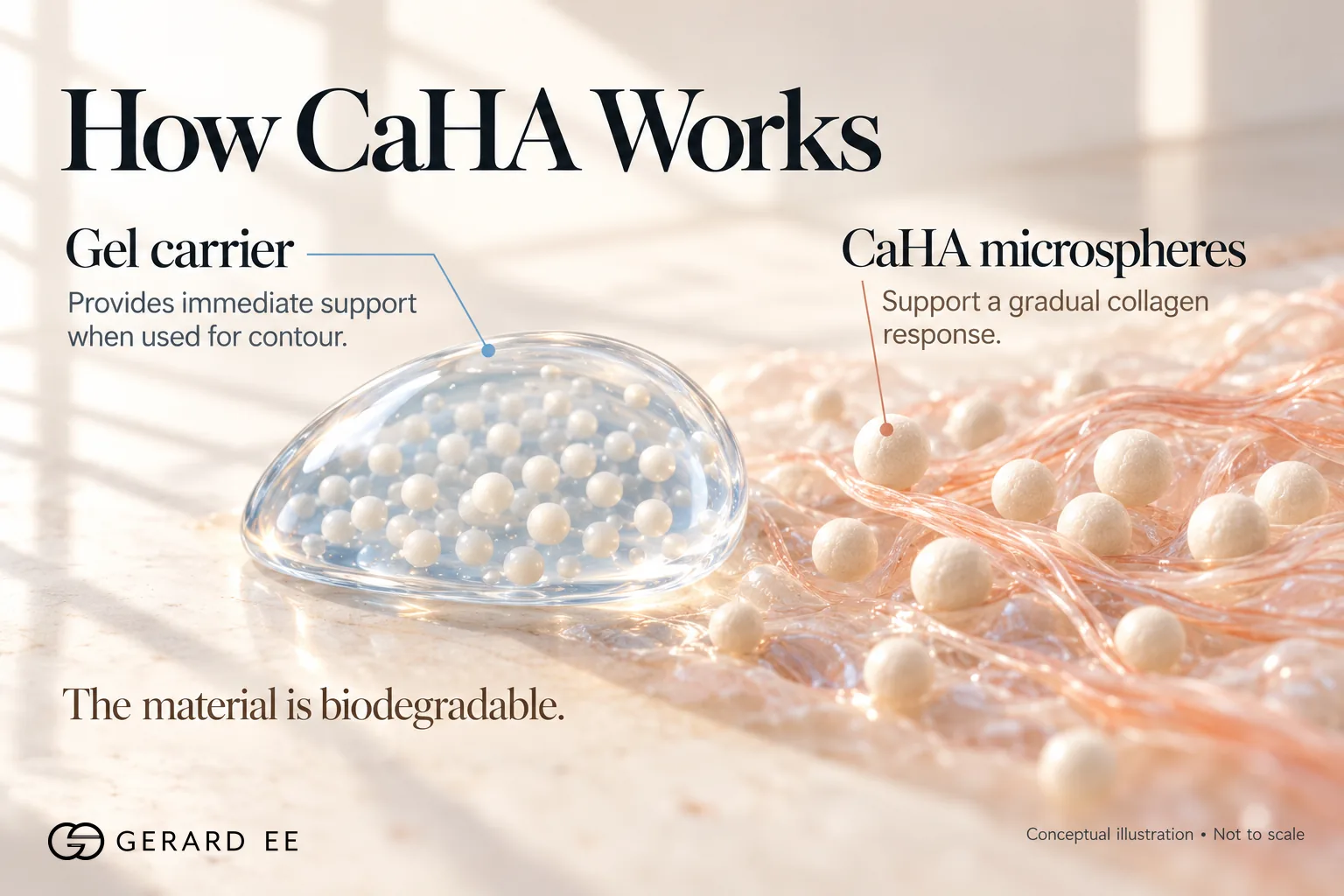
CaHA filler consists of calcium hydroxylapatite microspheres, 25 to 45 microns across, suspended in a carboxymethylcellulose gel. Calcium hydroxylapatite is the same mineral that forms bone and teeth, and it has more than 20 years of use in medicine. The gel gives immediate volume. Over the following two to three months the gel is absorbed, and the microspheres remain as a scaffold on which fibroblasts, the cells that produce collagen, lay down new collagen, mainly type I, around each particle. Part of the result is therefore the patient’s own tissue rather than the product. The microspheres are themselves broken down slowly into calcium and phosphate ions over 12 to 18 months, so CaHA is not permanent. A 2024 microscopy study compared the two most used biostimulators. In its words, “Two of the most popular regenerative fillers are calcium hydroxylapatite (CaHA-CMC; Radiesse, Merz Aesthetics, Raleigh, NC) and poly-L-lactic acid (PLLA; Sculptra Aesthetics, Galderma, Dallas, TX).” It found that CaHA particles are smooth, uniform spheres of mostly 20 to 45 µm, while PLLA particles are irregular flakes of anywhere from 2 to 150 µm. About 8% of the CaHA particles were small enough for immune cells to engulf, against about 46% of the PLLA particles. A 2025 immunology review explains why this matters. “CaHA is the only injectable ceramic biostimulator and interacts with the immune system differently than polymer biostimulators. Although the precise mechanism of CaHA-CMC (Radiesse; Merz Aesthetics, Raleigh, NC) remains to be elucidated, it does not rely on inflammatory pathways, avoids FBRs, and facilitates tissue regeneration.” FBR is the foreign body reaction through which PLLA and PCL produce their collagen. In laboratory testing, CaHA produced no M1 or M2 macrophage inflammatory activity, while PLLA raised inflammatory cytokine expression. The 2008 facial augmentation review puts the material simply. “The CaHA microspheres present in Radiesse have the same chemical composition as the inorganic constituent of teeth and bone, and exhibit an extensive safety profile”. The carboxymethylcellulose gel is absorbed over two to three months and replaced by collagen. The physical properties explain where it is used. “Radiesse has one of the highest viscosities when compared with other dermal fillers. This allows it to remain in the place where it is injected and not to migrate into the surrounding tissue.” “Radiesse has a high G’ providing it with greater lifting capacity than many other dermal fillers.”
Undiluted CaHA for cheek, chin and jawline contour
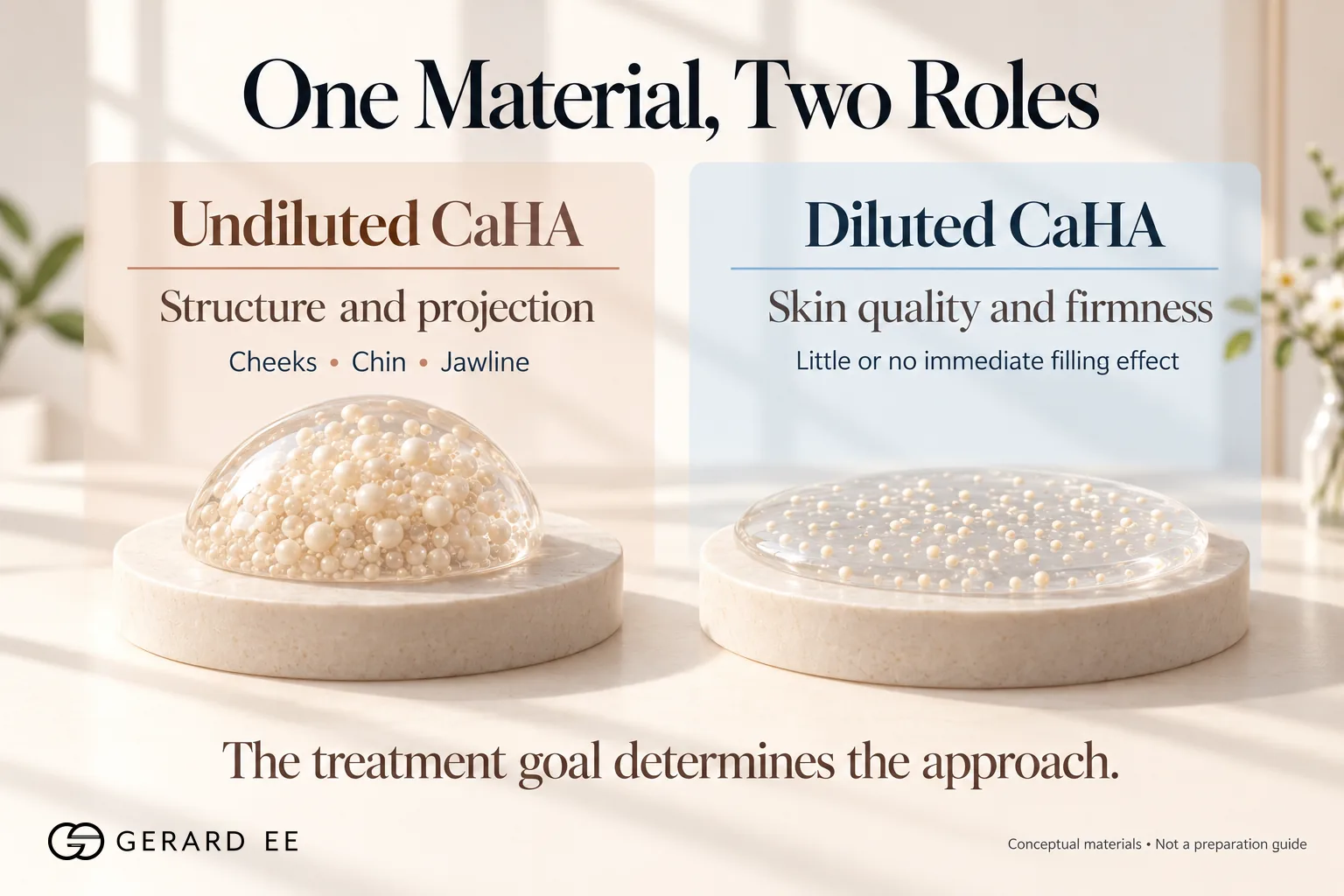
Undiluted CaHA is firm and holds its shape, which suits areas that need structure rather than softness. I use it to restore cheek projection, to lengthen and project a retruded chin, and to sharpen the angle and line of the jaw. Because the gel resists deformation more than most hyaluronic acid fillers, a smaller volume gives a crisper edge and holds its projection. CaHA is not used in the lips, the area around the eyes or the frown lines between the brows, because the skin there is thin and mobile, and a firm product that cannot be dissolved carries a higher risk of visible lumps. CaHA for the nose is covered on my CaHA nose filler page. The decade review summarises the dual effect. “In this manner, Radiesse provides both immediate (replacement volume) and long-lasting (collagen biostimulation) volume enhancement.” The result comes not only from the volume injected but from the long-term stimulation of the patient’s own collagen, which is why it lasts longer. On the lips, the 2008 review is direct. Because of the risk of speed-bump-like nodules, “Radiesse is not an ideal product for this region.”
Diluted and hyperdiluted CaHA for skin tightening
Diluted with one part saline to one part product, or hyperdiluted with two or more parts saline, CaHA no longer adds volume. The microspheres are instead spread as a thin sheet in the plane just beneath the skin, where each particle stimulates collagen and elastin in the tissue around it, so the whole treated area firms rather than one point lifting. Global consensus guidelines set out doses and injection planes for the mid and lower face, neck, décolletage, upper arms, abdomen and thighs. In a case series of 50 patients treated with hyperdiluted CaHA on the face, neck, décolletage and hands, skin thickness, laxity and wrinkles improved in 95% of patients aged 30 to 40, 80% of those aged 40 to 60 and 70% of those over 60. The decline with age likely reflects the slower collagen response of older fibroblasts. Diluted CaHA for the body is an off-label use, and I explain this before treatment. The 2019 consensus concludes that “Radiesse® (CaHA) is associated with a high and well-established safety profile and is a very effective agent for soft tissue augmentation of different face and body areas”, and that “The characteristic of Radiesse of long-term collagen stimulation reflects its substantial versatility.” The 50-patient case series “found that diluting and hyperdiluting Radiesse® with flexible dilution ratios favoured a treatment’s individualization, providing improved skin quality, elasticity, tightening, and firmness, without volume augmentation.” Two points from the 2018 global consensus apply to patients in Singapore. In Asian skin, a 1 to 1 dilution is needed to get a response in the neck, décolletage, upper arms and legs. On the neck, where the skin is thin and sits directly on the platysma, a cannula and a dilution of 1 to 2 up to 1 to 4 are recommended so the product is not placed too superficially, where it can show through or form nodules.
CaHA with HIFU, why the order of treatment matters
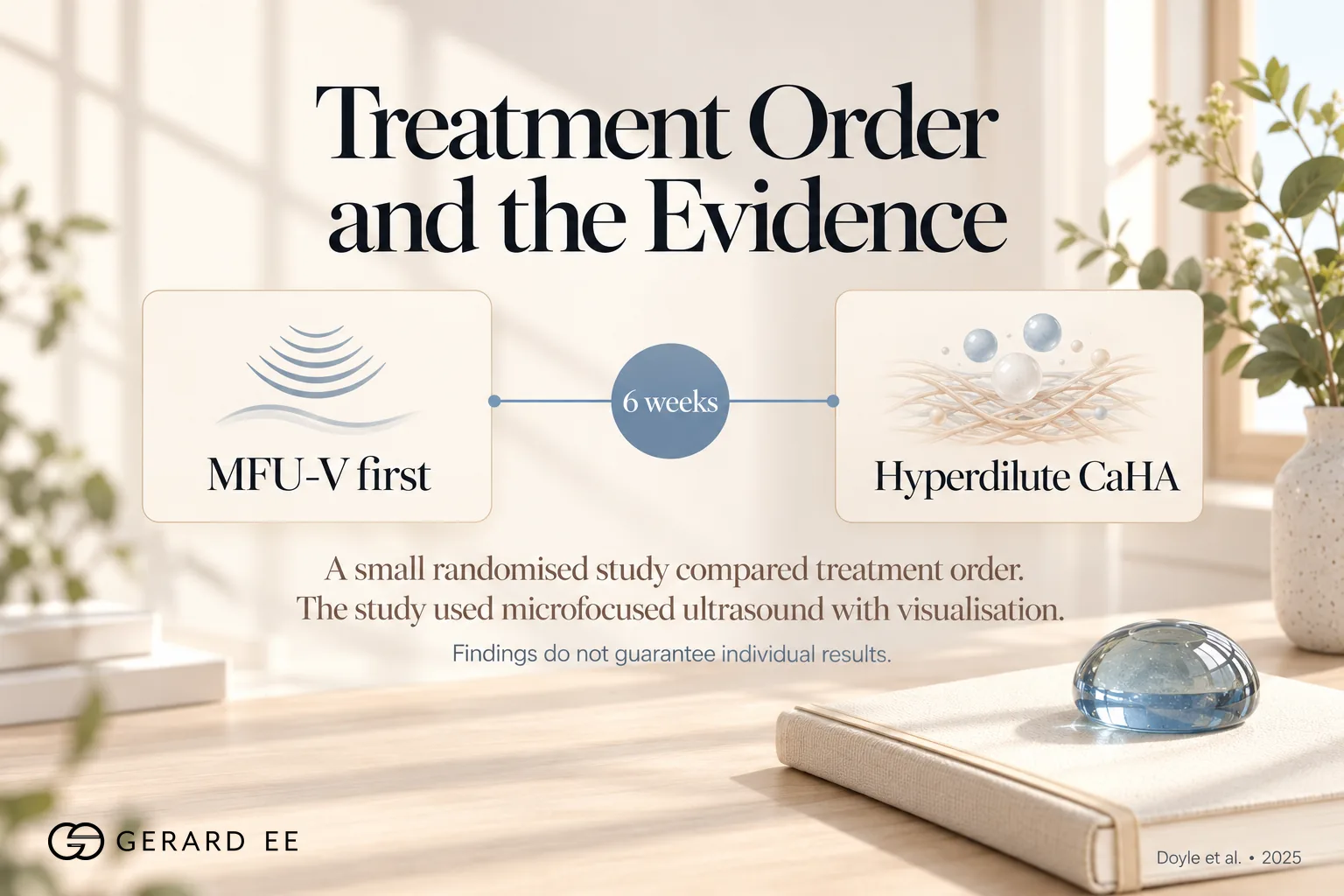
HIFU tightens the deeper layers by heating focused points in the connective tissue beneath the skin, whereas diluted CaHA rebuilds collagen and elastin closer to the surface, so the two are often combined. In a randomised study of 12 women treated on the lower face and under the chin, those given HIFU first and diluted CaHA six weeks later had a 143% increase in elastin on biopsy, compared with 63% when the order was reversed, and they also scored better on aesthetic improvement. The likely explanation is that the heat injury from HIFU starts a repair response that is still active at six weeks, and CaHA placed into healing tissue recruits more fibroblasts than CaHA placed into resting tissue. In a split-face study of 20 patients followed for 15 months, the combination improved marionette lines, the jawline contour and the neck. A Singapore study of 12 women treated on the upper arms in a single session found firmer skin at 24 weeks on objective measurement. I plan combined treatment in the same order, with HIFU first. In the randomised order study, the group treated with HIFU first showed a 143% relative increase in elastin coverage against 63% in the group treated with CaHA first, and the study concluded that HIFU first, followed by hyperdiluted CaHA six weeks later, gives the better result. Patients in the HIFU-first group felt they looked about 4 years younger at 120 days, against about 2.5 years in the reverse-order group. In the Singapore upper-arm study, 88% of subjects were rated improved at 12 weeks and 83% at 24 weeks. In the 20-patient split-face study, no further adverse events were reported over 15 months of follow-up.
CaHA for acne scars
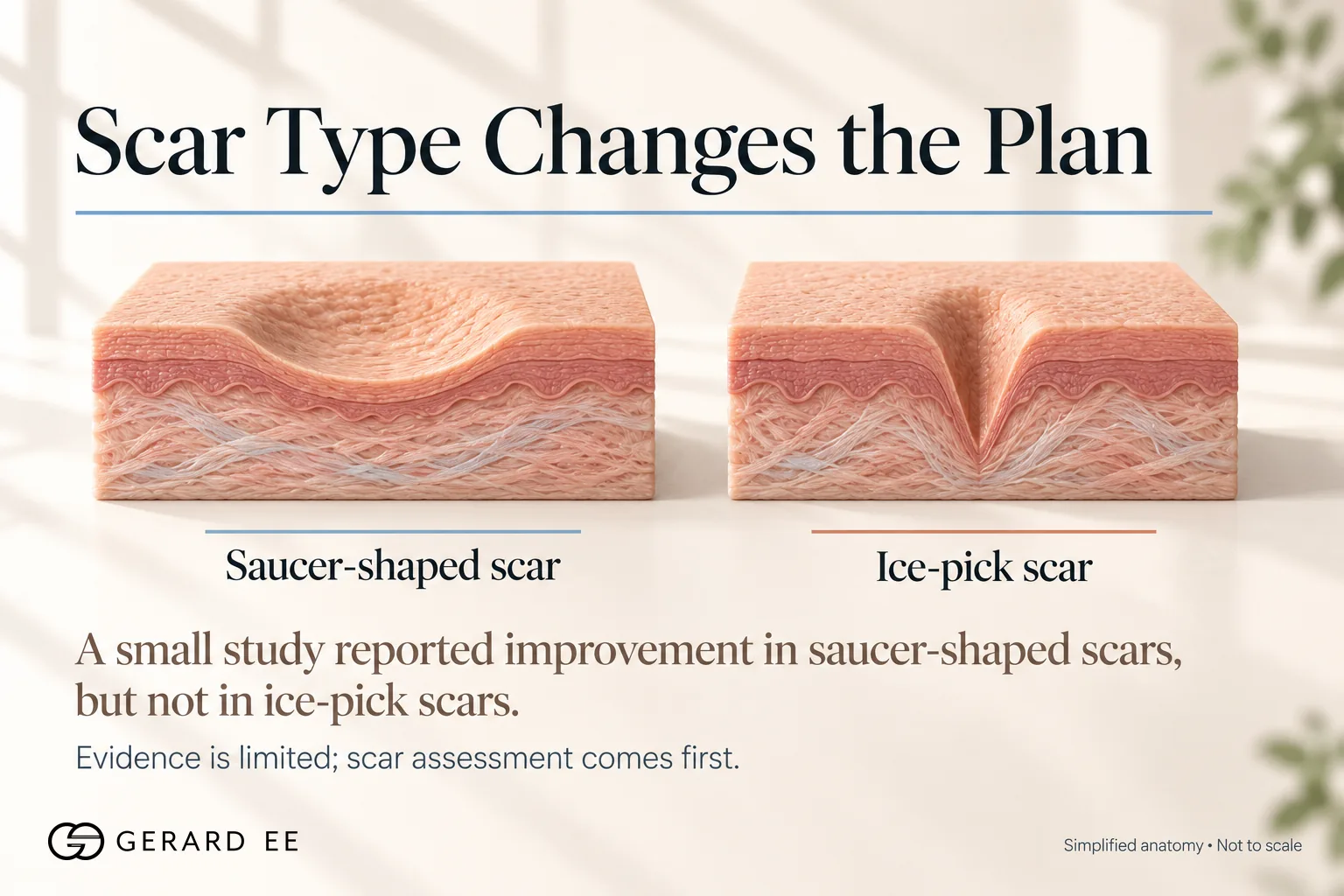
CaHA can lift some atrophic acne scars, the depressed scars left where collagen was lost beneath a healed lesion. In a study of ten patients, it improved saucer-shaped scars for up to 12 months but did not improve ice pick scars, which are too narrow and deep for a filler to support from below. In a pilot study combining HIFU with diluted CaHA, moderate to severe atrophic acne scars improved significantly at 90 days, with the greatest change in the most severe scars. Ice pick and deep boxcar scars need other treatments, which are covered in my acne scar treatment review. In the ten-patient study, the improvement lasted, at least in part, for 12 months after treatment. In the HIFU combination pilot, all ten subjects showed a significant improvement in acne scar severity (P = 0.002), nine were very satisfied and one was satisfied with the result.
How long CaHA lasts

The gel gives the immediate effect and is absorbed over the first few months, and the collagen that forms around the microspheres carries the result after that. In facial studies the average result lasted 12 to 18 months. Skin tightening with diluted CaHA is usually planned as two or three sessions, four to eight weeks apart, followed by a maintenance session every 12 to 18 months. Sessions and prices are on my CaHA treatment page. The long-term data come from the nasolabial fold trial extension. “At least 30 months after the last Radiesse treatment, 40 percent of the folds evaluated remained improved.” No long-term or delayed adverse events were seen in patients followed for up to 39 months, with no nodules, foreign body granulomas or infections reported. The 2019 consensus adds that published results last up to 18 to 24 months and that one maintenance session is suggested 12 to 18 months after the initial course. On the scale of use, “In 2013, Radiesse reached a distribution milestone with more than five million syringes shipped for a variety of aesthetic indications without any safety concerns.”
CaHA vs PLLA, PCL and hybrid hyaluronic acid
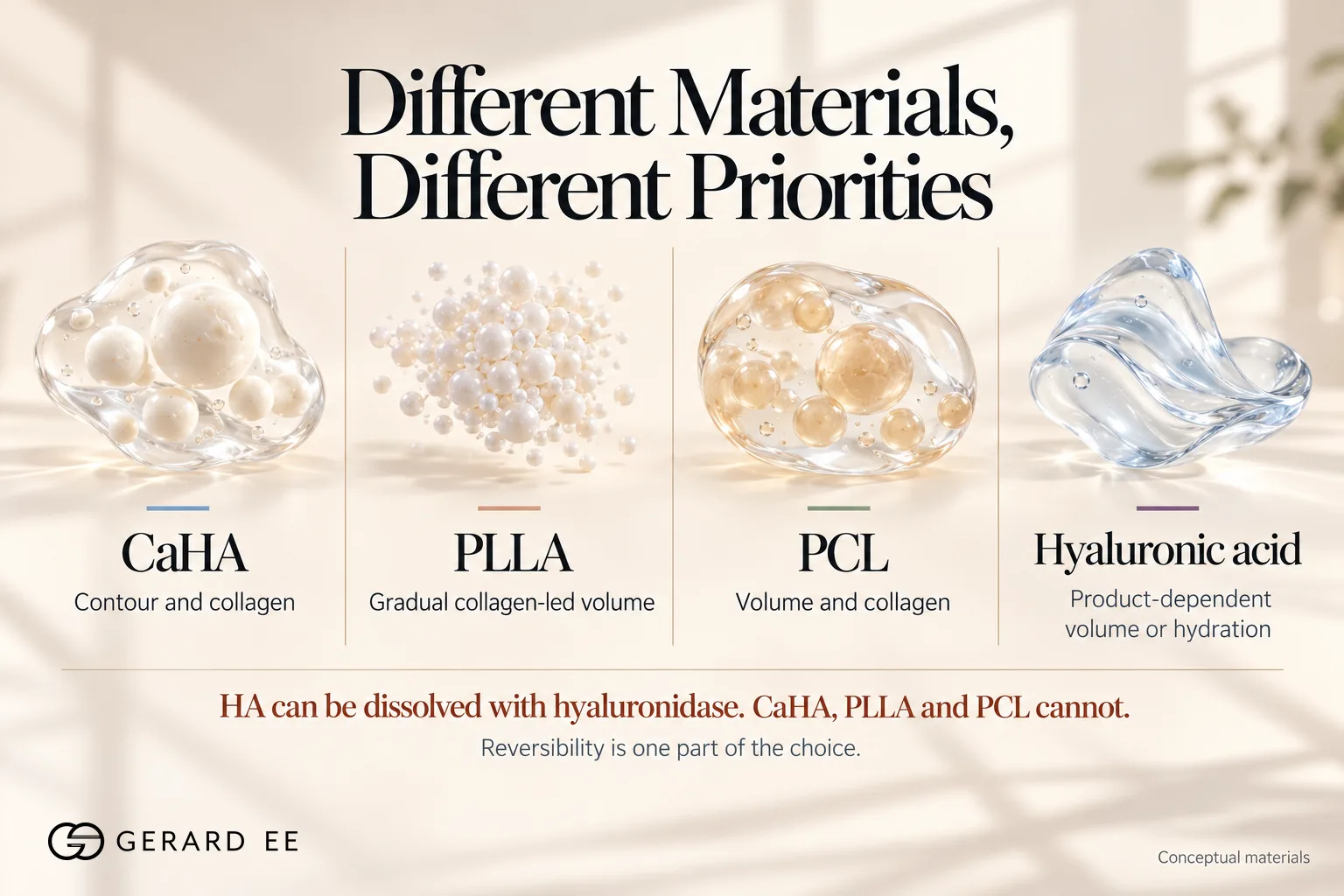
| CaHA | PLLA collagen stimulator | PCL filler | Hybrid hyaluronic acid | |
|---|---|---|---|---|
| Material | Calcium hydroxylapatite in gel | Poly-L-lactic acid powder | Polycaprolactone in gel | Hyaluronic acid of high and low molecular weight |
| Volume on the day | Yes, undiluted | No | Yes | No |
| Collagen stimulation | Yes | Yes | Yes | Hydration and skin quality |
| Can be dissolved | No | No | No | Yes, with hyaluronidase |
| Nodule rate in published series | 3%, mostly in the lips | 10 to 16% | Not pooled | Low |
| Typical duration | 12 to 18 months | Up to 2 years | 1 to 4 years by version | About 6 months |
CaHA suits a face that needs both immediate shape and firmer skin over time. Poly-L-lactic acid (PLLA) builds volume gradually over two to three sessions, with no immediate effect, because the powder itself adds nothing and the result is entirely new collagen. Polycaprolactone (PCL) filler gives volume on the day and the longest duration of the three, with a firm texture that cannot be reversed. Hybrid hyaluronic acid improves hydration and skin quality but does not build structural collagen. The full comparison of biostimulators is in my collagen biostimulator guide.
CaHA side effects and risks
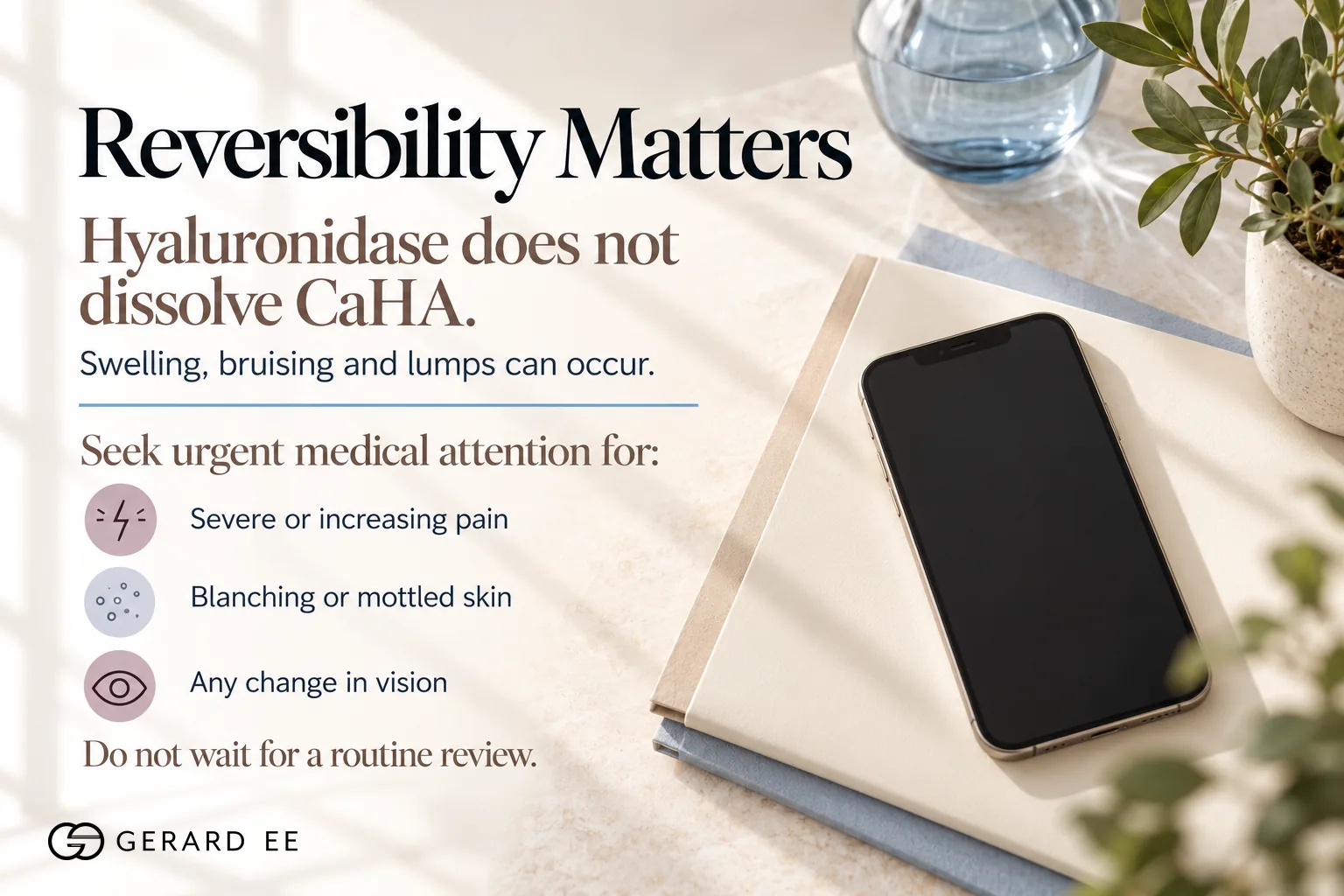
Swelling, bruising, tenderness and mild firmness are common for a few days. Undiluted or lightly diluted CaHA placed too superficially, particularly in thin or darker skin, can show as visible lumps or nodules, because the microspheres sit close enough to the surface to be seen and felt.
The largest safety review of CaHA pooled 21 studies. It opens, “Radiesse®, or calcium hydroxylapatite (CaHA), is a biodegradable, biostimulatory soft tissue filler suitable for deeper folds and wrinkles.” Across the studies, 5,081 CaHA treatments in 2,779 patients produced 173 adverse events, a rate of 3%, and nodules were by far the most common. By area, the adverse event rate was 9.4% for the lips (74 of 784), 1.8% for the tear trough (1 of 55), 1.6% for the perioral area (6 of 369), 0.8% for the cheeks (1 of 123) and 0.3% for the nasolabial folds (5 of 1,930). In most cases CaHA nodules are not visible and settle without treatment, while for PLLA the nodule and papule rate is believed to be around 10 to 16%. This is why I do not place CaHA in the lips or around the eyes, and why I choose it over PLLA for the cheek, chin and jawline.
The 2008 review gives the placement rule. CaHA is not injected into the dermis or just under it, because it can form visible white nodules there. The 2019 consensus describes the remedy. A nodule can be treated with lidocaine or saline and firm massage, and a nodule that does not settle may respond to a course of three or more injections of 5-fluorouracil with triamcinolone and lidocaine, or 5-fluorouracil with lidocaine.
As with any filler, an injection into a blood vessel can block it, and this is the most serious risk. Blanching, mottling or pain out of proportion to the injection in the hours after treatment are the warning signs, and they are treated as an emergency. Unlike hyaluronic acid, CaHA cannot be dissolved with hyaluronidase, so prevention depends on knowledge of the vascular anatomy, injection technique, dilution and the choice of cannula or needle for each area. I review every patient after treatment.

Dr Gerard Ee, Aesthetic Doctor in Singapore
Dr Gerard Ee is an aesthetic doctor in Singapore and the Medical Director of his practice at 50 Raffles Place. He graduated from St George’s, University of London, trained in surgery at Singapore General Hospital and the National University Hospital, and holds the MRCS (Edinburgh) and a postgraduate diploma in practical dermatology from Cardiff University.
He has practised aesthetic medicine since 2012, is the author of sixteen peer-reviewed papers, and writes and medically reviews every article on this site. Read more about Dr Gerard Ee.

Book a consultation with Dr Gerard Ee at The Clifford Clinic
Dr Gerard Ee consults and performs acne treatment at The Clifford Clinic, 50 Raffles Place, Singapore. Consultations are by appointment. Message the clinic on WhatsApp, or call 6532 2048.
Common questions about CaHA filler in Singapore
Is CaHA worth it?
CaHA is worth considering when a face needs structure and firmer skin together, because it gives volume on the day and builds collagen over months. It is not the right choice for the lips, the area around the eyes, or for anyone who wants a filler that can be dissolved.
Is CaHA better than hybrid hyaluronic acid?
The two products do different jobs. Hybrid hyaluronic acid hydrates the skin and improves its surface quality. CaHA stimulates structural collagen and, undiluted, adds contour. Some patients benefit from both.
What is better, CaHA or hyaluronic acid filler?
Hyaluronic acid filler is reversible and softer, which suits the lips, tear troughs and first-time patients. CaHA is firmer, lasts longer and stimulates collagen, which suits the jawline, chin and cheeks.
Is CaHA a filler?
Undiluted CaHA is a filler that also stimulates collagen. Diluted, it acts mainly as a collagen biostimulator for skin tightening, with little or no filling effect.
Can CaHA be dissolved?
CaHA filler cannot be dissolved. Hyaluronidase, the enzyme used to reverse hyaluronic acid filler, has no effect on calcium hydroxylapatite. The microspheres are broken down by the body over 12 to 18 months.
Is Radiesse better than Sculptra?
Radiesse and Sculptra are both collagen biostimulators, but they behave differently. Radiesse is calcium hydroxylapatite in a gel, so it gives volume and contour on the day and then builds collagen, and it lasts 12 to 18 months. Sculptra is poly-L-lactic acid powder that adds nothing on the day, builds volume gradually over two to three sessions and lasts up to two years. Neither can be dissolved. In the published series, nodules followed 3% of Radiesse treatments, almost all in the lips, against around 10 to 16% for Sculptra, and Radiesse builds its collagen without the foreign body reaction that Sculptra relies on. I choose Radiesse where a face needs shape and firmer skin together, and PLLA where a face has lost thickness across a wide area and the patient can wait three months for the result.
How long does Radiesse last?
In facial studies the average result lasts 12 to 18 months. The nasolabial fold trial extension reported that “At least 30 months after the last Radiesse treatment, 40 percent of the folds evaluated remained improved”, and the 2019 consensus puts published results at up to 18 to 24 months. For skin tightening with diluted CaHA, one maintenance session is suggested 12 to 18 months after the initial course.
Selected References
Published studies cited on this page
- Jacovella PF. Use of calcium hydroxylapatite (Radiesse) for facial augmentation. Clin Interv Aging. 2008;3(1):161–174. doi:10.2147/cia.s2065
- van Loghem J, Yutskovskaya YA, Werschler WP. Calcium hydroxylapatite, over a decade of clinical experience. J Clin Aesthet Dermatol. 2015;8(1):38–49.
- Goldie K, Peeters W, Alghoul M, et al. Global consensus guidelines for the injection of diluted and hyperdiluted calcium hydroxylapatite for skin tightening. Dermatol Surg. 2018;44 Suppl 1:S32–S41. doi:10.1097/DSS.0000000000001685
- de Almeida AT, Figueredo V, da Cunha ALG, et al. Consensus recommendations for the use of hyperdiluted calcium hydroxyapatite (Radiesse) as a face and body biostimulatory agent. Plast Reconstr Surg Glob Open. 2019;7(3):e2160. doi:10.1097/GOX.0000000000002160
- Massidda E. Starting point for protocols on the use of hyperdiluted calcium hydroxylapatite (Radiesse) for optimizing age-related biostimulation and rejuvenation of face, neck, décolletage and hands, a case series report. Clin Cosmet Investig Dermatol. 2023;16:3427–3439. doi:10.2147/CCID.S420068
- Doyle A, Looi I, Chu P. Microfocused ultrasound with visualization (MFU-V) and hyperdilute calcium hydroxylapatite (CaHA-CMC) of the lower face and submentum to treat skin laxity. Aesthet Surg J. 2024. doi:10.1093/asj/sjae226
- Yutskovskaya YA, Sergeeva AD, Kogan EA. Combination of calcium hydroxylapatite diluted with normal saline and microfocused ultrasound with visualization for skin tightening. J Drugs Dermatol. 2020;19(4):405–411. doi:10.36849/JDD.2020.4625
- Ramirez S, Puah IBK. Effectiveness of combined microfocused ultrasound with visualization and subdermal calcium hydroxyapatite injections for the management of brachial skin laxity. J Cosmet Dermatol. 2021;20:3871–3879. doi:10.1111/jocd.14573
- Goldberg DJ, Amin S, Hussain M. Acne scar correction using calcium hydroxylapatite in a carrier-based gel. J Cosmet Laser Ther. 2006;8:134–136. doi:10.1080/14764170600891632
- Casabona G. Combined use of microfocused ultrasound and a calcium hydroxylapatite dermal filler for treating atrophic acne scars, a pilot study. J Cosmet Laser Ther. 2018. doi:10.1080/14764172.2017.1406606
- Kadouch JA. Calcium hydroxylapatite, a review on safety and complications. J Cosmet Dermatol. 2017;16(2):152-161. doi:10.1111/jocd.12326
- McCarthy AD, Hartmann C, Durkin A, Shahriar S, Khalifian S, Xie J. A morphological analysis of calcium hydroxylapatite and poly-L-lactic acid biostimulator particles. Skin Res Technol. 2024;30(6):e13764. doi:10.1111/srt.13764
- Corduff N, Goldie K. The immunologic spectrum of biostimulators and its clinical importance. Plast Reconstr Surg Glob Open. 2025;13(8):e7001. doi:10.1097/GOX.0000000000007001
This page is written by Dr Gerard Ee from his own clinical practice and the published studies cited above. It is general information and not a substitute for a consultation. Prices are before GST unless stated and may change.