Dr Gerard Ee consults at The Clifford Clinic, 50 Raffles Place, Singapore.
Knee osteoarthritis (OA) is one of most common causes of persistent knee pain in adults in Singapore. While prevalent in adults in their 40s, having knee OA does not automatically mean that you need a knee replacement. For mild to moderate cases, there is a wide range of non-surgical treatment options available.
I have written this guide to explain what knee osteoarthritis is, what are the early signs of OA to look for, how a diagnosis is made, and what non-surgical treatment options you can consider.
What Is Knee Osteoarthritis?

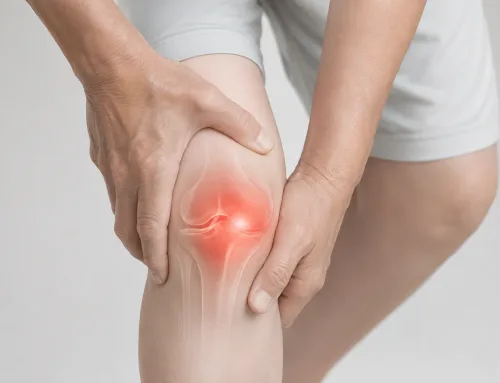
Knee osteoarthritis is the gradual wear of the articular cartilage that lines the ends of the bones in the knee joint. It is often accompanied by low-grade inflammation in the joint lining known as the synovium and changes in the knee’s underlying bone structure.
Cartilage degradation causes stiffness and pain as the cartilage is what allows the joint to glide smoothly and absorb load. As the cartilage thins, the knee loses its smooth movement and the bones start to rub against each other, causing the joint to become more reactive. The resulting swelling and pain from bone friction are also what causes stiffness in the knee.
OA is a progressive disease and its pace of progression is not fixed, varying between patients. Load, body weight, strength, activity patterns and the overall health of the joint environment all influence how quickly knee OA progresses.
Who Gets Knee OA
Several factors can increase the risk of developing knee OA.
- Risk rises with each decade from the 40s onward.
- Body weight.Higher body weight puts more strain on the knee.
- Previous knee injury.A past meniscus tear, ligament injury or knee surgery can change how load is distributed through the joint and accelerate wear.
- High cumulative load.Years of heavy physical work or high impact sport cause the cartilage to wear out faster.
- Muscle weakness around the knee and hip.Weak muscles transfer more load directly into the joint.
- Joint alignment.Varus and valgus knee alignments, also known as bow legs and knock knees respectively, forces load to shift unevenly onto the inner or outer knee compartment, accelerating wear.
- Family history.Genetics can affect how early knee OA develops.
Having one or more of these factors does not mean developing knee OA inevitable, but it does mean that any pain you experience in the knee deserves an examination rather than dismissal.
Symptoms of Knee OA
Symptoms of knee OA usually starts mild and escalate over time. The classic early signs of knee OA includes the following.
- Activity related painthat occurs when using the stairs, after long walks, when squatting, or after sports.
- Stiffness after rest.The knee feels tight after prolonged sitting or after waking up in the morning but loosens with movement.
- Occasional swellingafter demanding activity.
- A sense of grinding, clicking or creakinessin the joint.
- The knee tires more quicklythan it used to.
In more advanced stages of the disease, pain becomes more constant. Pain can be severe enough to be present at rest, disturb sleep, and limit walking distance during late-stage knee OA. By this stage, treatment options are narrow, thus the earlier knee OA is identified the more treatment options are available to you.
How Knee OA Is Diagnosed

In most cases, knee osteoarthritis can be diagnosed clinically by a focused physical examination and an X-ray. Personal and family history is also taken into account to give a more accurate diagnosis.
The history aspect of the examination focuses on the pattern of pain, what triggers it, how it has changed over time, and how it is affecting daily life and sleep. The physical examination looks at your range of motion, presence of swelling, joint-line tenderness, kneecap tracking, ligament stability and muscles strength around the knee.
X-rays are usually the first type of imaging done. X-rays are useful as they can identify joint space narrowing, bone spurs or osteophytes, changes in the underlying bone structure, and overall joint alignment. X-rays are graded using the Kellgren–Lawrence (KL) grading system, with KL 4 being grade that indicates end-stage knee OA.
MRI can be added selectively when symptoms do not match the X-ray results or if the X-ray is in conclusive. An MRI is typically ordered when a meniscus or ligament problem is suspected or when a focal cartilage defect needs to be ruled out.
My opinion
“Routine MRI for every knee OA case is not necessary. I add an MRI only when the symptoms and the X-ray do not match or when I am looking for a focal cartilage defect rather than general cartilage wear. As a focal defect is a different problem from knee OA, the presence of a focal defect will drastically alter the treatment plan I recommend. A focal defect will not respond to a knee injection focused strategy similarly to knee OA, it is thus important to perform an MRI to rule it out to prevent the wrong treatment from being matched to the patient.” Dr Gerard Ee
Non-Surgical Treatments
Non-surgical treatments are the foundation of treating knee OA. Effective non-surgical care for knee OA is layered, the best outcomes are often achieved when a treatment plan is supported these foundational non-surgical measures.
- Weight management. Modest weight loss can meaningfully reduce knee pain and slow OA progression.
- Targeted strengthening and physiotherapy. Exercise therapy is most effective when done with a good physiotherapist. Quadriceps and hip muscle strengthening help by improving shock absorption and knee stability.
- Activity modification. Activity level should be adjusted, not stop. Switching to lower impact alternatives like cycling, swimming and controlled gym work can reduce knee pain. Proper pacing and gradual tolerance-building is also recommended.
- Bracing and footwear. An offloading brace or supportive footwear can reduce joint stress and provide better biomechanical support.
- Medication. Short courses of pain relievers or anti-inflammatories can be taken during flare ups.
Knee Injections for Osteoarthritis
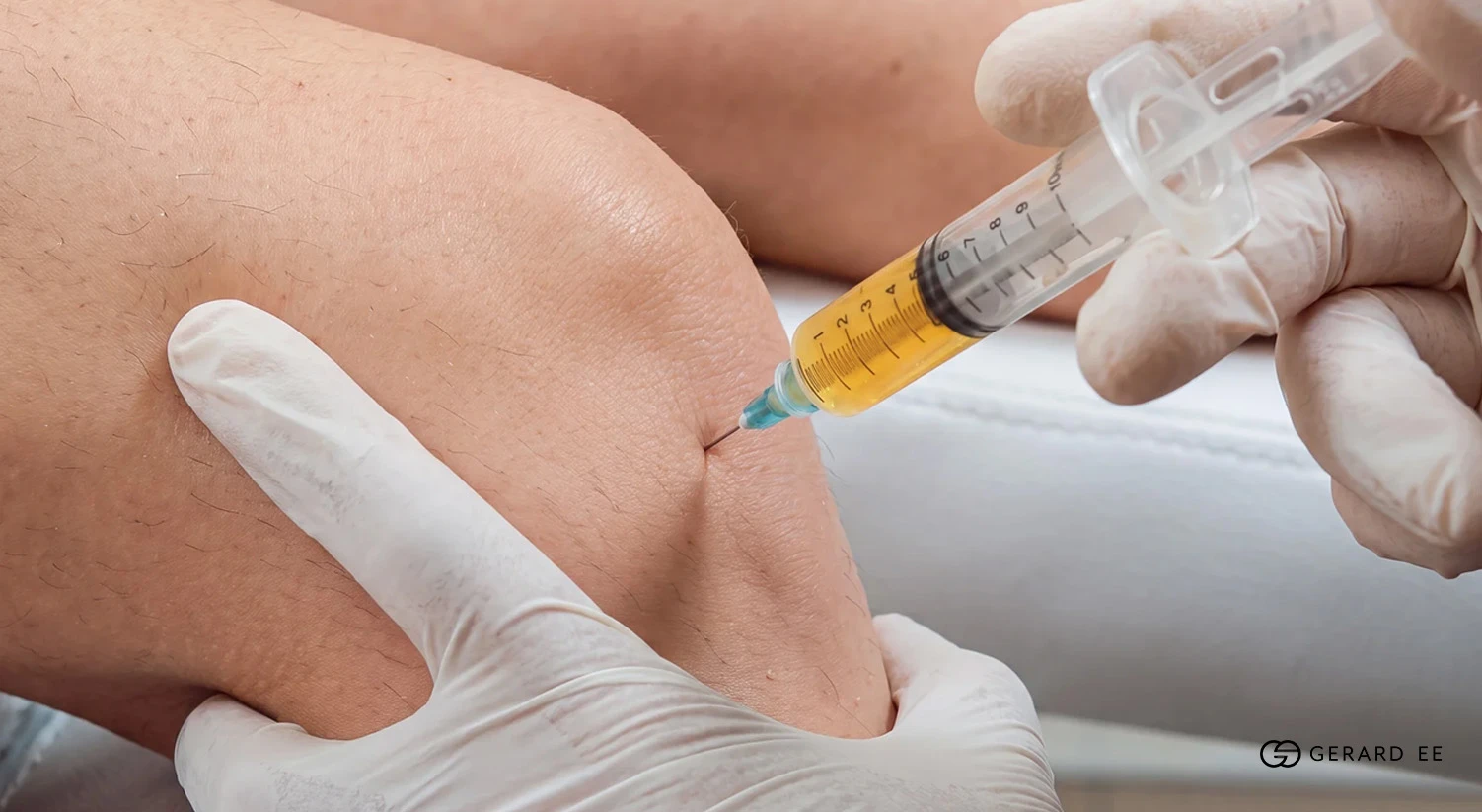
When foundational care alone is not enough, I recommend joint injections as the next step.
Cortisone shots, also known as steroid injections. Cortisone is a strong local anti-inflammatory with a fast onset but short duration. It is best suited for treating acute and inflamed flare ups. Steroid injections should not be used as a maintenance strategy. Repeated steroid injections into the same knee are discouraged as it can result in accelerated cartilage breakdown and increased risk of infection.Leukocyte-poor platelet-rich plasma (LP-PRP). LP-PRP is a biological treatment derived from the patient’s own blood. PRP therapy for knee OA reduces joint inflammation and reduce cartilage degradation by delivering growth factors and signalling proteins into the joint. Leukocyte-poor preparations, such as RegenLab RegenPRP, are favoured for knee OA treatment because they cause fewer post-injection flares and are associated with slightly better outcomes. Additionally, across multiple randomised clinical trials, PRP therapy outperforms hyaluronic acid for pain reduction and knee function improvement at six to twelve months in mild to moderate knee OA.
Hyaluronic acid (HA) viscosupplementation. HA is a gel like preparation that supplements the joint’s natural lubricating fluid. It is helpful for treating dry and creaky osteoarthritic knees. Synolis VA is patented brand of HA that is used in Singapore. It is a 2% non-crosslinked HA with 4% sorbitol antioxidant injectable that, unlike regular HA, serves as an antioxidant on top of being a lubricant.
Conjuran Knee Injection. Conjuran is a polynucleotide intra-articular injectable. It is used as a polynucleotide viscosupplement alternative to HA, but it is not a PRP equivalent.
Guna Collagen MD. A Class III injectable type-I collagen that is used as an extracellular-matrix bioscaffold. While it has a smaller clinical evidence base than HA or PRP, it is an option when HA, PRP and polynucleotide injectables do not provide enough relief.
My opinion
“Generally, I would use steroid injections for a flared knee. For mild to moderate OA where long term symptom improvement is the goal, I customise the type of injection to the knee pathology and severity. And HA or Conjuran when a viscosupplement is needed. Due the smaller number of studies backing the effectiveness of Guna Collagen MD, it is something I use only with informed consent from the patient. And usually only after HA, PRP or polynucleotide have already been tried and found to be lacking in terms of results.” — Dr Gerard Ee
Combination Treatments
Not all cases require a combination of treatments to treat. What treatments I use depends on the results of the patient’s knee examination. But below are some examples of effective treatment combinations.
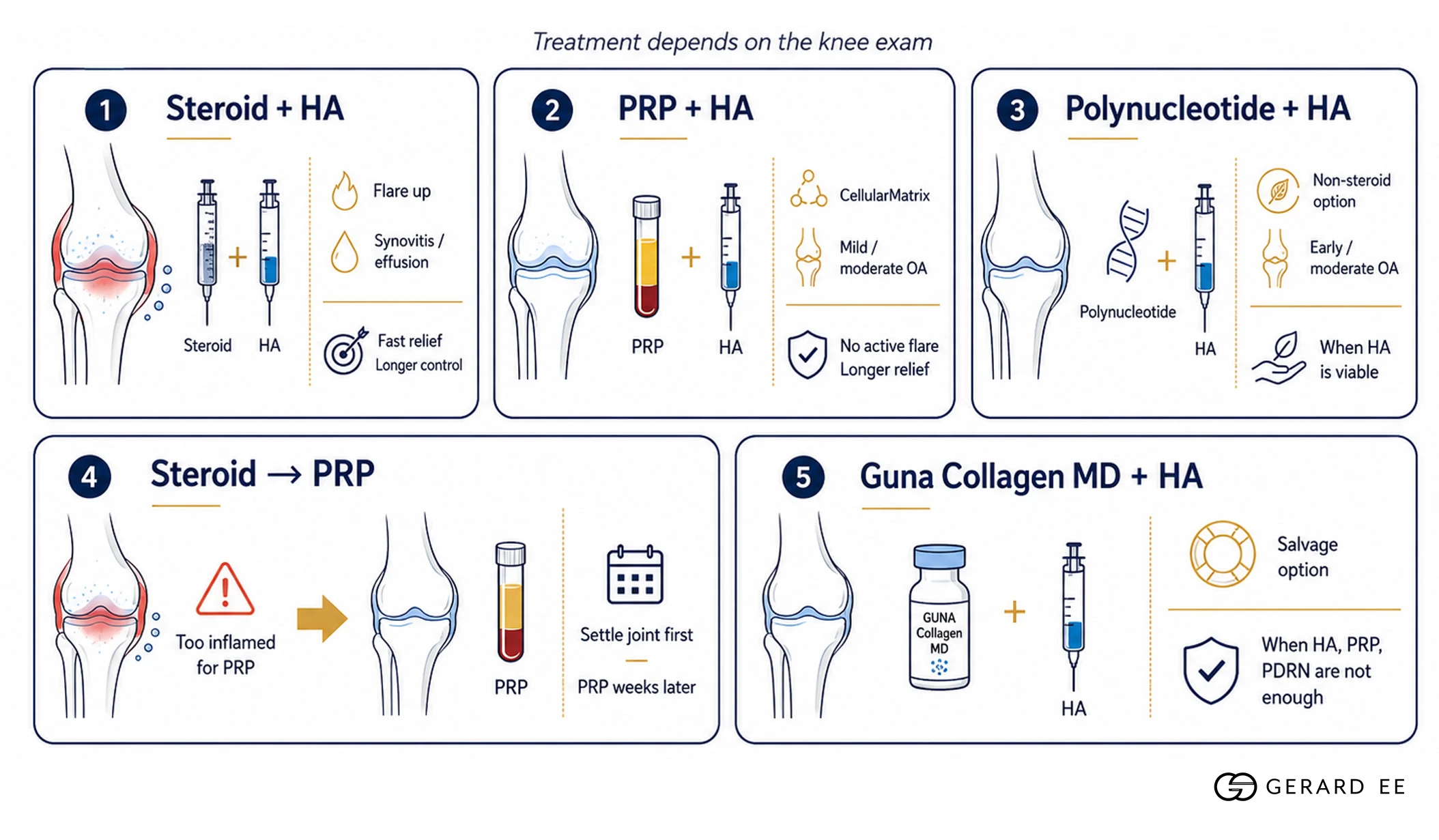
- Steroid plus HA for an OA flare up with synovitis and effusion. This combination provides fast relief and longer lasting symptom control.
- PRP plus HA via CellularMatrix for mild to moderate OA that is not experiencing an active flare up. This is good when longer duration relief is needed.
- Polynucleotide injectable plus HA when viscosupplementation is viable, or when a non-steroid approach is preferred. Suitable for early to moderate knee OA.
- Steroid shot, followed by PRP. I choose this sequence when the knee is too inflamed for a regenerative injection. The joint is first settled with a steroid injection, then revisited a few weeks later with the definitive injection, its type customised to the knee pathology and severity.
- Guna Collagen MD plus HA. This is a salvage strategy used when HA, PRP and PDRN do not provide enough relief.
When You Should Consider Knee Surgery
Not all cases of knee OA can be helped with non-surgical treatments or knee injections. In my experience, below are some of the signs that the patient’s knee OA has unfortunately progressed past the moderate stage of the disease.
- Imaging shows bone-on-bone contact with major function loss.
- The pain experienced is severe enough that it disturbs sleep.
- Pain is felt even when the joint is not in use.
- Non-surgical care is starting to yield diminishing returns.
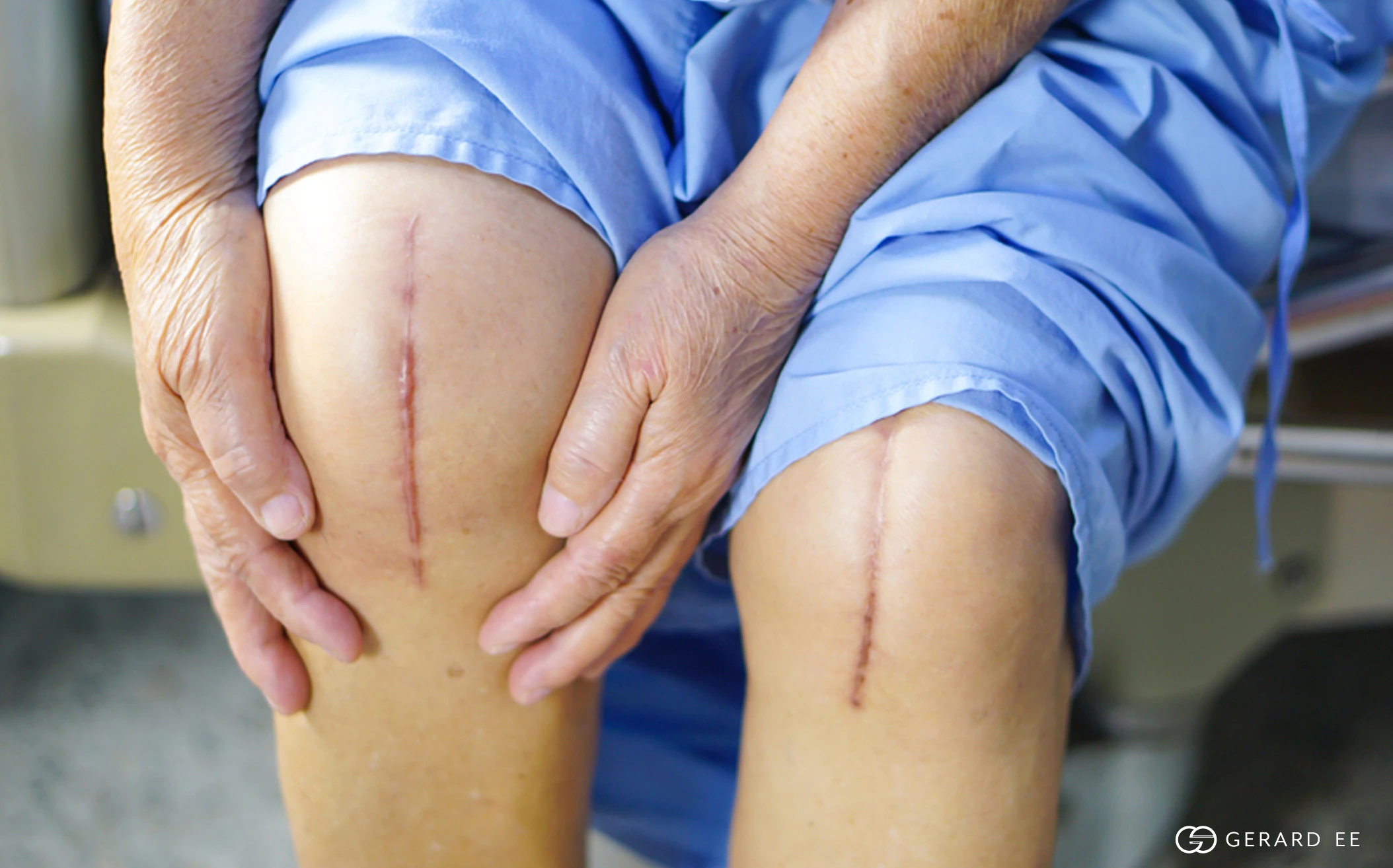
If a patient experiences the above symptoms, I would inform them that knee replacement might be the right choice for them. That being said, I consider surgery a last resort as it is invasive. I will always attempt to proceed via the non-surgical pathway when possible.
My opinion
“Helping patients delay or avoid knee replacement where possible is my main goal. But the non-surgical treatment pathway has limits, and surgery can genuinely be the right answer for advanced, end-stage arthritis. To me, what is most important is being honest with patients about the grade of their knee OA and what treatments are still viable for them.”
When A Knee Injection Is Inappropriate
There are a few situations where knee injections are not the right type of treatment to pursue.
- End stage knee OA with major function loss. Surgical referral should be considered in this case.
- When the patient has an active local or systemic infection, recent skin infection over the knee, certain blood disorders or uncontrolled anticoagulation.
- When the diagnosis is unclear. Reassessment, repeat X-ray or addition of MRI should be done first before deciding on a treatment plan.

Managing Unresponsive Patients
When a patient still sees little benefit twelve weeks after PRP therapy, another injection should not be hastily given. Below is my treatment structure for an unresponsive patient.
First, re-confirm the diagnosis. Review the X-ray, add an MRI if the diagnosis is unclear or to check if the pain is caused by a focal cartilage defect rather than generalised wear.
Next, look at rehabilitation and load. Many patients who appear unresponsive to treatments are actually not doing proper rehabilitation.
Finally, consider a combination of treatments or switching to a different treatment agent.
My opinion
“A non-responsive patients deserves a re-look. I will first review the imaging, often add an MRI, then check the rehabilitation progress of the patient. For some patients, adjusting their rehabilitation plan or switching to a combination plan or a different treatment agent works. However, not all knees will respond to knee injections or non-surgical treatments. If the treatment ceiling has been reached, honest counselling should be given to the patient and they should be told that surgery might be their only option. That honesty is part of my job.”
Honest Limitations
The non-surgical injection options for knee OA share some limitations. While they manage knee OA symptoms, improve knee function and influence the joint environment in different ways, none of these injections can regrow cartilage or cure osteoarthritis.
Preparation methods for PRP also vary across clinics, so treatment outcomes may vary depending on the clinic’s technique.
Similarly, HA products vary in molecular weight and crosslinking, which affects duration of effect. How long lasting the treatment is thus depends on what product the clinic is using.
Summary
Knee osteoarthritis is treatable, but not curable. Mild to moderate stages of disease can typically be treated with non-surgical treatments and knee injections. A good treatment plan should be paired with strengthening, weight management and sensible load adjustment.
Surgery is reserved for the end stage of the disease. I will only suggest surgical intervention when all non-surgical care options have been fully exhausted as my goal is always to help patients delay or avoid knee replacement where possible.
Speak to Dr Gerard Ee About Your Knee Pain

If a patient has been told they have knee osteoarthritis, or the knee is telling them something is wrong, the right first step is a proper assessment.
Knee joint injections at Dr Gerard Ee’s practice are performed in an MOH approved day surgery centre and are claimable through Medisave and hospitalisation insurance. The clinic’s team will advise on eligibility during consultation.

The Clifford Clinic and Surgery, 50 Raffles Place, #01-01 Singapore Land Tower, Singapore 048623 (Exit B, Raffles Place MRT) Phone: (65) 6532 2048 | WhatsApp: (65) 8318 6332
About Dr Gerard Ee
Dr Gerard Ee, MBBS (UK), MRCS (Edinburgh), PGDip Practical Dermatology (Cardiff) is a Member of the Royal College of Surgeons and a senior physician in Singapore. He is trained as an orthopaedic doctor and has years of experience in both operative and non-operative care of knee osteoarthritis. His peer-reviewed orthopaedic research has been published in top-tier journals including The Knee, Knee Surgery, Sports Traumatology, Arthroscopy (KSSTA), the Journal of Bone and Joint Surgery (British) and Clinical Orthopaedics and Related Research. He now works as a senior aesthetic doctor and continues to provide evidence-driven, non-surgical knee care for mild to moderate knee osteoarthritis with a clinical philosophy of using non-invasive treatments first and surgery as a last resort. He believes that treatment should be matched to evidence and to the individual patient.

Dr Gerard Ee, Aesthetic Doctor in Singapore
Dr Gerard Ee is an aesthetic doctor in Singapore and the Medical Director of his practice at 50 Raffles Place. He graduated from St George’s, University of London, trained in surgery at Singapore General Hospital and the National University Hospital, and holds the MRCS (Edinburgh) and a postgraduate diploma in practical dermatology from Cardiff University.
He has practised aesthetic medicine since 2012, is the author of sixteen peer-reviewed papers, and writes and medically reviews every article on this site. Read more about Dr Gerard Ee.
Book a consultation with Dr Gerard Ee at The Clifford Clinic
Dr Gerard Ee consults at The Clifford Clinic, 50 Raffles Place, Singapore. Consultations are by appointment. Message the clinic on WhatsApp, or call 6532 2048.
Frequently Asked Questions
Is knee osteoarthritis curable? No, but it is highly treatable. Non-surgical treatment in mild to moderate OA can substantially reduce pain, improve function and slow progression, often for many years.
Can knee OA be treated without surgery? Yes. Mild to moderate knee OA is usually managed with a combination of weight management, strengthening, activity adjustment and, where appropriate, knee injections. Surgery is reserved for the end stage of the disease or for patients who no longer respond to non-surgical care.
Which injection is best for knee OA? There is no single best injection. The type of injection used depends on whether the knee is experiencing a flare up, the knee OA grade, prior treatment response and the patient’s preference.
Typically, steroid shots are used for flare ups, PRP for selected mild to moderate knee OA, and HA or Conjuran if the patient prefers a viscosupplement strategy.
Are knee injections claimable through Medisave or insurance in Singapore? Knee joint injections performed in an MOH approved day surgery centre like The Clifford Clinic and Surgery are claimable through Medisave and hospitalisation insurance. Coverage depends on the specific plan.
Will knee OA get worse no matter what the patient does? OA is progressive, but the pace of its progression varies between patients. Body weight, strength, load management and the health of the joint environment all influence how quickly knee OA progresses.
This page is written from published research and from clinical experience in Singapore since 2012. It is for general education, not medical advice. Whether a treatment suits you, what it may achieve and what it may risk can only be established at a consultation. Dr Gerard Ee is the Medical Director of The Clifford Clinic, a private clinic in Singapore, and treatments discussed on this site are provided commercially.