Home›Blog›Acne›Acne Scars & Marks›Acne Scar Mapping: Why Diagnosis Comes Before Laser Choice
Acne scar treatment is not about selecting a single best laser, and the most common question posed to clinicians, which laser is best, is the wrong place to begin. Acne scarring is not one problem but several distinct types, and each responds to a different treatment approach. Mapping the scars first is what transforms a vague plan into a precise one, and skipping this step is the most common reason scar treatment falls short of expectations.
Dr Gerard Ee consults at The Clifford Clinic, 50 Raffles Place, Singapore.
My quick answer
Acne scars present in distinct types, mainly ice pick, boxcar, and rolling, which often appear together on the same individual. Each type requires a different treatment approach: TCA CROSS for ice pick scars, subcision for rolling scars, fractional CO2 or radiofrequency microneedling for boxcar scars, and Pico MLA for enlarged pores. No single laser addresses all scar types, so mapping the scars, accounting for skin tone and the presence of any active acne, must take precedence.
What I look for during the consultation
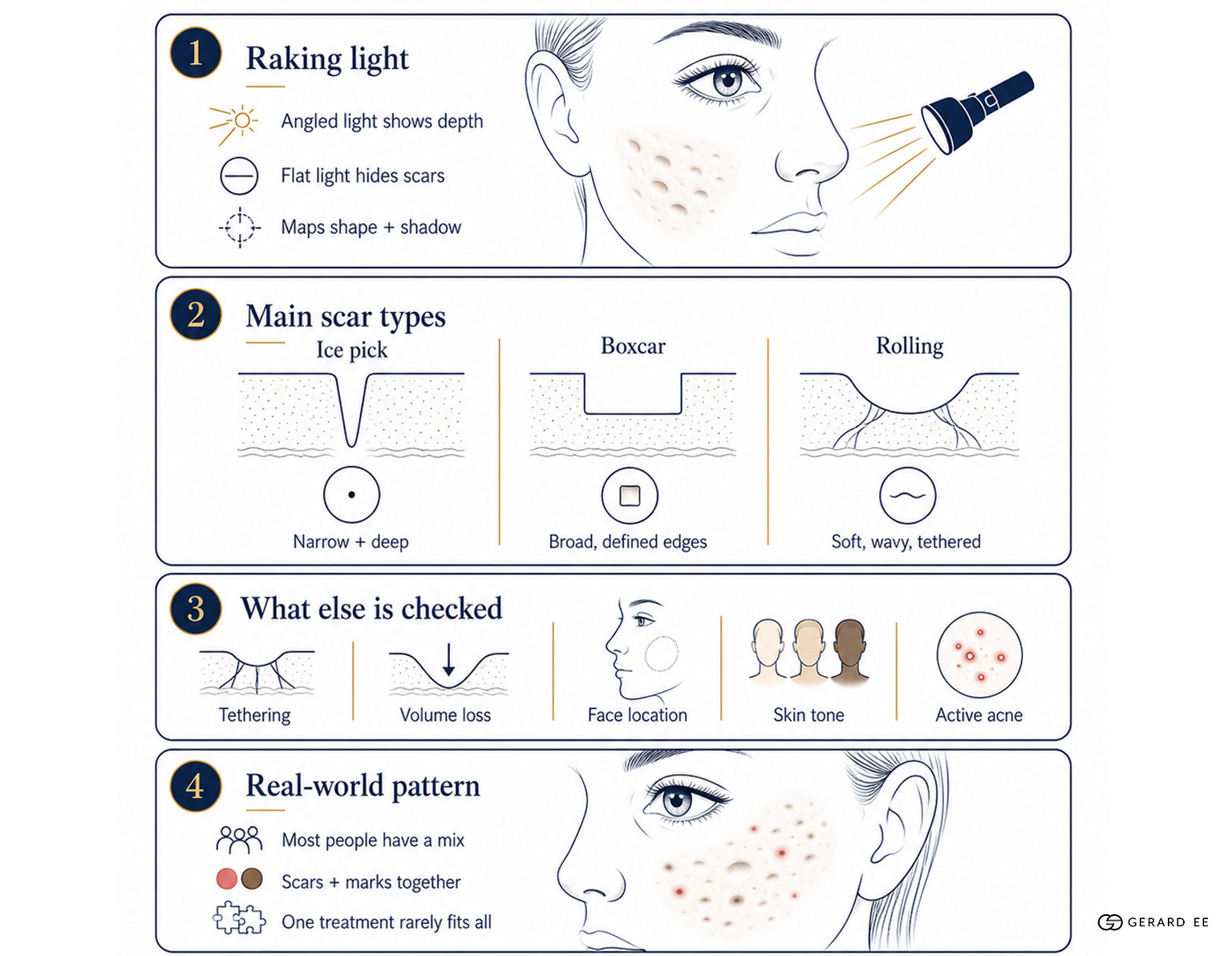
Mapping is a clinical skill rather than a technological tool. The skin is assessed under indirect, angled lighting, as raking light reveals the depth and shape of each scar far more effectively than flat lighting. From there, the process involves distinguishing ice pick scars from boxcar and rolling types, identifying which scars are tethered, and noting areas of volume loss rather than simple surface depressions. The location on the face matters, as does skin tone and the presence of any active acne.How I classify acne scars
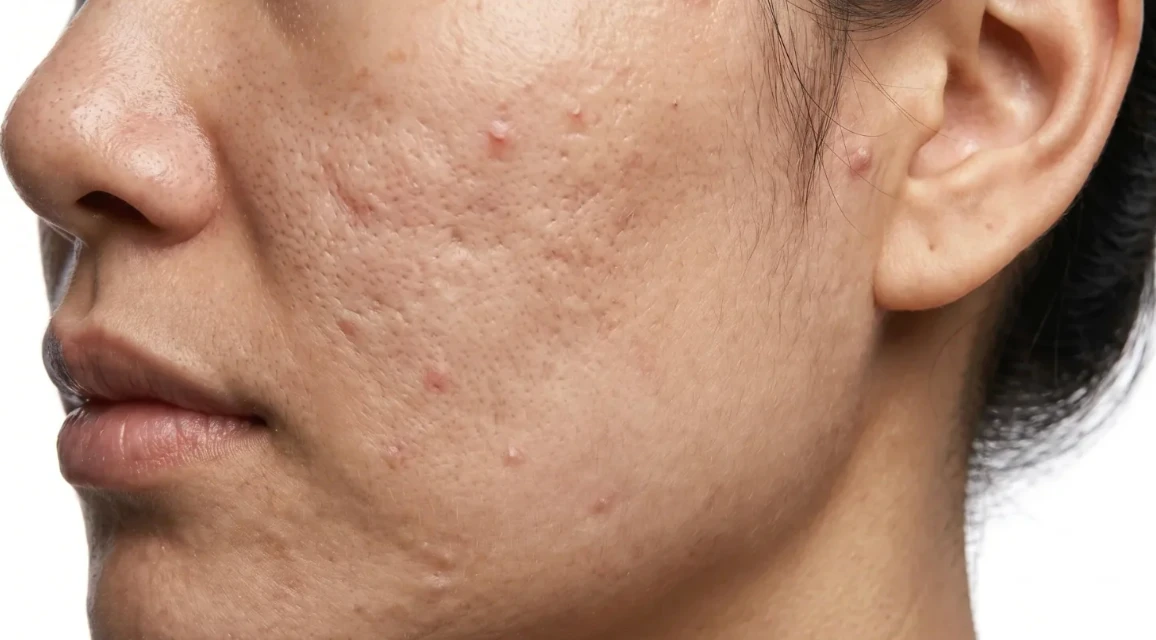
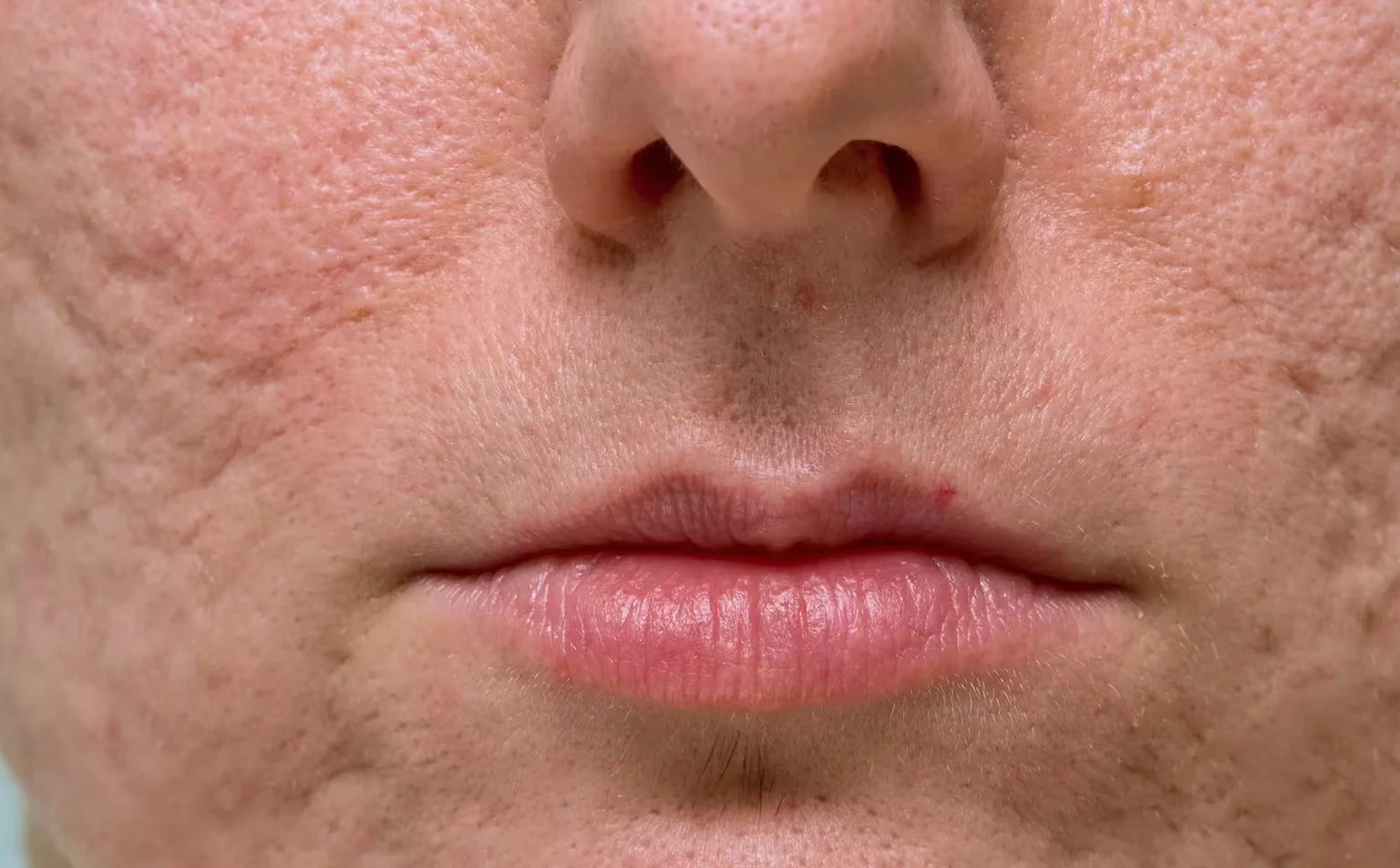
Ice pick scars are narrow and deep, resembling small punctures. Boxcar scars are broader, with defined edges and a flat base, and may be shallow or deep. Rolling scars appear soft and wavy, caused by the skin being tethered to the underlying tissue, which creates shadows across the surface. Most individuals present with a mixture of these types, along with flat red and brown marks, which is precisely why a single treatment rarely suits everyone.
Dr Gerard Ee’s clinical note
The scar mapping checklist is straightforward, yet it determines the entire course of treatment. The assessment considers scar type, tethering, volume loss, facial location, skin tone and the risk of post inflammatory hyperpigmentation, as well as the presence of any active acne. Only after evaluating all these factors does the clinician select among TCA CROSS, subcision, CO2, radiofrequency microneedling, and other modalities. The mapping itself constitutes the treatment plan.
When I would consider each treatment
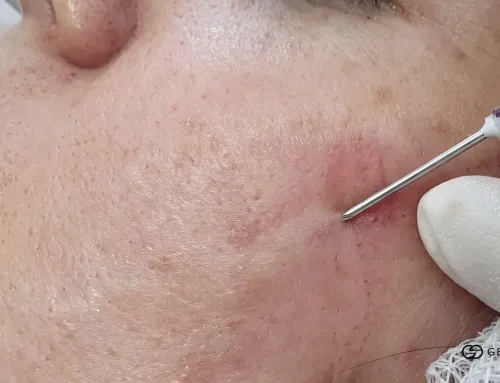
Once the scars have been mapped, each type is matched with the most suitable treatment. TCA CROSS is reserved for narrow ice pick scars. Subcision releases the tethering responsible for rolling scars. Fractional CO2 laser and radiofrequency microneedling remodel boxcar scars and broader textural unevenness, with CO2 often used to supplement devices such as Infini and Secret RF. Pico MLA is employed for enlarged pores. In cases where active acne coexists with scarring, Secret RF is particularly valuable as it also helps control the acne.When I would not treat, or would adjust the plan
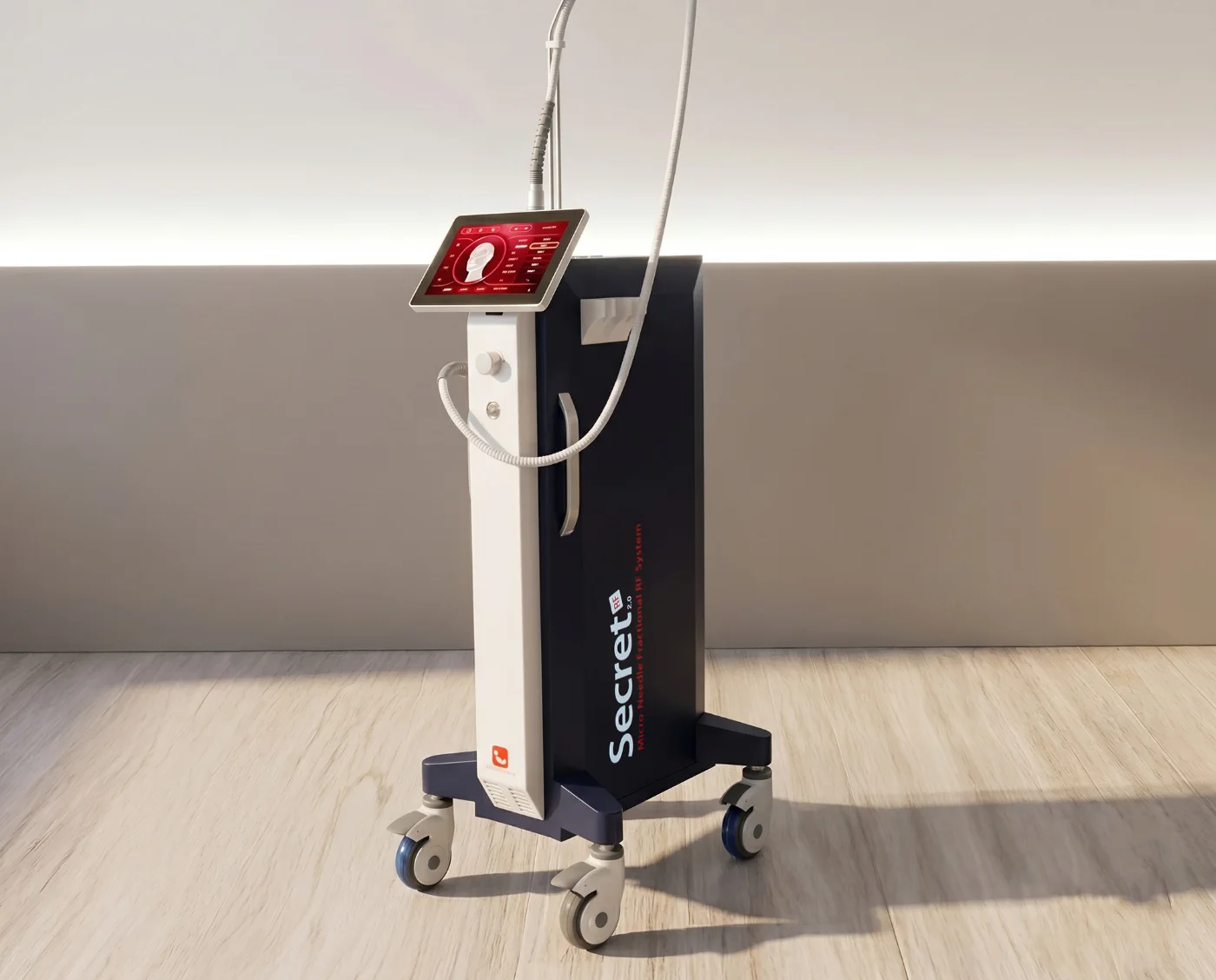
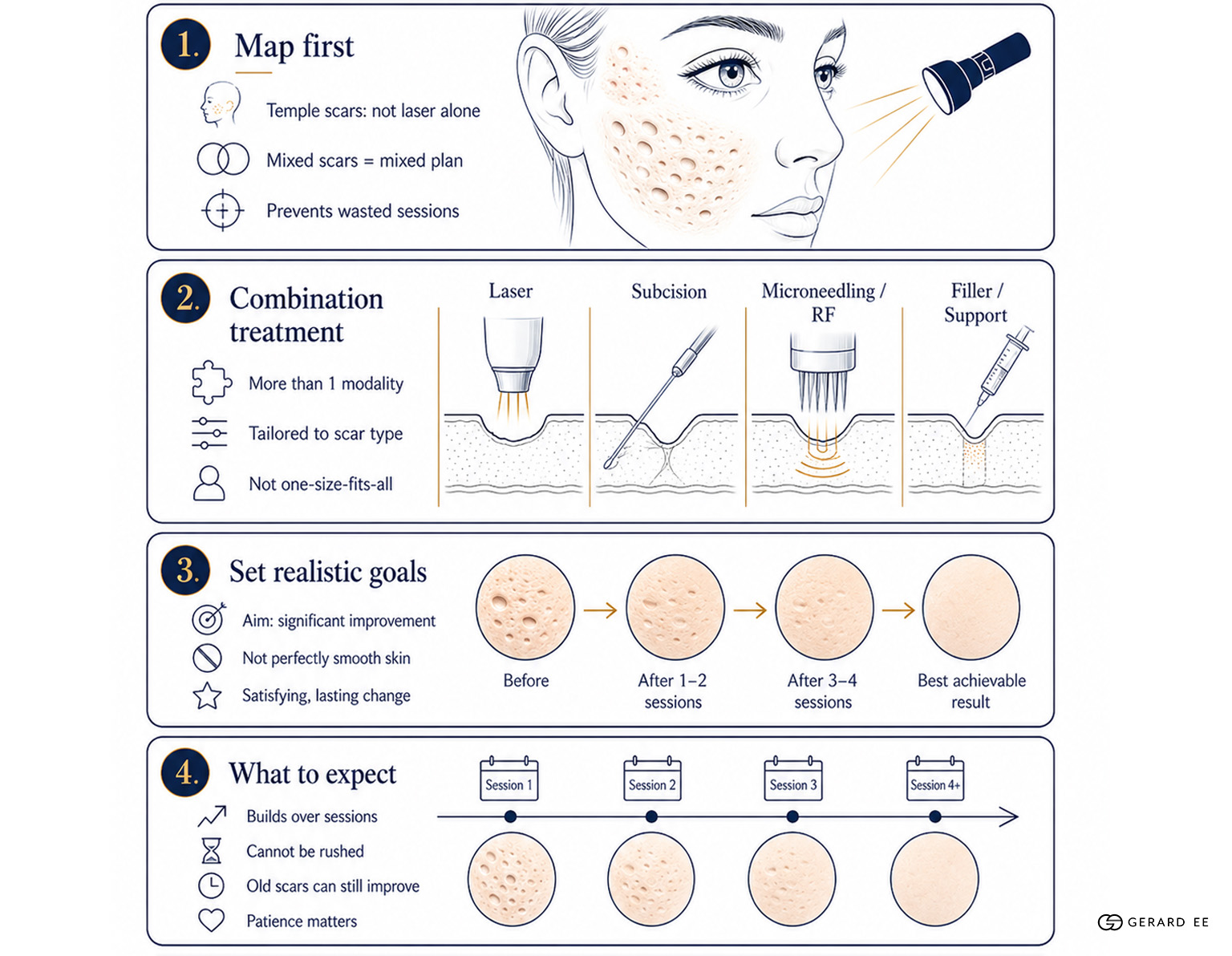
Two factors can override the textbook approach. In darker, PIH prone skin, greater caution is exercised with aggressive resurfacing modalities such as fractional CO2 and Secret RF, using lower energy settings and longer treatment intervals. Scarring is not treated while the skin is still actively breaking out, with the single exception of Secret RF. One important clinical caveat is that certain scars, such as those on the temples, respond poorly to laser alone and require a combination approach, which is worth recognising in advance.Common mistakes I see
The biggest mistake is using a single device for every scar, often whatever a clinic happens to own, which inevitably suits some scars while missing others. The second error is the belief that older scars are more difficult to treat, which clinical experience does not support. The third is commencing aggressive scar treatment while the skin is still breaking out, which is counterproductive. Mapping the scars first avoids all three pitfalls.
Mixed scarring is the norm
Very few individuals present with just one type of acne scar. Most have a mixture: perhaps some narrow ice pick scars on the cheeks, a few boxcar scars with defined edges, broader rolling scars that appear as shadows, and flat marks layered over them. This is precisely why mapping is so essential, as a single treatment applied to the entire face will suit some scars while missing others. Identifying the specific combination is what allows a plan to address each component appropriately. The acne scar treatment guide describes each modality in turn.
Why combination treatment outperforms a single laser
Because scarring is usually mixed, the most effective treatment plans combine modalities rather than relying on a single device. A combination approach might pair a treatment for narrow scars with one for tethered scars and another for broader textural issues, sequenced over several sessions. This is not about performing more procedures for their own sake, but about matching each tool to the scar type it suits best, so that the overall result is substantially better than any single laser could achieve alone.
What you can realistically expect
A mapped plan typically combines treatments, with improvement building progressively across a series of sessions rather than appearing all at once. Scar improvement takes time and cannot be accelerated, as the skin is undergoing active remodelling. The estimated number of sessions and the realistic degree of improvement are outlined at the initial consultation, so that progress can be measured against a clear treatment framework.
When to see a doctor
It is advisable to have acne scars assessed if they are a source of concern, if they clearly comprise a mixture of types, or if previous treatment with a single laser did not yield satisfactory results. Mapping is difficult to perform accurately without an in person assessment under proper lighting, and a consultation also serves to confirm whether active acne still requires control prior to initiating scar treatment.
Why some scars need combination treatment
Mapping often reveals that no single treatment will address every concern, and certain scar types make this especially clear. Scars in particular areas, such as the temples, respond poorly to laser alone and require a combination approach. A temple that is hollow rather than scarred is a volume problem, and is treated with temple filler. Mixed scarring across the face almost always calls for more than one modality. Recognising these patterns in advance prevents wasted sessions and disappointment, and it is one of the main reasons a careful map is worth the time before any treatment begins.Setting realistic goals for scar treatment
Scar treatment aims for significant, lasting improvement rather than perfectly smooth skin, and being transparent about this from the outset is important. Improvement builds gradually over a series of sessions as the skin remodels, and the process cannot be accelerated. Old scars respond just as well as new ones, so age is rarely a barrier, but patience remains essential. A clear plan, with a realistic number of sessions and an achievable goal, is what makes the process satisfying rather than frustrating.
What the evidence shows
Matching the treatment to the scar type is supported by a substantial body of clinical research. Acne scarring is common in individuals who have experienced significant acne, and the risk increases with more severe inflammation, which is why early acne control is important. The main treatments each have trial support for particular scar types. Fractional carbon dioxide laser is effective for depressed scars and compares well against gentler ablative lasers. Radiofrequency microneedling improves depressed scars in controlled studies. Subcision releases the tethering responsible for rolling scars. Focused acid treatment targets narrow ice pick scars. Because most individuals have a mixture of scar types, combining treatments according to the scar map consistently outperforms any single device.
How acne scars form, and why timing matters
Understanding how scars form explains why they are treated the way they are. When acne inflammation is deep or prolonged, it disrupts the collagen in the deeper layers of the skin. In most individuals, this results in a depressed, or atrophic, scar as collagen is lost, which gives rise to the ice pick, boxcar, and rolling scars most commonly observed. In some individuals, particularly on the chest, shoulders, and jawline, the skin overproduces collagen and forms a raised, or hypertrophic, scar or a keloid instead. Because the damage is established during active inflammation, the most powerful scar prevention step is to control acne early, before repeated deep breakouts can cause lasting harm.
Timing also shapes the treatment of established scars. Flat red and brown marks are addressed first or concurrently, as they represent colour changes rather than textural irregularities. True scars are treated on stable skin once active acne has settled, and the plan is staged over several sessions, since collagen remodelling is a gradual process that cannot be accelerated. Skin tone is factored in throughout, as darker skin types require gentler settings and longer intervals to avoid triggering pigmentation.

Get your acne scars mapped before any laser is chosen.
The Clifford Clinic is located at 50 Raffles Place, Singapore Land Tower. To arrange a consultation, please call (65) 6532 2048 or WhatsApp (65) 8318 6332.
Related reading
- Acne Treatment Singapore: How I Choose (Dr Gerard Ee)
- Acne Scar Removal (Dr Gerard Ee)
- TCA CROSS for Acne Scars (Dr Gerard Ee)
- Subcision for Acne Scars (Dr Gerard Ee)
- Secret RF for Acne Scars (Dr Gerard Ee)
- Edge Fractional CO2 Laser (Dr Gerard Ee)

Dr Gerard Ee, Aesthetic Doctor in Singapore
Dr Gerard Ee is an aesthetic doctor in Singapore and the Medical Director of his practice at 50 Raffles Place. He graduated from St George’s, University of London, trained in surgery at Singapore General Hospital and the National University Hospital, and holds the MRCS (Edinburgh) and a postgraduate diploma in practical dermatology from Cardiff University.
He has practised aesthetic medicine since 2012, is the author of sixteen peer-reviewed papers, and writes and medically reviews every article on this site. Read more about Dr Gerard Ee.
Book a consultation with Dr Gerard Ee at The Clifford Clinic
Dr Gerard Ee consults at The Clifford Clinic, 50 Raffles Place, Singapore. Consultations are by appointment. Message the clinic on WhatsApp, or call 6532 2048.
Frequently asked questions
Why do acne scars need to be mapped first?
Acne scarring is not a single problem. Ice pick, boxcar, and rolling scars each respond to different treatments, so mapping the scar types, accounting for skin tone and the presence of active acne, determines the most appropriate plan. No single laser can address all scar types.
What treatments are used for acne scars?
TCA CROSS is used for ice pick scars, subcision for rolling scars, fractional CO2 and radiofrequency microneedling for boxcar scars and broader textural concerns, Pico MLA for enlarged pores, and Secret RF for cases where active acne is still present.
Are old acne scars harder to treat?
In clinical experience, long standing scars respond just as well as recent ones, so it is rarely too late to treat them.
Can acne scars be removed completely?
Scar treatment aims for significant improvement rather than complete erasure, with results built gradually over a series of sessions. Realistic expectations are discussed at the initial consultation.
References
Sources cited on this page
- HealthHub Singapore. Acne. https://www.healthhub.sg/a-z/diseases-and-conditions/acne
- American Academy of Dermatology. Guidelines of care for the management of acne vulgaris. https://www.aad.org/member/clinical-quality/guidelines/acne
- Acne vulgaris. https://dermnetnz.org/topics/acne
- Prevalence and risk factors of acne scars in patients with acne vulgaris. PubMed. https://pubmed.ncbi.nlm.nih.gov/37357642/
- Fractional carbon dioxide versus erbium laser for atrophic acne scars: systematic review and meta-analysis. J Cosmet Dermatol. https://pubmed.ncbi.nlm.nih.gov/38733085/
- Fractional microneedle radiofrequency, with and without subcision, for atrophic acne scars: randomised split-face study. PubMed. https://pubmed.ncbi.nlm.nih.gov/28432727/
- Subcision in acne scarring: a review of clinical trials. J Cosmet Dermatol. https://onlinelibrary.wiley.com/doi/10.1111/jocd.15480
- CROSS technique with trichloroacetic acid for ice pick acne scars. PMC. https://www.ncbi.nlm.nih.gov/pmc/articles/PMC2956965/
- Dr Gerard Ee. Acne Scar Removal, Singapore. https://drgerardee.com/acne-scar-treatment-guide-singapore/
Raised scars that grow beyond the original wound are keloids, a different problem from pitted acne scars; see my guide to keloid scars and the options for keloid treatment in Singapore.
Medical disclaimer: This article is for general education and does not replace an in-person consultation. Treatment suitability, results and risks vary between individuals. Please speak with a qualified doctor before starting any acne treatment.
This page is written from published research and from clinical experience in Singapore since 2012. It is for general education, not medical advice. Whether a treatment suits you, what it may achieve and what it may risk can only be established at a consultation. Dr Gerard Ee is the Medical Director of The Clifford Clinic, a private clinic in Singapore, and treatments discussed on this site are provided commercially.