Patients ask me to choose between these two almost every week, usually after reading that both are “skin boosters” and finding nothing that explains the difference. They are not variations of the same treatment. One is a collagen stimulator, the other is a repair signal, and the choice follows from which of those a face actually needs. PDLLA collagen regenerating booster
Dr Gerard Ee consults at The Clifford Clinic, 50 Raffles Place, Singapore.
PDLLA vs PDRN skin boosters: what is actually different
PDLLA is poly-D,L-lactic acid, a resorbable polymer suspended with hyaluronic acid. Once injected into the dermis it acts as a scaffold: fibroblasts respond to the particles and lay down new collagen over the following weeks, and the particles themselves resorb. The change you see at three months is your own collagen, not the product.
PDRN, sold here as the Rejuran Booster, is polynucleotide, a fragmented DNA chain purified from salmon. It carries no scaffold and adds no structure. It works as a signal to the fibroblast, improving hydration, elasticity and the quality of healing in skin that is thin, irritated or recovering.
So the honest one-line answer is this. PDLLA builds. PDRN repairs. A face that has lost firmness needs the first; skin that is thin, dehydrated or inflamed needs the second.
| PDLLA skin boosters | Rejuran Booster (PDRN) | |
|---|---|---|
| Material | Poly-D,L-lactic acid particles with hyaluronic acid | Polynucleotides from salmon DNA |
| What it does | Stimulates new collagen; the particles resorb | Signals repair; improves hydration and elasticity |
| Where it goes | Dermis, across the treatment area | Dermis, often into thin or fragile skin |
| When it shows | Gradual, over six to twelve weeks | Earlier on skin quality, over three to six weeks |
| Typical course | Three sessions, four weeks apart | Three to four sessions, two to four weeks apart |
| Best for | Firmness, crepiness, early laxity | Thin skin, dehydration, redness-prone or healing skin |
| Not for | Volume replacement, or an inflamed active breakout | Structural loss or laxity |

What PDLLA skin boosters do, and what they do not
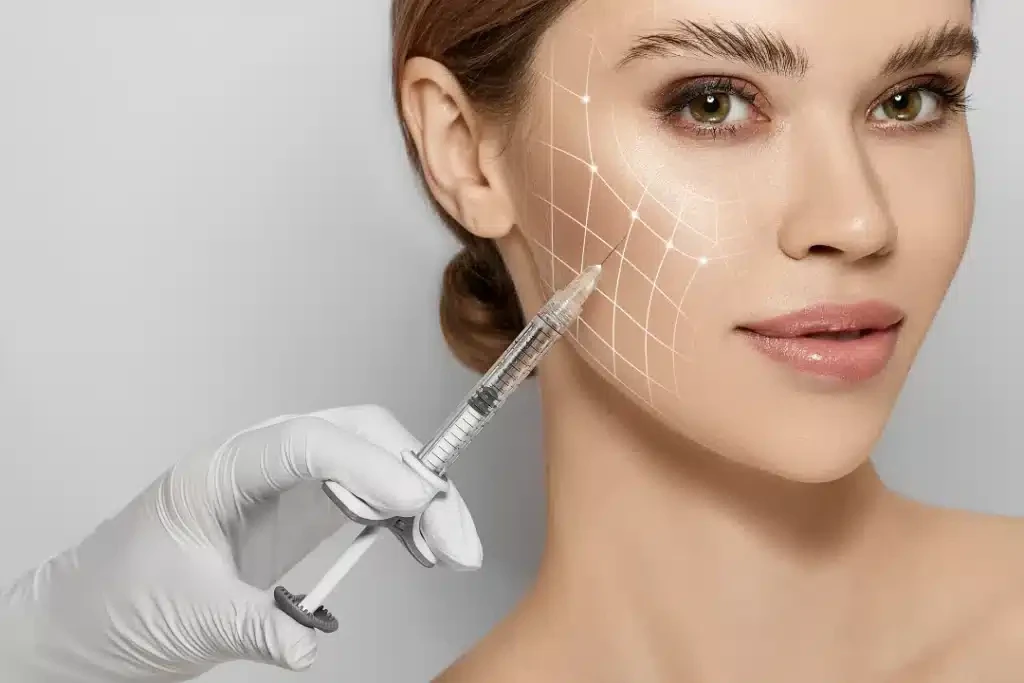
A PDLLA skin booster is injected, not applied. That distinction matters because the collagen response depends on the particles sitting in the dermis, and no topical version of this material reaches that layer.
What I use it for is skin that has thinned and lost firmness: fine crepiness on the cheek, a jawline that has softened, skin that no longer springs back. What it does not do is replace lost volume. If a cheek is hollow, the answer is a filler or a biostimulator placed deep on bone, not a booster in the dermis, and I will say so at the consultation rather than sell a course that cannot deliver what the patient wants.
PDLLA Volume is a different product from the PDLLA skin booster
Because the booster does not replace volume, the same material is also made in a volumising form, and patients are regularly quoted both without being told they are related. The skin booster sits in the dermis and works across an area to improve firmness and texture. PDLLA Volume is formulated for volume and placed deeper, into a hollow. Same polymer, different job, different plane, and the two are not interchangeable.
Two brand names cause most of the confusion. The manufacturer’s Korean regulatory record lists Juvelook Volume and Lenisna under a single tissue repair material approval held by VAIM, so a patient given one quotation for Lenisna and another for Juvelook Volume is often being quoted twice for the same material. [3] If you are comparing prices between clinics, that is the first thing worth establishing.
What the Rejuran Booster does, and what it does not
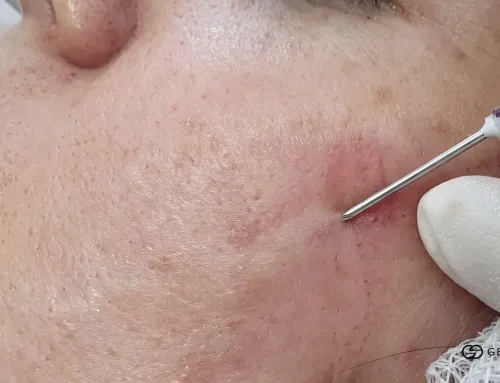
The Rejuran Booster suits skin that is behaving badly rather than skin that has lost structure. Thin under-eye skin, a face that stays red after laser, skin that heals slowly, skin that is dehydrated despite a reasonable routine. It also pairs well after resurfacing, where the priority is to settle the skin rather than to add collagen bulk. Rejuran PDRN skin boosters
What it does not do is lift or firm. Patients who come in asking for PDRN because a friend looked better after it often need the collagen side of the equation instead, and the examination usually makes that obvious.
Which one suits which patient
- Loss of firmness, crepey texture, early laxity in the 30s to 50s: PDLLA skin boosters.
- Thin, dry, easily irritated skin, or skin recovering from laser or acne: the Rejuran Booster.
- Under-eye skin quality without a hollow: the Rejuran Booster first, PDLLA added later if the skin can take it.
- A hollow, a fold or a descended cheek: neither. That is a filler, a biostimulator or a lifting treatment.
- Active inflamed acne: treat the acne first. Both are postponed.
Can PDLLA and Rejuran Boosters be combined
Yes, and it is often the better plan, but not in the same syringe and usually not on the same day. Where skin is both thin and slack I settle the skin first with the Rejuran Booster, then start the PDLLA course once it is calm, so that the collagen response happens in skin that can support it. Sequencing the two is a judgement made at the consultation on the state of the skin, not a fixed protocol.
How many sessions, and how long the result lasts
PDLLA is a course rather than a single treatment: three sessions about four weeks apart, with the result building over the following two to three months and holding for roughly a year in most faces before a maintenance session. The Rejuran Booster is a shorter cycle, three to four sessions two to four weeks apart, with the skin-quality change appearing earlier and fading earlier.
Neither is permanent, and neither is a substitute for sun protection and a sensible routine. A booster course on skin that is being burnt every weekend is money spent twice.
PDLLA skin booster and Rejuran Booster price in Singapore
A PDLLA skin booster combination is S$1,500 and a Rejuran Booster session is S$800, before GST, with consultation and review included. A PDLLA course is normally three sessions; a Rejuran Booster course is three to four, which is worth knowing when comparing the per-session figures.
Price is the wrong place to start, though. The cheaper course is expensive if it is the wrong material for the skin, and the two are not interchangeable.
>
What the published evidence on PDLLA skin boosters shows
Only papers whose article title itself contains the requested brand name are included below, together with the manufacturer’s regulatory record. Product names mentioned only in the abstract, keywords or methods were excluded.
The PDLLA skin booster side of this comparison now has controlled data: a 40-patient study of five needle-free PDLLA skin booster sessions reported sustained improvement in Global Aesthetic Improvement Scale scores and a measured lift of 2.3 mm on 3D imaging at 24 weeks. [1]
A documented tear trough case showed increased skin thickness on ultrasound after PDLLA skin booster, the collagen-stimulating effect that PDRN boosters such as Rejuran do not produce. [2]
Because these are injected rather than applied, the question that matters most is what happens if material enters a vessel. A 2026 study injected PDLLA with hyaluronic acid, as Juvelook and Juvelook Volume, directly into the artery of a rabbit ear in 112 animals. At 0.1 mL neither product produced persistent vascular occlusion or tissue necrosis. At 0.2 mL there was transient occlusion at standard and low dilutions, with blood flow restoring spontaneously within five minutes, and countercurrent flow was seen only with the volumising formulation. No skin necrosis, thrombosis or embolisation occurred, and histology showed preserved vessel walls with only a focal foreign-body reaction. [4]
That is an animal model observed for seven days, not a clinical safety guarantee, and it does not make an intravascular injection a trivial event. It is, however, the kind of data this category has largely lacked, and it is the reason I place a volumising PDLLA with a cannula rather than a needle.

Dr Gerard Ee, Aesthetic Doctor in Singapore
Dr Gerard Ee is an aesthetic doctor in Singapore and the Medical Director of his practice at 50 Raffles Place. He graduated from St George’s, University of London, trained in surgery at Singapore General Hospital and the National University Hospital, and holds the MRCS (Edinburgh) and a postgraduate diploma in practical dermatology from Cardiff University.
He has practised aesthetic medicine since 2012, is the author of sixteen peer-reviewed papers, and writes and medically reviews every article on this site. Read more about Dr Gerard Ee.

Book a consultation with Dr Gerard Ee at The Clifford Clinic
Dr Gerard Ee consults at The Clifford Clinic, 50 Raffles Place, Singapore. Consultations are by appointment. Message the clinic on WhatsApp, or call 6532 2048.
References
Sources cited on this page
- Seo SB, Wan J, Yoon SE, Wong IKJ, Lee KWA, Chua D, et al. The Effective Delivery of Poly(D,L-lactic Acid) (Juvelook) via Needle-Free Injection (CUREJET) for Facial Rejuvenation. Aesthetic Plast Surg. 2026;50(9):3382-3388. doi:10.1007/s00266-025-05434-2. PMID 41389157.
- Ravera K. Ultrasound and Radiological Patterns in Assessing the Efficacy of Juvelook for Collagen Stimulation and Tear Trough Enhancement: A Case Report. Cureus. 2025;17(4):e82668. doi:10.7759/cureus.82668. PMID 40400849.
- Ministry of Food and Drug Safety, Republic of Korea. Medical Device Database: VAIM Co., Ltd. Tissue repair material (조직수복용재료). Approval number 제허17-972호, item record 2017008208. The product listing includes Juvelook Volume (쥬베룩볼륨) and Lenisna (레니스나).
- Vachiramon V, Boonyarattanasoonthorn T, Rattanapinyopituk K, Duangbupha J, Limprasutr V, Kijtawornrat A, Wan J. Investigation of Vascular Behaviour and Tissue Response Following Intra-Arterial Injection of Poly D,L-Lactic Acid with Hyaluronic Acid Hybrid Biostimulators (Juvelook® and Juvelook Volume®) in a Rabbit Ear Model. J Funct Biomater. 2026;17(9):447. doi:10.3390/jfb17090447.
This page is written from published research and from clinical experience in Singapore since 2012. It is for general education, not medical advice. Whether a treatment suits you, what it may achieve and what it may risk can only be established at a consultation. Dr Gerard Ee is the Medical Director of The Clifford Clinic, a private clinic in Singapore, and treatments discussed on this site are provided commercially.