By Dr Gerard Ee, MBBS (UK), MRCS (Edinburgh), PGDip Practical Dermatology (Cardiff)
Dr Gerard Ee consults at The Clifford Clinic, 50 Raffles Place, Singapore.
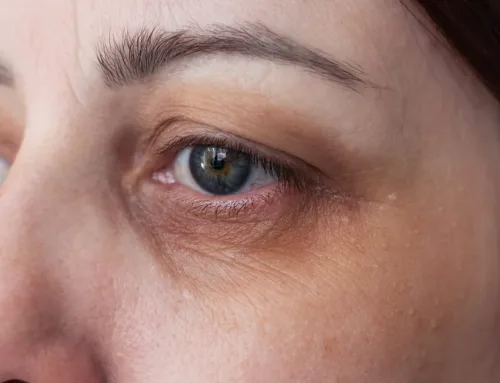
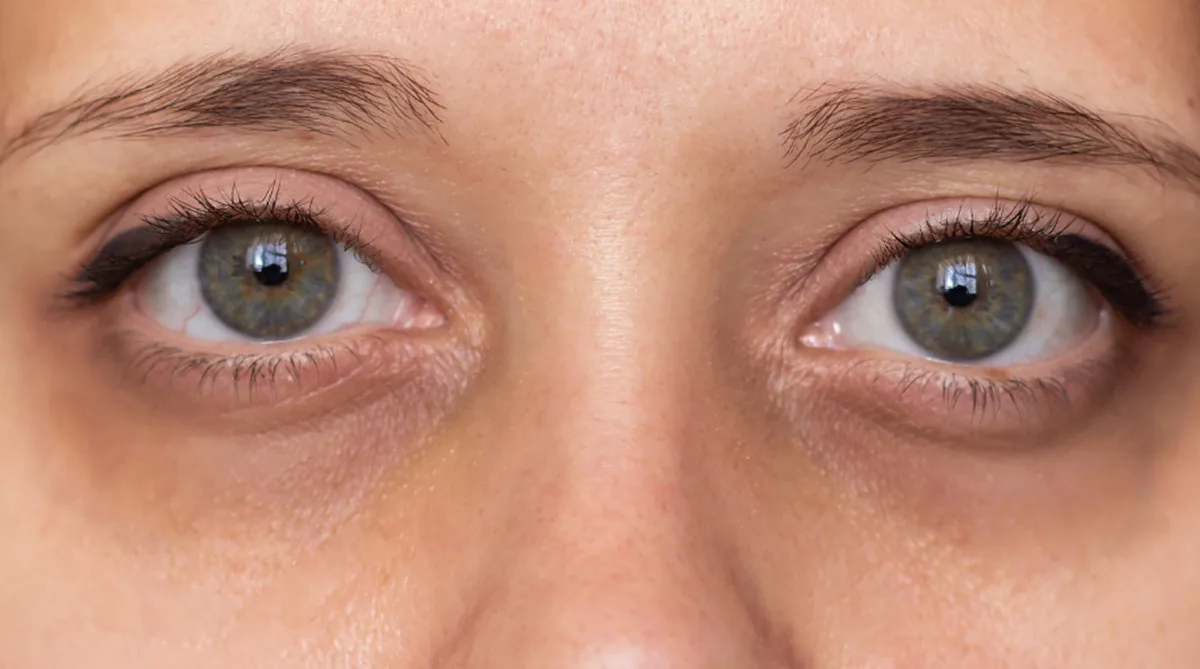
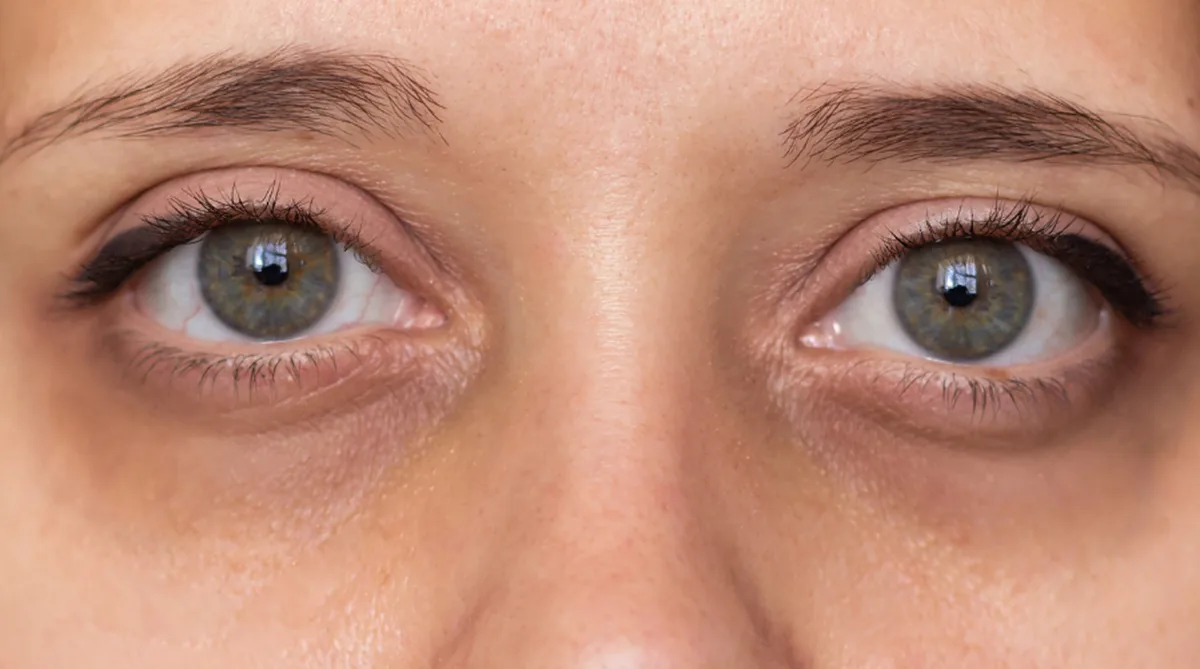
I regularly see a particular type of patient whom I can often identify from across the consultation room. The patient is usually young, sometimes a teenager accompanied by a parent. Dusky shadows sit beneath both eyes, and no amount of sleep improves them. The history includes a sensitive nose, morning sneezing, persistent congestion, rubbing the nose upwards, and itchy eyes in air conditioning or around dust.
These patients have usually tried brightening creams, vitamin serums, concealers and sometimes under-eye laser treatment or injections. The circles fade slightly, then return because the cause has not been treated. These are allergic shiners, dark eye circles driven by allergic rhinitis. This article explains how to recognise them, why treating the discolouration alone fails and the combined approach I use.
How a nose problem becomes an eye problem
Understanding the mechanism explains why an approach limited to creams and lasers often disappoints.
The first mechanism is impaired drainage. The veins draining blood from the thin under-eye tissue pass through regions affected by nasal congestion. When allergic rhinitis keeps the nasal passages inflamed, drainage around the eyes slows. Deoxygenated blood pools in vessels beneath the skin, creating a bluish, dusky shadow.
The second mechanism is skin damage caused by rubbing. Allergic eyes and noses itch, and patients may rub them many times a day without noticing. Years of friction can cause post-inflammatory hyperpigmentation and gradually thin and loosen the delicate under-eye skin, making the underlying vessels more visible.
An allergic shiner therefore has two overlapping components. The first is pooled blood visible through thin skin. The second is pigmentation and reduced skin quality caused by chronic rubbing. The balance differs between patients, which is why one standard dark-circle treatment will not suit everyone. Both components persist while the allergy remains untreated.
The problem is common in Singapore. Local epidemiological work places the prevalence of perennial allergic rhinitis at around 13 percent, with house dust mites the most common airborne allergen. These include Blomia tropicalis, a tropical species that may be absent from testing panels designed for temperate countries. Dust mite exposure here is year-round, so the rhinitis and dark circles can also persist throughout the year. Allergic rhinitis is also associated with asthma and chronic sinus disease, and early intervention may reduce progression towards asthma, particularly in younger patients.
How I recognise allergy-driven dark circles
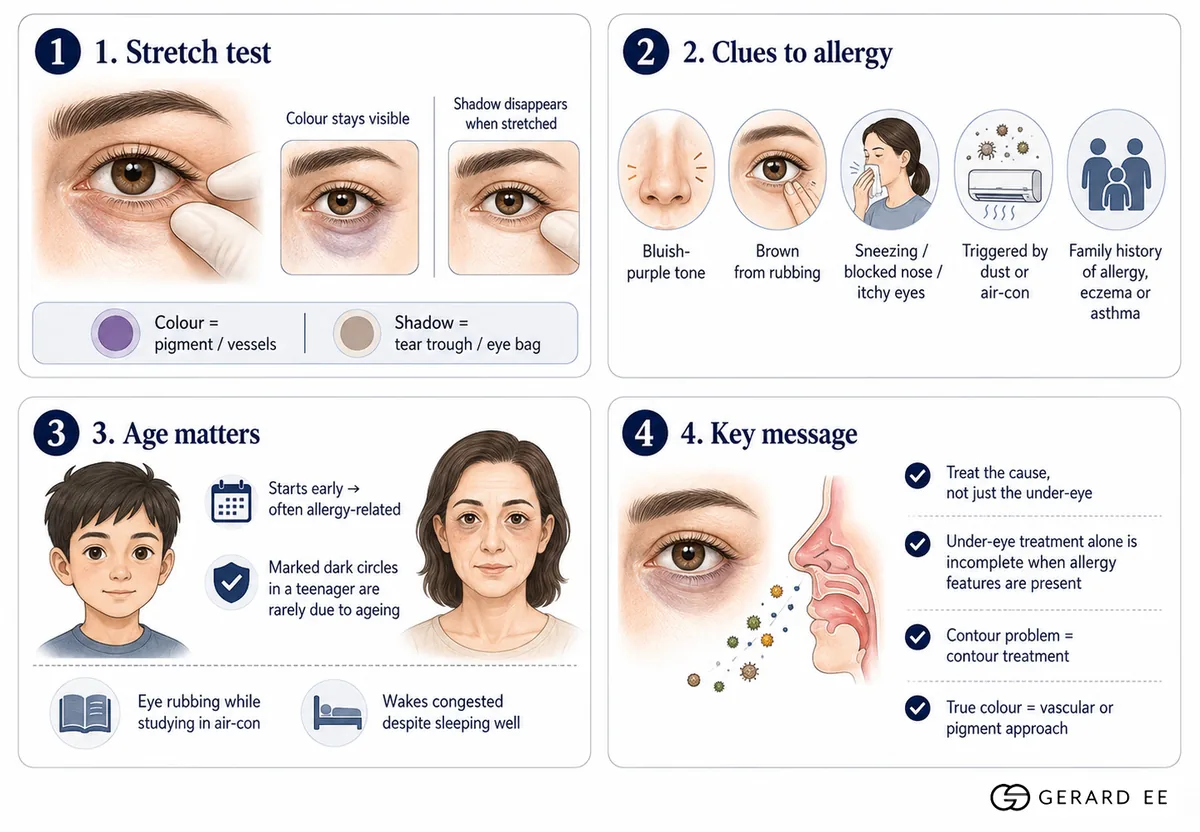
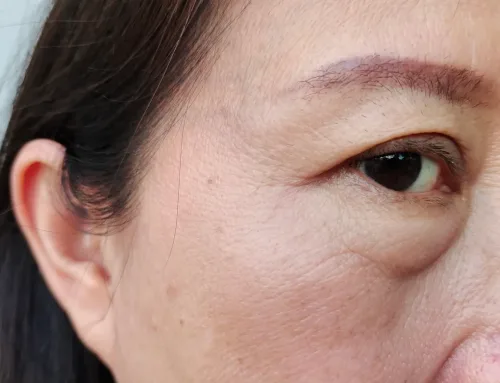
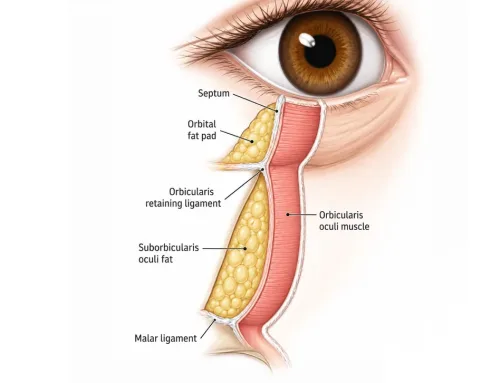
Assessment in the consultation room is brief. First, gently stretching the under-eye skin distinguishes discolouration, which remains visible, from a shadow caused by a tear trough or eye bag, which disappears. This matters because a shadow needs a contour treatment, whereas genuine colour needs a vascular or pigment-based approach. Allergy-related circles usually have a bluish-purple or dusky tone from the vascular component, often with a brown overlay caused by rubbing. Morning sneezing, nasal blockage, itchy eyes, an upward nose-rubbing habit, symptoms triggered by dust or air conditioning, and a family history of allergy, eczema or asthma support the diagnosis. Parents may also notice that a child rubs the eyes while studying in an air-conditioned room or wakes congested despite having slept well. Age is another clue. Allergic shiners often begin early, whereas ageing rarely explains marked dark circles in a teenager.
When these features are present, treating the under-eye area alone is incomplete, however effective the device.
Why creams, concealers and antihistamines keep disappointing
Brightening creams act on melanin at the skin surface. They do not affect the congested vessels beneath it and cannot keep pace with pigmentation caused by continued rubbing. Concealers provide camouflage, which is useful if the patient understands their limits. Antihistamines and nasal sprays address symptoms, but the rhinitis, congestion and rubbing can return when treatment stops. Under-eye lasers and injectables may improve appearance, but the discolouration can recur if the allergy continues to cause congestion and rubbing.
The pathway I use. The cause and the colour are treated together
I use two treatments in parallel because each addresses a different part of the problem.
The first track. Confirm and resolve the allergy
Testing comes first because immunotherapy must match the allergen. I use a blood test for specific IgE antibodies together with a skin-prick test, which measures skin reactivity to common allergens. Small drops of allergen extract are placed on the forearm, and the result is read after about 20 minutes. A raised, itchy response indicates sensitivity and is interpreted alongside the patient’s history rather than in isolation. The test is generally manageable even for young children. A blood test complements it and is particularly useful when a skin condition or antihistamine use could interfere with skin testing. In Singapore, the panel should include Dermatophagoides pteronyssinus, Dermatophagoides farinae and the tropical species Blomia tropicalis. This local coverage matters because a negative result from an incomplete panel can provide false reassurance.
If the results support it, I treat the allergy with sublingual immunotherapy, or SLIT.
What SLIT is

SLIT delivers a small, controlled dose of the confirmed allergen under the tongue each day, usually as a dissolvable tablet or drops. In Singapore, this is most often house dust mite extract. Repeated exposure gradually trains the immune system to tolerate the allergen rather than react to it, a process known as desensitisation. Unlike antihistamines and steroid nasal sprays, which suppress symptoms while they are used, immunotherapy modifies the underlying allergic response.
What the treatment involves in practice
The first dose is taken in the clinic under medical supervision, followed by a short monitoring period. Treatment then continues at home. The daily dose, typically two sprays or one dissolvable tablet, is held under the tongue for about one minute. The patient avoids eating, drinking and brushing their teeth for at least 15 minutes afterwards. Taking it at the same time each morning helps it become routine, and the preparations are convenient for travel during a multi-year course. Consistency is important. SLIT is not an occasional remedy for a bad allergy day but a regular treatment intended to change the immune response over time.
Some modern sublingual sprays, including SLIM, use allergoids, polymerised allergen proteins rather than single native extracts. The polymerised form binds less readily to the IgE antibodies that trigger reactions and, according to published work, can allow higher doses with fewer side effects. As immunotherapy is dose-dependent, delivering each dust mite allergen at full rather than diluted concentration may be advantageous. Preparations used for Singapore patients should cover Blomia tropicalis as well as the two Dermatophagoides species.
Symptom improvement typically begins after 8 to 14 weeks, while the full course lasts 3 to 5 years to build lasting tolerance. The first change may be less morning sneezing or rubbing rather than an immediate change beneath the eyes. The circles improve more gradually because congestion, pigmentation and thinned skin recover at different rates. A completed course may continue to reduce symptoms after treatment stops, whereas antihistamines work only while they are taken. Usual allergy medication can continue during the early months. Because house dust mite exposure in Singapore is not seasonal, SLIT is taken throughout the year.
SLIT is less likely to cause serious reactions than allergy injections, which makes it suitable for home use after the supervised first dose. Common side effects are usually mild and local, particularly an itchy mouth during the first few weeks. Throat irritation or slight swelling may also occur. Severe reactions are rare. SLIT is generally unsuitable for patients with severe or poorly controlled asthma, certain oesophageal conditions or a previous serious reaction to immunotherapy. It also requires daily consistency over several years. Testing is essential because SLIT works only against the allergen it contains.
For dark circles, reduced congestion improves venous drainage and less itching means less rubbing. This stops the process that keeps recreating the discolouration.
The second track. Treat the circles themselves at the same time
While SLIT addresses the cause, I treat the accumulated damage directly. V Beam Eyes is a vascular laser whose wavelength is selectively absorbed by blood vessels. It targets the dusky, vessel-related component of allergic shiners that pigment creams cannot reach. Juvelook Eyes stimulates collagen in under-eye skin. Years of rubbing can leave the skin thin and crepey. Rebuilding collagen improves the skin envelope and makes the structures beneath it less visible. These treatments do not replace allergy management. Their purpose is to improve changes already established in the skin while SLIT reduces the congestion and rubbing that would otherwise continue to recreate them.
The two treatments work at different levels. One addresses vessels and the other skin quality. Each is matched to the tissue it can reach.
Why simultaneously rather than sequentially
There is no need to complete the allergy treatment first. The two tracks do not interfere with each other, so the circles can improve while the underlying allergy is being treated. Treating only the discolouration leaves the cause active.
What does not work for allergic shiners
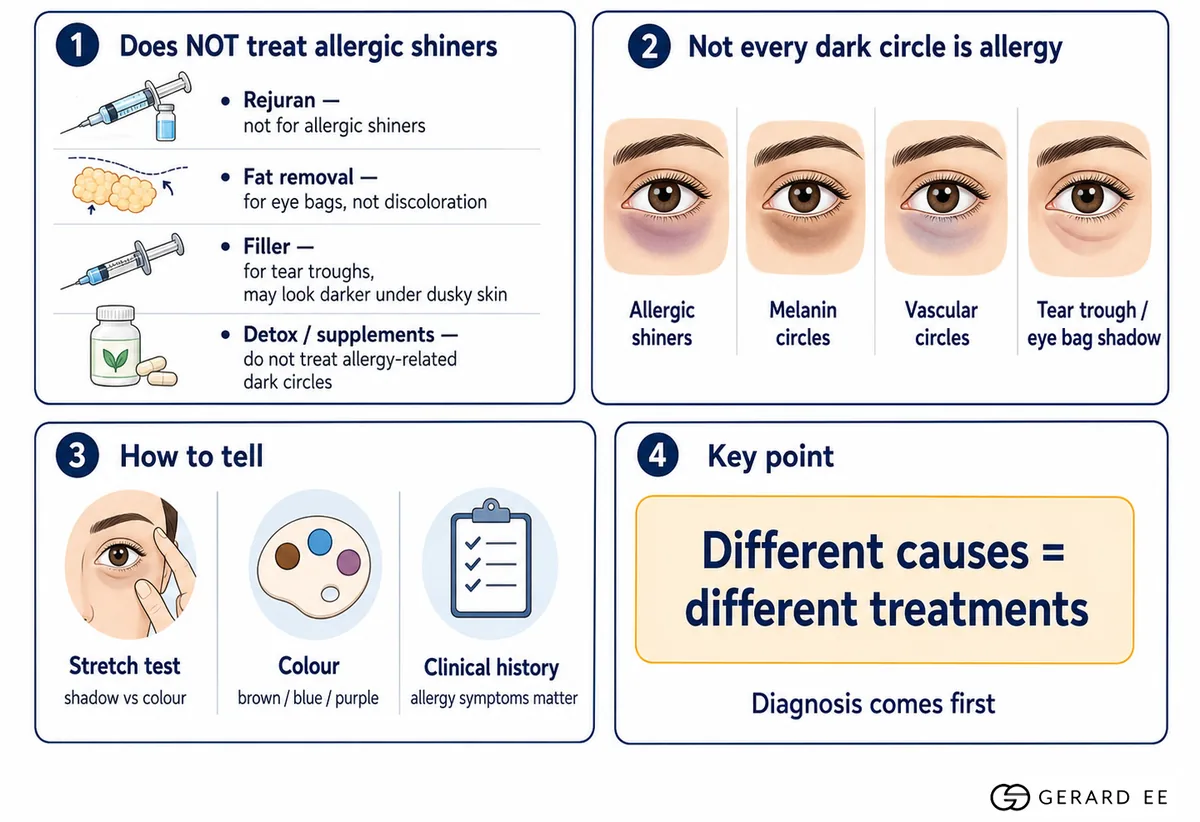
Several frequently requested treatments do not address allergic shiners. Rejuran does not lighten dark circles or act as a collagen biostimulator, so I do not use it in my under-eye practice. Fat removal and fillers treat eye bags and tear troughs respectively, not discolouration. Filler beneath dusky skin can make the area look darker. Detox regimens and supplements do not treat chronic under-eye darkness associated with allergy.
Not every dark circle is caused by allergy. Hereditary melanin-driven circles, vascular circles without rhinitis, and shadows caused by tear troughs or eye bags require different treatment. The stretch test, colour and clinical history help distinguish between them.
Related reading on eye bags and under-eye concerns
- Non-surgical eye bag removal: price, what happens and FAQ
- Which eye bag treatment is right for you
- Telling eye bags apart from tear troughs
- Non-surgical eye bag removal: what it can and cannot do
- Eye bag surgery in Singapore, and when it is the better answer
- Do eye bags come back after treatment?
- Why tear trough fillers make true eye bags worse
- What home remedies for eye bags actually do
- Treatment options for dark eye circles
- Emface Eyes explained
- Laser treatment for dark eye circles: which laser for which type

Dr Gerard Ee, Aesthetic Doctor in Singapore
Dr Gerard Ee is an aesthetic doctor in Singapore and the Medical Director of his practice at 50 Raffles Place. He graduated from St George’s, University of London, trained in surgery at Singapore General Hospital and the National University Hospital, and holds the MRCS (Edinburgh) and a postgraduate diploma in practical dermatology from Cardiff University.
He has practised aesthetic medicine since 2012, is the author of sixteen peer-reviewed papers, and writes and medically reviews every article on this site. Read more about Dr Gerard Ee.

Book a consultation with Dr Gerard Ee at The Clifford Clinic
Dr Gerard Ee consults at The Clifford Clinic, 50 Raffles Place, Singapore. Consultations are by appointment. Message the clinic on WhatsApp, or call 6532 2048.
Frequently asked questions
How do I know whether allergies cause my dark circles?
Indicators include a bluish or dusky colour, allergic rhinitis with sneezing or a blocked and itchy nose, habitual eye or nose rubbing, onset at a young age, and darkness that remains when the skin is gently stretched. An allergy blood test and skin-prick test can provide confirmation.
Can dark eye circles caused by allergies resolve on their own?
The vascular component may improve if the rhinitis is resolved, but pigmentation and skin thinning caused by years of rubbing often need direct treatment. This is why V Beam Eyes and Juvelook Eyes may be used while SLIT addresses the allergy.
What is SLIT, and how does it differ from antihistamines?
Sublingual immunotherapy places a small daily dose of the confirmed allergen under the tongue, gradually desensitising the immune system. Antihistamines suppress symptoms while they are taken. SLIT addresses the underlying allergic response.
How long does SLIT take to work?
Improvement typically begins after 8 to 14 weeks, and the full course lasts 3 to 5 years. Normal allergy medication can continue during the early months, and the benefit of a completed course may persist after treatment stops.
Is SLIT safe, and what are the side effects?
The first dose is taken under medical supervision, after which treatment continues at home. Side effects are usually mild and local, most commonly an itchy mouth during the early weeks. Severe reactions are rare. Suitability is assessed before treatment because SLIT is generally avoided in patients with poorly controlled asthma and certain other conditions.
Do children and teenagers develop allergic shiners?
Yes. They often appear in childhood or adolescence, and skin-prick testing is usually manageable even in young children. Early management may prevent years of worsening circles and chronic rubbing.
Why do my dark circles return after laser treatment?
The underlying allergic rhinitis may still be active. Continued congestion and rubbing can recreate the discolouration after treatment that addresses only its appearance.
Where can I be assessed?
The Clifford Clinic assesses dark eye circles alongside other under-eye concerns, including eye bags, so the recommendation can follow the diagnosis. Dr Gerard Ee, MBBS (UK), MRCS (Edinburgh), PGDip Practical Dermatology (Cardiff) is the founder and medical director of The Clifford Clinic and The Clifford Surgery in Singapore. He has treated under-eye concerns, including eye bags and dark circles, for more than 10 years. His centre offers both non-surgical and surgical eye-bag treatment, including scarless eye-bag removal and pinch blepharoplasty. This article reflects his clinical opinion, provides general information and does not replace a medical consultation. Further reading. SingHealth on Sublingual Immunotherapy, Cleveland Clinic on Sublingual Immunotherapy and NUHS on Allergic Rhinitis.
This page is written from published research and from clinical experience in Singapore since 2012. It is for general education, not medical advice. Whether a treatment suits you, what it may achieve and what it may risk can only be established at a consultation. Dr Gerard Ee is the Medical Director of The Clifford Clinic, a private clinic in Singapore, and treatments discussed on this site are provided commercially.