

What is the difference between a Port Wine Stain and a haemangioma?
Haemangioma and port wine stain (PWS) are both types of birthmarks that appear as red or purple marks on the skin. However, they have some significant differences. Haemangiomas are benign tumors that are made up of abnormal blood vessels. They can occur anywhere on the body, but they are most common on the face, scalp, chest, and buttocks. Haemangiomas are more common in infants and usually appear within the first few weeks of life. They are often called "strawberry marks" because of their reddish color and bumpy texture. PWS, on the other hand, are caused by an overgrowth of blood

Botox for the Trapezius Muscle – Pain Relief and Neck Line Sculpting In the Same Treatment
Aching, stiffness and soreness in the neck and shoulders are hardly a rare occurrence in modern adults. In fact, up to 7 in 10 adults had experienced neck and shoulder pain some time in their life. Sometimes, the muscles can be so tense that it appears enlarged, and visible “knots” appear along the shoulder line. The use of Botox to relieve sore and stiff muscles is not a new treatment but is often overlooked as compared to Botox’s more well-known uses in aesthetics medicine. Below, I will explain how Botox is used on the trapezius muscles to address neck and

Stretch Marks – Bidding Them Farewell With Fraxel and Vbeam Lasers
Childbearing is a notable milestone in a many women’s lives, marking the start of motherhood. However, for many women, the mark of pregnancy is quite literal – their rapidly growing belly left them with unsightly stretch marks. While there are many over-the-counter topical creams meant for stretch marks, most, if not all of them has not proven themselves to be particularly effective. Fortunately, nonetheless, stretch mark laser treatments like the Fraxel Dual Laser and VBeam Laser have proven themselves to be effective at addressing different types of stretch marks. Below, we shall discuss more about stretch marks in detail and
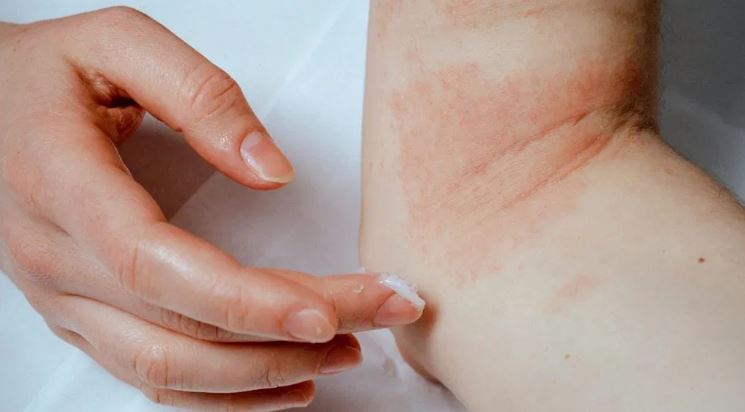
Atopic Dermatitis – Understanding the Causes and Treatment of Eczema
Eczema is the common name for atopic dermatitis, a persistent, chronic skin condition that involves dry, red and itchy skin. It a common ailment, affecting about 1 in 10 people, and also one of the more common conditions among my patients seeking laser treatment for eczema. Eczema is usually characterised by the following signs and symptoms: Thick, dry, scaly/flaky skin Persistent, itchy rashes which often worsens at night Reddish, raw inflamed skin from scratching Small red bumps on the skin Reddish, brownish or greyish patches of skin around the inside of joints such as elbows and knees Eczema can significantly

Lightening Dark Underarm Pigmentation With Pico Laser Treatment
Dark underarms are caused by hyperpigmentation of the skin. The excess melanin deposit over the skin can be due to a variety of reasons but regardless, the treatment for hyperpigmentation is the Pico and the Q-switch laser. Causes of dark underarm skin Hyperpigmentation of the skin can be due to many reasons Post-inflammatory hyperpigmentation (PIH) When the skin becomes inflamed for any reason, it can overstimulate melanocytes and cause them to produce melanin excessively hence causing darkening of the skin. PIH may be due to irritation from excessive shaving, waxing, scratching or fungal and bacterial infections. After the inflammation from

Atypical Moles vs Melanoma: Understanding the Difference
This is the page I point patients to when they ask whether a mole that looks different needs removing. It covers the features I check, the risk factors I ask about, and when I recommend excision rather than observation. Do we pay attention to our moles? Perhaps because moles usually develop in our childhood or adolescence it has already become such a mundane spot on our body that we are less mindful of its appearance. This article, however, serves to explore the key differences between atypical moles and melanoma and how atypical-looking moles can, in fact, be the manifestation of

Acne and Cancer, What the Research Shows
Written by Dr Gerard Ee, MBBS (UK), MRCS (Edinburgh), PGDip Practical Dermatology (Cardiff), sole author. First published November 2018. Last medically reviewed and updated 1 September 2026. Acne and cancer, the short answer There is no convincing evidence that acne causes cancer, and acne is not a recognised sign of most internal cancers. Several observational studies have reported associations between severe adolescent acne and later prostate cancer, breast cancer or melanoma, although the findings are inconsistent and do not establish causation. Certain cancer medicines, particularly epidermal growth factor receptor (EGFR) inhibitors, produce an acne-like eruption in a high proportion of

