A clinical perspective by Dr Gerard Ee, Medical Director, The Clifford Clinic
Dr Gerard Ee consults at The Clifford Clinic, 50 Raffles Place, Singapore.
When it comes to cholesterol testing, most patients expect to do the test, be handed a Low-Density Lipoprotein (LDL) number and be told whether it is good or bad. For decades the standard lipid profile has been treated as an isolated test and most people assume the conversation ends with that verdict. In my practice, I have come to see a cholesterol blood test as the start of a conversation rather than the end of one. It is a front door to cardiovascular prevention rather than a single pass-or-fail score.
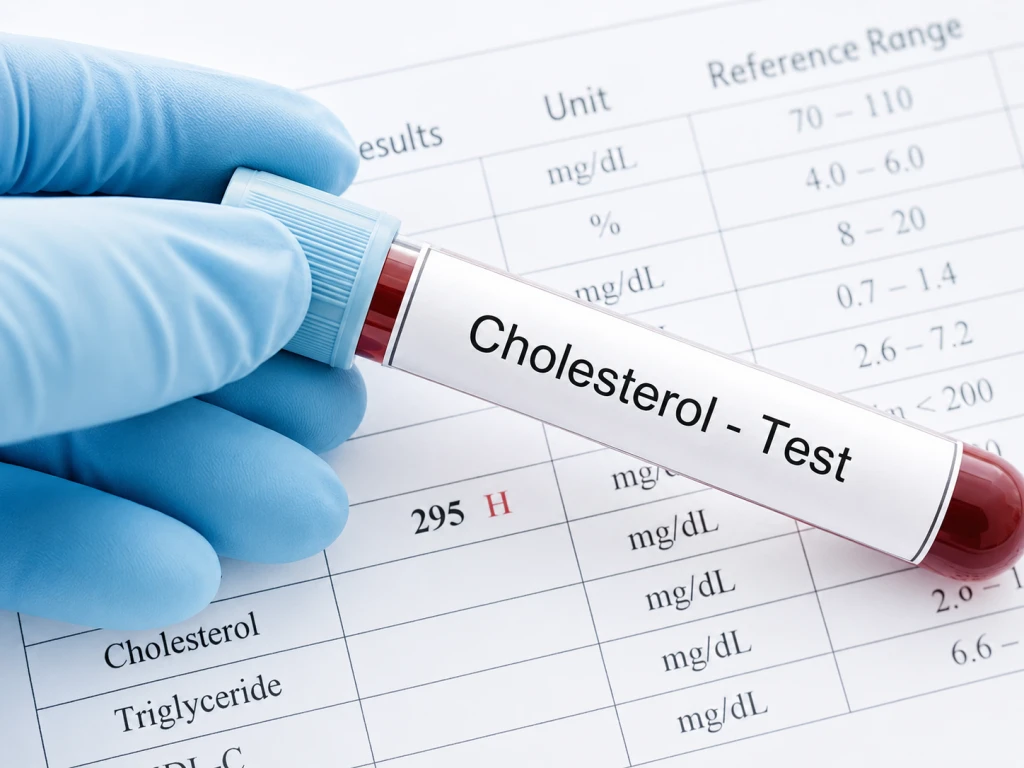
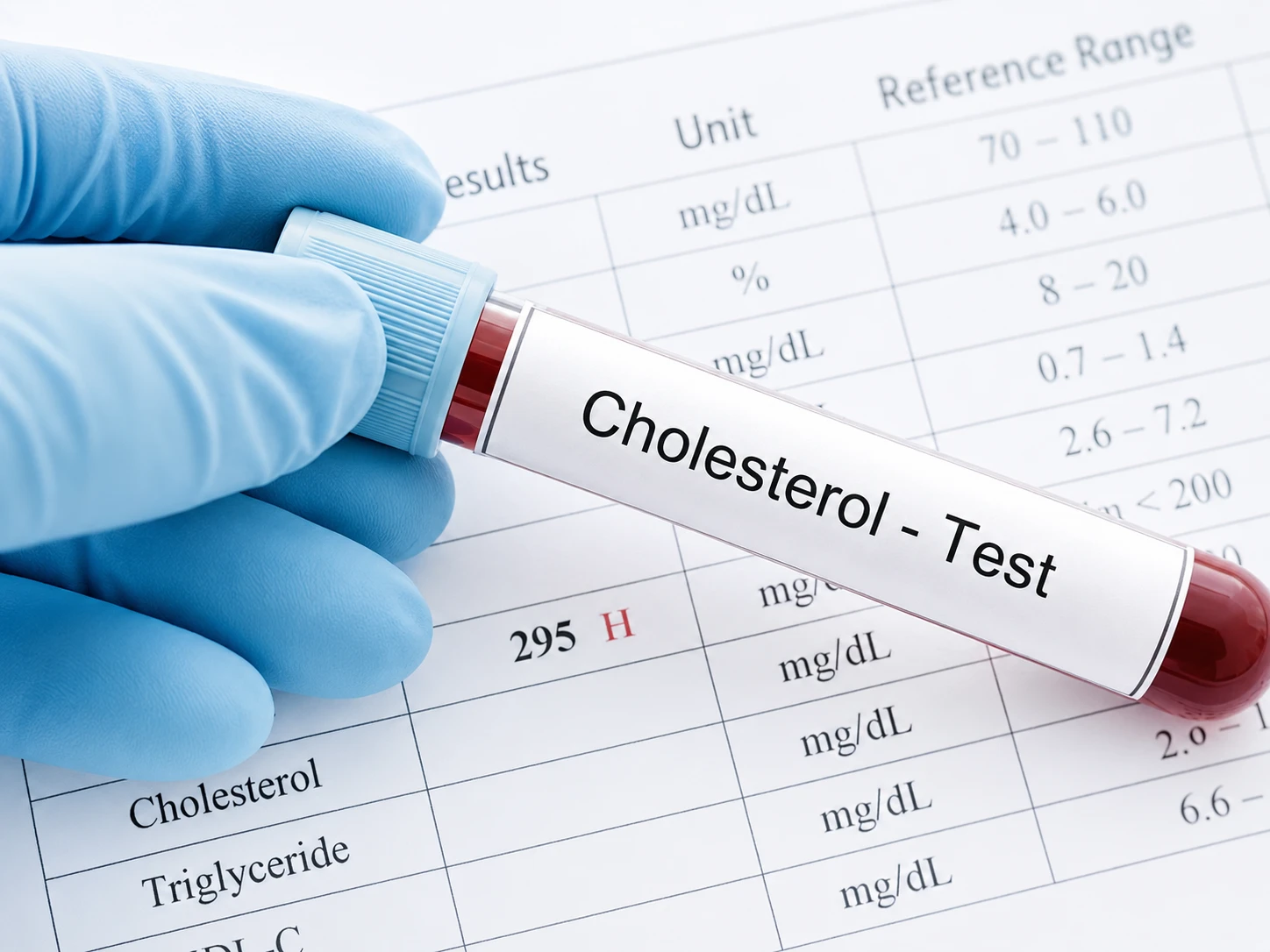
Every assessment still begins with the standard lipid profile, which consist of total cholesterol, LDL cholesterol, HDL cholesterol and triglycerides. These four numbers are reliable, inexpensive and widely understood and they provide the information needed for a first cardiovascular risk discussion in Singapore. This is easily done at every basic GP and polyclinic practice.
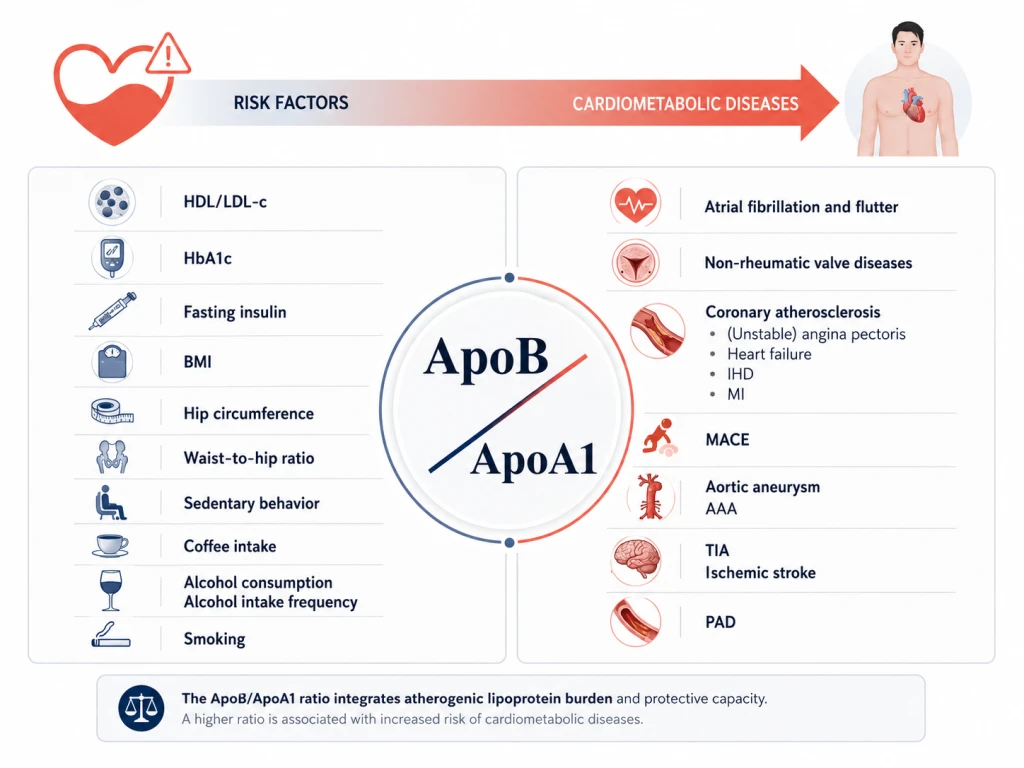
However, what a single LDL value cannot do is capture a patient’s entire cardiovascular risk picture. For selected patients, the Apolipoprotein B (ApoB) level, the ApoB/ApoA1 ratio, Lipoprotein(a), High-Sensitivity C-Reactive Protein (hs-CRP) and the Nuclear Magnetic Resonance (NMR) Lipoprotein Profile reveal risks a basic panel can miss.
At The Clifford Clinic, longevity medicine is built around specialised testing rather than the routine panels most clinics already run. Few doctors in Singapore discuss cholesterol testing in depth during a routine consultation, so it is worth explaining the difference between cholesterol mass, particle number, inherited risk and cholesterol-linked inflammation before deciding which tests are worth doing.
“The results of a cholesterol blood test should not be read as a single number in isolation. A patient’s family history, metabolic profile and long-term prevention goal all shape how I interpret the result.”
Specialised cholesterol testing vs the standard test at your GP
If you have had a cholesterol blood test or a basic health screen at a GP in Singapore, it was most likely a standard lipid profile measuring total cholesterol, LDL, HDL and triglycerides. That panel measures the cholesterol carried inside your lipoproteins. It is a good screening tool and, for many low-risk patients, it is all they need.
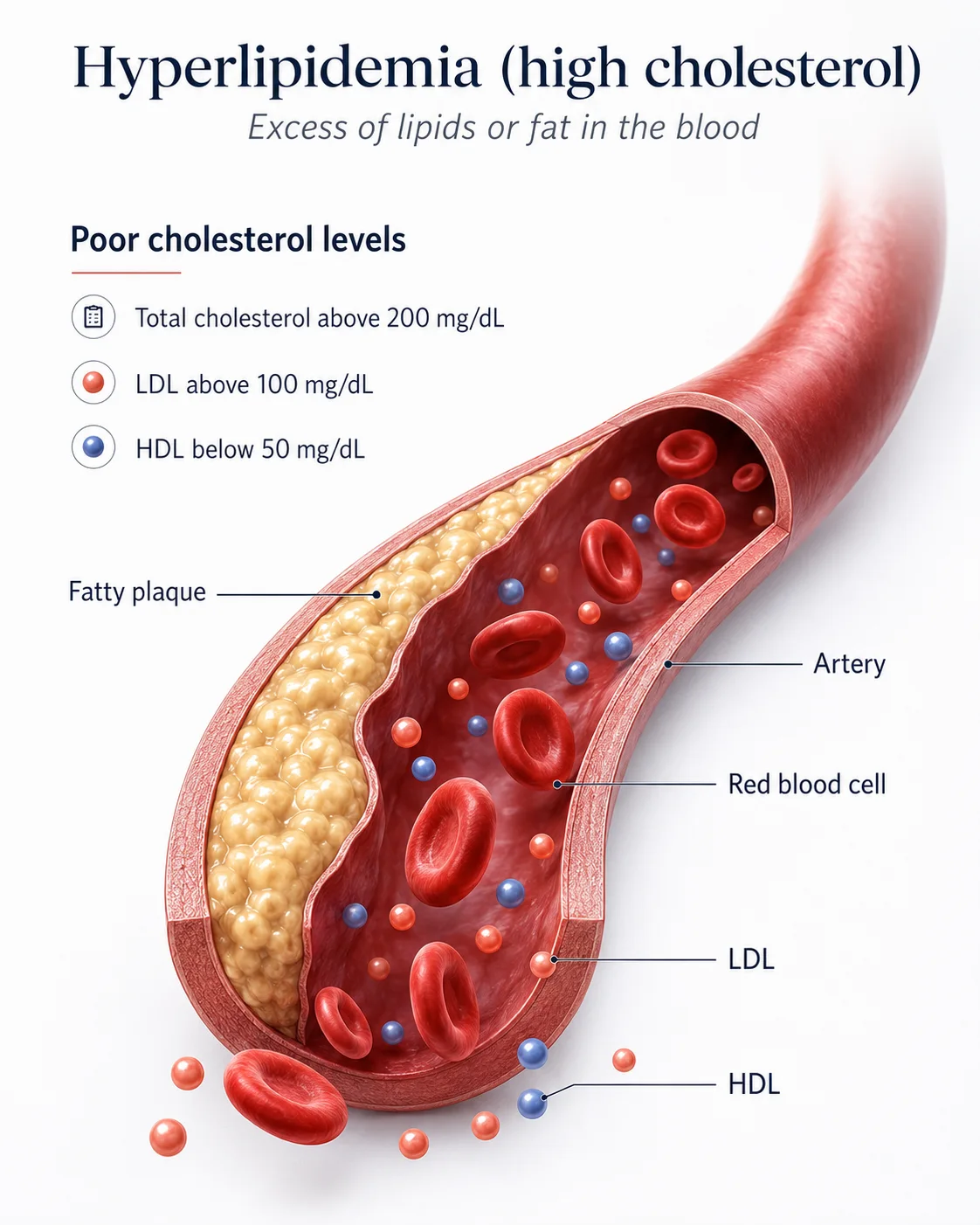
Specialised cholesterol testing goes further. It measures how many atherogenic particles are circulating (ApoB), how those balance against protective particles (the ApoB/ApoA1 ratio), what inherited risk you carry (Lp(a)), how much low-grade inflammation is present (hs-CRP), and what your lipoprotein subclasses look like at a particle level (NMR). Because a standard panel can reassure higher-risk patients too easily, these are the markers that more often change what a patient decides to do.
In short, a standard cholesterol test tells you the cargo; specialised cholesterol testing tells you the number of trucks on the road. When the two disagree, the particle count is usually the one I trust. The advanced markers I rely on are sent through Mayo Clinic Laboratories rather than run on a basic local panel, because at a particle level the platform matters as much as the marker. A complete particle-level screen is set out on the clinic’s advanced cholesterol blood test page.
How I approach cholesterol testing
The principle is simple: more testing is not automatically better testing. Some patients arrive with pages of advanced results and no idea what any of it means; others are dismissed after a routine lipid panel despite a worrying family history. Good cholesterol testing sits between those extremes. It should be targeted and matched to what a person is actually trying to prevent.
Three questions decide whether further testing is worthwhile. Does the standard result fit the clinical story? Is there a reason to suspect risk that cholesterol mass alone would not capture? And would a deeper test actually change the recommendation? When the answer to the last question is no, further testing waits and an advanced cholesterol blood test should provide more in depth, not just another figure in a report.
A quick note on units quoted. International articles often quote cholesterol in mg/dL, while most Singapore laboratories report in mmol/L. Both appear throughout this article so the numbers make sense on any report.
Why LDL cholesterol is important but incomplete
LDL cholesterol measures how much cholesterol is carried inside LDL particles and it remains one of the most evidence-backed targets in medicine. Lowering it is a central pillar of cardiovascular prevention, particularly in higher-risk patients or those with established atherosclerotic disease.
Its limitation is that LDL cholesterol is not the same as LDL particle number. Two people can carry an identical amount of LDL cholesterol yet have very different numbers of circulating particles, and the person with more particles generally carries a higher atherogenic burden even when the LDL number looks identical on paper.
This is the distinction worth circling back to. LDL cholesterol reflects cholesterol mass, while ApoB and LDL particle number reflect the particle count. When the two are in discordance, the deeper markers deserve more weight, because they can change how concerning an otherwise reassuring result really is.
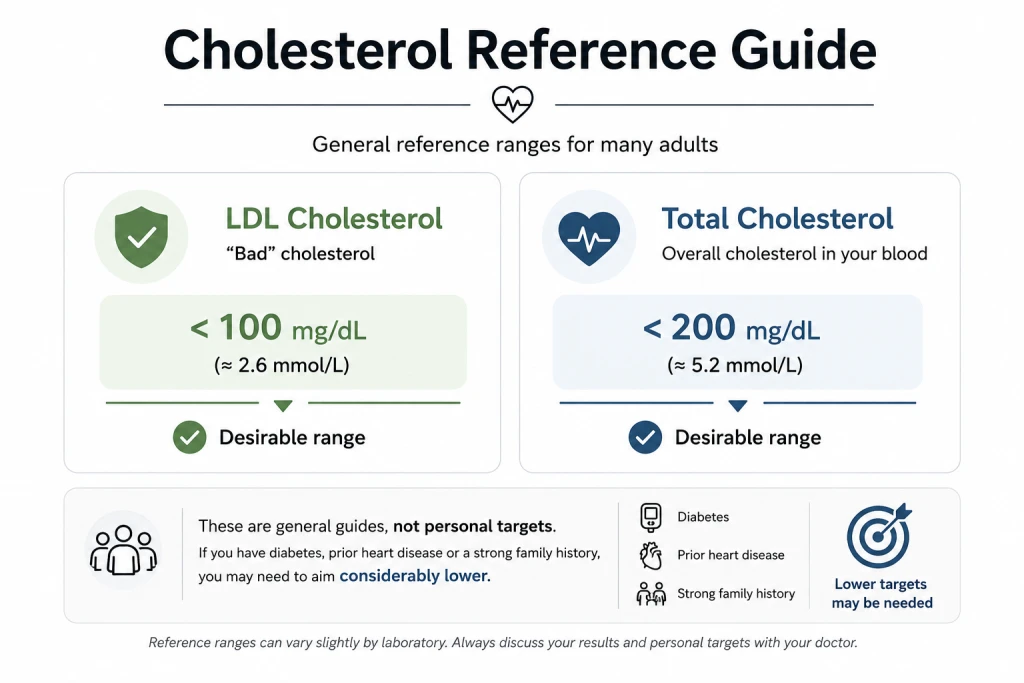
For reference, an LDL cholesterol below 100 mg/dL (about 2.6 mmol/L) is commonly considered desirable for many adults, and a total cholesterol below 200 mg/dL (about 5.2 mmol/L) sits in the desirable range. These are general guides, not personal targets, since a patient with diabetes, prior heart disease or a strong family history may need to aim considerably lower.
ApoB: the particle count I trust most
ApoB stands for apolipoprotein B, a structural protein that sits on the atherogenic lipoprotein particles – LDL, VLDL remnants, IDL and Lp(a). Because each particle carries exactly one ApoB molecule, the test counts the particles directly rather than estimating the cholesterol inside them.[1]
This matters most in patients with cardiometabolic disease, diabetes or raised triglycerides, where LDL particles are often cholesterol-depleted. In these patients LDL cholesterol can read as ideal while ApoB stays elevated. This marks the discordance noted earlier and a risk the standard panel quietly understates. The 2026 ACC/AHA dyslipidemia guidelines state that when LDL cholesterol and ApoB disagree, ApoB predicts atherosclerotic cardiovascular disease more accurately and it flags residual risk even in statin-treated patients who have already reached their LDL goal.[1] In primary-prevention data, ApoB remained significantly associated with new heart attacks even when assessed alongside other atherogenic lipids.
Excess ApoB refers to an ApoB level higher than the LDL cholesterol alone would predict. Roughly one in ten people in the general population carry this excess, and they sit at meaningfully higher cardiovascular risk than their LDL suggests, across the entire LDL spectrum, including those whose LDL looks low and reassuring.[3][4] That single statistic is perhaps the strongest argument for measuring ApoB alongside LDL rather than instead of it.
A normal LDL cholesterol sitting alongside a raised ApoB in patients with fatty liver is a pattern I actively look for in my own practice. On a standard panel these patients look healthy yet on ApoB they do not. That single discordant result frequently reframes the whole consultation. When LDL is at goal but ApoB stays high, the guidelines point to intensifying treatment with non-statin options such as ezetimibe, bempedoic acid, PCSK9 inhibitors or inclisiran.[1]
ApoB is also practical to run as it is standardised and does not require fasting. For patients who want to move beyond a basic panel, it is the first specialised test I reach for.
ApoA1 and the ApoB/ApoA1 ratio
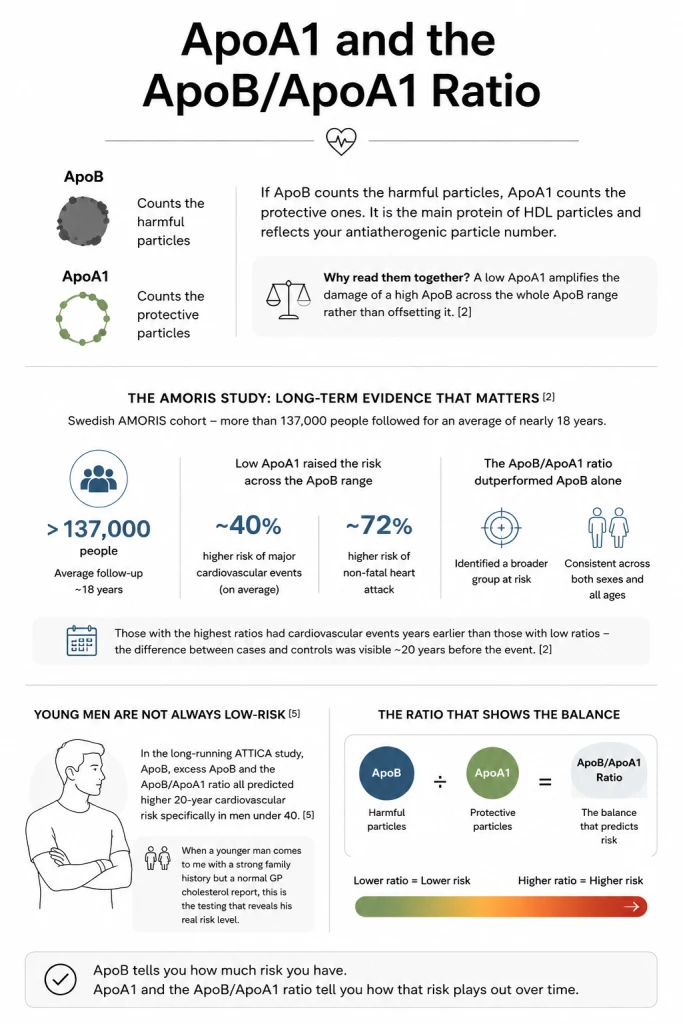
If ApoB counts the harmful particles, ApoA1 counts the protective ones. It is the main protein of HDL particles and reflects your antiatherogenic particle number. What makes the pair worth reading together is how they interact: a low ApoA1 amplifies the damage of a high ApoB across the whole ApoB range rather than offsetting it.[2]
The Swedish AMORIS cohort followed more than 137,000 people for an average of nearly eighteen years. A low ApoA1 raised the risk of major cardiovascular events by around 40% on average across the ApoB range and by roughly 72% for non-fatal heart attack.[2] The ApoB/ApoA1 ratio, which captures that balance in a single number, identified a broader group of at-risk people than ApoB alone and held across both sexes and all ages. Those with the highest ratios tended to have cardiovascular events years earlier than those with low ratios, with the difference between cases and controls visible roughly two decades before the event.[2] That lead time is exactly what preventive cholesterol testing aims to use.
The assumption that young men are low-risk does not always hold. In the long-running ATTICA study, ApoB, excess ApoB and the ApoB/ApoA1 ratio all predicted higher 20-year cardiovascular risk specifically in men under 40.[5] So when a younger man comes to me with a strong family history but a normal GP cholesterol report, this is the testing that reveals his real risk level.
Why I consider the NMR Lipoprotein Profile
The NMR Lipoprotein Profile uses nuclear magnetic resonance spectroscopy to measure the number and size of lipoprotein particles rather than their cholesterol or triglyceride content. Depending on the platform, an NMR profile can capture well over 200 measures of particle size and composition, including around fifteen lipoprotein subclasses spanning VLDL, LDL and HDL, alongside a range of metabolites.[6] The LDL particle count it reports is a genuinely granular view, folding in intermediate-density lipoprotein and several LDL subclasses.[7]
A standard cholesterol blood test shows cholesterol content; NMR adds the particle patterns behind it. Small dense LDL, triglyceride-enriched HDL and large VLDL can flag residual risk that conventional testing misses, particularly in people with premature cardiovascular disease.[9] In insulin resistance, diabetes, high triglycerides and discordant results, that extra resolution can be the difference between a report that falsely reassures and one that honestly alerts.
That said, in a large prospective study of nearly 28,000 initially healthy women followed for eleven years, NMR particle measures predicted cardiovascular disease about as well as but no better than standard lipids and apolipoproteins, and adding LDL particle number or ApoB to a good basic model produced almost no improvement in risk reclassification.[8] Particle size added even less once particle number was accounted for.[7][8] That is why I reserve NMR for cases with a strong family history, significant metabolic risk or a motivated patient who wants a granular baseline to track over years.
ApoB, by contrast, is standardised, fasting-independent and widely available, whereas NMR is more specialised, less standardised and historically run by a small number of dedicated laboratories.[1][7] That is why the NMR samples are sent through Mayo Clinic Laboratories, a particle-level result is only as trustworthy as the platform that produced it.
Lp(a): the inherited marker that is too often missed
Lp(a), or lipoprotein(a), is one of the most commonly overlooked cardiovascular risk markers. Because it is largely genetically determined, a patient can eat well, exercise consistently and sleep properly and still carry a high Lp(a). This unfortunately breaks the comforting assumption that good habits guarantee good numbers.
Because Lp(a) is not usually included in a standard lipid profile, many patients believe they have completed a thorough cholesterol check when a crucial piece is missing. It can be treated as a once-in-adulthood test. Once measured, it rarely needs repeating unless circumstances change.[15] I particularly recommend it for patients with a family history of premature heart attack or stroke.
A high Lp(a) result is not a reason to panic, but it does mean the rest of the risk picture should be taken seriously, because a raised Lp(a) raises the stakes on everything else that can be controlled. LDL cholesterol, ApoB, blood pressure, glucose, smoking, sleep, exercise and body composition all deserve scrutiny, with imaging or a specialist referral where needed.
hs-CRP and the inflammatory layer
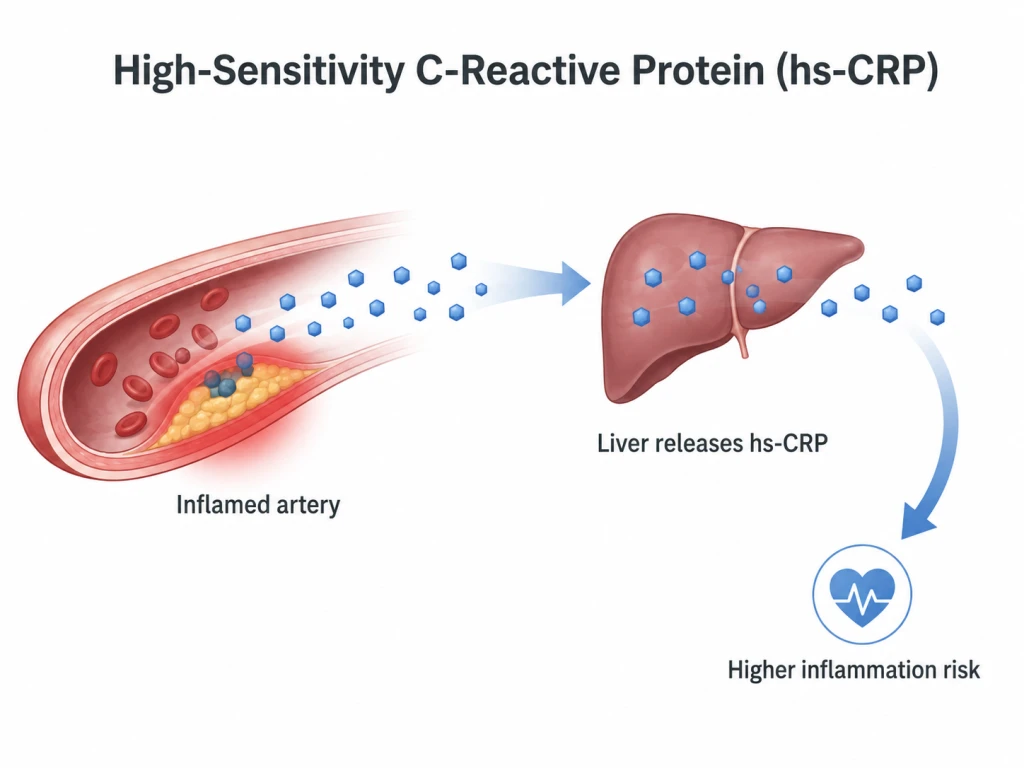
High-sensitivity C-reactive protein (hs-CRP) provides information about low-grade inflammation. It is not a cholesterol marker, but it belongs in some assessments because atherosclerosis is not purely a lipid process. Inflammation is part of how arteries quietly stiffen and age over the decades, and hs-CRP offers a window onto that process.
hs-CRP must be interpreted carefully because it is easily disturbed. Infections, recent injuries, dental problems, autoimmune conditions and even an unusually intense workout can all raise it. For that reason a single elevated result is best treated as a prompt to repeat or contextualise the test, never as a standalone diagnosis.
How I sequence cholesterol testing in practice
Patients often ask whether they should do as many tests as possible to be safe. The better answer is the right tests, in the right order, rather than more of them. For most adults, a standard lipid profile alongside a careful family history is the right start; if the picture is clean and the family history unremarkable, a one-time Lp(a) adds a useful layer of security.
When the picture is more complex for example in metabolic syndrome, diabetes or a worrying family history, ApoB and the ApoB/ApoA1 ratio are worth adding, along with an NMR Lipoprotein Profile and hs-CRP for inflammatory context. A fuller work-up may also include fasting insulin, HbA1c, liver function, kidney function and thyroid function, because cholesterol never exists in isolation from the rest of the metabolism.
Factors that never appear on a lipid report also matter. Diagnosis like fatty liver, central weight gain, high blood pressure, poor sleep, menopause-related changes and overall diabetes risk all shift how the same data should be read. The same borderline LDL means one thing in a lean, active 35-year-old and quite another in a patient with fatty liver, central obesity and disturbed sleep.
Coronary calcium scoring can be valuable when its result is likely to change a treatment or prevention decision. But it is a CT-based test that carries radiation exposure, so it is not routine screening for everyone and is ordered only when it will genuinely add something.
A doctor-led approach to prevention
The future of cholesterol testing lies in more than blood tests. It lies in better interpretation, sharper risk stratification and prevention planning tailored to each patient.
For some patients, lifestyle optimisation and repeat testing every few months is enough. For others, the right path includes medication, further imaging, family screening or a much lower target for both LDL cholesterol and ApoB. The real work is connecting the laboratory numbers to the life they belong to.
Conclusion
My own view is that a standard cholesterol blood test is an excellent entry point, but rarely the end of the conversation. Health-conscious patients deserve an assessment that can take in particle burden, the balance of harmful and protective particles, inherited risk and inflammation.
That is why I pay attention to ApoB, the ApoB/ApoA1 ratio, Lp(a), hs-CRP and the NMR Lipoprotein Profile in selected patients with the goal is always to understand risk more accurately, well before the disease becomes obvious.
If you are unsure whether you have had a complete cholesterol assessment, or a family history worries you, a specialised, doctor-led cholesterol blood test in Singapore is worth more than relying on the standard numbers in a typical GP report. At The Clifford Clinic, advanced cholesterol testing with particle-level markers starts from $450 for the testing itself, with the consultation charged separately. You are welcome to book a consultation to talk it through.
About the author

the clifford clinic
Dr Gerard Ee is the Medical Director of The Clifford Clinic in Singapore, where he practises longevity medicine across a wide suite of services with a particular focus on specialised testing rather than routine panels. He holds an MBBS from St George’s, University of London, the MRCS (Edinburgh), and a Postgraduate Diploma in Dermatology from Cardiff University. This article reflects his general clinical perspective and is intended for education; it is not a substitute for personalised medical advice.
People also ask
Is ApoB more important than LDL cholesterol?
ApoB does not replace LDL cholesterol, but when the two disagree it is usually the more reliable guide. LDL cholesterol measures the cholesterol carried inside LDL particles, while ApoB counts the atherogenic particles themselves. There are LDL, VLDL remnants, IDL and Lp(a) because each carries a single ApoB molecule. When particle number is high but the cholesterol per particle is low, ApoB catches a risk that LDL alone misses, which is why current guidance favours measuring it alongside LDL.
Why is my LDL normal but my ApoB high?
This mismatch is called discordance, and it tends to appear in insulin resistance, fatty liver, type 2 diabetes and raised triglycerides, where each particle carries less cholesterol than usual. You can have a healthy LDL number while still carrying a large number of atherogenic particles, and in that situation ApoB is the better indicator of risk.
What does the ApoB/ApoA1 ratio tell me?
ApoB reflects your harmful, plaque-forming particles, while ApoA1 reflects the protective particles that carry cholesterol away. The ratio captures the balance between the two in a single number, and a less favourable balance is linked to cardiovascular events appearing years earlier which is exactly the kind of early signal that helps prevention rather than reaction.
What is the difference between ApoB and LDL particle number (LDL-P)?
They overlap heavily. LDL-P, measured by NMR, counts LDL particles specifically, while ApoB counts every atherogenic particle, including VLDL remnants, IDL and Lp(a). When triglycerides and remnant particles are high, ApoB can capture more of the picture; in many people the two markers move together and tell a similar story.
What is a good ApoB level?
Thresholds vary by laboratory and individual risk, but many clinicians regard an ApoB below 0.9 g/L (90 mg/dL) as desirable, with levels above roughly 1.3 g/L (130 mg/dL) treated as risk-enhancing. The target is lower for people with diabetes, established heart disease or a strong family history, so ApoB is best interpreted against the whole clinical picture rather than a fixed cut-off.
Does an NMR Lipoprotein Profile replace a standard cholesterol test?
No, NMR is a complement, not a substitute. It adds particle-level detail (number, size and subclasses) that a standard panel cannot show, but the lipid profile remains the sensible starting point. In unselected patients NMR does not consistently outperform good basic testing plus ApoB, so it is best reserved for cases where the extra resolution will change a decision.
Can you have a heart attack with normal cholesterol?
Yes! And it is one of the main reasons to look beyond a basic panel. A normal LDL can sit alongside a high particle count, a high Lp(a) or significant inflammation, each of which carries risk the standard numbers do not reveal. Normal cholesterol lowers the odds; it does not guarantee a clean set of arteries.
What does “small dense LDL” mean?
Small, dense LDL particles penetrate the arterial wall more readily than larger, buoyant ones, and they often appear in insulin resistance and high-triglyceride states. NMR can flag them, but in most analyses the number of particles matters more than their size, so small dense LDL is best weighed as one part of a fuller picture rather than a verdict on its own.

Dr Gerard Ee, Aesthetic Doctor in Singapore
Dr Gerard Ee is an aesthetic doctor in Singapore and the Medical Director of his practice at 50 Raffles Place. He graduated from St George’s, University of London, trained in surgery at Singapore General Hospital and the National University Hospital, and holds the MRCS (Edinburgh) and a postgraduate diploma in practical dermatology from Cardiff University.
He has practised aesthetic medicine since 2012, is the author of sixteen peer-reviewed papers, and writes and medically reviews every article on this site. Read more about Dr Gerard Ee.

Book a consultation with Dr Gerard Ee at The Clifford Clinic
Dr Gerard Ee consults at The Clifford Clinic, 50 Raffles Place, Singapore. Consultations are by appointment. Message the clinic on WhatsApp, or call 6532 2048.
References
Sources cited on this page
- Blumenthal RS, Morris PB, Gaudino M, et al. 2026 ACC/AHA/AACVPR/ABC/ACPM/ADA/AGS/APhA/ASPC/NLA/PCNA Guideline on the Management of Dyslipidemia. Journal of the American College of Cardiology. 2026. https://linkinghub.elsevier.com/retrieve/pii/S0735-1097(25)10254-4
- Walldius G, de Faire U, Alfredsson L, et al. Long-Term Risk of a Major Cardiovascular Event by apoB, apoA-1, and the apoB/apoA-1 Ratio — Swedish AMORIS Cohort. PLoS Medicine. 2021. https://pubmed.ncbi.nlm.nih.gov/34851955
- Johannesen CDL, Langsted A, Nordestgaard BG, Mortensen MB. Non-HDL Cholesterol and Apolipoprotein B Measures and Risk of Atherosclerotic Cardiovascular Disease. JAMA Cardiology. 2026. https://jamanetwork.com/journals/jamacardiology/fullarticle/10.1001/jamacardio.2026.0898
- Johannesen CDL, Langsted A, Nordestgaard BG, Mortensen MB. Excess Apolipoprotein B and Cardiovascular Risk in Women and Men. Journal of the American College of Cardiology. 2024. https://pubmed.ncbi.nlm.nih.gov/38839200
- Giannakopoulou SP, Chrysohoou C, Antonopoulou S, et al. Association of Apolipoprotein B, Excess Apolipoprotein B and apoB/apoA1 Ratio With 20-Year ASCVD Risk: The ATTICA Study (2002–2022). Clinical Research in Cardiology. 2025. https://pubmed.ncbi.nlm.nih.gov/41060429
- Verma KP, Inouye M, Meikle PJ, et al. New Cardiovascular Risk Assessment Techniques for Primary Prevention: JACC Review Topic of the Week. Journal of the American College of Cardiology. 2022. https://pubmed.ncbi.nlm.nih.gov/35863853
- Mudd JO, Borlaug BA, Johnston PV, et al. Beyond Low-Density Lipoprotein Cholesterol: LDL Heterogeneity in Coronary Artery Disease. Journal of the American College of Cardiology. 2007. https://pubmed.ncbi.nlm.nih.gov/17964036
- Mora S, Otvos JD, Rifai N, et al. Lipoprotein Particle Profiles by Nuclear Magnetic Resonance Compared With Standard Lipids and Apolipoproteins in Predicting Incident Cardiovascular Disease in Women. Circulation. 2009. https://pubmed.ncbi.nlm.nih.gov/19204302
- Fernández-Cidón B, Candás-Estébanez B, Gil-Serret M, et al. Physicochemical Properties of Lipoproteins Assessed by NMR as a Predictor of Premature Cardiovascular Disease. PRESARV-SEA. Journal of Clinical Medicine. 2021. https://pubmed.ncbi.nlm.nih.gov/33805580
- Mayo Clinic. Cholesterol test.
- Mayo Clinic. C-reactive protein test.
- CDC. Cholesterol myths and facts.
- Mayo Clinic. Coronary calcium scan.
- Harvard Health Publishing. Eggs have less effect than saturated fats on cholesterol levels.
- Koschinsky ML, et al. A focused update to the 2019 National Lipid Association scientific statement on the use of lipoprotein(a) in clinical practice. Journal of Clinical Lipidology. 2024.
This page is written from published research and from clinical experience in Singapore since 2012. It is for general education, not medical advice. Whether a treatment suits you, what it may achieve and what it may risk can only be established at a consultation. Dr Gerard Ee is the Medical Director of The Clifford Clinic, a private clinic in Singapore, and treatments discussed on this site are provided commercially.