
Home›Blog›Acne›Acne Scars & Marks›Is At-Home Microneedling Safe?
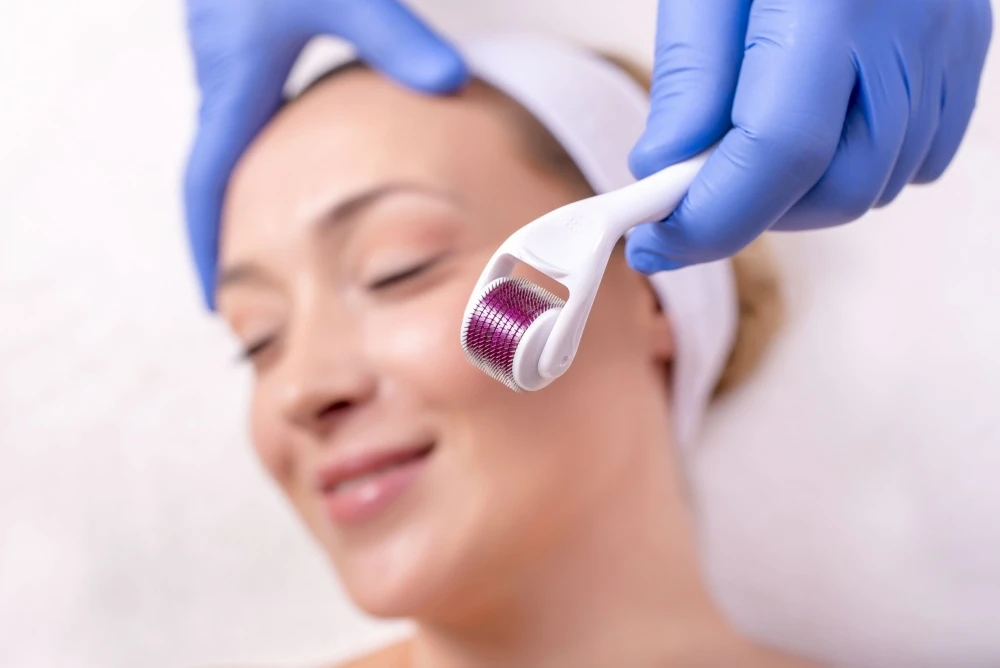
I do not recommend trying to reproduce medical microneedling for acne scars at home. A product sold online is not automatically suitable for deeper skin treatment, and a clean-looking roller does not establish sterile technique.
Dr Gerard Ee consults at The Clifford Clinic, 50 Raffles Place, Singapore.
Superficial cosmetic rollers, medical microneedling and RF microneedling are different. Understanding which one a product actually performs is more useful than relying on the word “microneedling” on its packaging.
Home rollers and clinical treatment are different
Some cosmetic products mainly act at the surface. Medical devices penetrate living tissue and require an assessment of depth, area and suitability. The FDA distinguishes these categories and has not authorised microneedling medical devices for over-the-counter sale in the United States. [1] That is a US regulatory statement, not a claim about every product’s status in Singapore.
Results from a clinical acne-scar study cannot simply be applied to a home roller. The device, procedure, patient selection and follow-up may all differ.
What can go wrong?
Needling can cause bleeding, irritation, infection and pigment change. [1] Inappropriate depth or repeated injury may also leave persistent marks or worsen the appearance being treated.
Active acne, an irritated skin barrier or an unexplained rash needs assessment before a procedure. Needling over a problem without knowing its cause can complicate both treatment and recovery.
Applying a strong serum immediately afterwards is not automatically helpful. A product suitable for intact skin is not necessarily appropriate after needling. The evidence for a clinician-supervised combination does not validate a home mixture or technique.
RF microneedling should not be performed at home
RF microneedling adds radiofrequency heating to needle penetration. It requires additional decisions about energy delivery and anatomy. The FDA advises that RF microneedling is a medical procedure and should not be used at home. [2]
The RF microneedling guide describes the Secret RF and Infini treatments I provide, their limitations and their risks. A non-invasive home RF product is a different category again and should not be confused with needle-based RF.
Does professional treatment remove all risk?
No. An appropriate assessment, trained technique and suitable infection-control practices reduce avoidable risk, but they do not guarantee a complication-free result. Ask who will perform the procedure, which device is used, what recovery to expect and how to obtain help afterwards.
If the main concern is acne scars, first establish the type of scar and treatment options. Not every depression is best treated with needling. The microneedling evidence article explains realistic benefits.
If your skin is already reacting
Stop further needling and avoid adding new active products to an unexplained reaction. Seek medical review for worsening pain, spreading redness, discharge, blistering or changes that are not settling. Tell the clinician which device and skincare products were used and when the symptoms started.
If you would like to discuss an existing scar concern or a reaction after home treatment, contact the clinic. The next step should follow an assessment of the skin.

Dr Gerard Ee, Aesthetic Doctor in Singapore
Dr Gerard Ee is an aesthetic doctor in Singapore and the Medical Director of his practice at 50 Raffles Place. He graduated from St George’s, University of London, trained in surgery at Singapore General Hospital and the National University Hospital, and holds the MRCS (Edinburgh) and a postgraduate diploma in practical dermatology from Cardiff University.
He has practised aesthetic medicine since 2012, is the author of sixteen peer-reviewed papers, and writes and medically reviews every article on this site. Read more about Dr Gerard Ee.

Book a consultation with Dr Gerard Ee at The Clifford Clinic
Dr Gerard Ee consults at The Clifford Clinic, 50 Raffles Place, Singapore. Consultations are by appointment. Message the clinic on WhatsApp, or call 6532 2048.
References
Sources cited on this page
- FDA. Microneedling devices: benefits, risks and safety.
- FDA. RF microneedling safety communication, 15 October 2025.
This page is written from published research and from clinical experience in Singapore since 2012. It is for general education, not medical advice. Whether a treatment suits you, what it may achieve and what it may risk can only be established at a consultation. Dr Gerard Ee is the Medical Director of The Clifford Clinic, a private clinic in Singapore, and treatments discussed on this site are provided commercially.
Related Posts





26 Comments
Comments are closed.


doxycycline 100 mg tablet
doxycycline 100 mg tablet
metoprolol generic
metoprolol generic
dutasteride 0.5 mg capsule price
dutasteride 0.5 mg capsule price
antibiotics for bronchitis
antibiotics for bronchitis
doxycycline hyclate for uti
doxycycline hyclate for uti
lamictal for bipolar
lamictal for bipolar
diflucan over the counter uk
diflucan over the counter uk
esomeprazole 20mg capsule
esomeprazole 20mg capsule
cialis 5mg benefits
cialis 5mg benefits
xenical alli price
xenical alli price
ozempic breathlessness
ozempic breathlessness
doxycycline side effects stomach pain
doxycycline side effects stomach pain
naltrexone bupropion brands
naltrexone bupropion brands
acyclovir cream for herpes genital
acyclovir cream for herpes genital
orlistat liver disease
orlistat liver disease
terbinafine mechanism antifungal summary
terbinafine mechanism antifungal summary
ivermectin rosacea expert insights
ivermectin rosacea expert insights
ivermectin scabies expert review
ivermectin scabies expert review
minoxidil mechanism technical overview
minoxidil mechanism technical overview
sildenafil dietary absorption effects
sildenafil dietary absorption effects
avanafil food interaction documentation
avanafil food interaction documentation
vardenafil vs sildenafil comparison chart
vardenafil vs sildenafil comparison chart
orlistat food instructions
orlistat food instructions
alli side effects
alli side effects
amoxicillin antibiotic summary
amoxicillin antibiotic summary
Peak Concentration Concepts
Peak Concentration Concepts