
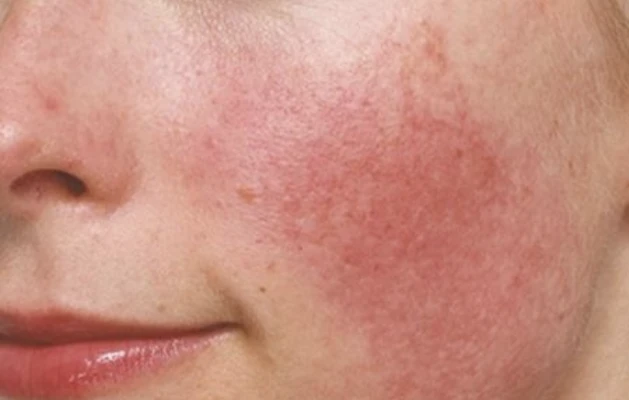
If you have noticed your face flushing more easily in your 40s or that your baseline redness seems to remain even when you’re not hot or stressed, you are very likely to be developing rosacea. Rosacea often becomes more noticeable in midlife, especially when everyday triggers (heat, spicy food, alcohol, exercise, stress, mask friction, office aircon) happen repeatably.
Dr Gerard Ee consults at The Clifford Clinic, 50 Raffles Place, Singapore.
The encouraging part is this: rosacea can be managed very effectively. The goal is not to attain a perfect skin in a single session, but the goal is control, with an aim for less flushing, less background redness and no acne-like bumps.
My clinical view: “Rosacea can be managed very effectively. A reduction of flush intensity and baseline redness, without any papules is possible with pulse dye laser and a correct course of prescription creams.”
— Dr Gerard Ee
In this blog post, I’ll walk you through:
- Why rosacea can feel worse with age
- The #1 mistake I see: confusing acne with papulopustular rosacea
- A practical Rosacea treatment Singapore approach (what actually works in real life here)
- A detailed, doctor-level explanation of what a pulsed dye laser is
- Why Vbeam pulsed dye laser is a “gold-standard” option for Laser treatment for Rosacea
- Where AGNES treatment can be a useful add-on for selected patients — and why it must never replace treating the root cause (rosacea)
What rosacea is, and what it is not
Rosacea is a chronic inflammatory condition that typically affects the central face — cheeks, nose, chin, sometimes forehead. It can show up as:
- Flushing (heaty redness that comes and goes)
- Persistent baseline redness (you look “sunburnt” even when you feel fine)
- Visible small blood vessels (telangiectasia)
- Acne-like bumps and pustules (papulopustular rosacea)
- Sensitive, reactive skin (stinging, burning with skincare)
- Sometimes eye irritation (ocular rosacea)
Rosacea is not contagious. And it is not simply sensitive skin, although rosacea skin often becomes sensitive because the barrier is inflamed and reactive.
Why rosacea can worsen with age
In your 30s, rosacea may present as occasional flushing. This may occur when you are embarrassed or stress, or occur when you exercise. In your 40s and beyond, two changes commonly happen:
1) Flushing becomes easier to trigger.
Your face becomes more vascular-reactive — so small triggers (heat, alcohol, stress, hot drinks, spicy food, a brisk walk to the MRT) can create big redness.
2) Redness can become more persistent.
Over time, repeated inflammation and blood vessel dilation can make baseline redness more constant, and fine vessels may become more visible.
In Singapore, this is amplified by our lifestyle rhythm: hot commute → cold office aircon → lunchtime spice → afternoon coffee → evening workout. A rosacea face can feel like it never gets a break.
Do not confuse acne with papulopustular rosacea
This is one of my top messages to patients and to anyone searching “Rosacea treatment Singapore” online:
Papulopustular rosacea can look exactly like acne — and it’s very easy to treat wrongly
Papulopustular rosacea causes red bumps and pus-filled spots that can mimic acne. But the background is different: rosacea usually sits on top of flushing and diffuse redness, and the skin tends to sting and react.
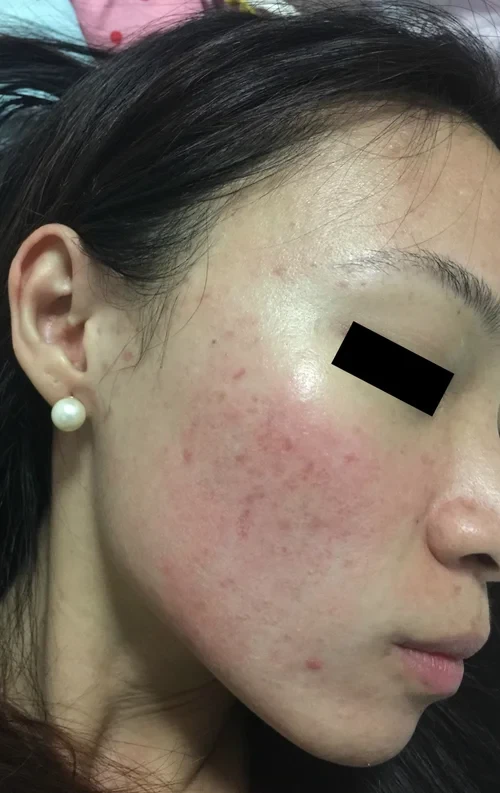
When rosacea bumps are treated like acne, people often reach for:
- strong exfoliants
- harsh cleansers
- “drying” spot gels
- scrubs
- overly aggressive retinoid routines
- and sometimes, the worst culprit: steroid creams on the face
This approach often worsens redness, irritates the barrier, and creates a vicious cycle: more inflammation → more flushing → more sensitivity → more breakouts.
Clinical principle: If bumps are truly rosacea-driven, great outcomes come from prescription anti-inflammatory rosacea creams, not from a misdiagnosis of pimples or acne.
Singapore-specific rosacea triggers

You don’t need to avoid everything. But you do need a realistic trigger strategy.
Common triggers I see locally:
- Heat + humidity, sweating during commutes or outdoor lunches
- Aircon dehydration (skin stinging, reactive flushing)
- Spicy hawker food and hot soups
- Coffee/tea (especially hot drinks)
- Alcohol (especially when paired with heat)
- Exercise (the intensity matters; so does cooling down)
- Stress + poor sleep
- Mask friction (for those still mask-wearing frequently)
A good rule: do not aim for “zero triggers.” Aim for “fewer stacked triggers in one day.”
Rosacea treatment in Singapore: what a sensible plan looks like
When patients ask me about Rosacea treatment Singapore, I usually explain it like this:
I treat rosacea in two layers:
- Inflammation layer (bumps, pustules, burning, sensitivity)
- Vascular layer (flushing, baseline redness, visible vessels)
If you only treat one layer, results are often incomplete.
Prescription creams for rosacea: Rozex and Soolantra
For papules and pustules, topical prescription treatment is often the backbone.
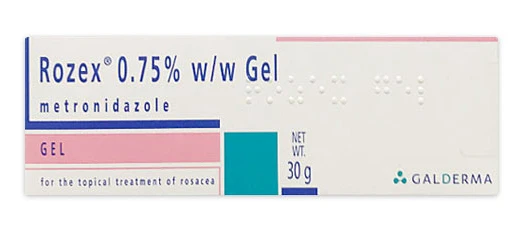
Rozex (metronidazole)
Rozex is commonly used for inflammatory rosacea — especially when the skin is irritated, bumpy, and reactive. In the right patient, it’s a steady, dependable option.
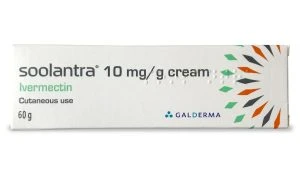
Soolantra (ivermectin)
Soolantra is another key prescription for papulopustular rosacea. It can be particularly helpful when inflammation is persistent and the rosacea has that “acne-like” pattern.
Both are legitimate medical options. The art is choosing the right one (or sequencing them) based on your subtype, sensitivity, and severity.
Mirvaso: temporary redness relief only
This is an important safety and expectation point.
Mirvaso (brimonidine gel) works by temporarily constricting superficial blood vessels, so redness can look reduced for a period of time.
But:
- it does not treat the underlying rosacea process
- it is not the foundation of long-term control
- and some patients can experience rebound flushing / rebound redness, which can feel significantly worse
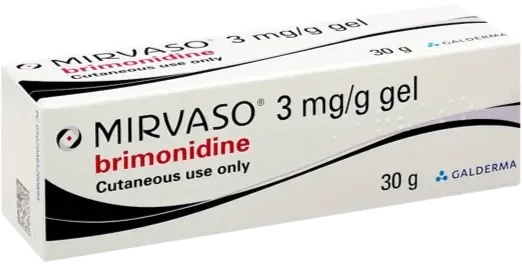
My stance: Mirvaso is not how I build a rosacea plan. At most, it may have a limited role for short-term, supervised, situational use in carefully selected patients who tolerate it — but never as the main strategy.
Laser treatment for rosacea: what a pulsed dye laser really is
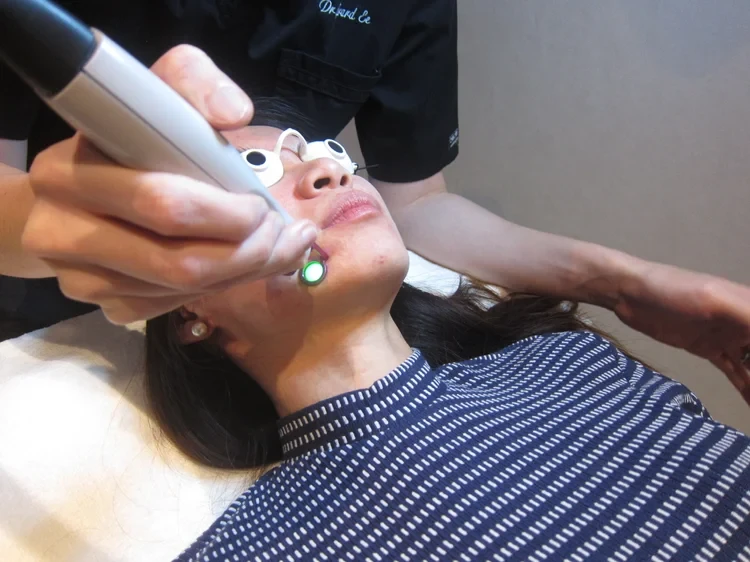
If you’ve been researching Laser treatment for Rosacea, you’ll see many devices mentioned. It helps to be clear on what a pulsed dye laser (PDL) is because understanding the mechanism helps you understand why it works so well for redness and flushing.
What is a “dye laser”?
A dye laser is a laser where the lasing medium is an organic dye dissolved in a solvent. In a pulsed dye laser, the dye medium is excited by a high-energy light source, producing laser light in the yellow spectrum.
In dermatology, pulsed dye lasers commonly emit light around 585–595 nm. A sweet spot because this wavelength is strongly absorbed by haemoglobin, which is what blood looks red and the skin flushed.
What does “pulsed” mean, and why does it matter?
“Pulsed” means the laser doesn’t deliver energy continuously — it delivers it in controlled bursts (pulses).
That matters because skin structures cool down at different speeds. Blood vessels have a concept called thermal relaxation time. This means how quickly the vessel can cool after being heated. When a pulsed dye laser delivers energy in a pulse duration that is appropriately matched, it heats the vessel effectively while limiting unwanted heat spread to surrounding skin.
The key principle: selective photothermolysis
- The target chromophore is haemoglobin.
- The yellow laser light is absorbed preferentially by blood.
- That absorbed light becomes heat.
- Heat damages the vessel lining in a controlled way.
- Over time, the body clears the treated vessel fragments.
- The clinical result: less redness, fewer visible vessels and a calmer baseline vascular reactivity
In simple terms: PDL treats the root cause of rosacea.
Why cooling matters (comfort and safety)
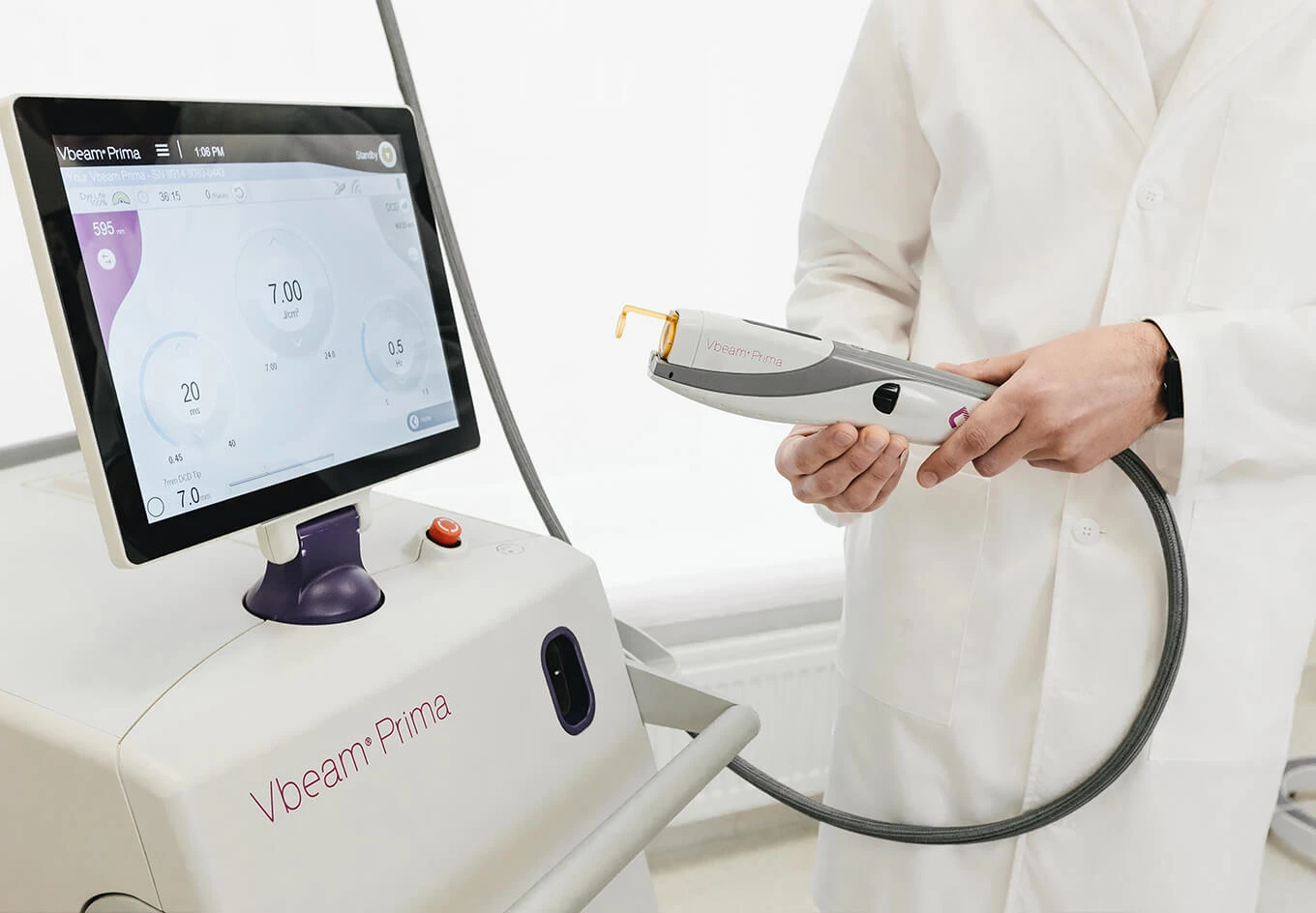
Modern pulsed dye lasers often incorporate epidermal protection. For example, V beam systems are commonly used with a dynamic cooling device that delivers a brief cryogen spray just before the laser pulse, protecting the skin surface and improving tolerability.
Why V Beam pulsed dye laser is a top choice for rosacea redness
Now to the question many patients ask:
“Doctor, is Vbeam really different — and is it worth it?”
My clinical view: Vbeam pulsed dye laser provides excellent results
Especially when your dominant rosacea features are:
- persistent background redness
- frequent flushing
- visible fine vessels
- redness that doesn’t fully respond to creams alone
Pulsed dye laser as a category is one of the most established device treatments for rosacea redness and telangiectasia.
Vbeam is one of the most well-known and extensively referenced pulsed dye laser platforms, with regulatory indications listing rosacea among treatable vascular lesions, and multiple clinical studies evaluating 595 nm PDL designs and outcomes in rosacea.
That’s why when people search Laser treatment for Rosacea, Vbeam is so often the reference standard that clinics and studies mention.
What results to expect with V Beam for rosacea
The goal is not to erase every hint of pink overnight. The goal is a meaningful change in daily life:
- Your baseline redness looks lighter and more even
- Flushing episodes feel less intense
- Triggers still exist, but your skin is less reactive
- Papules/pustules become controllable with the right prescription creams
- Makeup becomes optional rather than necessary
How many sessions?
It varies. Some patients see noticeable improvement early, but rosacea is chronic, and vascular features often respond best with a planned series and proper settings, especially for diffuse redness.
What about downtime?
Some patients experience temporary redness, swelling, or bruising-like discolouration depending on settings and vessel type. This is discussed before treatment so you can plan around work and social schedules.
Where AGNES fits: a useful add-on for selected patients — but not the foundation
Where AGNES fits in a rosacea plan
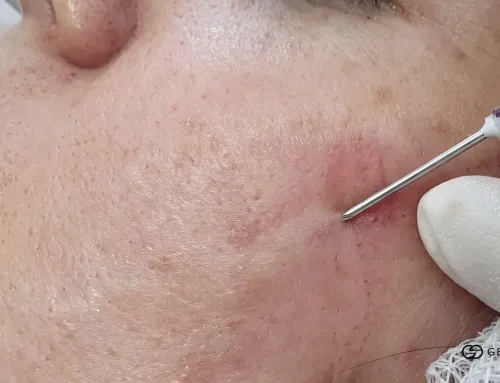
AGNES is a radiofrequency (RF) platform that uses microneedle-based energy delivery. The concept in acne treatment is selective electrothermolysis, targeting and heating structures like sebaceous glands through controlled RF delivered via a needle, with the aim of reducing stubborn gland-driven inflammation in the right patient.
When AGNES can be helpful
AGNES can be a good add-on when:
- you have true acne overlap (not just rosacea bumps)
- you have stubborn, recurrent lesions that behave like sebaceous gland
- there are specific areas that repeatedly flare despite good topical control
- oiliness and sebaceous activity are clearly part of the problem
The critical principle: treat the root cause first.
Here’s the trap I want you to avoid:
If the primary diagnosis is rosacea, and the bumps are rosacea-driven, then acne treatment is not the answer.
The root cause must first be resolved, which is the rosacea.
That means:
- getting the inflammation under control with the correct prescription creams (for example Rozex or Soolantra)
- stabilising the skin barrier
- then treating the vascular layer with V beam pulsed dye laser when redness/flushing is persistent
Only after that do I decide if AGNES has a role — typically as an add-on for specific stubborn sebaceous-gland areas in carefully selected patients.
Used correctly, AGNES can complement a rosacea plan. Used incorrectly (especially when rosacea is mistaken for acne), it can distract from what really needs treating.
A modern rosacea strategy for Singapore
If you want a simple mental model, here it is:
- Accurate diagnosis (rosacea subtype matters; don’t assume acne)
- Control inflammation with prescription topicals (Rozex or Soolantra)
- Avoid common trigger stacking in Singapore’s heat–aircon lifestyle
- Treat the vascular component (baseline redness, vessels, flushing) with V beam pulsed dye laser when appropriate
- Consider add-ons like AGNES only if there’s true sebaceous-gland overlap after rosacea is stable
- Maintain with a calm skincare routine and sensible lifestyle adjustments
Considering Rosacea treatment Singapore or Laser treatment for Rosacea?
I’m Dr Gerard Ee, Medical Director at The Clifford Clinic (Raffles Place). If you’re dealing with persistent redness, frequent flushing, or acne-like rosacea bumps, especially if previous “acne treatment” hasn’t worked — a proper diagnosis and targeted plan can make a big difference.
I commonly combine:
- Prescription topical creams (Rozex and Soolantra)
- V beam pulsed dye laser for redness, flushing and facial vessels
- Adjunct options like AGNES in selected overlap cases (only after rosacea control is established)
The Clifford Clinic is located at 50 Raffles Place, #01-01 Singapore Land Tower, Singapore 048623. Call +65 6532 2048 or WhatsApp +65 8318 6332 to book a consultation with me at The Clifford Clinic.

Dr Gerard Ee, Aesthetic Doctor in Singapore
Dr Gerard Ee is an aesthetic doctor in Singapore and the Medical Director of his practice at 50 Raffles Place. He graduated from St George’s, University of London, trained in surgery at Singapore General Hospital and the National University Hospital, and holds the MRCS (Edinburgh) and a postgraduate diploma in practical dermatology from Cardiff University.
He has practised aesthetic medicine since 2012, is the author of sixteen peer-reviewed papers, and writes and medically reviews every article on this site. Read more about Dr Gerard Ee.

Book a consultation with Dr Gerard Ee at The Clifford Clinic
Dr Gerard Ee consults at The Clifford Clinic, 50 Raffles Place, Singapore. Consultations are by appointment. Message the clinic on WhatsApp, or call 6532 2048.
References
Sources cited on this page
References
-
US FDA. Candela Vbeam Family of Pulsed Dye Lasers (Vbeam Prima / Vbeam Perfecta) 510(k) documentation (indications include rosacea)
-
Bernstein EF. “Rosacea treatment using the new-generation, high-energy, 595 nm, long pulse-duration pulsed-dye laser” (clinical improvement and safety)
-
Bernstein EF. “Pulsed dye laser treatment of rosacea using a novel 15 mm diameter treatment beam” (improvement with favourable safety profile)
-
Tan ST et al. “Pulsed dye laser therapy for rosacea” (study using Cynosure PhotoGenica V PDL; concludes PDL is useful for rosacea)
-
Rozex (metronidazole) Summary of Product Characteristics (therapeutic indication includes inflammatory papules/pustules and erythema of rosacea).
-
Soolantra (ivermectin) Summary of Product Characteristics / FDA label (indicated for inflammatory lesions of rosacea; papulopustular).
-
US FDA label for Mirvaso (brimonidine gel) (notes rebound phenomenon / worsening erythema and warnings including unapproved post-laser use).
-
EMA product information for Mirvaso (brimonidine gel) (worsening erythema/flushing guidance and recurrence notes)
-
Kwon TR et al. “Targeting of sebaceous glands to treat acne by micro-insulated needles with radio frequency in a rabbit ear model” (selective sebaceous gland destruction concept relevant to microneedle RF platforms such as AGNES)
-
Ahn GR et al. “Selective Sebaceous Gland Electrothermolysis Using a Single Microneedle Radiofrequency Device for Acne Patients” (evaluates microneedle RF selective electrothermolysis approach in acne)
-
National Rosacea Society. Menopause/hot flashes as rosacea triggers (patient education).
This page is written from published research and from clinical experience in Singapore since 2012. It is for general education, not medical advice. Whether a treatment suits you, what it may achieve and what it may risk can only be established at a consultation. Dr Gerard Ee is the Medical Director of The Clifford Clinic, a private clinic in Singapore, and treatments discussed on this site are provided commercially.
Related Posts





27 Comments
Comments are closed.


zpacks antibiotics
zpacks antibiotics
lovegra
lovegra
levitra generic
levitra generic
vardenafil 20mg price
vardenafil 20mg price
meloxicam 15 mg
meloxicam 15 mg
allopurinolo
allopurinolo
macrobid 100 mg capsule price
macrobid 100 mg capsule price
xenical 120mg capsule
xenical 120mg capsule
tadalafil recreational use
tadalafil recreational use
get dutasteride
get dutasteride
sémaglutide comprimés de rybelsus
sémaglutide comprimés de rybelsus
tirzepatide vs semaglutide cardiovascular outcomes
tirzepatide vs semaglutide cardiovascular outcomes
semaglutid köpa flashback
semaglutid köpa flashback
proscar and tamsulosin together
proscar and tamsulosin together
flagyl syrup dosage for adults
flagyl syrup dosage for adults
bupropion 200 uses in hindi
bupropion 200 uses in hindi
terbinafine dosage quick guide
terbinafine dosage quick guide
ivermectin pharmacokinetic properties
ivermectin pharmacokinetic properties
vardenafil full strength
vardenafil full strength
avanafil safe online approach
avanafil safe online approach
avanafil price comparison factors
avanafil price comparison factors
PDE5 inhibitor action pathway
PDE5 inhibitor action pathway
vardenafil time dynamics
vardenafil time dynamics
Peak Concentration Guide
Peak Concentration Guide
Absorption Overview
Absorption Overview
Understanding Slow Onset
Understanding Slow Onset
Sildenafil vs Avanafil Clinical Overview
Sildenafil vs Avanafil Clinical Overview